
Tokenized Finance: How Real-World Assets Are Reshaping Web3 Capital Markets
Turning Physical Value into Digital Opportunity Across Web3 Markets

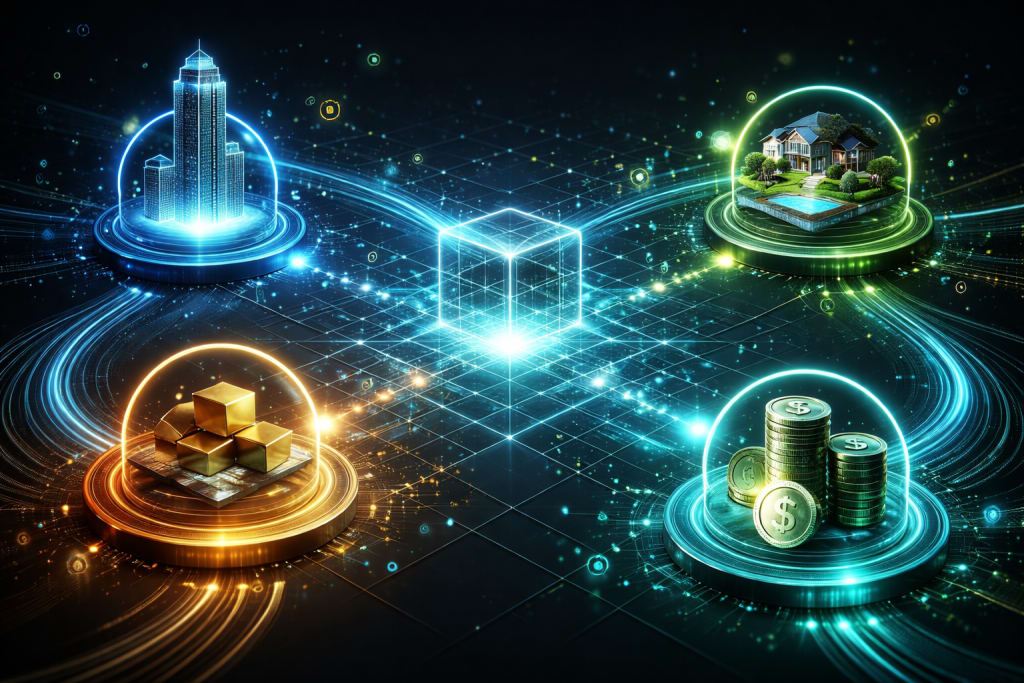
One of the most important structural shifts happening in Web3 today is the rise of tokenized real-world assets (RWAs). While early blockchain innovation focused primarily on cryptocurrencies and decentralized applications, the next phase of growth may come from bridging traditional financial instruments with decentralized infrastructure.
Tokenization allows assets such as government bonds, private credit, real estate, and equities to be represented as digital tokens on blockchain networks. This process can unlock new levels of transparency, liquidity, and accessibility for markets that were historically restricted to institutional investors.
As global financial systems continue to digitize, tokenized finance is emerging as one of the most significant narratives shaping the future of Web3.
The Convergence of Traditional Finance and Web3
Traditional financial markets operate on infrastructure that is often fragmented and slow. Settlement processes can take days, cross-border transactions involve multiple intermediaries, and access to certain asset classes remains limited.
Blockchain networks are offering an alternative framework. By representing financial assets as tokens on-chain, transactions can settle faster while maintaining transparency and programmability.
Several major institutions have already begun exploring blockchain-based settlement layers. Networks such as Ethereum and Solana are increasingly used to experiment with tokenized securities, decentralized exchanges, and on-chain financial products.
The coming together of traditional finance and Web3 isn't just about saving time; it could also completely change how the world's capital markets work.
Why Tokenized Assets Matter for Market Liquidity
Tokenization introduces several structural advantages to financial markets:
Fractional ownership
Assets such as real estate or bonds can be divided into smaller units, allowing broader investor participation.
24/7 markets
Unlike traditional exchanges, blockchain-based markets can operate continuously without closing hours.
Programmable financial instruments
Smart contracts enable automated interest payments, compliance rules, and asset management strategies.
Global accessibility
Users around the world can access tokenized assets without relying on traditional banking intermediaries.
These features could significantly expand the total addressable market for many financial instruments while increasing capital efficiency.
Institutional Interest in On-Chain Finance
Institutional adoption has historically been one of the slowest aspects of crypto growth, largely due to regulatory uncertainty and infrastructure limitations. But big financial companies are starting to pay more attention to tokenized assets.
Large financial entities are now exploring tokenized treasury products, blockchain-based money market funds, and decentralized lending protocols as potential alternatives to traditional financial rails.
This trend is particularly significant because institutional capital tends to move at large scale. Once regulatory frameworks and custody solutions mature, the integration of traditional assets into Web3 could accelerate rapidly.
The Expanding Role of Tokenized Treasury Markets
Among the various tokenized assets entering the blockchain ecosystem, U.S. Treasury-backed products have gained significant traction. These instruments allow investors to gain exposure to government bonds through blockchain-based tokens that generate yield.
For many investors in the crypto ecosystem, tokenized treasuries provide an attractive balance between stability and on-chain accessibility. Users can invest in yield-producing assets while staying within decentralized financial infrastructure, as opposed to hoarding idle stablecoins.
Projects working in this space are building the foundation for what could become a fully integrated on-chain capital market.
Market Research and Ondo Market Forecasting
As tokenized finance continues to expand, analysts have begun examining the potential long-term value of projects focused on real-world asset integration. In this context, discussions around ondo price prediction are becoming increasingly common in research reports and crypto market analysis.
When researchers evaluate ondo price prediction, they often focus on metrics such as the growth of tokenized asset markets, institutional adoption trends, and the scale of capital entering decentralized financial infrastructure. These factors play an important part in determining how value could accumulate within RWA-focused ecosystems.
The growing interest in ondo price prediction shows that the crypto industry is moving away from purely speculative stories and toward judging projects based on how well they connect to real financial markets.
The Long-Term Outlook for Tokenized Finance
Tokenized assets could eventually transform the architecture of global financial systems. As blockchain technology continues to mature, several developments may accelerate this transformation:
- Tokenized government bonds and treasury markets
- Blockchain-based stock settlement systems
- On-chain derivatives and credit markets
- Institutional-grade decentralized asset management platforms
These innovations could enable faster settlement, improved transparency, and more efficient capital allocation across global markets.
Conclusion
One of the most important changes in Web3 is the ability to tokenize real-world assets. By bridging traditional financial markets with decentralized infrastructure, blockchain technology has the potential to unlock entirely new forms of liquidity and global participation.
As this sector develops, projects focused on integrating real-world financial instruments into Web3 ecosystems may play a central role in shaping the next phase of crypto market growth. For investors, developers, and institutions alike, the emergence of tokenized finance could mark the beginning of a new era for decentralized capital markets.
About the Creator
Muhammad Irfan Afzal
I write clear, practical, engaging articles on technology, online safety, and modern digital life. My goal is to help readers understand complex. My aim to provide value, awareness, and real-world solutions for everyday digital challenges.
Keep reading
More stories from Muhammad Irfan Afzal and writers in 01 and other communities.
The Role of Market Analysis in the Expanding Web3 Ecosystem
The cryptocurrency industry has evolved rapidly over the past decade, transforming from a niche technological experiment into a global digital economy. Blockchain technology now supports a wide range of applications including decentralized finance platforms, digital ownership systems, supply chain tracking solutions, and blockchain-based gaming environments.
By Muhammad Irfan Afzal11 days ago in 01
Top 11 Mobile App Development Companies in Texas: Expert Picks 2026
If you have spent any time trying to hire a development team recently, you already know the challenge. There are hundreds of agencies promising the world, but very few actually deliver apps that work, scale, and keep users coming back. Texas has become one of the most active tech corridors in the entire country, and narrowing down who is worth your budget takes real effort.
By Sherry Walker5 days ago in 01




Comments
There are no comments for this story
Be the first to respond and start the conversation.