
Why Digital Experience Solutions Are Essential for Modern Cultural Spaces
Museums, galleries, and heritage sites are under real pressure to engage a generation raised on screens. Here's what the shift to immersive technology actually looks like on the ground.

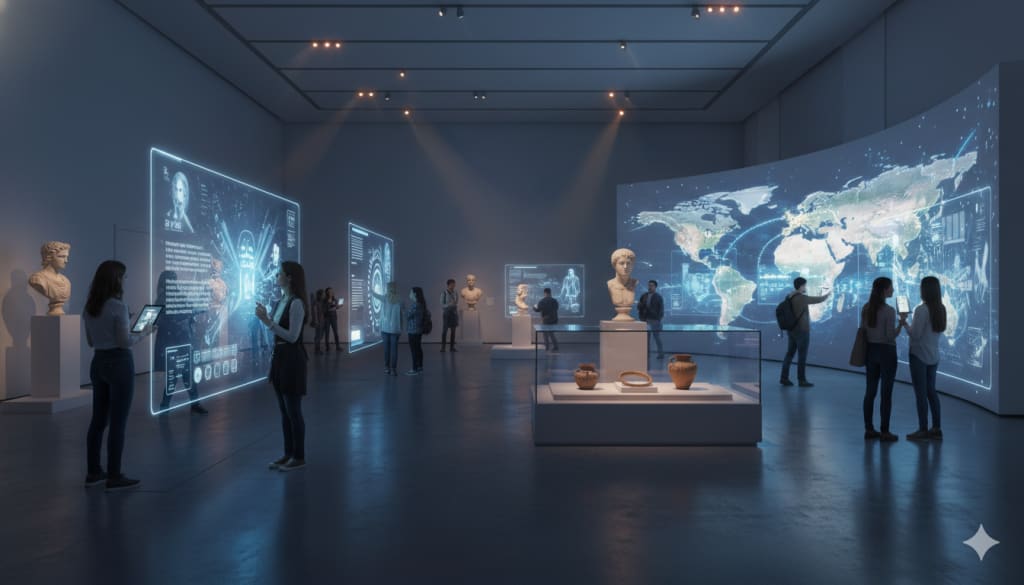
Walk into most museums built before 2010, and the format is familiar. Objects sit behind glass. Labels explain what they are. Visitors walk through in a line and leave. That model worked for decades, but it is struggling today.
Attendance at traditional cultural institutions has been declining steadily. The Pew Research Center has documented that younger Americans—particularly those under 35—visit museums far less frequently than older generations. The reason is not a lack of interest in history or culture. It is a mismatch in how information is delivered.
This is where digital experience solutions are making a measurable difference.
The Core Problem Cultural Spaces Face
Cultural institutions hold irreplaceable collections. The challenge is not the content—it is the presentation. A printed placard next to a 3,000-year-old artifact gives a visitor a date and a name. It does not explain why that object mattered to the people who made it, or what the world looked like when it was created.
Digital-native visitors expect interaction. They are used to systems that respond to them, adapt to their pace, and connect information across layers. Static displays do not do that.
Museums and heritage sites that have adopted immersive digital experiences report higher visitor engagement, longer dwell times, and stronger return rates. The data from the Smithsonian Institution's digitization program shows how making collections digitally accessible—and interactive—fundamentally changes how people connect with artifacts.
What "Phygital" Actually Means in Practice
The term "phygital" gets used loosely. In practice, it means building environments where physical objects and digital layers work together rather than replacing each other.
An example: A natural history museum installs a touchscreen surface in front of a dinosaur skeleton. Visitors can rotate the skeleton in 3D, watch a simulation of how the animal moved, and hear audio reconstructions of its environment. The fossil is still there. The physical experience is intact. The digital layer adds depth that a label cannot provide.
This is what interactive experience design looks like when it works well. The technology supports the object. It does not overshadow it.
Interactive exhibit design firms now collaborate directly with curators, historians, and educators to map out visitor journeys before a single screen is installed. The design process starts with learning objectives, not hardware specs.
Immersive Technologies Driving the Change
Several technologies are now mature enough for large-scale cultural deployment:
Augmented Reality (AR)
Visitors point a device at an artifact and see layered information, reconstructions, or historical context appear on screen. AR is particularly effective for archaeological sites where the physical remains are fragmentary.
Projection Mapping:
Large-scale projections transform walls, floors, and ceilings into dynamic storytelling surfaces. This technique has been used in installations at institutions across Europe and Asia to recreate historical environments at full scale.
Spatial Audio:
Sound design tied to specific locations within a gallery creates immersive zones without headphones. A visitor who walks past a display about ancient trade routes, for example, hears ambient sounds from the period.
AI-Powered Personalization:
AI-powered digital experience solutions can adapt what a visitor sees based on their behavior. If a visitor lingers at one display, the system can suggest related content, adjust audio guides, or surface deeper reference material. This is no longer experimental—several major institutions now run AI-driven visitor experience platforms.
Companies working in digital experience consulting often combine several of these technologies rather than deploying them in isolation. The result is a coherent environment rather than a collection of disconnected screens.
The Role of Consulting and Custom Development
Building these environments is not straightforward. Cultural institutions have unique constraints: preservation requirements, accessibility mandates, budget cycles tied to grant funding, and the need to maintain physical infrastructure while layering in new technology.
Interactive experience technology in cultural spaces requires custom development far more often than off-the-shelf software. A heritage site in a UNESCO-listed building cannot install infrastructure the same way a commercial venue can. Content management systems need to handle multilingual assets, accessibility features, and curator-controlled update workflows.
This is why institutions increasingly work with a digital experience consulting company that understands both the technology and the operational context of cultural organizations. Firms like ViitorCloud are building AI-driven and immersive platforms that help cultural spaces meet these specific demands—combining a custom AI solution with digital experience to create solutions that fit institutional workflows rather than forcing institutions to adapt to generic platforms. Their Custom AI Development Services reflect this approach, focusing on purpose-built systems over template deployments.
Why This Matters Beyond Engagement Metrics
Visitor numbers and dwell times are measurable. But the deeper argument for DX solutions in cultural spaces is about access and equity.
Digital layers make collections available to people who cannot travel to a physical site. A student in a rural area can interact with artifacts held in a museum thousands of miles away. A visitor with mobility limitations can explore spaces that physical access restrictions make difficult.
The technology also supports preservation. Digital documentation of fragile objects means their details survive even if the physical object deteriorates over time.
Where This Is Heading
Cultural institutions that invest in immersive technologies now are building infrastructure that will support programming for the next decade. The organizations that wait are likely to find the gap between visitor expectations and what they offer continues to widen.
The shift is not about replacing the physical experience. It is about making that experience more complete, more accessible, and more durable. The artifacts and collections held in cultural spaces are significant. The goal of digital experience design is to make that significance legible to more people, in more ways, over more time.
That is a practical goal. And the tools to achieve it exist today.
About the Creator
ViitorCloud Technologies
As a leading software development company, we’ve empowered 500+ startups, SMBs, and enterprises to transform their operations. Upgrade your business with our AI-First Software and Platforms that automate and scale, keeping you future-ready.
Keep reading
More stories from ViitorCloud Technologies and writers in 01 and other communities.
AI-First Platform Development: How Businesses Are Rebuilding Software From the Ground Up
Most software built in the last decade was designed for humans to operate. AI was added later, often as a layer on top of existing systems. That approach is reaching its limits. A growing number of companies are now moving toward AI-first software and platform development — where artificial intelligence is built into the architecture from the start, not retrofitted afterward.
By ViitorCloud Technologiesabout 24 hours ago in 01
How AI is Solving FinTech's Biggest Compliance Problem: RegTech Automation in 2026
Picture Marcus Chen, Chief Compliance Officer at a mid-sized European digital payments firm, on a Monday morning in January 2026. His team of twelve has spent the weekend scrambling through 4,000 flagged transactions a weekend that looked exactly like every weekend before it. Forty percent of those flags will turn out to be false positives. His analysts are exhausted. His board is demanding answers. And in three weeks, the firm faces a MiCA audit.
By Nishant Bijaniabout 22 hours ago in 01
How the YouTube Shorts Algorithm Works in 2026
If you’ve ever uploaded a YouTube Short and wondered why one video gets thousands of views while another barely moves, you’re not alone. It can feel unpredictable at first. But once you understand how the YouTube Shorts algorithm actually works, things start to make a lot more sense.
By James Martina day ago in 01
Waiting
It could have been the perfect summer day. The hot July sun warmed the water in the backyard pool just enough to be comfortable and refreshing. The laughter of the five little girls echoed against the splashing water as they chased each other in a classic game of Marco Polo. The game distracted them enough that they failed to notice the dipping sun nearing the horizon. Their fingers and toes had long ago turned wrinkly like raisins, but none wondered why they had been left to play so long today.
By A. J. Schoenfeld7 days ago in Fiction



Comments
There are no comments for this story
Be the first to respond and start the conversation.