
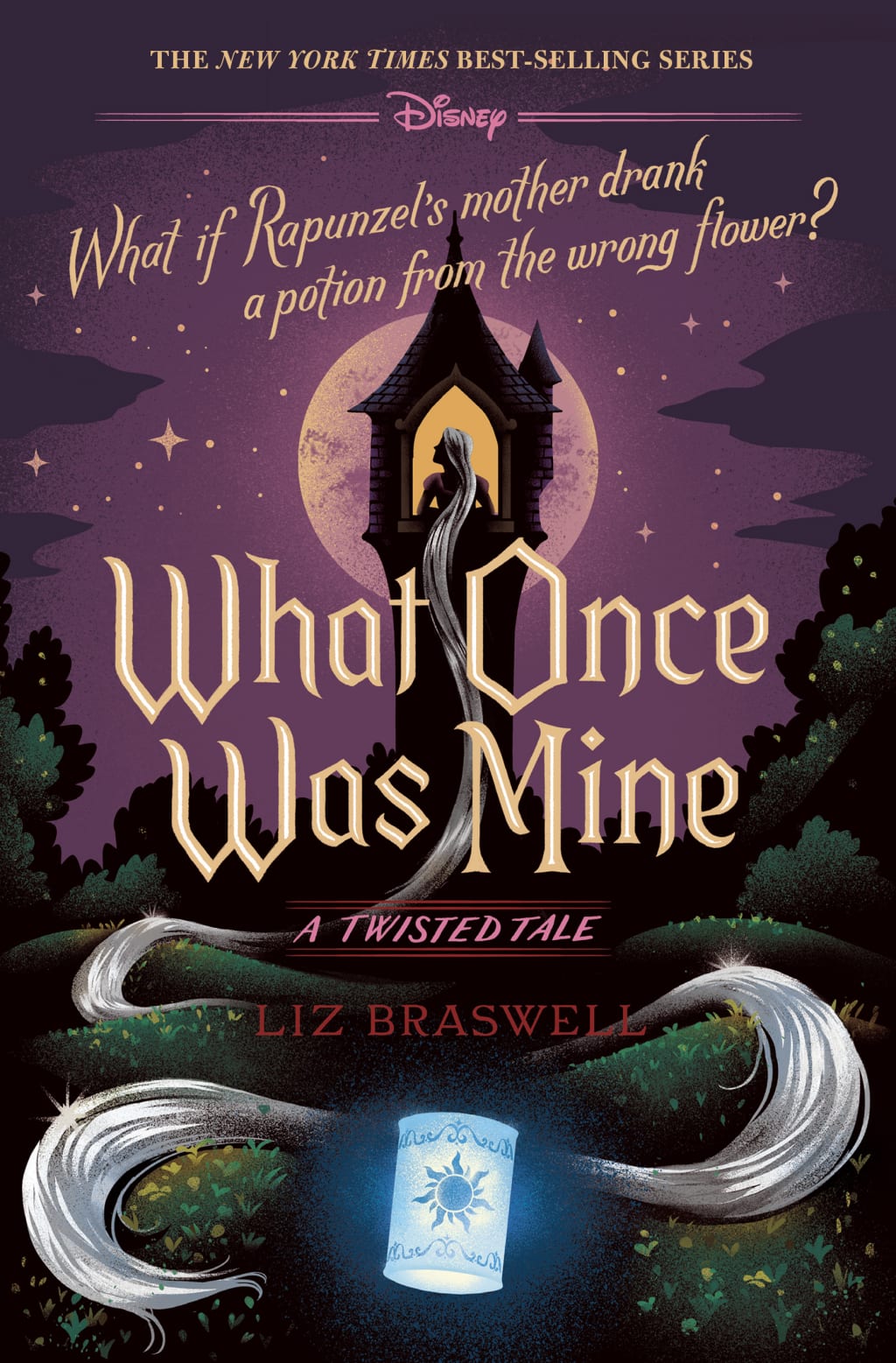
What Once Was Mine, written by Liz Braswell and published in 2022 as part of Disney's acclaimed Twisted Tales series, presents a compelling reimagining of the beloved animated film Tangled. The central premise of this novel poses a captivating question: what if Rapunzel's magical hair carried the power to curse rather than to heal? By inverting one of the core elements of the original fairy tale, Braswell crafts a story that is both familiar and entirely new, exploring themes of self-acceptance, identity, fear, and the true nature of freedom. The result is a richly layered narrative that challenges readers to consider how different circumstances might shape the same essential character — and how one's greatest perceived flaw might ultimately become their most extraordinary strength.
Plot Summary
The novel begins in the kingdom of Corona, where the queen, pregnant and gravely ill, is saved not by a drop of golden sunlight but instead by a flower tainted with dark, cursed magic. As a consequence of this change, Princess Rapunzel is born with silver-streaked hair imbued with a powerful and dangerous force — one that can wither, curse, and even kill, rather than heal. Terrified of the harm she might cause, and believing the outside world will never understand or accept her, Mother Gothel locks Rapunzel away in a tall tower hidden deep in the forest. Crucially, Gothel's justification for Rapunzel's imprisonment feels more credible in this version of events: the magic truly is dangerous, and Rapunzel herself has witnessed its destructive consequences firsthand.
Rapunzel, however, does not lose her characteristic curiosity and longing for the outside world. She spends her days painting the walls of her tower, tending to a small garden, and dreaming of the floating lanterns that illuminate the sky every year on her birthday — a tradition she does not yet know is meant for her. Her life is upended when Flynn Rider (also known as Eugene Fitzherbert), a charming and roguish thief, stumbles upon her tower while fleeing the royal guards. Rather than immediately striking a deal as in the original story, the two embark on a slower and more cautious alliance, complicated by the real danger that Rapunzel's hair poses to anyone who touches it.
A significant addition to the cast is Gina, a female thief and associate of Flynn's, who accompanies the pair on much of their journey. Gina adds an important dimension to the story, offering a different kind of female perspective and creating a more nuanced dynamic than the simple hero-and-heroine structure of the original film. As the three travel together, Rapunzel begins to experiment with and slowly understand her cursed magic, learning that it is not simply a force of destruction but something more complex that reflects her inner emotional state. The journey takes her through enchanted forests, into contact with the kingdom's inhabitants, and toward a climactic confrontation that forces her to reckon with the full scope of her power and her identity.
The climax diverges sharply from the animated film. Rather than a straightforward restoration of healing magic and reunion with her royal parents, Rapunzel's ending is harder-won and more morally ambiguous. The resolution hinges not on the reversal of her curse but on her acceptance of it — and on the realization that power which is feared by others is not inherently evil. The conclusion is satisfying precisely because it rewards the reader's patience through a longer, more complicated arc of personal growth.
Character Analysis
Rapunzel in this novel retains much of what makes her beloved in the original story: her warmth, her creativity, her fierce curiosity, and her emotional intelligence. However, Braswell deepens these traits by placing them under genuine pressure. This Rapunzel carries real guilt. She has accidentally hurt people with her hair, and she has internalized the message that she is dangerous. What distinguishes her character arc is the way the novel refuses to let her simply be rescued from this belief. Instead, Rapunzel must actively dismantle her own shame, confronting each fear as she encounters new people and new situations that complicate her simple belief that she is a monster.
Flynn Rider / Eugene Fitzherbert is rendered with similar fidelity to his animated counterpart — roguish, self-deprecating, and secretly earnest — but his relationship with Rapunzel evolves more slowly and thoughtfully. Because the stakes of physical contact with Rapunzel are so high, their growing closeness feels genuinely hard-earned. His gradual shift from self-interested rogue to someone willing to risk himself for Rapunzel's sake is one of the emotional pillars of the book.
Gina represents one of Braswell's most interesting additions to the source material. She is pragmatic and tough in ways that Rapunzel is not, and her presence prevents the story from becoming exclusively a romance. Her relationship with Flynn adds texture and history to his character, while her eventual bond with Rapunzel introduces a layer of female friendship and solidarity that the animated film largely lacked. Gina also serves as a foil to Rapunzel: where Rapunzel has been sheltered and protected, Gina has navigated a harsh world on her own terms.
Mother Gothel, as in most Twisted Tales reimaginings, is the novel's most morally complex figure. Her manipulation of Rapunzel is no less real or damaging than in the film, but her motivations here carry an additional strand of plausibility. She genuinely believes — or has convinced herself — that keeping Rapunzel isolated is an act of protection. Braswell does not fully redeem Gothel, but she complicates her enough that readers are invited to think critically about the line between protection and control.
Themes and Analysis
The most prominent theme of What Once Was Mine is the danger of allowing fear — whether one's own or others' — to define identity. Rapunzel's curse is a metaphor for any quality that makes a person feel like a threat to those around them: mental illness, neurodivergence, emotional intensity, or simply being different. The novel asks whether the answer to such a condition is lifelong isolation, and resoundingly answers no. Rapunzel's journey is one of learning to exist in the world with her full self intact, rather than apologizing for or hiding what she is.
Braswell also explores the theme of institutional and parental power. Gothel's control over Rapunzel is framed, as always, as a form of love — but the novel makes clear that love which requires another person's total submission is not truly love at all. This theme resonates with contemporary conversations about autonomy, consent, and the ways in which well-meaning protection can curdle into oppression. The kingdom of Corona, too, is not entirely innocent: its inhabitants fear what they do not understand, and that collective fear creates the conditions in which someone like Rapunzel could never feel safe.
A secondary theme concerns the nature of magic itself as a moral category. In fairy tales, dark magic is almost universally coded as evil, while healing or golden magic is good. Braswell subverts this binary by giving Rapunzel magic that looks dangerous but is ultimately neutral — its moral weight is determined entirely by the intentions and circumstances of its use. This is a quietly radical idea, and the novel handles it with enough subtlety that it feels earned rather than didactic.
The theme of female friendship, embodied primarily in the relationship between Rapunzel and Gina, adds an important dimension to the story that the original Tangled never fully developed. The novel suggests that Rapunzel's liberation is not solely the product of romantic love but also of being seen and accepted by another woman who has no obligation to love her — and who chooses to do so anyway.
Writing Style and Structure
Liz Braswell writes in a style that is accessible without being simplistic, with a particular gift for interiority. The reader spends a great deal of time inside Rapunzel's head, which is both the novel's greatest strength and an occasional source of pacing unevenness. Some readers may find the middle section of the book slower than the opening and closing acts, as the emotional processing of events sometimes takes precedence over forward momentum. However, this is a deliberate stylistic choice that serves the novel's deeper aims: this is fundamentally a book about what happens inside a person, and Braswell is committed to honoring that even at the cost of pace.
The prose is warmly descriptive, with a talent for sensory detail that brings the world of Corona to life without over-burdening the reader. Braswell's dialogue is naturalistic and often witty, particularly in the exchanges between Flynn and Rapunzel. The novel is structured in three loose acts corresponding to the tower, the journey, and the confrontation, which mirrors the structure of the animated film closely enough to feel satisfying to fans while departing from it meaningfully enough to justify its existence.
Conclusion
What Once Was Mine is one of the stronger entries in the Twisted Tales series precisely because its central inversion is not merely a plot-level change but a philosophical one. By giving Rapunzel a curse rather than a gift, Braswell creates space to explore what it truly means to accept oneself — not despite one's most frightening qualities, but alongside them. The novel respects its source material while pushing it into genuinely new territory, and in doing so, it offers readers something the animated film could not: a Rapunzel who must earn her freedom not through circumstance but through the hard, ongoing work of self-knowledge.
The book is recommended for fans of the Twisted Tales series, readers who enjoy fairy tale retellings with psychological depth, and anyone who has ever felt that a part of themselves was too dangerous or too strange to be shown to the world. Braswell's answer — that the only path forward is through, not around — is as timely as it is timeless.
About the Creator
Parsley Rose
Just a small town girl, living in a dystopian wasteland, trying to survive the next big Feral Ghoul attack. I'm from a vault that ran questionable operations on sick and injured prewar to postnuclear apocalypse vault dwellers. I like stars.
Keep reading
More stories from Parsley Rose and writers in BookClub and other communities.
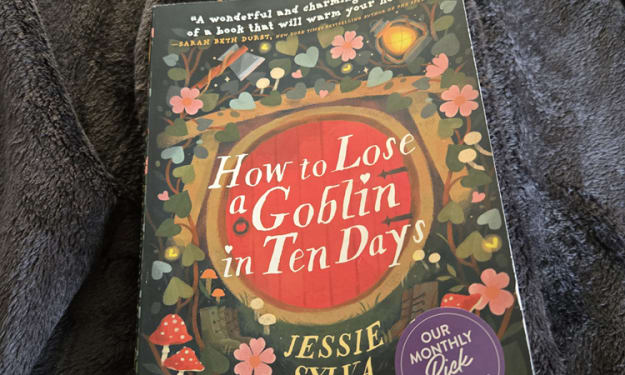
So I read How to Lose A Goblin in Ten Days
Jessie Sylva's "How to Lose a Goblin in Ten Days" is a delightful gem that captures the whimsical spirit of The Princess Bride while carving out its own charming space in the cozy fantasy genre. This is a book that understands the magic isn't always in grand quests or epic battles—sometimes it's in the quiet moments of two unlikely people learning to share a space and, eventually, their lives.
By Parsley Rose about a month ago in BookClub
A Visitor's Guide To Victorian England
A Book Review Being interested in all things Victorian, I am constantly looking for books on the Victorian Era. In fact, I should admit that I am obsessed about ‘all things Victorian’. From the clothes worn by men and women, rich or poor, to how they lived, where they lived, what they ate and would (or would not ) drink, what kind of transport there was, who worked where, who went to school (and who didn’t), the list really is endless.
By Ruth Elizabeth Stiffa day ago in BookClub
8 Must-Read Cozy Fall Books in 2026
There’s something magical about fall—the crisp air, the golden leaves, and the quiet moments that invite reflection. It’s the perfect season to slow down, wrap yourself in a soft blanket, and lose yourself in a good book. Cozy fall reads aren’t just stories; they’re experiences that capture the warmth, mystery, and nostalgia of autumn. From charming small-town tales to atmospheric mysteries and gentle adventures, the right book can make an autumn evening unforgettable.
By Diana Meresc5 days ago in BookClub



Comments
There are no comments for this story
Be the first to respond and start the conversation.