
If the Strait of Hormuz is closed for a long time, it will benefit Russia.
A potential US-Israel conflict with Iran could disrupt the Strait of Hormuz, a route carrying 20% of the world’s oil. Learn how this crisis could boost Russian oil exports and trigger a global energy shock.

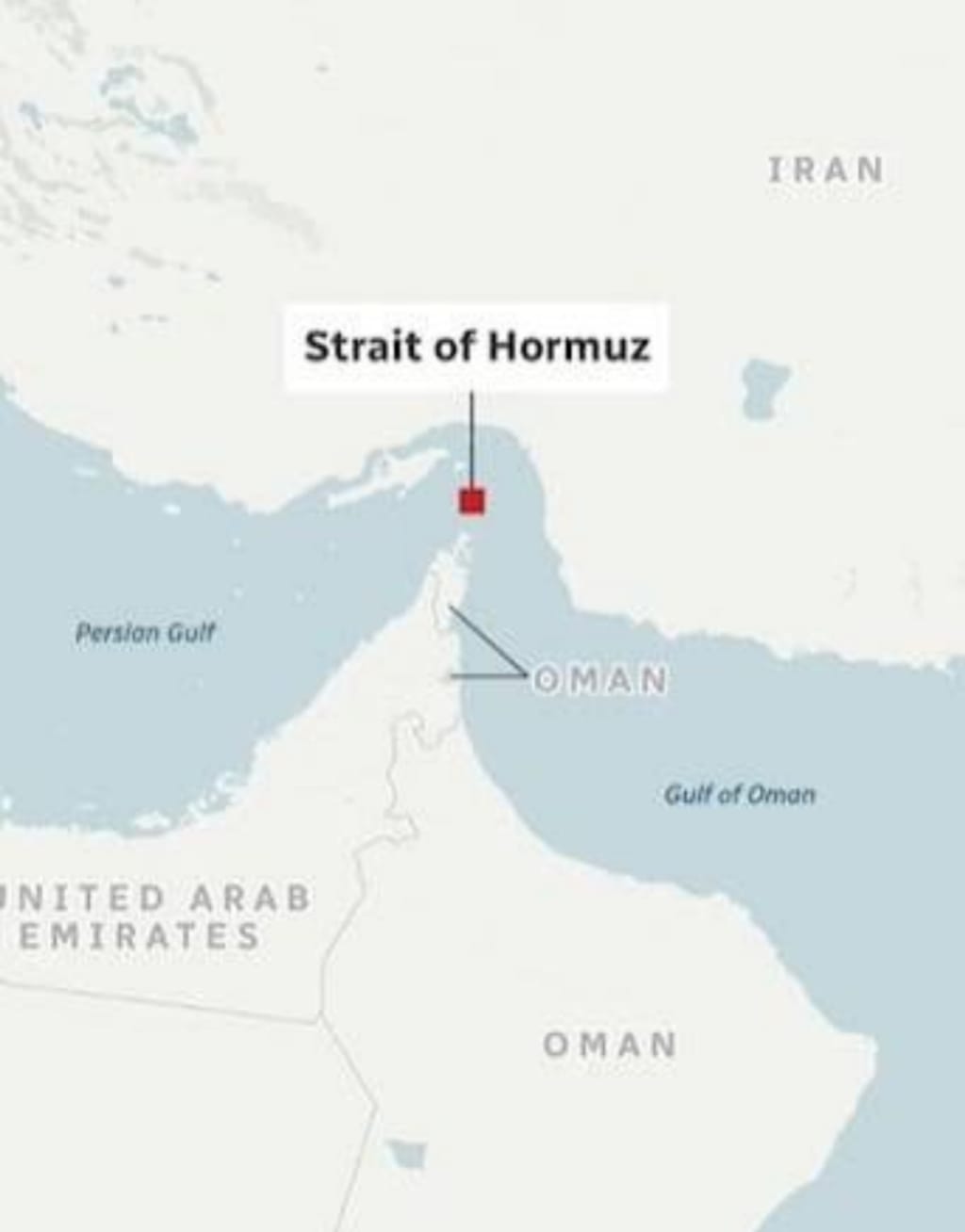
A war involving the United States and Israel with Iran carries the risk that the Strait of Hormuz could remain closed for a prolonged period. This is a crucial route in the global economy through which 20% of the world’s oil and liquefied natural gas is supplied from the countries of the Persian Gulf.
Any disruption in this route would create problems for Europe, the United States, and even Donald Trump himself. However, it would also benefit Russia, because it would give the Kremlin an opportunity to increase oil exports and earn billions of dollars to finance the war against Ukraine.
Iran controls the northern coast of the narrow Strait of Hormuz. It has repeatedly threatened to close the strait in response to what it calls American and Israeli “aggression,” but even after the deaths of senior leaders and days of bombardment, it has not acted on this threat. However, shipping has almost stopped because shipping companies are unwilling to take the risk and insurance costs have skyrocketed.
“The Strait of Hormuz is technically open, but in practice it has been closed to shipping,” say analysts at Kpler, which monitors tanker traffic. “This is not just an abstract geopolitical risk; it is a real disruption to supply.”
How the war helps the Kremlin
According to Kpler analysts, “This conflict will significantly strengthen Russia’s position in the global oil market.” Disruptions in Middle Eastern oil supply would increase India and China’s dependence on Russian oil.
In recent months, these two major buyers of Russian oil have reduced their imports under Western pressure, forcing Russia to cut prices further and reduce exports. But even these steps have not fully sold the sanctioned oil, and millions of barrels remain at sea in shadow-fleet tankers waiting for buyers.
If the Strait of Hormuz is closed, the world will not only lose official Middle Eastern oil from Saudi Arabia, the United Arab Emirates, Kuwait, and Iraq, but also be cut off from the supply chain of smuggled and sanctioned Iranian oil. With Venezuela under U.S. blockade, Russia would effectively become the only country able to sell cheap oil through the shadow fleet. With global prices inevitably rising, it will become easier for Moscow to sell cargo that is currently stranded at sea.
Bloomberg energy expert Javier Blas says:
“This war will benefit Vladimir Putin because oil prices will rise and demand for sanctioned Russian crude will increase. If the White House ignores it, India could become a buyer of that oil.”
Mr. Trump has demanded that India stop importing Russian oil. However, with congressional elections approaching in November, keeping gasoline prices low in the United States may become a higher priority for him.
Blas writes that although this option may not be easy for those trying to counter Putin’s aggressive policy, it could partially offset the oil shortage caused by disruptions in the Strait of Hormuz.
Analysts say that even if Trump remains dissatisfied, India is likely to resume buying Russian oil. S&P Global Ratings has also stated that India’s strategic oil reserves are currently below the level set by the International Energy Agency.
In contrast, China has actively increased its reserves in recent months, but Kpler analysts say that if the Strait of Hormuz is blocked, Beijing will also be prepared to increase maritime oil imports from Russia.
“In the short term, disruptions will most likely put pressure on India, which will probably immediately turn to Russian oil due to its availability and well-established logistics mechanisms,” analysts say. China, which has recently reduced imports of Russian oil, may also abandon this caution if the conflict continues for weeks.
But Russia’s interests are not limited to this
Shipping disruptions have given the Kremlin hope that it can maintain pipeline exports to Europe. However, there are two obstacles.
First, the European Union is preparing a full-scale oil embargo against Russia, and its details were expected to be announced in mid-April. An oil crisis would not be the right time to announce such a decision.
Second, key European buyers of Russian oil and Kremlin allies Hungary and Slovakia have not received oil via the “Druzhba” pipeline for more than a month because it was damaged in Ukraine due to Russian bombing. As a result, both countries have vetoed new sanctions against the Kremlin and European loans to Ukraine.
The European Union proposed that the two countries obtain oil through a pipeline connected to Croatia’s maritime terminal instead of Russian oil. But if maritime oil supplies decrease due to problems in the Strait of Hormuz, this option will become practically ineffective, and the EU may be forced to pressure Ukraine to repair the pipeline more quickly.
How the West is affected
Mr. Trump promised Americans that prices would remain low and gasoline would be cheap. A global oil crisis does not align with those promises.
The United States is the world’s largest producer of oil and gas and will not face a real supply shortage. Moreover, the country has strategic oil reserves that it can release into the market to control price increases.
But the situation in Europe is different. After cutting energy ties with Russia which used to supply gas through pipelines under long-term contracts the European Union now buys oil and gas from the open market and is dependent on price fluctuations.
Europe’s economy, unlike the U.S. economy, is growing slowly, and any new energy crisis could lead to economic and political instability.
This war began on Saturday, and when European markets reopened on Monday, gas prices had already risen 20% compared with Friday.
Tom Marzec-Manser, senior analyst for European gas markets at Wood Mackenzie, said:
“This is a significant jump, but even more extreme events have occurred.” He pointed to the previous conflict with Iran in June 2025, when prices rose even higher, and warned:
“The longer this continues, the higher prices will go.”
But by how much?
Analysts at the American bank Goldman Sachs have predicted a 130% increase. According to an analytical note cited by Bloomberg, if the blockade of the Strait of Hormuz lasts more than two months, gas prices in Europe could triple.
Qatari LNG cannot easily be replaced. The United States, despite being the largest producer, cannot significantly increase exports because its terminals are already operating at maximum capacity. Russian LNG is also under sanctions.
If the Strait of Hormuz is blocked, the United States will not be able to fix the problem. Mr. Trump has long promised to resolve another major issue—the Houthi blockade in the Red Sea—but the key shipping route between Europe and Asia remains closed.
About the Creator
Keep reading
More stories from Real content and writers in Chapters and other communities.
Pakistani Man Asif Merchant on Trial in New York Over Alleged Trump Assassination Plot Linked to Iran’s IRGC
A Pakistani citizen, Asif Merchant, who was arrested on charges of planning the assassination of former U.S. President Donald Trump, has appeared in court in New York as the trial against him begins. During the proceedings, he told the court that he had been working A Pakistani citizen, Asif Merchant, who was arrested on charges of planning the assassination of former U.S. President Donald Trump, has appeared in court in New York as the trial against him begins. During the proceedings, he told the court that he had been working with Iran’s Islamic Revolutionary Guard Corps (IRGC) and that the plan involved recruiting hired assassins.
By Real content6 days ago in Chapters
The Cave Part 6
If you have ever heard a tale about yourself that you cannot remember and doubtless think is made up, you will know how I felt when Tharkin related all that the eagle had seen of me before my memories were scattered. Of far distances and traveling companions that I did not recall, camping out under the stars and making our way to the mountains with deliberate purpose. The great bird had lost contact with my party once we entered the forests, and the seven other members were not seen again by him or his brethren since.
By Jamye Sharp25 days ago in Chapters




Comments
There are no comments for this story
Be the first to respond and start the conversation.