
After the Movie, a Murder
Killing of Fay Bosler, October 14th, 1922. Ft. Wayne, IN.

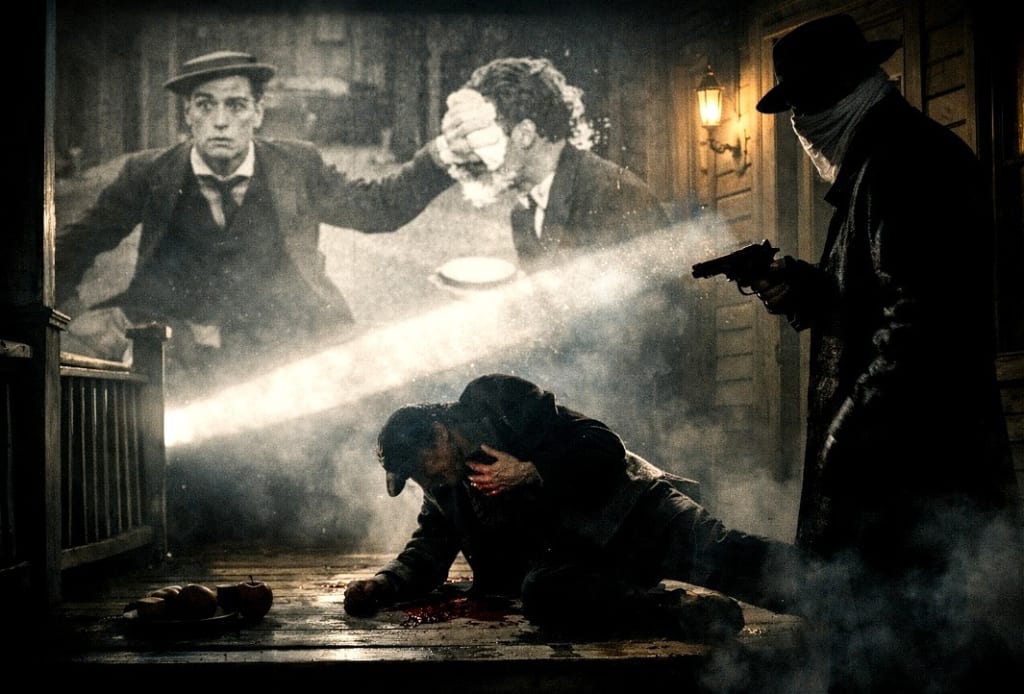
The flickering ghosts of 1922 are not all residents of unhallowed halls wherein were seen tragic and mysterious endings. No. In that year, Keaton did Cops, and old Stone Face was quite a hand at running down the bad guys, whoever they might be, as evidenced in his seminal short Sherlock Jr. (which actually came out two years later). It was selected in 1991 for the United States National Film Registry as “culturally, historically, or aesthetically significant.”
1922 was a sterling year for the newborn cinema, which came careening, silently, out of the motion picture screen and into the consciousness of a Twenties that roared.
I suppose in 1922 eager auds could still get a face full of Boston cream pie, courtesy of Mabel Normand or Fatty Arbuckle, or even Keaton or the Little Tramp himself.
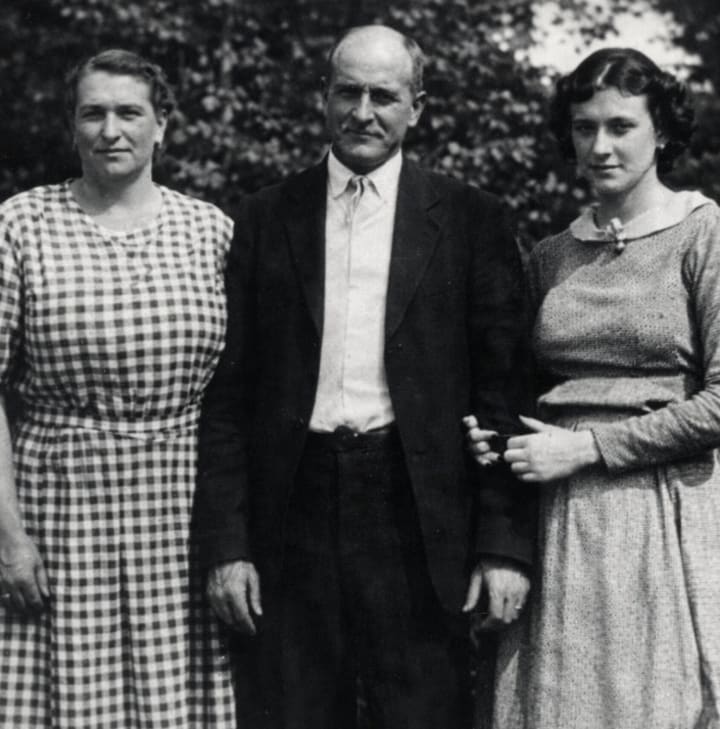
Actually, scratch Arbuckle off the list. By this time, he had already been accused in the rape and death of tragic actress Virginia Rappe. So, no pie-throwing for Fatty. Three separate trials awaited him before his eventual acquittal in April of that same year.
The heavily made-up faces, the exaggerated expressions, the wacky hijinks and the slipping-on-a-banana-peel gags may or may not have been the cinematic entertainment pursued by Fay Bossler and daughter Elda that October 14th; we know only that they visited the theater. What specific picture they saw that night was not, for posterity, ever recorded. It might have been romance.
It most appropriately would have been action, or horror.
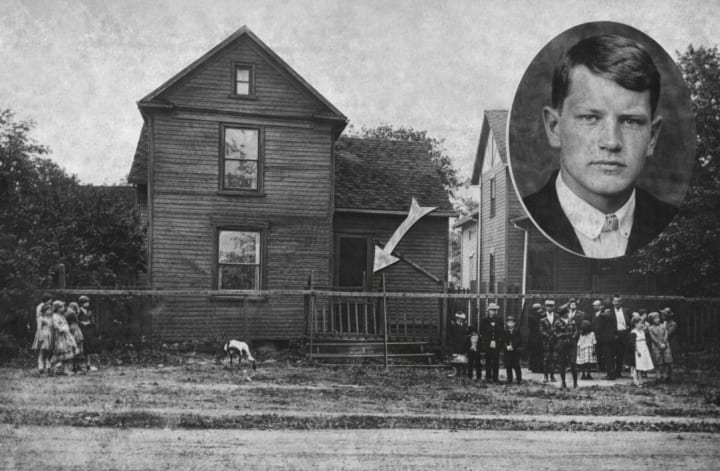
Fay Bosler went to the door of his two-story home after hearing a knock, or heavy boots on the porch boards. He must have smelled of fresh apples, which he and Elda had been eating. The story does not record why Mother Bosler was not so dining on the fruitarian repast; perhaps she was lying on the davenport, feeling poorly.
A shot rang out.
The cold moment of death, when shock steals over the scene, issuing a freeze on the passage of time.
Another shot.
A man stood on the porch, his face covered by a silk kerchief. We suppose it was white. Elda ran to the phone—which was still a luxury item in 1922. A third shot rang out.
“I’m shot! I’m dying!” Fay called out, blood dripping from between his fingers as he clutched his chest dramatically, crumpling to the floor and creating a pool of red beneath his body. There was, alas, no chance, no hope. Mr. Bosler died on his way to St. Joseph’s Hospital. Most likely, he never had an inkling of who plugged him, or why.
His last moments might have left vibrational stirrings of psychic agony in the old place. If so, we could not attest to it. Is the place at 1918 Weisser Avenue even still there? We digress.
The police investigated, but they had only suspicions of gangsters peddling cheap, Prohibition-era booze in the neighborhood; and maybe, someone speculated, Fay was mistaken for a criminal adversary. But it was all simply speculation and hearsay. Fay Bosler went to his grave with his murderer still at large.
One final note: the white kerchief slipped from the killer’s face ere his mysterious exit. The kerchief itself would seem to have been a vital clue, due to the laundry mark that could have potentially opened up the investigation as to who had had the kerchief laundered. Alas, the police seem to have totally disregarded this vital link in the chain of evidence, such as it was, for fear that it could have “hampered their investigation.” As if.
It is clear that, unlike Buster Keaton, they were not Sherlock Jr.s.
C’est la vie.
Author's website
YouTube
Read my book: Theater of the Worm: Essays on Poe, Lovecraft, Bierce, and the Machinery of Dread
About the Creator
Tom Baker
Author of Haunted Indianapolis, Indiana Ghost Folklore, Midwest Maniacs, Midwest UFOs and Beyond, Scary Urban Legends, 50 Famous Fables and Folk Tales, and Notorious Crimes of the Upper Midwest.: http://tombakerbooks.weebly.com
Mom K*illed Children Who Bullied Her Daughter
They say hell hath no fury as a woman scorned, but the truth is, a mama bear is the fiercest creature walking the Earth. She’ll climb mountains and fight lions to protect her baby cubs. Sadly, a mother's devotion can be devastating when coupled with mental illness.
By Criminal Matters6 days ago in Criminal
New Epstein files twist delivers blow to Trump...
On November 18, a long-simmering political battle in Washington reached a dramatic turning point. The House of Representatives overwhelmingly approved legislation mandating the release of all government records tied to the investigation into the alleged crimes of Jeffrey Epstein. While the move had been anticipated for weeks, its implications were far-reaching—especially for Donald Trump, who had once promised full transparency on the issue.
By Shirley Oyiadom5 days ago in Criminal




Comments
There are no comments for this story
Be the first to respond and start the conversation.