
Javed Iqbal: The Monster Who Murdered 100 Boys in Six Months
Javed Iqbal, Pakistan's most notorious serial killer, murdered 100 boys in 1999, luring, abusing, strangling, and dissolving them in acid as revenge for his mother's death. He confessed and was sentenced to die.
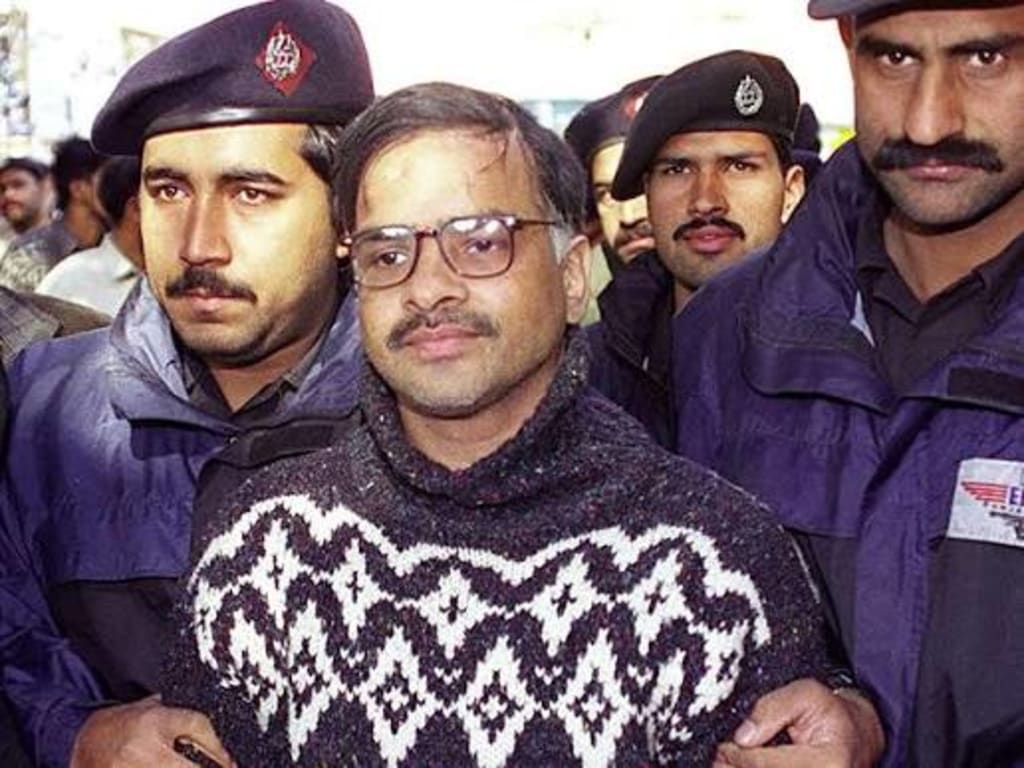
Javed Iqbal Mughal stands as one of the most horrifying and prolific serial killers in modern history earning the grim distinction of being Pakistan's worst serial killer. Born around 1961 in Pakistan Iqbal came from a relatively affluent background. His family provided him with significant privileges early in life by his late teens his father had purchased a villa for him and gifted him a powerful 200cc motorbike. These luxuries would later become tools in his predatory schemes.In the early 1990s Iqbal's dark tendencies first came to light when he was arrested following allegations from one of his victims. He faced accusations of sexually abusing young boys luring them to his residence with promises of food money or shelter. However, the case did not result in lasting consequences—no formal charges stuck, and he was released. This brush with the law left a deep scar on Iqbal. He later claimed that the stress and humiliation his mother endured during his arrest and the surrounding scandal contributed to her suffering a fatal heart attack. Consumed by grief and rage Iqbal vowed revenge—not directly against the authorities, but against society itself. He declared his intention to inflict the same level of anguish on 100 other mothers by taking their sons' lives.
This twisted motive marked a deadly escalation in his behavior. Determined to avoid future accusations or survivors who could identify him, Iqbal shifted from mere abuse to calculated murder. Between June and November 1999, over a span of roughly six months, he targeted vulnerable young boys—primarily street children, runaways, beggars, and orphans aged 6 to 16—who had little family oversight or protection. Operating from a modest apartment in Lahore, he would approach these boys in public places, offering them food, small amounts of money, or a place to stay. Once they accompanied him home, the horror unfolded.
Iqbal sexually assaulted his victims before strangling them, often using an iron chain or other means to ensure death. He then meticulously dismembered the bodies and dissolved the remains in large drums filled with concentrated hydrochloric acid. This gruesome disposal method effectively eliminated physical evidence, allowing him to continue his killing spree undetected for months. What made the case even more chilling was Iqbal's methodical record-keeping: he maintained detailed logs of each victim, including their names, ages, photographs, and sometimes other personal details. These records served as a macabre catalog of his crimes.
By late 1999, Iqbal had reached his self-imposed target. On December 30, 1999, he dramatically confessed by sending letters to the police and a prominent Lahore newspaper editor. In these handwritten notes, he openly admitted to the rape and murder of exactly 100 boys. He described his methods in graphic detail—the luring, the abuse, the strangulations, the dismemberment, and the acid baths—and provided the location of his residence, essentially inviting authorities to investigate. He also claimed the killings were an act of vengeance against the police for the mistreatment he believed he and his family had suffered years earlier.
The confession triggered immediate shock and a massive response. Police raided his home, where they discovered acid drums containing human remains, photographs of missing boys, and other incriminating evidence. Many of the victims were later identified through these records and family reports of disappearances. Iqbal initially evaded capture, hiding in various locations including a drainage culvert and a cave, but he eventually surrendered by walking into a newspaper office and announcing himself as the "killer of 100 boys."
His trial drew widespread attention due to the sheer scale of the atrocities and the vulnerability of the victims. In March 2000, an anti-terrorism court in Lahore convicted him on 100 counts of murder. He received 100 death sentences—one for each victim—along with additional penalties. The judge ordered an exceptionally severe execution: Iqbal was to be publicly strangled with the same chain he had used on his victims, in front of the parents of the murdered boys, then his body dismembered into 100 pieces and dissolved in acid—mirroring the fate he had inflicted on his victims. This poetic yet brutal sentencing reflected the outrage felt across Pakistan.
However, Iqbal never faced that execution. On October 9, 2001, while in custody awaiting the carrying out of his sentence, he was found dead in his cell under mysterious circumstances, officially ruled a suicide. Some reports suggested he hanged himself, though questions lingered about foul play or prison conditions.The case of Javed Iqbal remains a haunting chapter in Pakistan's criminal history, exposing failures in child protection, the plight of street children, and the depths of human depravity. His actions shattered countless families, leaving 100 mothers to endure the unimaginable pain he had vowed to inflict. The tragedy underscores the importance of vigilance for vulnerable youth and swift justice in the face of such evil.
About the Creator
Keep reading
More stories from Kure Garba and writers in Criminal and other communities.
Lured, Killed, Decapitated – A Jealous Husband’s Brutal Crime in the Woods
In a chilling case that unfolded in rural New Hampshire in September 2020 Britany Barron then 33 was found guilty of falsifying physical evidence connected to the brutal murder of her co-worker Jonathan Amerault. The crime involved her husband Armando Barron 32 at the time who became convinced she was having an affair with Amerault after discovering flirtatious messages on her phone. This jealousy-fueled rage led to a violent chain of events that ended in kidnapping, torture shooting, decapitation and attempts to conceal the body.The tragedy began on the night of September 19-20 2020 in Jaffrey New Hampshire where the Barrons lived. Armando reportedly abusive in the marriage confronted Britany over Snapchat exchanges with Amerault a 25-year-old attractive co-worker from Keene. Enraged, Armando allegedly used Britany's phone to lure Amerault to Annett Wayside Park (also known as Annett State Park) in Rindge New Hampshire—a secluded spot just north of the Massachusetts border—under the pretense of meeting her.
By Kure Garba5 days ago in Criminal
How To Deal With LEOs And Not Catch A Bullet
Darn it! The newest shooting to enrage people has occurred and again, you’re faced with that werid question, why? Why would guys with families at home, men and women with lives, be using deadly force on American citizens? It’s a puzzler, isn’t it?
By Jason Ray Morton 6 days ago in Criminal
The Ken Childs Controversy: Inside a Private Investigator Scandal Involving Surveillance, Cybercrime Allegations
Los Angeles is a city built on stories. Some are scripted in movie studios. Others unfold quietly in courtrooms, investigative offices, and digital networks far from the spotlight.
By Shane Smitha day ago in Criminal


Comments
There are no comments for this story
Be the first to respond and start the conversation.