
Gardening in Clay Soil: Plants and Techniques That Work
Transform your garden's greatest challenge into its greatest asset.

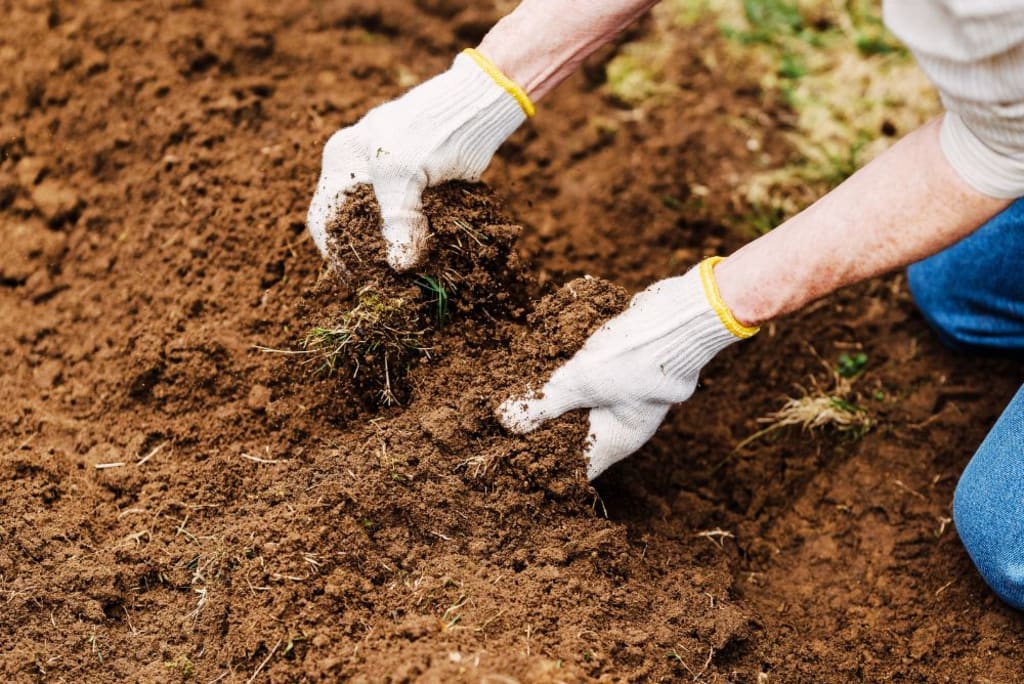
You dig a hole and the soil sticks to your shovel like glue. Rain creates puddles that linger for days. In summer, the ground cracks like a dried riverbed. If you garden in clay soil, you know these frustrations intimately.
But here is the truth that experienced gardeners understand: Clay soil is not a curse. It is an opportunity.
Clay soil, properly managed, is among the most fertile ground on earth. Its tiny particles hold nutrients that sandy soil loses to rain. Its density, properly amended, retains moisture through drought. The plants that thrive in clay often grow larger, bloom longer, and need less water than those in lighter soils.
This guide will help you stop fighting your clay and start working with it.
🧪 Understanding Clay Soil
What Clay Is
Clay particles are microscopic—so small they pack tightly together, leaving little space for air or water movement. This creates:
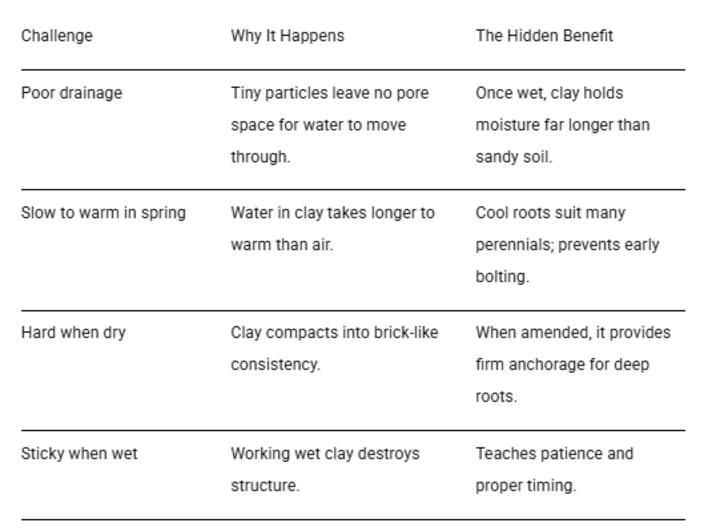
The Simple Test
Squeeze a moist handful of your soil:
- Sandy soil: Crumbles immediately when you open your hand.
- Loamy soil: Holds together briefly, then crumbles.
- Clay soil: Forms a tight ball that stays together; can be smoothed into a "ribbon" between thumb and finger.
🌾 Step-by-Step: Improving a Clay Bed
Year One: The Foundation
- Test drainage. Dig a hole 12 inches deep, fill with water, time drainage. If it takes more than 24 hours, consider raised beds for vegetables.
- Add organic matter. Spread 3-4 inches of compost over the surface.
- Plant a cover crop in fall if area is empty. Winter rye is excellent.
- Mulch existing beds with 2-3 inches of organic material.
Year Two: Building Structure
- Plant clay-tolerant species. Let their roots do the work of breaking up soil.
- Top-dress with compost each spring and fall.
- Avoid tilling. Repeated tilling destroys soil structure. Let earthworms and plant roots create pores.
Year Three and Beyond
- Soil should be noticeably improved. Continue annual organic matter additions.
- Expand plant palette as drainage improves.
- Enjoy your transformed soil.
🚫 What Not to Do in Clay
- Don't add sand. Sand mixed with clay creates concrete. Organic matter only.
- Don't till when wet. Ever.
- Don't walk on beds. Compaction is permanent. Use pathways.
- Don't plant too deep. In clay, planting slightly high is better than too deep.
- Don't despair. Clay soil produces magnificent gardens. Give it time.
🔍 Knowing What You're Working With
When you're new to a property, you may find mystery plants thriving in clay that you can't identify. Some may be valuable natives adapted to your specific conditions; others may be invasive thugs taking advantage of disturbed soil.
Before removing any unknown plant, use a reliable plant identification app to learn what it is. That vigorous spreader might be a valuable native like Joe-Pye weed that belongs in your clay garden—or it might be an invasive that needs removal. Identification prevents you from accidentally destroying established plants perfectly suited to your soil while ensuring you target the right species for control.
🌟 The Clay Garden's Secret Gift
Clay soil gardeners learn patience. They learn to wait for soil to dry before planting. They learn that improvement happens slowly, over years, not seasons. They learn to appreciate plants that thrive despite—or because of—the heaviest ground.
But they also learn something else: Clay gardens, once established, are magnificent. The moisture-holding capacity that challenged spring planting sustains plants through summer drought. The nutrient-rich particles that stuck to shovels feed growth that surpasses sandier soils. The very density that seemed oppressive provides anchorage for towering perennials and long-lived shrubs.
Your clay soil is not a problem to solve. It is a partner to understand. Work with it, choose plants that love it, and it will reward you with a garden of extraordinary depth and vitality.
About the Creator
Emma Wallace
Director of Research and Development at AI Plant Finder (Author)
Emma Wallace is an esteemed researcher and developer with a background in botany and data analytics.
Keep reading
More stories from Emma Wallace and writers in Earth and other communities.
Gothic Gardening: Embracing Drama with Dark Foliage and Flowers
There is a garden aesthetic that rejects the bright and cheerful in favor of the mysterious and dramatic. It embraces shadows rather than sunlight, depth rather than dazzle. It finds beauty in darkness—in leaves the color of aged wine, in flowers so deep purple they appear black, in forms that suggest ancient forests and moonlit mysteries.
By Emma Wallace18 days ago in Earth
Remarkable Looking Lizards
Inhabiting the southwestern US, collared lizards are known for their vibrant color and their characteristic black “collar” mark around their necks. These lizards have quick movement and impressive speed. Collared lizards are primarily insectivorous, meaning their diet mainly consists of insects. They are known for their hunting skills, often pouncing on prey after displaying tail movements.
By Rasma Raistersabout 23 hours ago in Earth
Israel-Iran War: Environmental Risks Overview
Nearly a month into the Israeli-US war against Iran, it is clear that the environmental costs for Iran and the wider region have been substantial and are continuing to mount. The primary environmental threat during this stage of the war is conflict-linked pollution, which has the potential to impact public health, as well as terrestrial and marine ecosystems, and natural resources such as soils and aquifers. Contamination of water bodies is of particular concern for Iran, where drought and mismanagement have depleted water resources.
By Ibrahim Shah a day ago in Earth



Comments
There are no comments for this story
Be the first to respond and start the conversation.