
Using Biochar Machines for Organic Waste Recycling on Farms
How Biochar Revolutionize Sustainable Agriculture

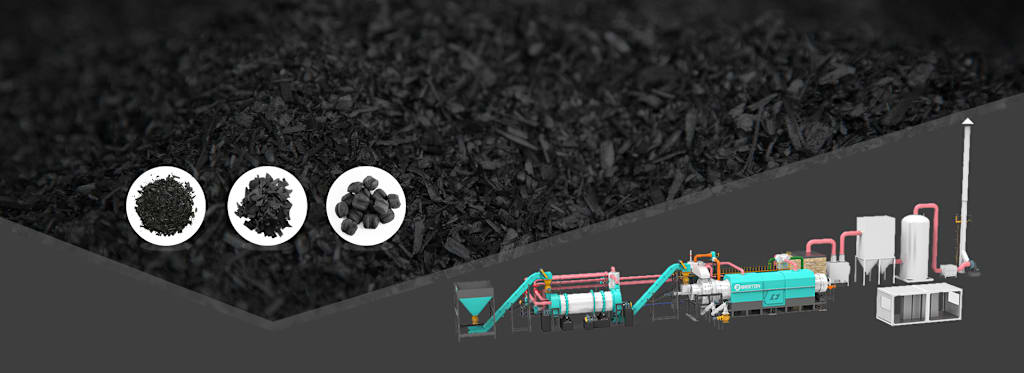
Every day, farms around the world generate tons of organic waste—crop residues, animal manure, rice husks, and fruit peels—that often ends up in landfills or is burned openly. These practices not only waste valuable resources but also release harmful greenhouse gases like methane and carbon dioxide, worsening climate change and polluting air and water. Fortunately, there’s a game-changing solution: biochar machines. These innovative devices transform farm organic waste into biochar, a carbon-rich "black gold" that enriches soil, reduces emissions, and closes the loop on agricultural waste. Let’s explore how biochar machines are reshaping organic waste recycling and paving the way for more sustainable farming.
First, it’s essential to understand what biochar is and how biochar machines work. Biochar is a stable, carbon-rich material produced by heating organic waste in a low-oxygen environment through a process called pyrolysis. Unlike open burning, which incinerates waste and releases most carbon into the atmosphere, pyrolysis locks carbon into a solid form that can remain in soil for hundreds to thousands of years. Biochar machines are the core equipment that makes this transformation possible, using continuous high-temperature anaerobic pyrolysis technology to convert various organic wastes into high-quality biochar.
The process is straightforward and farm-friendly. First, farm organic waste—such as corn stover, wheat straw, or animal manure—is collected and pretreated: crushed into small particles and dried to reduce moisture content (ideally below 15%) for efficient pyrolysis. The pretreated waste is then fed into the biochar machine, where it’s heated in a sealed, oxygen-free reactor. As temperatures rise, the waste decomposes, evaporating water and volatile substances, while the remaining carbon is rearranged into a porous, carbon-dense material—biochar. Notably, the process also produces byproducts like syngas, which can be reused to power the machine itself, making the entire process energy-efficient and self-sustaining.
The benefits of using biochar machines for organic waste recycling on farms are threefold: environmental, agricultural, and economic. Environmentally, it’s a powerful tool for climate action. By converting organic waste into biochar, farms divert waste from landfills, reducing methane emissions (a greenhouse gas 27.9 times more potent than CO2) and locking carbon in soil—effectively acting as a carbon sink. For example, a farm in Nanjing, China, uses biochar machines to process 410 tons of crops annually, preventing open burning and reducing carbon emissions significantly. Additionally, biochar’s porous structure helps filter contaminants like heavy metals in soil, protecting groundwater and improving environmental quality.
Agriculturally, biochar is a soil supercharger. Its porous nature improves soil water retention, which is crucial for arid regions or drought periods, reducing irrigation costs and ensuring more efficient water use. It also enriches soil fertility by retaining essential nutrients, reducing the need for chemical fertilizers, and providing a habitat for beneficial soil microorganisms. A 500-acre rice test field in Nanjing saw a 6.1% increase in soil organic matter and a 10% crop yield increase after using biochar produced from farm waste. Farmers also report reduced pest and disease issues, as biochar helps suppress harmful pathogens that thrive in unprocessed organic waste.
Economically, biochar machines offer long-term value for farmers. While there is an upfront investment, the cost is offset by multiple revenue streams: reduced spending on chemical fertilizers and irrigation, higher crop yields and quality, and even income from carbon credits or biochar sales. In some cases, farmers can earn additional income by selling excess biochar to other farms or gardening businesses. A mobile biochar processor in the southeastern U.S. can generate annual profits of over $89,000 by converting forest and farm waste into biochar sold at $350 per ton. For small-scale farmers, portable biochar machines are particularly accessible, allowing them to process waste on-site without the need for expensive transportation.
Despite these benefits, adopting biochar machines is not without challenges. Some farmers are hesitant due to upfront costs, and there is a need for more education on proper use and benefits. However, governments and environmental organizations are increasingly offering incentives—such as grants and technical support—to encourage adoption. For example, China’s "straw carbonization return to field" projects receive government support, helping farmers cover equipment costs and promoting widespread use. Additionally, the development of more affordable, user-friendly machines is making biochar technology accessible to farms of all sizes.
In a world where sustainable agriculture is no longer an option but a necessity, biochar machines offer a simple, effective way for farms to reduce their environmental footprint while boosting productivity. By turning organic waste into a valuable resource, these machines close the agricultural waste loop, protect the planet, and support farmers’ livelihoods. Whether you’re a small family farm or a large agricultural operation, investing in a biochar machine is an investment in a greener, more resilient future.
The future of farming is circular—and biochar machines are leading the way. By embracing this technology, we can turn farm waste into a force for good, one batch of biochar at a time.
About the Creator
Bestonpyrolysis
Engaged in waste plastic/tyre/rubber recycling, oil sludge treatment, biomass recycling, sewage sludge management and paper recycling…
https://bestonpyrolysisplant.com/
Keep reading
More stories from Bestonpyrolysis and writers in Earth and other communities.
Waste Plastic to Fuel: Paving the Way for a Circular Economy
Plastic pollution has become one of the most pressing environmental issues of our time. From oceans to landfills, millions of tons of plastic waste accumulate annually, causing devastating impacts on wildlife, ecosystems, and human health. Yet, in the midst of this challenge lies a remarkable opportunity: transforming waste plastics into fuel. This innovative approach not only reduces environmental pollution but also supports the transition toward a circular economy, where resources are reused and repurposed instead of discarded.
By Bestonpyrolysis4 days ago in Earth
Researchers discover why certain volcanoes suddenly explode.
Researchers have discovered a shallower band of hot fluids over a deep pocket of melt beneath an active volcano. According to the new image, a calm surface may be deceiving because pressure can build up gradually before fractured rock gives way.
By Francis Dami2 days ago in Earth



Comments
There are no comments for this story
Be the first to respond and start the conversation.