
Does Ambidexterity Make a Difference?
Strides have been made in diagnosing students with learning disabilities. And among some circles, there’s talk that a student that happens to be ambidextrous may have signs of such disorders that affect a student's ability to learn. Is this true? Let’s find out if those that can use both hands have a specific learning disorder.

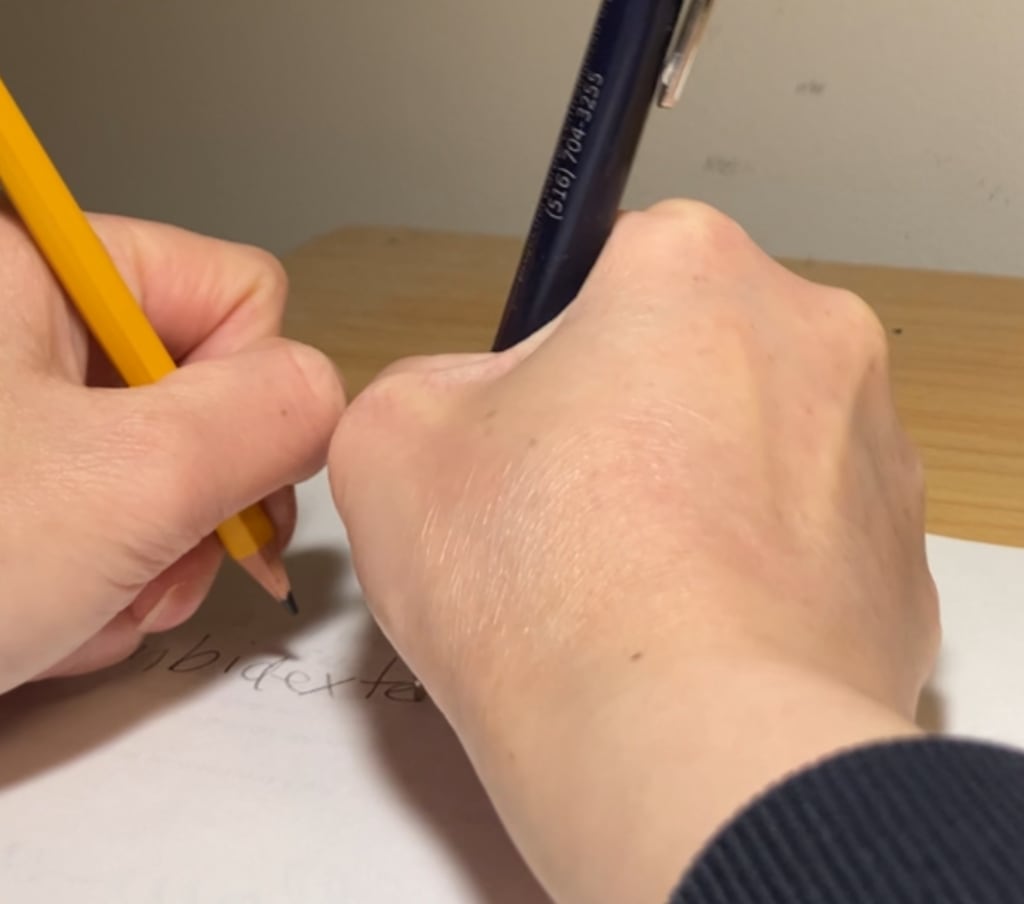
Using Both Hands
Ambidexterity is a unique trait some people have. It’s also a bit of an anomaly, considering that most of us end up becoming either left or right-handed. Still, this designations doesn't mean that left and right handed people exclusively use those hands. It's that they often favor one hand use of the other in most of their endeavors.
Ambidexterity is the ability to favor both hands equally while doing certain activities such as writing, throwing a ball, or boxing. Having this ability may be considered a wonderful ability to have.
However, this ability has lately come under scrutiny due to research. And this makes one wonder if having this ability is actually a curse.
Seen as a Correlation
Once considered a sign of intelligence, research has been proving that this is not a cause or a byproduct of high I.Qs. Also, other studies suggest that those with this trait may be prone to neurological disorders such as Attention Deficit Hyperactivity Disorders (ADHD) or other learning disorders.
However, like the high IQ argument, ambidexterity is not the correlation that equates cause. There were several famous people that were reported to be ambidextrous such as:
- Michelangelo,
- Albert Einstein,
- writer Ian Fleming, and
- Benjamin Franklin was reportedly ambidextrous, too.
- James Garfield, the 20th U.S. president reportedly was able to write Greek with his left hand and Latin with his right hand, at the same time! (Saunders, 2011).
Not All Ambixtrous People were Born That Way
However, ambidextrous people were also known to be left-handed people forced to learn how to use tools or instruments made for right-handed people. In other cases, parents had forced left-handed children to convert to the other hand (this is especially true in the Middle East where left-handedness is frowned upon since that hand has been used traditionally for sanitary purposes).
Many studies point to the rarity of someone with natural or true ambidexterity. It is believed that one out of one hundred people are naturally ambidextrous.
Due to its uniqueness, researchers have pondered this trait's effect on the brain. Did this create a super intelligent person? Are those forced to become right-handed neurologically affected by this move?
Unfortunately, the studies of these people are murky as of this writing. Still, there has been research on ambidextrous people as a whole. And that study does involve brain and developmental skills.
Ambidexterity and the Brain
A 2010 Scientific American article by Emily Anthes, shed some light on the matter. The article detailed a study made by a team of European researchers. They assessed nearly 8,000 Finnish children with ambidextrous abilities and reported that mixed-handed children (as they referred to them) were at an increased risk of linguistic, scholastic, and attention-related difficulties (Anthes, 2010).
On top of that, the findings claimed that by age eight, these children were about twice as likely to have language and academic difficulties as their peers. And, by the time they were 16 they were twice as likely to have symptoms of ADHD that were more severe than those characterized as being right or left-handed.

Some speculations were given to the possible reason why ambidextrous children were prone to ADHD. Much of it focuses on the way the hemispheres of the brain interact to control certain features. The left hand is controlled by the right hemisphere; the right is controlled by the left side of the brain. Those who are left-handed often have stronger skills controlled by the right side of the brain; vise-versa for right-handed individuals. It’s believed that those with ADHD and/or ambidexterity have a different way of communicating these skills.
The difference in the way the brain operates in a person with ADHD and a person with ambidexterity is merely coincidental, at this point. In other words, further studies need to be made. What is certain is the researchers behind the 2010 study are not convinced that this unique trait causes ADHD.
“Handedness is really a very crude measure of how the brain is working,” Alina Rodriguez, a clinical psychologist at King’s College London and the study’s lead author was quoted as saying in the article.
While ambidexterity may not be a cause of high intelligence or ADHD, it may well be a product of social values and current technology. Many people, especially left handed people, have had to convert or adapt to using the other hand in order to perform tasks made for right-handers.
Why Does This Matters?
Still, while this trait ultimately does not make a difference in one’s intelligence or disability, it may be a marker or an indication that a person may have ADHD. Knowing this may help to change teachers and specialists' approach to serving students with learning disabilities or to recognize there may be an issue.
On the other hand, ambidexterity is not a sign that a student has a learning disorder that affects their ability to learn. Instead, it may be a sign that they learn in different ways. As mentioned, earlier some of the most brilliant people in history had this ability.

Work Cited:
- Anthes, Emily, "Ambidexterity and ADHD: Are They Linked?", Scientific American (July, 2010)
- "Ambidexterity", Wikipedia.com (retrieved 2026)
- Staff writer: "Why Are Some People Ambidextrous?", Healthline.com (retrieved 2026)
- Crezo, Adrienne, "11 Facts About the Ambidextrous", Mental Floss (Dec. 2015)
About the Creator
Dean Traylor
I wrote for college and local newspapers, magazines and the Internet (30 years). I have degree in journalism, masters in special education (and credentials), and certificate in screenwriting. Also, a special ed. teacher (25 years)
Keep reading
More stories from Dean Traylor and writers in Education and other communities.
The Use and Abuse of Cliff's Notes
Honest or Dishonest Education? Commentary There is something dishonest about Cliff Notes; however, it's not in terms of cheating. The yellow-and-black, annotated booklets are great guides for developing reading comprehension skills for a complex novel. It seems to work well after a student has read a chapter in a book and uses the booklet to get a clearer understanding of the story's plot. Also, teaching methods such as anticipatory reading (getting to know what's going to happen in the story before you actually read it) seems to work well with some of the questions it offers.
By Dean Traylor15 days ago in Education
Understanding Tax-Efficient Investing
For high-net-worth individuals, tax-efficient investing is a critical component of wealth management. Taxes can significantly impact portfolio growth, and strategies that minimize tax liabilities help preserve more capital over time. By considering tax implications when making investment decisions, investors can enhance after-tax returns and support long-term financial goals.
By Winston Feng4 days ago in Education
How Interest Rates Impact Real Estate Investments and Shape Market Opportunities
Understanding Why Interest Rates Matter in Real Estate Interest rates play a major role in the real estate market. They affect how much it costs to borrow money and how much buyers pay each month for a mortgage. Because most real estate purchases involve loans, interest rates impact real estate investments in many ways.
By Manny Khoshbin2 days ago in Education



Comments
There are no comments for this story
Be the first to respond and start the conversation.