
What Is Skull Base Surgery? A Complete Beginner’s Guide
What is skull base surgery? Learn about procedures, risks, recovery time, and conditions treated in this easy-to-understand beginner’s guide.

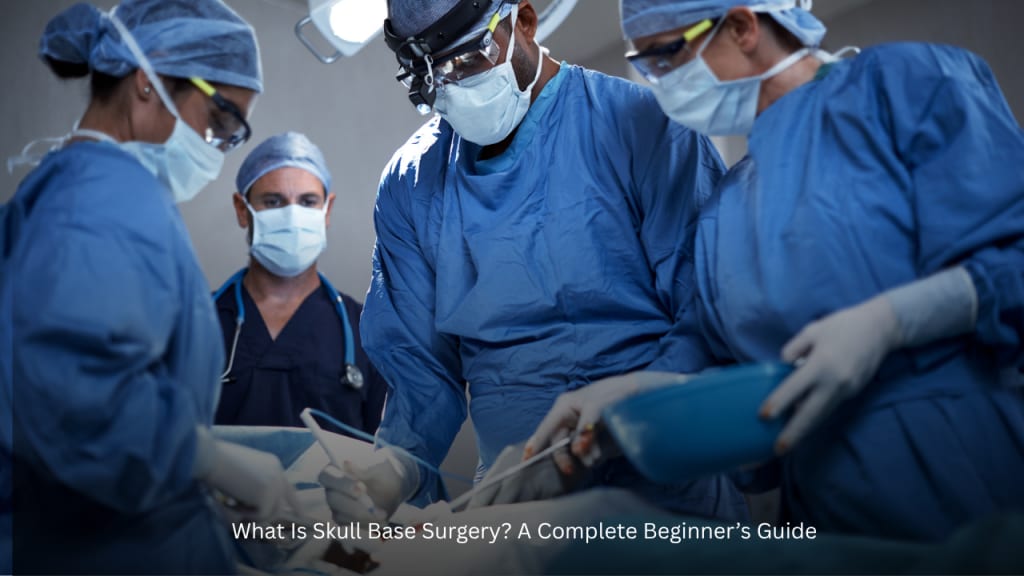
If your doctor has mentioned skull base surgery, you might be feeling a mixture of confusion and anxiety. The term sounds extreme, but understanding exactly what it means and why it exists can make the whole experience far less daunting.
This guide walks you through everything: what skull base surgery is, what conditions require it, the different types of procedures, what recovery looks like, and the questions you should be asking your surgical team.
What Is Skull Base Surgery?
Skull base surgery is a highly specialized area of neurosurgery focused on diagnosing and treating conditions that affect the bottom of the skull, which is the bony platform on which the brain rests. This region is called the skull base or cranial base, and it is one of the most anatomically complex areas of the human body.
The skull base contains multiple openings (called foramina) through which critical structures pass: the brainstem, major arteries, veins, and nearly all twelve cranial nerves that control everything from vision and hearing to swallowing and facial movement. Because of this density of vital anatomy, operating in this region demands extreme precision and specialized training.
What Conditions Does It Treat?
Skull base surgery addresses a wide range of growths, lesions, vascular abnormalities, and structural defects that arise in or near this region. These include:
Tumors
- Pituitary adenomas — the most common skull base tumor, arising from the pituitary gland and often causing hormonal or visual symptoms
- Meningiomas — slow-growing tumors arising from the membranes surrounding the brain
- Acoustic neuromas (vestibular schwannomas) — benign tumors on the nerve connecting the ear to the brain, causing hearing loss and balance problems
- Chordomas and chondrosarcomas — rare, locally aggressive tumors arising from bone
- Craniopharyngiomas — benign but locally destructive tumors near the pituitary stalk
- Nasopharyngeal carcinomas — cancers arising from the throat that can invade the skull base
Vascular Conditions
- Cavernous sinus aneurysms — bulges in major arteries near the skull base
- Arteriovenous malformations (AVMs) — abnormal tangles of blood vessels
- Carotid-cavernous fistulas — abnormal connections between arteries and veins
Other Conditions
- CSF (cerebrospinal fluid) leaks through the skull base
- Skull base fractures from head trauma
- Encephaloceles — brain tissue protruding through skull defects
- Chronic infections or abscesses of the skull base
Types of Skull Base Surgery
There is no single "skull base surgery", it's an umbrella term for many different procedures. The approach chosen depends on the location, size, and nature of the condition, as well as the patient's overall health.
- Endoscopic Endonasal: Surgery through the nose using a thin camera (endoscope). Minimally invasive, no external incisions. Gold standard for pituitary tumors.
- Craniotomy: A portion of skull is temporarily removed to access deeper structures. Used for complex tumors and vascular lesions.
- Transcranial: Accessing the skull base from above via a scalp incision. Several subtypes including bifrontal and orbitozygomatic approaches.
- Retrosigmoid: Accessing the posterior fossa behind the ear. Commonly used for acoustic neuromas and posterior skull base meningiomas.
- Translabyrinthine : Approach through the inner ear bones. Used for acoustic neuromas when hearing preservation is not the priority.
- Radiosurgery (SRS): Not conventional surgery — uses focused beams of radiation (Gamma Knife, CyberKnife) to treat some skull base tumors non-invasively.
Who Performs Skull Base Surgery?
One of the defining features of skull base surgery is that it almost always involves a multidisciplinary team. Because the skull base sits at the intersection of neurosurgery, ENT surgery, ophthalmology, and vascular surgery, patients benefit from surgeons from multiple specialties working together.
A typical skull base team may include:
- A neurosurgeon specializing in skull base and brain tumor surgery
- An ENT (ear, nose, and throat) surgeon or otolaryngologist, especially for endoscopic nasal approaches
- A neuro-ophthalmologist when vision is at risk
- A neuroradiologist to interpret complex imaging
- A neuro-anesthesiologist for specialized intraoperative management
- A radiation oncologist if radiosurgery or post-operative radiation is planned
Before Surgery: Diagnosis and Planning
The diagnostic workup for skull base conditions typically involves several types of advanced imaging:
- MRI (Magnetic Resonance Imaging) — the primary tool for visualizing soft tissue, tumors, and their relationship to nerves and vessels
- CT (Computed Tomography) — best for evaluating bone involvement and anatomical detail
- CT angiography or MR angiography — to visualize blood vessel involvement
- Hormonal blood tests — essential if a pituitary tumor is suspected
- Audiological testing — for lesions near the hearing and balance nerves
- Ophthalmologic evaluation — visual field testing if optic nerves are threatened
Intraoperative Monitoring
During skull base surgery, neurophysiologists continuously monitor cranial nerve and brain function in real time using techniques such as electromyography (EMG), somatosensory evoked potentials (SSEPs), and brainstem auditory evoked responses (BAERs). This monitoring helps surgeons avoid inadvertent nerve injury during the procedure.
Risks and Complications
All surgery carries risk, and skull base surgery, given the density of critical structures involved, is no exception. Understanding these risks helps patients make informed decisions and set realistic expectations.
Possible Risks
- Injury to cranial nerves (affecting vision, facial movement, hearing, or swallowing)
- CSF leak (leakage of spinal fluid through the nose or ear)
- Stroke or bleeding
- Infection (meningitis, wound infection)
- Hormonal deficiency (particularly after pituitary surgery)
- Incomplete tumor removal requiring further treatment
- Anaesthetic complications
Risk profiles vary significantly by tumor type, location, and surgical approach. In experienced hands at high-volume centers, serious complications are substantially less common. Always discuss your specific risk profile with your surgeon before proceeding.
Recovery: What to Expect
Recovery from skull base surgery depends heavily on the type of procedure performed. Here is a general overview:
- Endoscopic Endonasal Surgery (Minimally Invasive)
- Hospital stay: typically 2–5 days
- Return to light activity: 1–2 weeks
- Full recovery: 4–6 weeks for most patients
- Nasal congestion and crusting for several weeks is normal
- Avoid blowing nose, bending, or heavy lifting early in recovery
Open Craniotomy Approaches
- Hospital stay: typically 5–10 days
- Return to light activity: 4–6 weeks
- Full recovery: 2–6 months depending on complexity
- Fatigue is common and should be expected for weeks to months
Rehabilitation may involve speech therapy, vestibular physiotherapy (for balance), ophthalmology follow-up, or endocrinology care, depending on which structures were affected.
About the Creator
Fabio A. Frisoli
I’m Dr. Fabio A. Frisoli, a board-certified neurosurgeon at Atlantic Brain and Spine, specializing in brain tumors, skull base, and minimally invasive spine surgery, delivering advanced, patient-centered care.
Keep reading
More stories from Fabio A. Frisoli and writers in Education and other communities.
Early Signs and Symptoms of Brain Tumors You Shouldn’t Ignore
Key Takeaways Brain tumors can be benign or malignant — both require medical evaluation Early warning signs include persistent headaches, seizures, vision and speech changes, balance problems, and personality shifts Symptoms vary depending on where the tumor is located in the brain New-onset seizures in adults and sudden severe headaches require emergency care Gradual but persistent symptoms should prompt a doctor's appointment within days MRI is the primary tool for brain tumor diagnosis Early detection leads to better treatment outcomes and quality of life
By Fabio A. Frisoli4 days ago in Education
From Stove to Strategy: Steve Wolfe’s Guide to Scaling Your Food Business
Turning a home-cooked recipe into a thriving food business is exciting—but scaling it is a completely different challenge. Steve Wolfe, an entrepreneur who has navigated the path from kitchen experimentation to boardroom strategy, knows this firsthand. In this post, we’ll explore practical insights, human stories, and actionable steps to help food entrepreneurs grow their businesses without losing their soul.
By Steven Joseph Wolfe4 days ago in Education
Foraging Appalachia’s Wild Edibles
It's that time of year again and Appalachia offers a remarkable abundance for anyone willing to learn its seasonal gifts and practice careful gathering. Across ridges, holler's, stream-side's, and meadows, edible plants, berries, roots, and fungi appear through every part of year. Knowledge is key and teaches not only what can be eaten, but also how to gather with respect so that these resources remain available far into future.
By Tim Carmichael7 days ago in Feast



Comments
There are no comments for this story
Be the first to respond and start the conversation.