
Why Mexico’s Student Information System Market Is Growing Alongside Digital Education
Mexico’s student information system market is growing as schools adopt cloud platforms, analytics, and digital tools to improve administration and student outcomes.

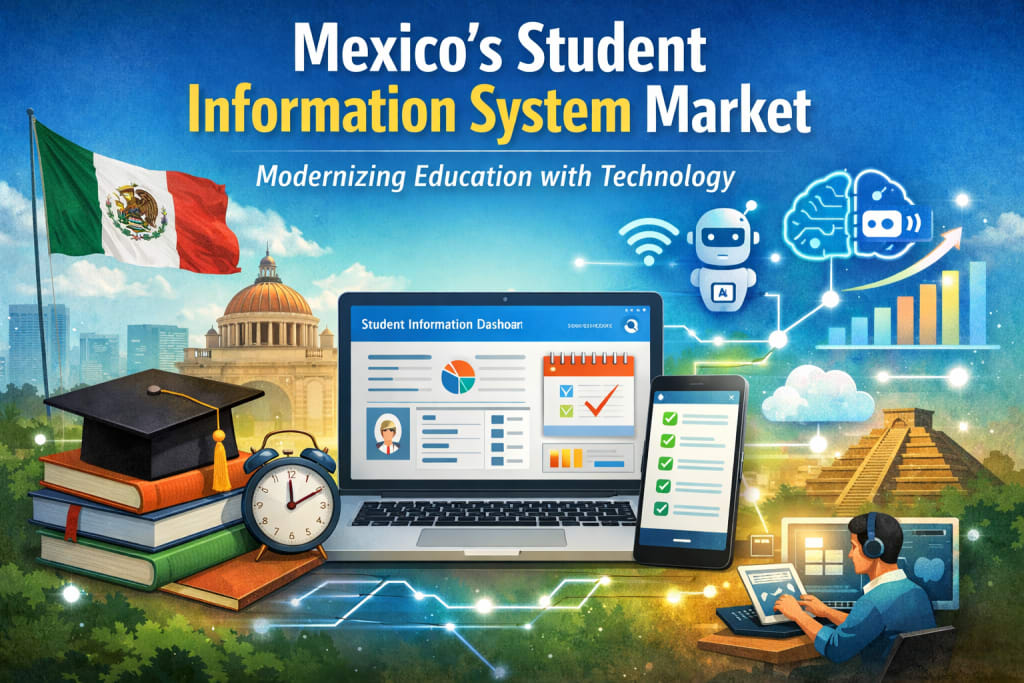
A modern education is less about classrooms‚ textbooks and tests‚ and more about information management‚ how schools track student attainment‚ and how they leverage technology to improve student outcomes․ This trend has recently begun reaching Mexico‚ where schools and universities are beginning to purchase student information systems that handle everything from admissions and attendance to billing‚ reporting and academic planning․
In 2024‚ the Mexico student information system market was valued at USD 163․50 million‚ and it is projected to reach USD 406․52 million by 2033‚ registering a CAGR of 10․65% during the forecast․ The growth factors include digital education reforms and initiatives undertaken by SEP‚ increasing demand for hybrid and remote learning‚ adoption of cloud-based and analytics-based platforms‚ and better integration with edtech and ERP solutions․
One of the big factors driving this market is that educational institutes are being asked to do more with their data․ Schools are no longer looking for simply a tool to keep records․ They want systems that would help them operate more effectively‚ be more responsive‚ and provide a better experience for students‚ teachers‚ and administrators․ The modern student information system is considered to be part of the operational backbone of the institution instead of merely being a back-office add-on․ This is particularly applicable in an environment of increasingly diverse digital learning models and methods․
According to the IMARC report‚ one of the driving trends in the student information systems market is the existing on-premise SIS systems shifting to cloud-native and SaaS products which are scalable‚ fault-tolerant‚ can be accessed remotely and have flexible pricing models․ They also observed that the whole of Mexico's cloud computing market is growing and that there is a demand for a system that covers all of enrollment‚ grading‚ attendance and finance․
That matters because institutions today are operating in a more complex environment than they were several years ago‚ facing the needs of hybrid learning‚ distributed administration and real-time reporting․ Legacy systems feel even more constrained․ In the cloud‚ institutions that want regular updates‚ less reliance on infrastructure‚ and a faster turnaround can more easily scale and‚ in practice‚ digitize administration․
Another trend is increased use of predictive analytics and other data analysis tools‚ with more schools using student information systems to mine student performance data for trends‚ identify students who may be falling behind‚ and enable more proactive interventions․ IMARC cited these kinds of tools from major software vendors‚ including AI-improved tools from PowerSchool and Ellucian such as contextual AI tools and predictive analytics dashboards․
This is where the market becomes particularly interesting‚ because student information systems are doing more than just collating data․ They're beginning to shape decision-making․ Early-warning tools‚ personalized academic pathways‚ and predictive planning models can help schools improve advising‚ better allocate resources‚ and support student retention․ These systems are more calculated than merely administrative in focus․
The market itself is broad enough to support multiple types of solutions․ For instance IMARC segments the market into solutions and services․ On the solutions side‚ the key products are enrollment‚ academics‚ financial aid and billing․ The key products on the services side are managed services and professional services․ The company segments on the basis of on-premise and cloud and K-12 and higher education end-users․ Regionally‚ the report found Northern Mexico‚ Central Mexico‚ Southern Mexico‚ and others․
However with a variety of institutions and a variety of use cases it is likely that vendors who can provide a path for customization‚ integration and ease of use will be better positioned as the market matures․ Educational environments can be diverse and administrative processes can differ greatly regardless of institutional type․ For instance‚ a K-12 network might have attendance and family communication prioritized‚ while a higher ed institution might have billing‚ scheduling‚ analytics‚ and student lifecycle tracking prioritized․ This is speculation based on the network segmentation in the report․
Other evidence for this trend can be seen in IMARC's news release of May 2025‚ in which the Mexican government announced that it would be opening 20 extra campuses in the 2025-2026 academic year through the UBBJ․ It is hoped that one day 300 campuses will be opened across the country․ The report states that in March 2025 Mexico's government announced an investment of MXN 2․5 billion into educational infrastructure across the country which would include 18 new high school campuses being opened in 12 states․ These trends are expected to increase demand for student information systems․
What makes this market interesting is that it lies at the intersection of education reform and digital transformation․ As institutions grow‚ modernize‚ and try to compete on student experience‚ the systems that manage academic and administrative information become increasingly more critical․ The future of education technology in Mexico‚ if not just about content distribution or teaching in virtual classrooms‚ has more to do with the way the platform runs things behind the curtain‚ which can be inferred from the market drivers and trends examined by IMARC․
For those interested in the history of education technology in Latin America‚ the Mexico student information system market provides an example of something more than just a story of software usage․ It is a story of software deployment as a planned asset for institutional growth‚ and how schools are adapting to a more connected‚ data-driven and digitally managed future․
About the Creator
michael matthew
I’m a market researcher passionate about understanding people, markets, and motivations. My work blends data analysis, consumer psychology, and strategic insight to help brands and businesses make informed, human-centered decisions.
Keep reading
More stories from michael matthew and writers in Education and other communities.
Why Mexico’s Cryptocurrency Exchange Market Is Growing So Fast
What makes Mexico particularly interesting is that this shift is playing out in parallel with a nascent fintech ecosystem‚ expanding mobile channels and increasing demand among the general population for digital financial services․ The crypto exchange story in Mexico is not just about tokens and speculation․ It is about access‚ innovation‚ and the next chapter of financial participation․
By michael matthew5 days ago in Trader
From Vision to Action: Executives Crafting a Strategy That Works
A vision statement can be a powerful source of inspiration, defining what an organization aspires to achieve. Yet, on its own, a vision is not enough to drive results. Many companies craft compelling statements that energize stakeholders but fail to produce measurable outcomes. The real challenge for executives lies in translating this aspirational language into concrete strategies that guide day-to-day operations and long-term growth.
By Yeasha Sobhana day ago in Education
What is Cryptocurrency? How does it Work
Over the past decade, the way people understand money has changed significantly. Instead of relying only on cash and banks, the world is shifting toward a faster and more connected financial environment. One of the key drivers of this transformation is cryptocurrency. Many people hear about it in news updates or investment discussions, but still wonder what it really means and why it matters today.
By Praveen Kumar4 days ago in Education




Comments
There are no comments for this story
Be the first to respond and start the conversation.