
Will Life Expectancy Reach 90 by 2030?
Exploring Medical Advances, Lifestyle Changes, and Global Trends Shaping the Future of Human Longevity

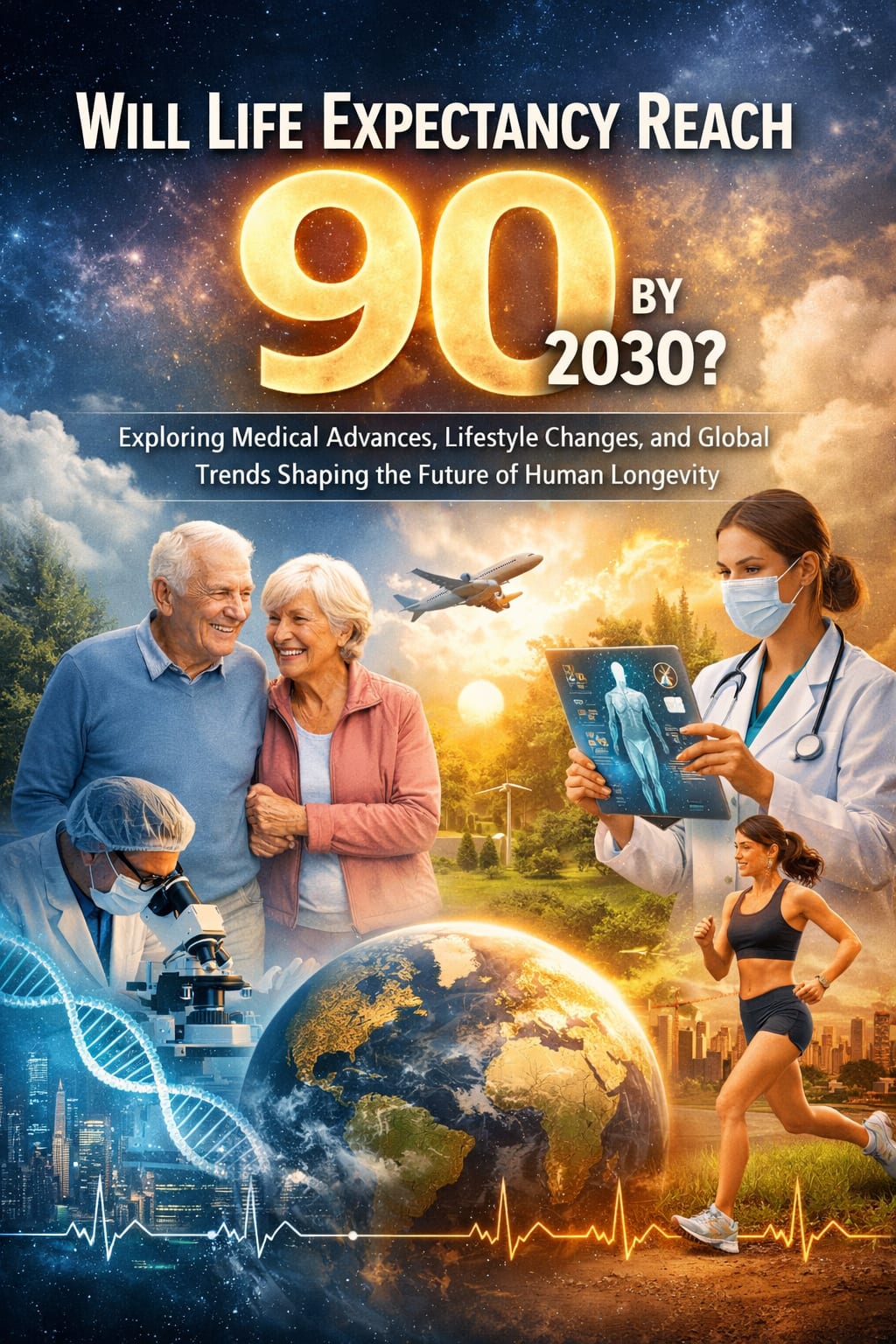
The idea that the average human life expectancy could approach 90 years by 2030 is both fascinating and ambitious. Over the past century, humanity has witnessed an extraordinary rise in life expectancy due to breakthroughs in medicine, improved living standards, and better awareness of health and hygiene. While reaching an average global life expectancy of 90 within such a short time frame may seem optimistic, the trends driving longevity suggest that we are steadily moving toward longer, healthier lives.
Historically, life expectancy has seen dramatic improvements. In the early 20th century, the global average life expectancy was around 30 to 40 years. Today, it exceeds 70 years in many parts of the world. This increase can largely be attributed to advancements such as vaccines, antibiotics, and improved maternal and child healthcare. Diseases that once claimed millions of lives—such as smallpox and polio—have either been eradicated or significantly controlled.
Looking ahead to 2030, several key factors could contribute to further increases in life expectancy. One of the most important is progress in medical technology. Innovations in areas such as artificial intelligence, personalized medicine, and genetic research are revolutionizing how diseases are diagnosed and treated. Early detection of conditions like cancer, heart disease, and diabetes allows for timely intervention, significantly improving survival rates.
Another major factor is the growing emphasis on preventive healthcare. People today are more aware of the importance of maintaining a healthy lifestyle. Balanced diets, regular exercise, and mental well-being are increasingly recognized as essential components of long-term health. Public health campaigns and digital health tools, such as fitness trackers and mobile health apps, are encouraging individuals to take proactive steps toward healthier living.
Nutrition also plays a vital role in extending lifespan. Access to healthier food options and increased knowledge about the benefits of balanced diets are helping reduce the prevalence of obesity and related diseases. At the same time, research into anti-aging foods and supplements continues to gain attention, with scientists exploring how certain nutrients can slow down the aging process at a cellular level.
However, the journey toward an average life expectancy of 90 is not without challenges. One significant issue is inequality. While developed countries enjoy higher life expectancies, many developing regions still struggle with poverty, limited healthcare access, and infectious diseases. For the global average to reach 90, improvements must occur across all regions, not just in wealthy nations.
Climate change is another factor that could impact future life expectancy. Rising temperatures, air pollution, and the spread of new diseases pose serious threats to global health. Addressing environmental issues will be crucial to ensuring that gains in longevity are not reversed.
Additionally, aging populations present both opportunities and challenges. As more people live longer, societies must adapt to meet the needs of older individuals. This includes improving healthcare systems, providing adequate social support, and creating opportunities for seniors to remain active and engaged. Advances in geriatric care and age-friendly infrastructure will play a key role in supporting longer lives.
Mental health is also an essential component of longevity. Loneliness, stress, and depression can have a significant impact on overall health and lifespan. Promoting strong social connections and mental well-being is just as important as addressing physical health.
While reaching an average life expectancy of 90 by 2030 may be ambitious on a global scale, it is already a reality in some regions and communities. Countries with advanced healthcare systems and high living standards are approaching or even surpassing this milestone for certain population groups. This suggests that, with the right policies and innovations, achieving such a goal is not entirely out of reach.
In conclusion, the possibility of life expectancy nearing 90 years by 2030 reflects the remarkable progress humanity has made in improving health and well-being. While challenges remain, ongoing advancements in medicine, technology, and lifestyle awareness provide strong reasons for optimism. The future of longevity will depend not only on scientific breakthroughs but also on our collective ability to ensure that these benefits are accessible to all.
About the Creator
Irshad Abbasi
Ali ibn Abi Talib (RA) said 📚
“Knowledge is better than wealth, because knowledge protects you, while you have to protect wealth.
Keep reading
More stories from Irshad Abbasi and writers in Feast and other communities.
Red Chili and Longevity
For centuries, red chili peppers have been a staple ingredient in cuisines around the world, especially in South Asia, Latin America, and parts of Africa. Known for their fiery taste and vibrant color, these small but powerful ingredients do more than just add heat to food. Increasingly, researchers are exploring whether consuming red chili peppers may actually contribute to a longer and healthier life.
By Irshad Abbasi about 8 hours ago in Feast
Pi Day Deals: Sweet Ways to Celebrate March 14 Every Year
Every year on March 14, something unusual happens across bakeries, pizza shops, and kitchens around the world. Math lovers smile, pie lovers celebrate, and people who never cared about numbers suddenly start searching for pie. That day is Pi Day. The date 3/14 matches the first digits of the famous mathematical constant 3.14, and over time it has grown into a celebration of food, curiosity, and simple joy. One of the biggest reasons people look forward to the day is the tradition of Pi Day deals. Restaurants and bakeries often offer pies, pizzas, and desserts at special prices. But Pi Day is not only about discounts. It is about gathering with friends, sharing food, and enjoying a small moment of fun built around a number that never ends.
By Muqadas khan4 days ago in Feast
Everyone Is Acting Normally Challenge Winners
In the Everyone Is Acting Normally challenge, something is clearly wrong, but no one stops to name it. Across the shortlist, that wrongness appears as resurrections, surveillance, disappearance, and denial, each treated as part of daily life.
By Vocal Curation Teamabout 4 hours ago in Resources




Comments
There are no comments for this story
Be the first to respond and start the conversation.