

No one checked the clock in Marrow Street anymore.
There was one, of course—high on the brick tower at the end of the road, its white face cracked like dry porcelain, its black hands frozen at 3:17. It had stopped years ago, though no one remembered when. Still, people looked at it sometimes, out of habit, like glancing at a sky that no longer held weather.
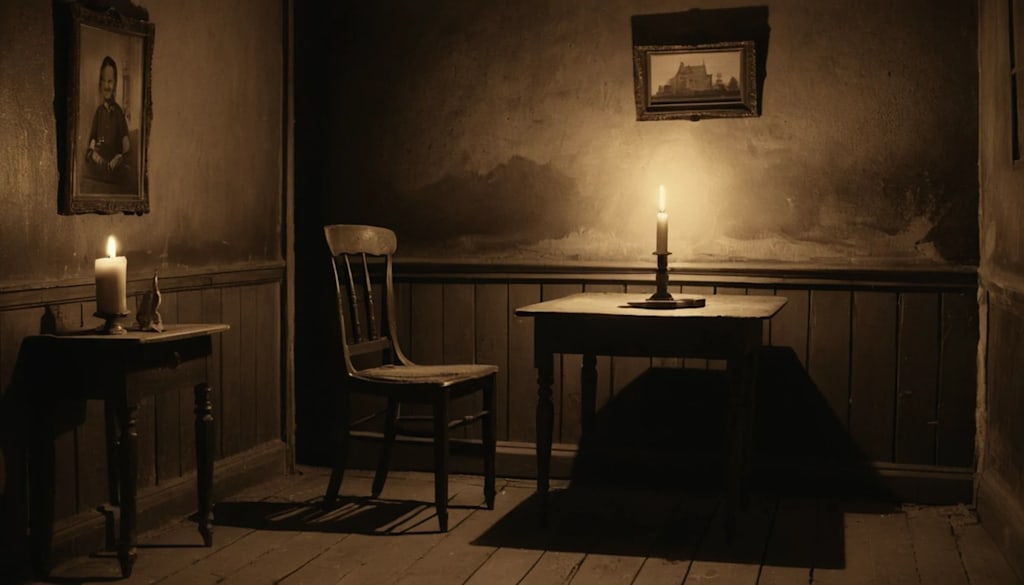
Mary kept her shop open with the door propped just enough to let in light but not enough to invite the wind. The bell above the door—small, brass, and slightly dented—hung silent. It had not rung in months.
Customers entered quietly. They always did.
A man stepped in now, closing the door behind him with deliberate care, as if it might complain if shut too quickly. Mary didn’t look up immediately. She let him take three steps onto the worn wooden floor. Only then did she raise her eyes.
“Afternoon,” she said.
He nodded, not speaking. His coat was damp at the hem, though the sky outside was clear. He removed it slowly and draped it over his arm instead of the hook by the door.
Mary watched that.
She turned and began arranging jars along the shelf—salt, dried herbs, small things people needed but never discussed. The man wandered between the narrow aisles, careful not to brush against anything. His fingers hovered over a row of glass bottles, then withdrew.
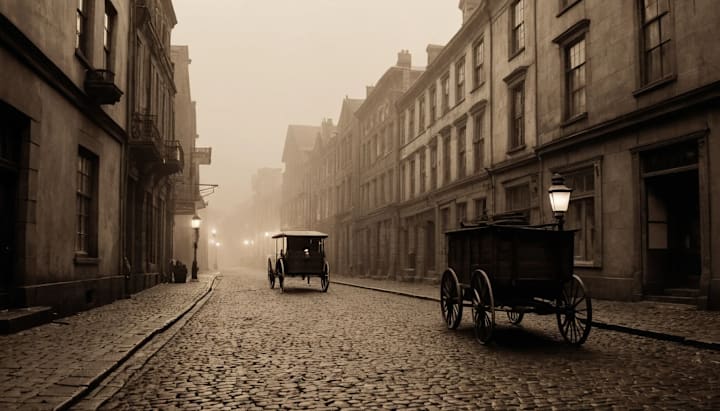
From outside, a cart rolled past. Its wheels made no sound on the cobblestones.
Mary’s hand paused mid-motion.
The man did not turn toward the window. He did not acknowledge it at all.
After a moment, Mary continued working.
He brought three items to the counter: a spool of thread, a tin of matches, and a small paper packet tied with twine. He placed them down one at a time, spacing them evenly, as though they might argue if too close together.
“Anything else?” Mary asked.
He shook his head.
She wrapped the items in brown paper, folding each corner with practiced precision. When she reached for the twine, her fingers hesitated, then tightened the knot twice instead of once.
The man noticed.
Neither of them commented.
He paid in coins, exact change, placing them flat on the counter rather than into her hand. Mary slid them into the drawer without counting.
“Take care,” she said.
He nodded again, picked up the parcel, and moved toward the door.
For a second—just a second—his hand lingered on the handle.
Mary’s breath caught.
Then he opened it slowly, stepped out, and closed it behind him without a sound.
The bell did not ring.
—
At dusk, the street emptied itself like a held breath released too carefully.
Windows were shuttered one by one. Lamps dimmed but never went fully dark. Doors were locked, then checked, then checked again. People moved with a kind of quiet urgency, finishing small tasks that could not be left undone.
Mary closed her shop last.
She swept the floor, though it was already clean. She wiped the counter, though no fingerprints marked it. When she reached the door, she paused, her hand resting just beneath the silent bell.
For a moment, she looked at it—really looked.
Then she stepped outside and shut the door behind her, easing it into place until the latch clicked as softly as possible.
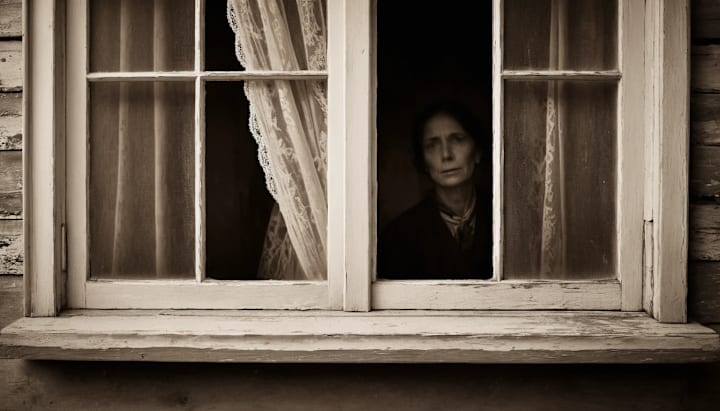
Across the street, old Joe was still awake. His silhouette shifted behind a thin curtain, pacing, stopping, pacing again. He did this every night.
Mary turned away.
The sky deepened into something heavier than night. Not darkness exactly—more like the absence of edges. Shapes blurred. Distances lost meaning.
From the far end of Marrow Street, something moved.
No one saw it.
No one looked.
Mary walked home with steady steps, her eyes fixed forward. She passed the tower without glancing up. She passed the alley where the bricks always seemed damp. She passed the place where the cobblestones dipped ever so slightly, like something beneath them had once tried to rise.
At her door, she stopped.
She listened.
There was nothing. Not wind, not insects, not even the faint creak of settling wood.
Only the silence.
She unlocked the door, slipped inside, and closed it quickly—but not abruptly. Never abruptly.
Inside, she lit a candle. The flame wavered, then steadied.
Mary sat at the small table by the window. She did not look outside. She never did, not after dusk.
Instead, she watched the flame.
Time passed.
It always did.
—
Sometime in the night, there came a sound.
Soft. Almost imagined.
A faint, metallic tremor.
Mary’s eyes snapped to the door.
She did not move.
The sound came again.
Not a knock. Not quite.
More like something brushing against the bell outside, testing it.
Mary’s fingers tightened around the edge of the table.
She held her breath.
The sound stopped.
Silence returned, thicker now, pressing against the walls.
Mary waited.
She did not stand. She did not speak. She did not go to the door.
Minutes passed. Or hours.
Eventually, the candle burned low, its flame shrinking until it guttered and went out.
Mary remained where she was, in the dark, her eyes open.
—
Morning came without announcement.
It always did.
Light seeped into the street as if it had been waiting just beyond reach. Doors opened. Windows unlatched. People stepped outside, blinking, stretching, resuming.
Mary opened her shop.
The bell above the door hung still.
She arranged her shelves, swept the floor, prepared for customers who would arrive without sound.
Across the street, Joe’s door remained closed.
Mary noticed that.
Others did too.
No one spoke of it.
The day went on.
A woman entered the shop, her face pale but composed. She selected a loaf of bread, a small jar of honey. At the counter, her hands trembled slightly.
“Sleep well?” Mary asked.
The woman nodded too quickly.
Mary wrapped the items carefully, tying the twine with a single knot this time.
“Take care,” she said.
The woman hesitated, then leaned in just enough to be heard without raising her voice.
“It almost rang,” she whispered.
Mary’s expression did not change.
The woman straightened, took her parcel, and left without another word.
The bell did not ring.

—
By afternoon, Joe’s door was open.
The house inside was empty.
No signs of struggle. No overturned furniture. No broken glass.
Just absence.
A few people passed by, slowing for a fraction of a second before continuing on. No one stepped inside. No one called his name.
By evening, the door was closed again.
By night, it was as if Joe had never lived there at all.
—
Mary stood behind her counter as the light faded once more.
Her hands moved automatically, aligning jars, folding cloths, preparing for a night that would come whether acknowledged or not.
She glanced at the bell.
Just once.
Then she looked away.
Outside, the street grew quiet.
Doors closed. Lamps dimmed. The world narrowed.
Mary locked her shop and stepped into the deepening dusk.
At the end of the street, the tower stood with its frozen clock, its unmoving hands marking a moment no one remembered.
Mary walked past it without looking.
Behind her, something shifted in the distance.
Ahead, her door waited.
She reached it, paused, and listened.
Nothing.
She opened it, stepped inside, and closed it gently.
The bell above her shop remained silent.
And in Marrow Street, as always, no one let it ring.
About the Creator
Algieba
Curious observer of the world, exploring the latest ideas, trends, and stories that shape our lives. A thoughtful writer who seeks to make sense of complex topics and share insights that inform, inspire, and engage readers.
Ping
Laughter at the beach tickles my ears, blending with the harmony of the crashing waves. Smiles on every beachgoer greet my gaze as the sun shines down upon us. The perfect day off. Away from the four walls of the office building located many miles away. Time to just lie back and enjoy the ocean view. My eyes close, allowing the gentle, serene waves to soothe my nerves and wash away thoughts of stress. Tension recedes from my muscles with each pat from the water on the shore while the sun kisses my dark skin. This is what they mean when they say tropical bliss.
By Iris Harrisa day ago in Fiction


Comments
There are no comments for this story
Be the first to respond and start the conversation.