
Book Review: "The Palace"by Gareth Russell (Pt. 4)
5/5 - Hampton Court changes yet again... but change isn't always good...

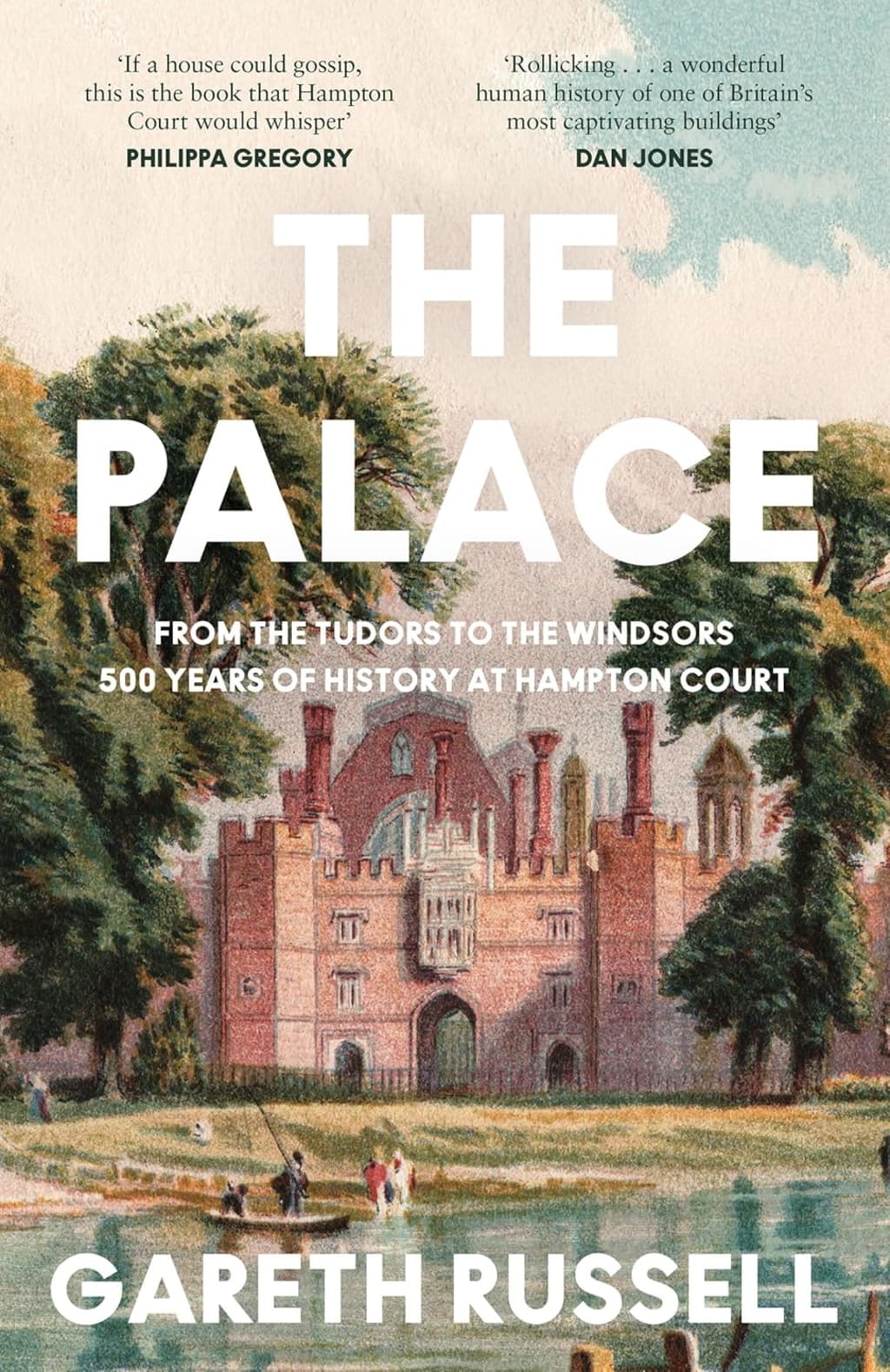
This review covers chapter 13 to chapter 17
***
Chapter 13 is the Queen's Bedchamber and covers the sicknesses of King James' wife - Anne. She is consumed by something after the birth of her last child, bleeding and pain is everywhere. But the doctor's don't actually know what it is: is it gout? is it malnutrition? is it something to do with her female reproductive organs? Who knows. Some diagnosed it as dropsy. But it is said that she still came about in public until she could no longer do so - still doing her public duty through intense amounts of pain and fever. Still decked out in jewels more expensive than entire cities in her country.
As we move through the next few chapters, we are presented with the English Civil Wars. Charles I is clearly way in over his head and he doesn't really have a lot of friends amongst the court. When he escapes Hampton Court, he is aptly brought back for execution. I have to feel a bit sorry for Charles I because this is a man who was raised so far removed from society that he was basically rammed with his own sense of ego from the day he was born. I'm not saying what he did was correct - it was horrifically wrong, but it was also predictable given the way he was raised.
The Puritan era was not much better though. Oliver Cromwell proved to be a king in everything but name and Hampton Court for a time, though it was quickly gotten rid of, was a squatting place with markets and random people walking about and living there. The Puritan Era underway meant Hampton Court made for an excellent place for entertainment and weddings once again - oh yeah, that definitely sounds like it was for the people. I don't know, I find Oliver Cromwell both a requirement for the time to reset everything and a man who was horrifyingly hypocritical. The author seems to agree with me: there's a certain weird ego about him which makes it impossible that he would be one of the people.
When the monarchy was restored, we see the marriage of Charles II and his wife, Catherine. I won't particularly lie to you when I say it is exactly what you think it is - the restoration is a time of extravagance and spending. It isn't an era where the royals held back and well, you can definitely see why certain people would write certain plays during this time. No seriously, I studied restoration theatre, you want to look some of this stuff up and see exactly how it reflects the royals and the ideas portrayed by the restoration royals. Hedonistic and unnecessarily sexual, this chapter was filled with absolutely no surprises.
James is a king which doesn't really need much discussion but King William III is a heavily political figure. Defeating the Catholic influence over England and 'burying' the divine right of kings. James was a Catholic and so, it was a bit shifty when this man was also supposed to be the protector of the Church of England too. He was a temporary measure and Mary II was definitely waiting in the wings to become Queen. That she did. Princess Anne was the person who started the rumour that her brother, also called James (the pretender) may have been a changeling child and of course, this was all happening around Hampton Court - the house of whispers. Princess Anne was obviously, James' half-sister and this was not a new concept. If someone didn't like you in Court, then be prepared to be the recipient of some wild accusations. Even if when you look at them, James doesn't look too much like his siblings (laughs).
When King James left the kingship, William III came into power with the rightful Queen, Mary II.
William and Mary assert their right as King and Queen of England through the changing of Hampton Court. New designs, new baroque ideas, new rooms and more. It is something of a modernisation, but also a change that is seemingly required in the old, unfashionable palace.

The author doesn't leave out any of the oddities and gossips that go on in the walls of the court. He doesn't leave out the monetary problems, the heirs and who they are and of course, the way in which the politics that went on around the country rippled through the entertainment and the (as known today) parasite class to become something of a puppet rule. William of Orange probably though, had his wits about him and worked with the basic presumption that a Catholic couldn't be the head of a Protestant Church. The conforming the faith was therefore at the forefront, even though the divine right of kings was something of the past. Was it really something of the past though? Of course not.
We'll move through the next few chapters with the understanding that we are about to see the monarch modernise, again we see the puppet rulers they become. That of course, is not before the grandiose Queen Victoria, a ruler that would not accept puppet rule but an image of England as a changing world. One thing you must notice that it is always England's queens that move the country through grand and extreme changes. The long, driving reign of queens have been the cornerstones of Great British production and revolution.
About the Creator
Annie Kapur
I am:
🙋🏽♀️ Annie
📚 Avid Reader
📝 Reviewer and Commentator
🎓 Post-Grad Millennial (M.A)
***
I have:
📖 300K+ reads on Vocal
🫶🏼 Love for reading & research
🦋/X @AnnieWithBooks
***
🏡 UK
Keep reading
More stories from Annie Kapur and writers in Geeks and other communities.
Book Review: "The Palace"by Gareth Russell (Pt. 3)
This review covers chapter 7 to chapter 12 *** We're carrying on with our review of The Palace by Gareth Russell and I cannot lie, I am devouring this book so thoroughly I might just go back and read the whole thing again. Chapters are named after rooms, whispers are carrying gossip from chamber to chamber, ladies in waiting are also ladies of intrigue, there's so much to digest. I love Gareth Russell's writing as well, it makes for such interesting reading as I feel like I could shut my eyes and watch Edward VI participating in jousts and games in a place like Hampton Court, made for entertainment.
By Annie Kapura day ago in Geeks
Goodbye, Mr. Duvall
It is turning out to be an interesting year. I was in the middle of teaching a class when a pop-up appeared on the screen announcing the death of Mr. Robert Seldon Duvall (yes, that was his full name). I was in the middle of a discussion on the obsession we have with winning when it comes to sports (the Winter Olympics was a theme), and I felt as though things were coming full circle. We had already lost Gene Hackman last year, and along with that titan, it feels though one particular golden age has closed off to be replaced by...?
By Kendall Defoe 24 days ago in Geeks
Iran Releases Epstein Files:
Introduction The controversy surrounding the Epstein files has once again captured global attention. These documents relate to the criminal activities and powerful connections of American financier Jeffrey Epstein, who was accused of operating a large international sex-trafficking network involving underage girls. In recent months, rumors and reports have circulated online claiming that Iran has released sensitive information related to these files, sparking intense debate and speculation across political and media circles worldwide.
By shaoor afridi4 days ago in Geeks




Comments (1)
Some of the quotes and your review make me tempted by this