
Frida Kahlo’s Pain on Canvas — How a Devastating Accident Turned Her Body Into Her Most Shocking Artwork
From shattered bones to haunting self-portraits, the truth about how Frida Kahlo transformed unbearable physical pain into some of the most iconic, medically precise art in history

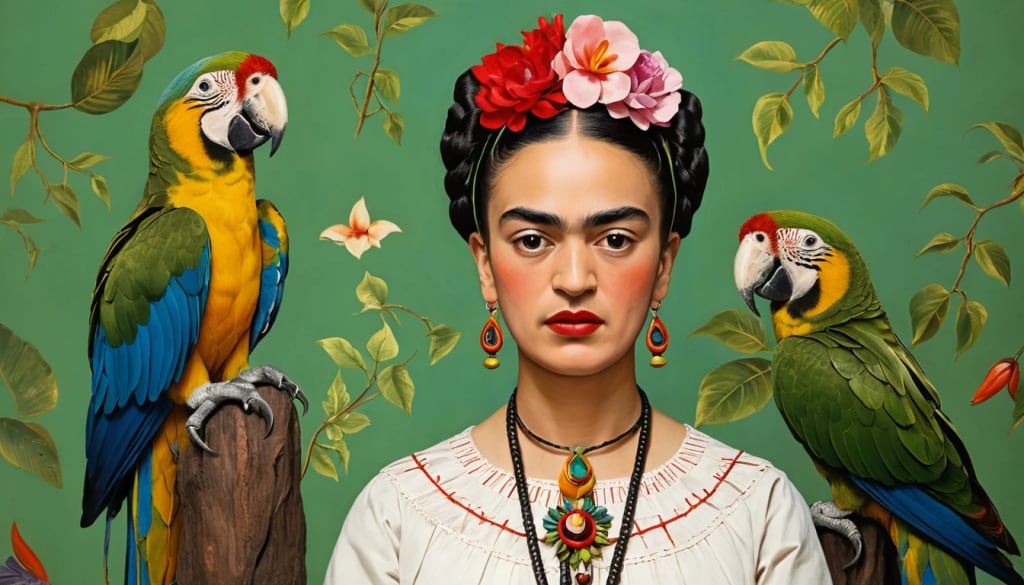
Few artists in history have managed to fuse personal tragedy, raw emotion, and visual genius as powerfully as Frida Kahlo. Born in 1907 in Coyoacán, Mexico, Kahlo’s life was defined by suffering from an early age. She contracted polio at age six, which left her right leg thinner than the left and caused lifelong health challenges. But it was the catastrophic bus accident she suffered at 18 that would define both her life and her artistic legacy. This accident, a collision with a streetcar that shattered her spine, pelvis, ribs, and legs, is often cited in biographies. Yet the full extent of how it transformed her art — literally making her body a map of her suffering — remains shocking to most who study her life.
The bus accident left Kahlo hospitalized for months, enduring over 30 surgeries throughout her life. But unlike many who might have retreated from the world, Frida turned inward — and into paint. Her diary, letters, and paintings reveal a woman confronting the immediacy of pain, mortality, and bodily limitation in ways that were unprecedented in early 20th-century art. Pain was not just metaphorical; it was anatomical, visceral, and often graphically literal.
One of the most shocking aspects of her work is how directly she depicted her injuries and medical procedures. For example, in paintings like The Broken Column, Kahlo portrays herself with a split torso held together by a crumbling ionic column, her spine visible in horrifying detail. Nails pierce her face and body, while tears streak her cheeks, expressing both agony and the isolation of her suffering. Art historians note that such depictions are almost medical in their precision, as though she were drawing not just for aesthetic or emotional effect but as a literal documentation of her trauma.
Kahlo’s decision to integrate her medical reality into her art was both shocking and revolutionary. She didn’t flinch from the grotesque or the painful; she embraced it. Her paintings became a direct communication of her physical and psychological pain, making viewers feel the impact of her accidents in ways few artists had ever dared. Works like Henry Ford Hospital depict a miscarriage and bloodied medical imagery, while Without Hope portrays her lying in a hospital bed, skeletal braces around her legs, conveying the immobilization and despair she endured. In many ways, her canvas became her hospital bed, her brush her scalpel, dissecting herself emotionally and physically before the viewer.
Beyond the literal, Kahlo’s art captures the intersection of body, identity, and culture. She combined traditional Mexican folk art with personal trauma, creating a visual language that was intensely private yet universally resonant. The shocking power of her work lies not only in the depiction of pain but in how she confronted mortality, gender, and disability with courage, humor, and an unflinching gaze. Many of her self-portraits are studded with symbols: monkeys, skeletons, plants, and blood — all acting as witnesses to the toll her body endured.
Interestingly, Frida’s art wasn’t merely cathartic; it was also politically and socially charged. She used her body and injuries to comment on Mexican identity, colonial history, and the female experience of suffering. Her work merges the personal with the political in ways that continue to influence contemporary art, feminism, and disability studies. The idea that one could use extreme bodily trauma as both aesthetic and cultural commentary was shocking then — and remains striking now.
What makes Kahlo’s story even more surprising is her resilience in the face of unending medical crises. She underwent countless surgeries, wore steel corsets to stabilize her spine, and endured constant pain. Yet she produced over 140 paintings, nearly all with her signature theme of self-exploration and bodily representation. Each piece is a testament to how an individual can turn devastating suffering into creativity, artistry, and an enduring cultural legacy.
Modern viewers are often startled by the clinical accuracy with which Kahlo rendered her injuries. It’s as if she wanted to ensure no one misunderstood the reality of her pain. In a pre-photography era, when intimate portrayals of injury were rare, her art acted almost as a forensic record of the human cost of trauma. This literalness, paired with surreal symbolism, continues to draw attention from both art lovers and medical historians alike.
Her life also forces reflection on the psychological toll of chronic pain. Kahlo was notoriously candid about her depression, her miscarriages, and her volatile relationships, particularly with Diego Rivera. Her work serves as an unvarnished testament to the intertwining of body, mind, and art — and the shocking reality that creativity can sometimes emerge from the most extreme suffering.
Frida Kahlo’s legacy is a reminder that the human body is both fragile and a canvas for expression. Her work shocks, informs, and inspires because it is unflinchingly honest, deeply personal, and historically unprecedented. In an age where artists often abstract suffering or sanitize trauma for audiences, Kahlo’s paintings remain a raw, vivid, and almost clinical testament to living with pain.
Frida Kahlo’s life and art show us that genius is sometimes inseparable from suffering. A single bus accident — an event that shattered her spine and pelvis — defined much of her adult existence. Yet she transformed that trauma into art so literal and medically accurate that some of her paintings could almost serve as diagrams in a medical textbook. That is the shocking, remarkable, and enduring truth about Frida Kahlo: a woman who turned the unbearable into beauty, and whose canvas still haunts and educates us more than a century later.
About the Creator
Algieba
Curious observer of the world, exploring the latest ideas, trends, and stories that shape our lives. A thoughtful writer who seeks to make sense of complex topics and share insights that inform, inspire, and engage readers.
The Night Polo of Emperor Akbar: When a Glowing Ball Lit Up the Mughal Game
Among the many fascinating innovations associated with the Mughal Empire, one lesser-known yet remarkable story involves the love of sport displayed by the great emperor Akbar. Known for his administrative brilliance, military strength, and cultural openness, Akbar was also passionate about physical games—especially the ancient sport of polo, known in South Asia and Persia as chogan or chaugan. One of the most intriguing legends about him is that he introduced a glowing ball so the game could be played at night.
By Irshad Abbasi about 14 hours ago in History



Comments
There are no comments for this story
Be the first to respond and start the conversation.