
How Mughal and Ottoman Rulers Celebrated Eid
A glimpse into the grandeur, generosity, and cultural richness of Eid festivities in two of history’s most powerful empires

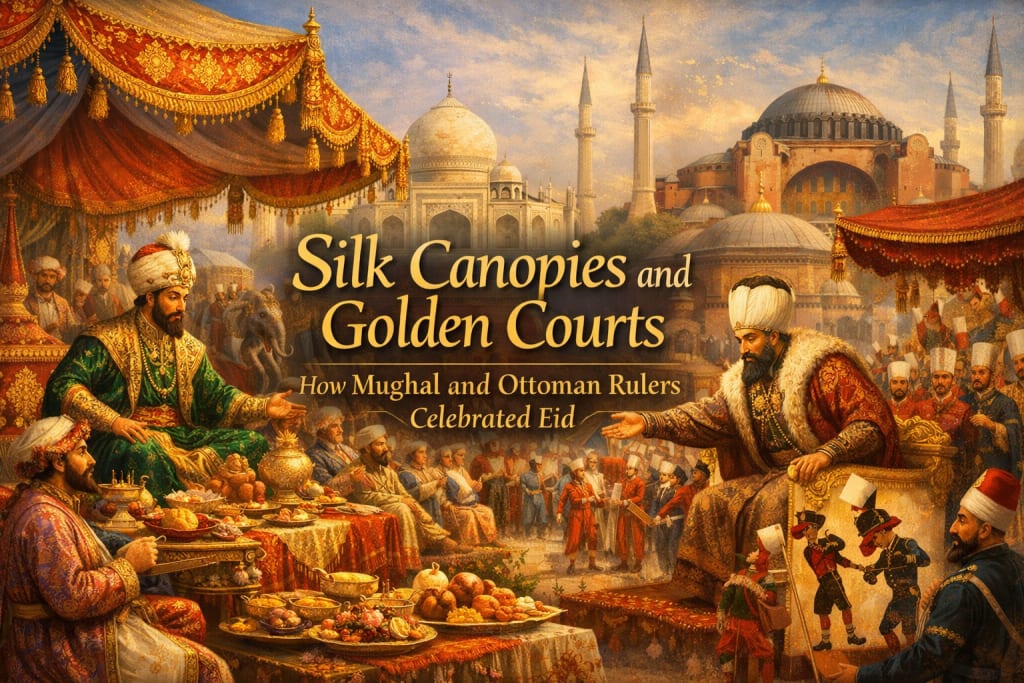
Eid, one of the most important Islamic festivals, has always been a time of joy, gratitude, and communal harmony. While today it is celebrated with prayers, feasts, and family gatherings, in the courts of the Mughal and Ottoman empires, Eid was an event of extraordinary splendor. These powerful dynasties transformed the religious occasion into a grand display of wealth, culture, and political authority—without losing its spiritual essence.
In the Mughal Empire, particularly during the reigns of emperors like Akbar, Jahangir, and Shah Jahan, Eid celebrations were marked by elaborate preparations. The day would begin with the emperor attending Eid prayers, often held in vast open grounds known as Eidgahs. Dressed in luxurious robes made of silk and brocade, adorned with precious gems, the emperor would be accompanied by nobles, courtiers, and soldiers in a grand procession.
After the prayers, the royal court would come alive with festivities. Magnificent shamianas—large ceremonial tents—made of fine silk and embroidered with gold and silver thread were erected in palace gardens. These canopies provided shade for nobles and guests, creating an atmosphere of elegance and comfort. The court was decorated with flowers, carpets, and intricate designs, reflecting the refined aesthetic of Mughal culture.
Feasting was central to Eid celebrations. Royal kitchens prepared an array of dishes, from rich biryanis and kebabs to sweet delicacies like sheer khurma. Food was not only served to the elite but also distributed among the poor. Charity was an essential part of the celebrations, as emperors sought to demonstrate their generosity and fulfill their religious duties. Gifts, including gold coins, clothes, and food, were distributed to servants, soldiers, and common citizens.
Entertainment played a major role in Mughal Eid festivities. The court hosted performances of music and dance, poetry recitations, and theatrical shows. Elephant fights, polo matches, and other traditional sports were organized to amuse the audience. These events were not merely for enjoyment—they also showcased the empire’s strength and cultural sophistication.
Meanwhile, in the Ottoman Empire, Eid—known as Bayram—was celebrated with equal grandeur, particularly in cities like Istanbul, the imperial capital. The Ottoman sultans, such as Suleiman the Magnificent, followed a ceremonial routine that blended religious devotion with imperial protocol.
The day began with the sultan attending the Bayram prayer at a grand mosque, often the Sultan Ahmed Mosque or other imperial mosques. The procession to the mosque was a spectacle in itself. Soldiers in uniform, court officials, and musicians formed a majestic parade, while the sultan rode in regal attire, symbolizing both piety and power.
Following the prayers, the sultan would return to the palace, where an official greeting ceremony took place. Known as the “Bayramlaşma,” this event allowed high-ranking officials, ambassadors, and members of the court to pay their respects to the ruler. In return, the sultan often presented gifts, robes of honor, and monetary rewards.
Like their Mughal counterparts, Ottoman rulers emphasized charity during Eid. Food was distributed to the poor, prisoners were sometimes pardoned, and public kitchens served meals to thousands. This reinforced the image of the sultan as a just and benevolent leader.
Public celebrations were equally vibrant. Markets and streets were decorated, and people wore their finest clothes. Entertainment included music, storytelling, shadow plays, and fairs. In some cases, large public gatherings featured acrobats, jugglers, and mock battles, creating a festive atmosphere throughout the city.
Both empires used Eid as an opportunity to strengthen social bonds and reinforce political legitimacy. By combining religious observance with public generosity and cultural expression, Mughal emperors and Ottoman sultans created celebrations that were both spiritually meaningful and visually magnificent.
In essence, Eid in the Mughal and Ottoman courts was far more than a religious festival—it was a reflection of imperial identity. The silk canopies, golden decorations, lavish feasts, and lively entertainment all spoke of a world where faith and power intertwined seamlessly. Even today, these historical celebrations continue to inspire awe, reminding us of a time when festivals were not only observed but transformed into grand spectacles of unity, generosity, and cultural brilliance.
About the Creator
Irshad Abbasi
Ali ibn Abi Talib (RA) said 📚
“Knowledge is better than wealth, because knowledge protects you, while you have to protect wealth.
Keep reading
More stories from Irshad Abbasi and writers in History and other communities.
The Turkish City Transformed by “Green Gold”
In the western region of Turkey lies the ancient city of Ayvalık—a place where history, culture, and nature intertwine. Once a modest coastal settlement, Ayvalık has experienced a remarkable transformation over centuries, largely due to what locals proudly call “green gold”: olives.
By Irshad Abbasi 6 days ago in History
The Irony of Flying While We Bomb the "World's Greatest Terror Regime"
Ah, the irony of flying at this moment in time as the United States is simultaneously bombing Iran - the nation officials have insisted for decades is "The World's Greatest Terror Regime" - while the TSA is on a go-slow, courtesy of a funding squeeze that's left its officers unpaid, quitting in droves, and turning checkpoints into something like slow-moving bread lines.
By Scott Christenson🌴7 days ago in Humor




Comments
There are no comments for this story
Be the first to respond and start the conversation.