
Iran war: What is happening on day 13 of US-Israel attacks?
Cyberattacks, tensions in the Strait of Hormuz and rising oil prices are deepening the global consequences of the war

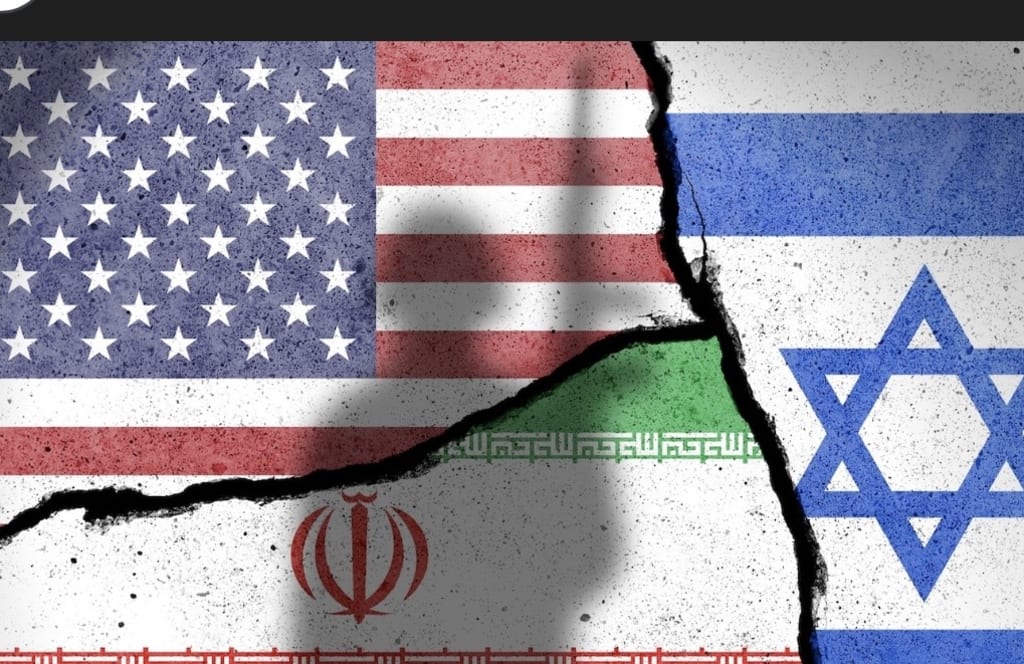
The United States and Israeli strikes on Iran continue, as Tehran has stepped up attacks to disrupt energy markets, triggering a spike in oil prices.
According to Iran’s representative to the United Nations, Amir Saeid Iravani, at least 1,348 civilians have been killed as the war entered its 13th day on Thursday.
Escalation Leading to the 2026 War
The road to the current war did not begin suddenly. Instead, it developed through a series of escalating incidents between Israel and Iran throughout 2024 and 2025.
In June 2025, Iran launched a large-scale missile and drone attack against Israel after Israeli strikes targeted Iranian nuclear and military facilities. More than 150 ballistic missiles and over 100 drones were reportedly used in the attack, though many were intercepted by Israeli air defense systems. 
This confrontation, sometimes referred to as the “Twelve-Day War,” significantly increased tensions in the region and drew the United States further into the conflict. The U.S. also conducted strikes against Iranian nuclear facilities during this period, claiming the attacks were necessary to prevent Iran from developing nuclear weapons. 
Although a temporary ceasefire followed, the underlying tensions remained unresolved. Diplomatic negotiations between Iran and the United States continued into early 2026 but ultimately failed to produce a long-term solution.
⸻
Operation Lion’s Roar and the Start of the 2026 War
The most dramatic escalation occurred on February 28, 2026, when Israel and the United States launched a coordinated military operation against Iran known as Operation Lion’s Roar. The operation involved hundreds of airstrikes targeting Iranian military bases, missile systems, air defenses, and nuclear facilities. 
The strikes were carried out across multiple Iranian cities, including the capital Tehran. Explosions were reported throughout the country as aircraft and missiles targeted strategic sites. The attack was one of the largest military operations conducted against Iran in modern history.
One of the most shocking outcomes of the strikes was the death of Iran’s Supreme Leader, Ayatollah Ali Khamenei, who was reportedly killed during the attacks along with several other senior officials. 
The United States and Israel argued that the operation was necessary to prevent Iran from developing nuclear weapons and to weaken its military capabilities. However, critics argued that the attack violated international law and could destabilize the entire Middle East.
⸻
Iran’s Retaliation
Following the strikes, Iran responded with a massive wave of retaliatory attacks against Israel and U.S. military installations across the Middle East.
Iran launched hundreds of drones and ballistic missiles targeting Israeli territory as well as American military bases in countries such as Qatar, Bahrain, Kuwait, Iraq, and the United Arab Emirates. 
In addition to direct missile attacks, Iranian-backed groups across the region also became involved. Hezbollah fighters in Lebanon resumed fighting along Israel’s northern border, while other allied groups launched attacks against U.S. and Israeli interests.
The conflict quickly expanded beyond a single battlefield, affecting multiple countries and military bases across the Middle East.
⸻
The Strait of Hormuz Crisis
One of the most significant consequences of the war has been the disruption of global energy supplies.
Iran warned that it could block the Strait of Hormuz, one of the world’s most important shipping routes for oil and natural gas. Approximately 20% of the world’s oil supply passes through this narrow waterway.
As tensions escalated, several oil tankers were attacked and shipping traffic dropped dramatically. At one point, tanker traffic fell by about 70%, and eventually nearly all commercial shipping stopped passing through the strait due to security risks. 
This disruption caused oil prices to surge dramatically. Global markets reacted with panic, and the price of Brent crude oil rose above $100 per barrel for the first time in several years. The situation created fears of a global energy crisis similar to the oil shocks of the 1970s.
⸻
Civilian Casualties and Humanitarian Impact
The war has also had devastating consequences for civilians.
Reports indicate that thousands of civilians have been killed or injured during the bombing campaigns and retaliatory strikes. Iranian officials have claimed that many civilian sites, including hospitals and schools, have been damaged or destroyed. 
Additionally, cultural and historical sites in Iran have suffered damage due to nearby explosions. Several heritage sites in cities such as Tehran and Isfahan have reportedly been affected by shockwaves and debris from bombings. 
Humanitarian organizations have warned that continued fighting could create a major refugee crisis in the region, with millions of people potentially forced to flee their homes.
⸻
International Reaction
The international community has responded with concern and calls for de-escalation.
Russia and several other countries have urged the United States and Israel to halt their military operations and pursue diplomatic negotiations instead. 
The United Nations has also expressed alarm about the conflict and warned that it could spiral into a much larger regional war if it continues.
Some countries have supported the U.S. and Israeli actions, arguing that Iran’s nuclear program poses a serious threat to international security. Others have strongly condemned the strikes, saying they violate Iran’s sovereignty and could lead to catastrophic consequences.
⸻
Political Reactions Inside the United States
The war has sparked intense debate within the United States itself.
Supporters of the military action argue that confronting Iran was necessary to prevent the development of nuclear weapons and to protect U.S. allies in the region.
However, critics have questioned the legality and strategy of the attacks, arguing that they could drag the United States into another long and costly war in the Middle East.
Large protests have taken place in several American cities, with demonstrators calling for an end to the war and urging diplomatic solutions instead of military action. 
The political divide reflects broader disagreements about U.S. foreign policy and the role of military force in international conflicts.
⸻
Military Situation on the Ground
As the war continues, neither side has achieved a decisive victory.
Israel and the United States have conducted extensive airstrikes targeting Iranian infrastructure and military capabilities. However, analysts note that there is no guarantee that these attacks will lead to the collapse of Iran’s government or significantly weaken its military power. 
Iran, meanwhile, continues to launch missiles and drones against Israeli and U.S. targets while mobilizing allied groups across the region.
Military experts warn that the conflict could drag on for months or even years if diplomatic solutions are not found.
⸻
Economic and Global Consequences
The war has had major economic consequences worldwide.
Energy markets have been particularly affected due to the disruptions in the Persian Gulf. Rising oil prices have contributed to inflation in many countries and increased costs for transportation, manufacturing, and energy.
Financial markets have also experienced volatility as investors react to the uncertainty created by the conflict.
Beyond economics, the war has also raised fears about the potential use of advanced weapons, including cyber warfare, drones, and possibly even nuclear weapons if tensions escalate further.
⸻
Prospects for Peace
Despite the ongoing violence, there are some signs that diplomatic efforts may still play a role in ending the conflict.
Iran’s leadership has stated that the war could end if certain conditions are met, including guarantees that the United States and Israel will not launch future attacks and compensation for damages caused during the war. 
However, reaching such an agreement will be extremely difficult given the deep mistrust between the parties involved.
Negotiations would likely require mediation by international organizations or neutral countries, as well as significant compromises from all sides.
⸻
Conclusion
The war between the United States, Iran, and Israel represents one of the most dangerous geopolitical crises in the modern era. What began as a long-standing rivalry over nuclear weapons and regional influence has escalated into a direct military confrontation with global consequences.
The conflict has already caused thousands of casualties, damaged critical infrastructure, disrupted global energy markets, and increased the risk of a wider regional war. While military operations continue, the possibility of diplomatic negotiations remains uncertain.
Ultimately, the future of the conflict will depend on whether the involved nations choose continued escalation or seek a path toward peace through dialogue and international cooperation.
If no solution is found, the war could reshape the political landscape of the Middle East and affect global stability for years to come.
About the Creator
Keep reading
More stories from Sorea Cata and writers in History and other communities.
The War in Iran (2026): Causes, Developments, and the Latest Events
Escalations before the 2026 war The Middle East experienced several escalating conflicts between 2023 and 2025. Iran and Israel exchanged missile strikes and cyberattacks, while Israel conducted airstrikes against Iranian military infrastructure in Syria and other locations.
By Sorea Cata5 days ago in History
The London Smog of 1952: The "Great Smog" that killed 12,000 people in four days of absolute, yellow darkness.
The taste of a copper penny coated in rotten egg yolk. That was the first warning. It was Friday, December 5, 1952. A blind man led a sighted businessman across Euston Road, tapping his white cane against the invisible curb. The businessman couldn't see his own shoes. The air had turned into a thick, yellowish-green soup that smelled of burning hair and raw sulfur. It was not a fog. It was an executioner. Over the next four days, twelve thousand Londoners would choke to death in their own beds, murdered by the very fireplaces they lit to keep warm.
By The Chaos Cabinet2 days ago in History
Becca
"Everything is so... flat." Denille said stupidly as she looked around her new neighborhood. She looked around at the muted desert where even the smallest sign of life seemed to have given up. The plant life was shrubs that were half cooked by the heat and where there should have been a lawn, a mess of white rocks laid glistening in the sun. Even the sky looked stretched thin, like the sun had ironed it smooth. She’d moved from Riverside, where at least there were hills, but here in Barstow, everything felt baked and brittle.
By Sara Wilson8 days ago in Fiction



Comments
There are no comments for this story
Be the first to respond and start the conversation.