
The American Involvement in the Pacific and the Far East
Remembering How the USA Won the War in the Pacific
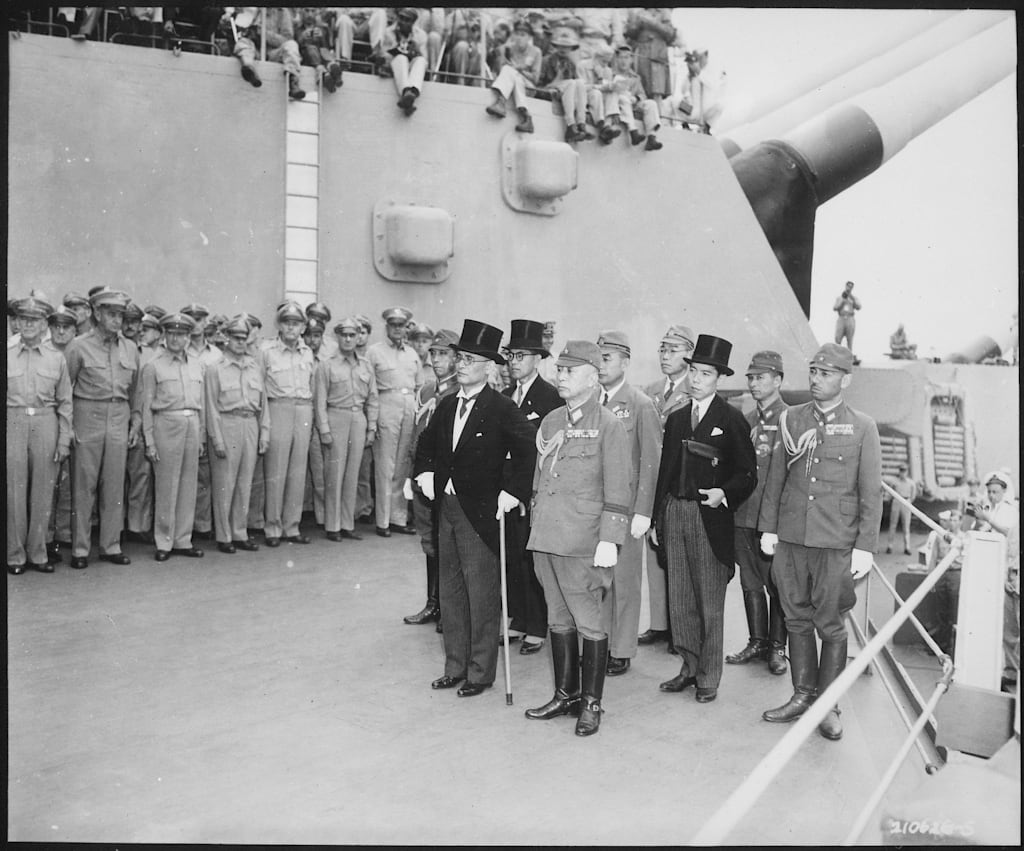
The United States involvement in the war generally came as a result of tensions in the Pacific and Far East with the Japanese Empire. Japanese advances into China had concerned the West, in addition to the Japanese withdrawal from the League of Nations during the 1930s. As such, the United States and others began to freeze exports to Japan in the early 1940s.
This US trade embargo had some impact. Oil, especially, was something that the Japanese imported, as there was precious little oil in Japan. If the embargo continued, the Japanese could potentially run their oil supplies dry. Any further negotiation with the United States would probably require Japanese withdrawal from most of China. The Japanese felt that war with the United States was a risk worth taking to expand their empire in the Pacific, gain many additional raw materials, and, in addition, the oil supplies of the Philippines were an obvious target.
With the Europeans preoccupied in Europe, the US naval presence in the Pacific was the main obstacle to future Japanese advances in the Pacific. More specifically, the US Fleet stationed at Pearl Harbor included up to eight battleships and four aircraft carriers after Roosevelt had reinforced the harbor with many additional warships. A single large airstrike on this fleet could potentially wipe most of it out.
As such, Japanese plans for Pearl Harbour were drafted. With their carrier fleet the Japanese would approach Pearl Harbor and then target the battleships, aircraft carriers, aircraft, and oil depots at Pearl Harbor. In December of 1941, the Japanese had reached their targets and delivered their payloads. All the battleships at Pearl Harbor were hit to some extent, and the Japanese did enough to effectively sink five of them. Hundreds of US aircraft were also wiped out. Fortunately for the Americans, their aircraft carriers were not in port during the raid. In addition to this, plans for a third Japanese sortie were abandoned, which may well have spared the oil depots at Pearl Harbour.
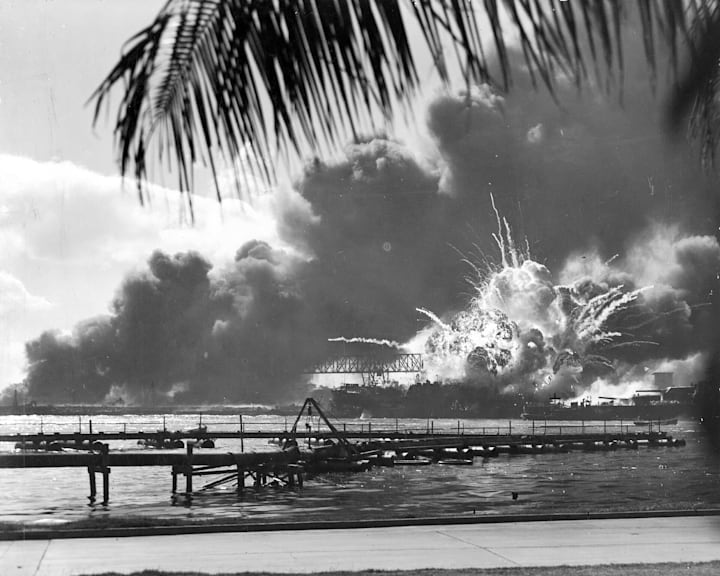
After this, the Japanese and the United States formally declared war on each other. Now, the war in the Pacific had begun, and the United States was left to ponder how the Japanese had bombed Pearl Harbor without being detected. They were soon joined by European allies such as Britain, which had a notable military presence in Singapore.
Months after Pearl Harbor, the Japanese had gained the advantage. Japanese advances in the region overran European colonies in the Pacific, including the British stronghold of Singapore, which resulted in the surrender of over 100,000 British and Commonwealth troops as Malaya fell to the Japanese. In the Philippines, the Americans and General Douglas MacArthur were also pushed out, allowing the Japanese to seize the oil supplies there. The Japanese advanced close to Australia, leaving the Australian mainland within range of Japanese bombers.
The Japanese advance was only checked at sea by the remains of the US Pacific Fleet and their aircraft carriers. At the Battle of Coral Sea, the Japanese could not occupy their intended target of Port Moresby and withdrew. Although it was a close battle, the US aircraft carriers had held firm.
Worse was to come at the Battle of Midway later in 1942. Admiral Yamamoto targeted Midway Island as a trap that would lure the US aircraft carriers out to four Japanese aircraft carriers. With this, Yamamoto aimed to sink them and then occupy Midway Island. However, the US intelligence had deciphered the Japanese codes, and so Admiral Nimitz was well aware of Japanese plans around Midway Island. As such, he sent his own aircraft carriers to defend Midway Island.
In the battle that followed, the Japanese aircraft, such as the A6M Zero, were more than a match for the US planes. However, in one bold sortie, a few US SBD dive-bombers broke through and hit three of Japan's four carriers, which was enough to sink them. As the battle continued, the United States lost one of its own carriers, but the sinking of the fourth and remaining Japanese carrier was suitable compensation. As such, the battle was a big defeat for Japan as they had lost not only four aircraft carriers, but hundreds of supported aircraft, and thousands of personnel.
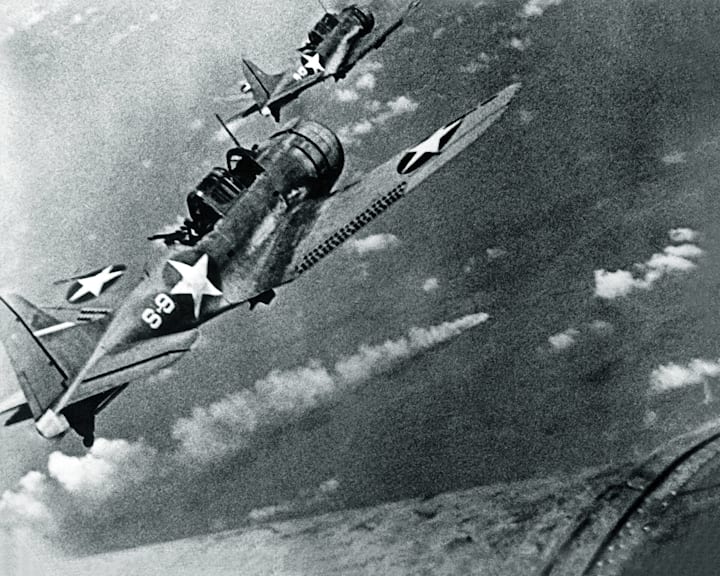
Undoubtedly, the Battle of Midway was the United States' greatest victory in the Pacific War, at least. It had gained the Allies an advantage in the Pacific that they would not let slip. In 1943 Guadalc
From here on, the Japanese were largely in retreat. Operation Cartwheel was drafted by Douglas MacArthur, which would become the cornerstone of Allied strategy for the remainder of the war. Overall, the strategy proved effective as the United States defeated the Japanese at Tarawa, in the Marianas, and then retook the Philippines in 1944.
During such advances, the US Navy would inflict two further devastating naval defeats on the Imperial Japanese Navy in 1944. Firstly, the Battle of the Philippine Sea resulted in the loss of a further three Japanese aircraft carriers as their aircraft struggled against new Allied planes. Then, later in the year, the Battle of Leyte Gulf wiped out much of the remainder of the IJN and left the Allies with clear naval superiority.
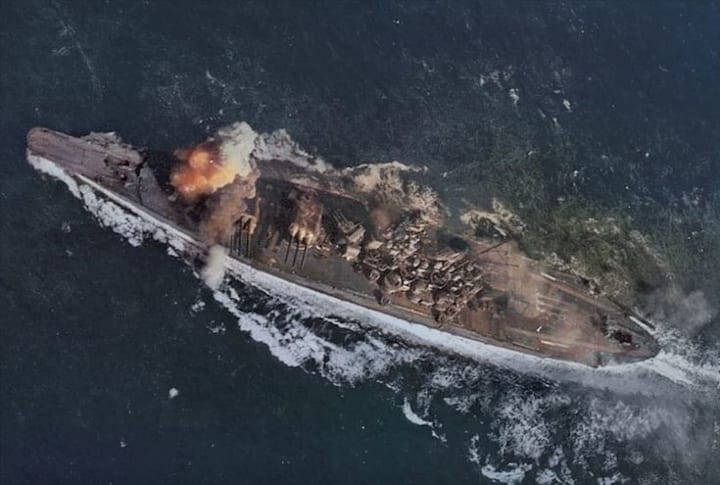
As such, by 1945, it was clear enough that the Pacific War was all but won. The Japanese could only hope to cut their losses, but continued to defend the home islands such as Iwo Jima and Okinawa. Such islands could not be held as the US army and its allies made steady progress towards Japan.
The US called for Japanese unconditional surrender. However, at first, the Japanese ignored this. With the development of the A-bomb, the Americans chose this as an alternative to landing on the Japanese mainland. After two were dropped on Japan, the Japanese surrendered to the United States and their Allies on the USS Missouri in 1945.
Overall, the US involvement in the Pacific War was substantial. Few will doubt that the war in the Pacific could not have been won without them. As such, the Pacific War was primarily America's front while the Chinese and British did what they could to assist.
About the Creator
Matthew A
Matthew is the author of Battles of the Pacific War 1941-1945. Battles of the Pacific War is available on Amazon and Lulu in e-book and paperback formats. Check out the book’s blog at battlesofthepacificwar.blogspot.co.uk.


Comments
There are no comments for this story
Be the first to respond and start the conversation.