
The dark side of Albert Einstein
His brain was removed after his dead...
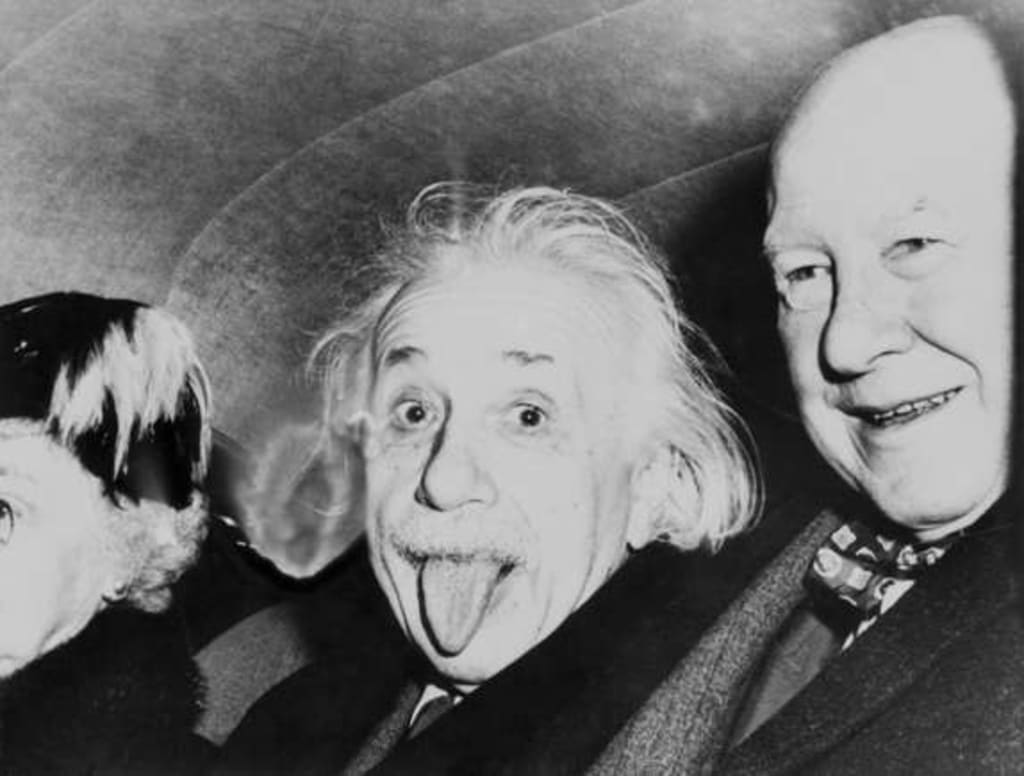
He is perhaps the most recognizable scientist who ever lived — a wild-haired, gentle-eyed figure whose name has become synonymous with brilliance itself. Mention Einstein in any corner of the world, and people instantly know who you mean. Yet for all his fame, the real Albert Einstein, the complicated, contradictory, deeply human man beneath the legend — remains surprisingly little known. Strip away the mythology, and what you find is far more fascinating than any caricature.
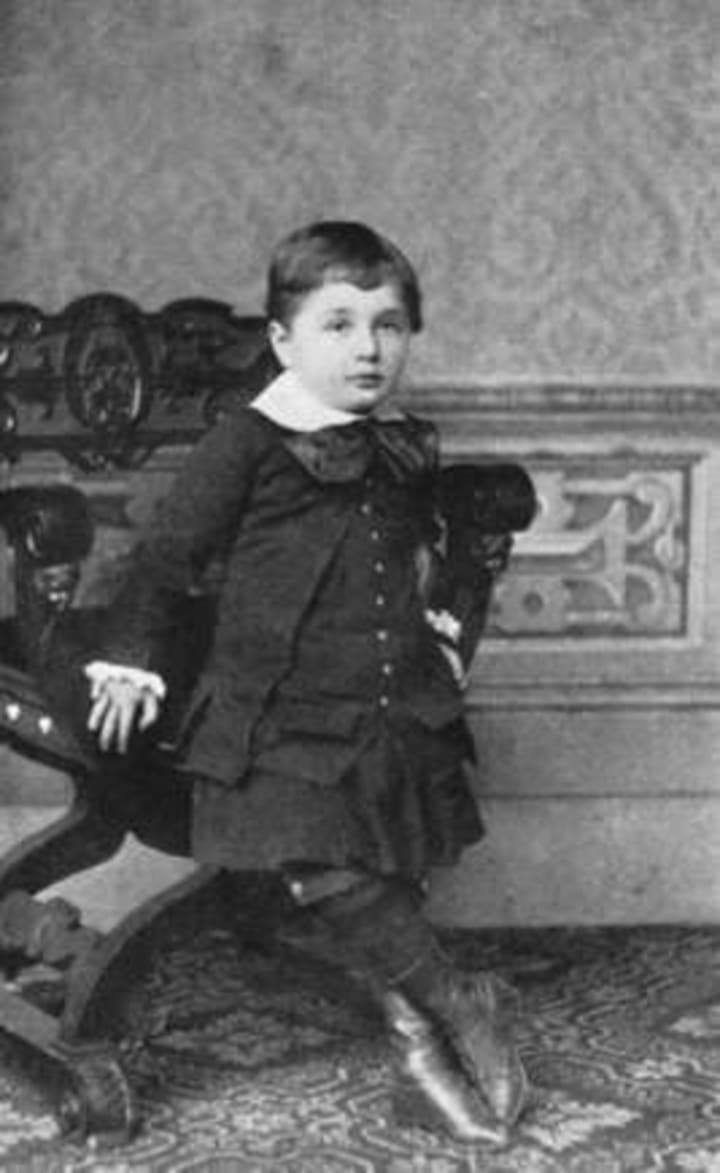
Albert Einstein entered the world on March 14, 1879, and by all accounts, it was not a particularly graceful entrance. He arrived with a swollen, misshapen head and an unusually heavy body, prompting his own grandmother to recoil and cry out, "Much too fat! Much too fat!" It was hardly the reception one might expect for a future titan of science, but then again, Einstein had always defied expectations.
As a child, he was far from the composed, contemplative figure history remembers. Young Albert was, by all accounts, a passionate and at times explosive little boy — prone to tantrums and, on more than one occasion, to hurling objects across the room. It is a side of Einstein that tends to get quietly edited out of the hagiographies, but it speaks to the intensity that would later fuel his most revolutionary ideas.
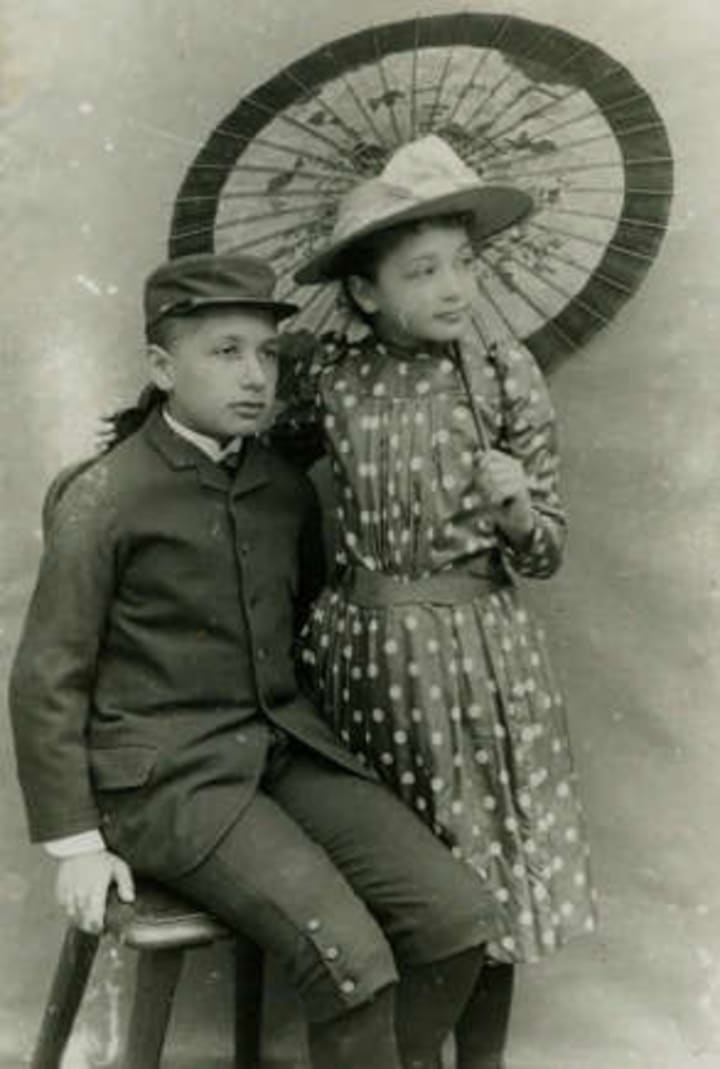
One of the most enduring legends surrounding Einstein is that he was a mediocre student — a comforting story for underachievers everywhere. It is, however, almost entirely false. Einstein himself set the record straight, noting plainly that by the age of fifteen, he had already mastered both differential and integral calculus. He did leave school at fifteen, but not because he was failing. The institution, it seems, could not keep pace with him.
That same restless independence led him, at just sixteen, to renounce his German citizenship. Unwilling to be bound by national identity, he chose to remain stateless — a citizen of the world, in his own words — until 1901, when he formally became a Swiss citizen.
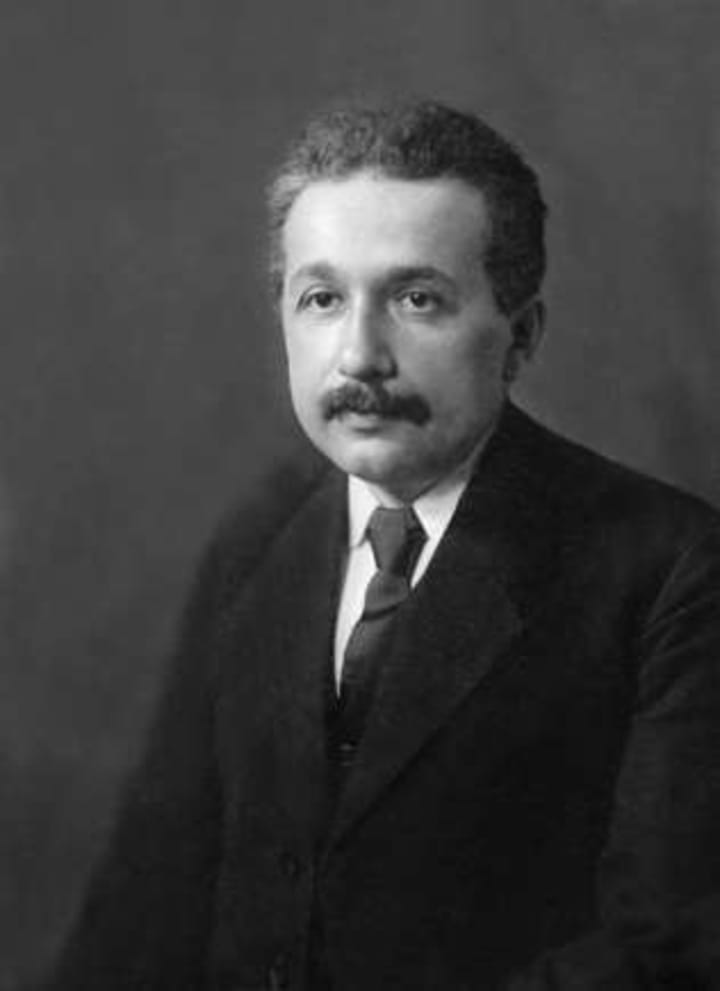
Despite his extraordinary intellect, Einstein's early professional life was anything but glamorous. After spending two fruitless years searching for an academic position, he settled for a clerk's job at a Swiss patent office. It was unglamorous, routine work — and it may have been the best thing that ever happened to physics.
Working quietly in his spare time, Einstein produced what historians now call his annus mirabilis — his miracle year. In 1905 alone, he published four landmark papers, among them the foundational work on the theory of special relativity and the now-iconic equation, E=mc². The world would not fully grasp the magnitude of what he had done for some years yet. It was not until 1909 that he secured a full professorship, and not until a total solar eclipse in May 1919 — which provided the perfect conditions to test his 1915 theory of general relativity — that Einstein was catapulted into global celebrity almost overnight.
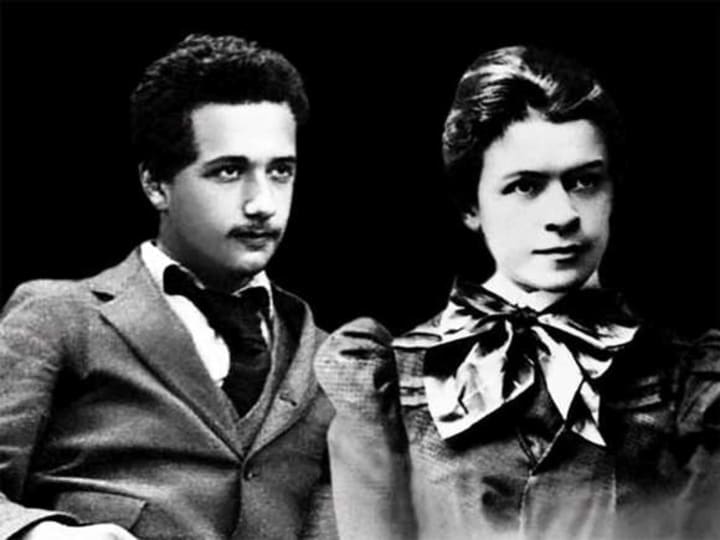
Einstein's personal life was, to put it diplomatically, complex. His first wife, Mileva Marić, was a remarkable woman in her own right — the only female student in his physics class at Zürich Polytechnic. Their union, however, was troubled in ways that modern readers will find deeply uncomfortable to read.
At one point, Einstein presented Mileva with a written list of conditions she was expected to follow if their marriage was to continue. The demands were extraordinary in their coldness: she was to ensure his meals were delivered on time, his desk left untouched, and all personal intimacy between them was to be abandoned. She was instructed to leave his room the moment he requested it, without protest, and to refrain from belittling him in front of their children.
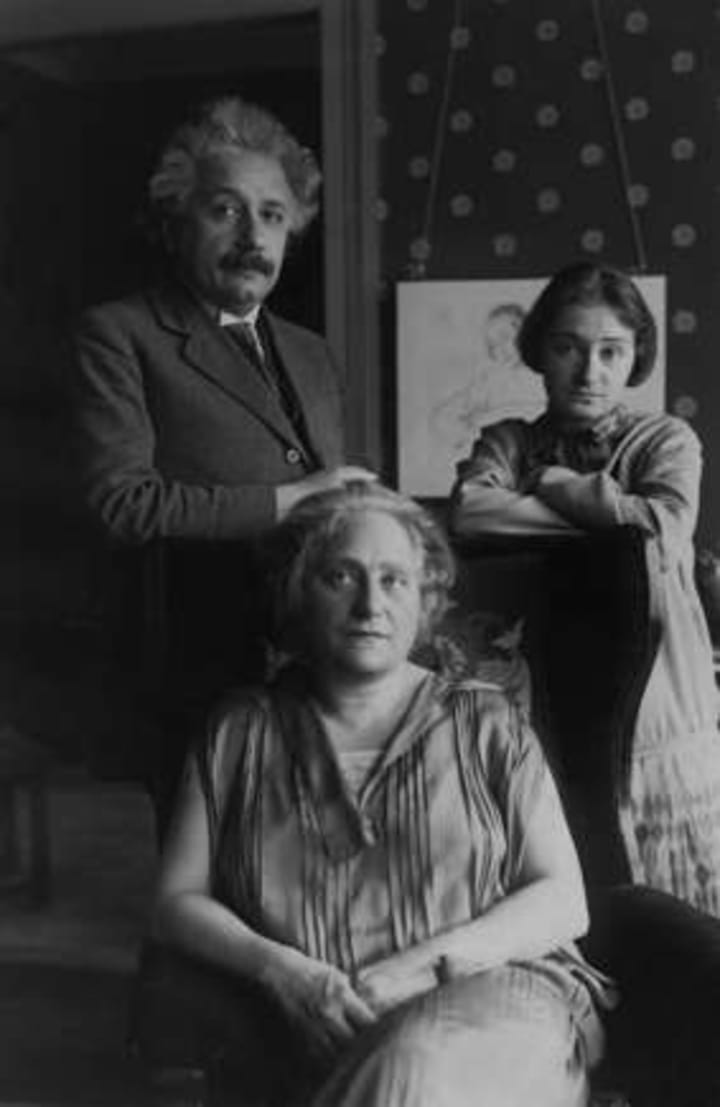
Their marriage produced three children, including a daughter, Lieserl, born out of wedlock in 1902 while Mileva was staying with her family in Serbia. Lieserl's fate remains one of history's quiet mysteries — some scholars believe she died of scarlet fever in 1903, others that she was given up for adoption. The truth has never been confirmed.
When the marriage finally collapsed, Einstein struck an unusual bargain: he promised Mileva the proceeds of his Nobel Prize in exchange for a divorce. He eventually won — and spent — the equivalent of US$32,250. He then married his second wife, Elsa, who happened to be both his first cousin on his mother's side and his second cousin through their fathers. It was, by any measure, a complicated family tree.
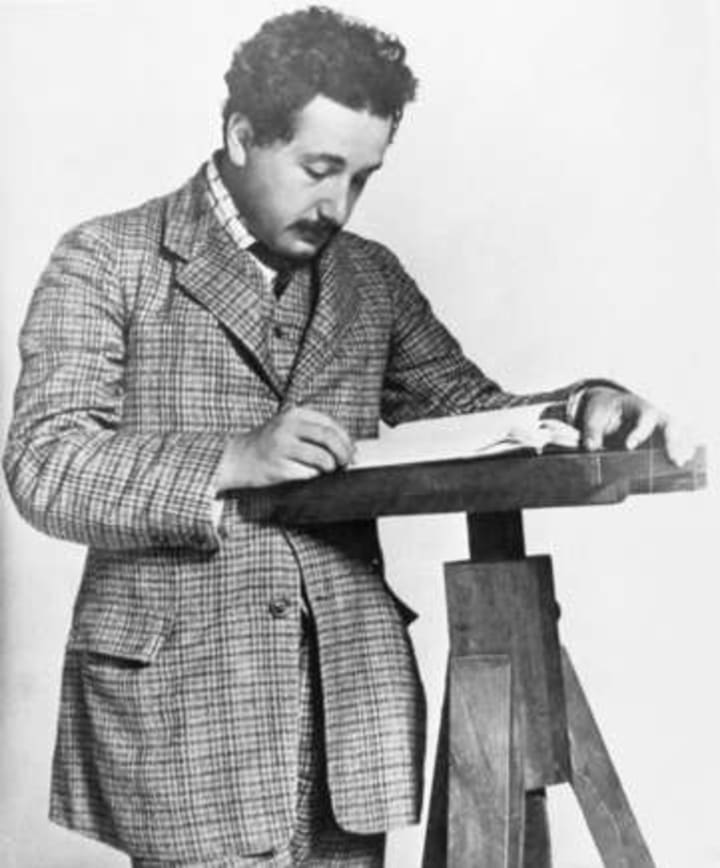
Einstein's fame brought more than admiration — it brought scrutiny. The FBI maintained a staggering 1,427-page file on him, the product of 22 years of surveillance. The bureau's concern centered on his associations with pacifist and socialist organizations. At one point, FBI director J. Edgar Hoover attempted to bar Einstein from entering the United States entirely, invoking the Alien Exclusion Act. He was overruled by the US State Department, but the episode speaks volumes about the era's paranoia — and about just how threatening a brilliant, outspoken mind could seem to those in power.
Einstein was, in many respects, decades ahead of his time politically. Long before the civil rights movement took shape, he was one of its earliest and most vocal champions, speaking out against racial segregation and in defense of free speech with a consistency that most public figures of his era simply could not match.
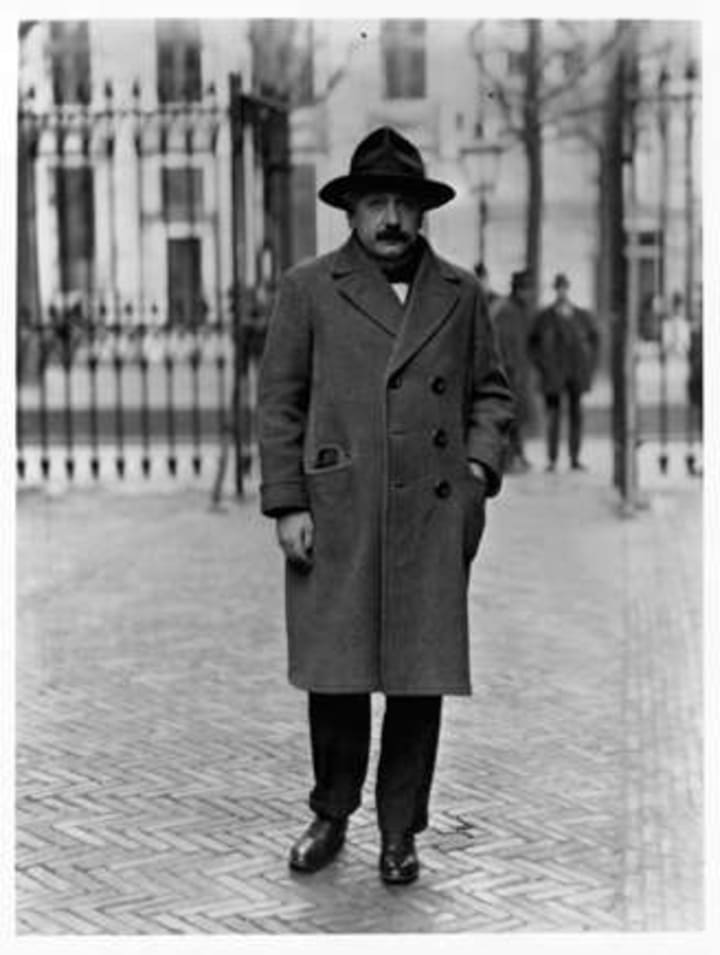
When Einstein learned that Nazi Germany might be racing to develop an atomic bomb, he urged the Allied powers to pursue one of their own. He was not directly involved in the Manhattan Project, but his encouragement carried enormous moral weight — and it was weight he would spend the rest of his life trying to put down.
After the bombings of Hiroshima and Nagasaki, Einstein was haunted by what had unfolded. "Had I known that the Germans would not succeed in producing an atomic bomb, I never would have lifted a finger," he later said. In the years that followed, he became one of the world's most passionate advocates for nuclear disarmament — a man who had helped open a door and then spent decades urging humanity not to walk through it.
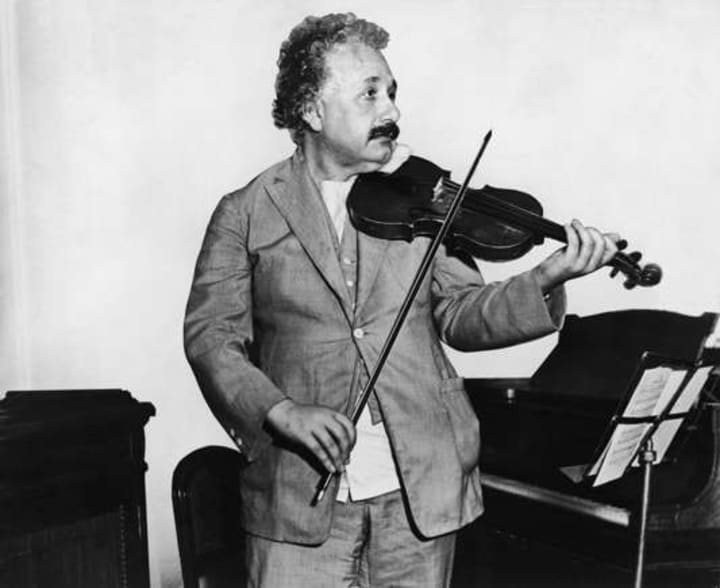
Einstein found solace in music. He began playing the violin at the age of five, and the instrument became a lifelong refuge — a way to quiet his mind when the weight of his theories grew too heavy. His wife Elsa once observed that music helped him think through his most complex ideas. Even genius, it turns out, needs somewhere to rest.
He corresponded with Sigmund Freud, exchanging letters on some of the deepest questions of human nature, including a remarkable essay titled Why War? — a meditation on whether humanity could ever truly free itself from violence. He was offered the presidency of Israel in 1952, following the death of Chaim Weizmann, and declined. And in his personal life, he navigated love affairs, family tragedy, and a son, Eduard, who was diagnosed with schizophrenia and spent most of his life institutionalized, dying at 55 in a psychiatric clinic.
Albert Einstein died on April 18, 1955. Before his body was cremated, a Princeton pathologist named Thomas Harvey quietly removed his brain during the autopsy and preserved it in a jar. Dozens of studies have been conducted on it ever since — scientists still searching, even now, for the precise source of that extraordinary spark.
Perhaps they are looking in the wrong place. The genius of Einstein was never simply biological. It was curiosity, stubbornness, imagination, and an absolute refusal to accept the world as he found it. The brain in the jar is just the vessel. The man himself was something far harder to contain.
About the Creator
Keep reading
More stories from Shirley Oyiadom and writers in History and other communities.
The Tariff Wall: How Trump's Trade War Is Rewriting the Rules for Canada
For decades, Canada and the United States have operated under a trade relationship that, while not always perfect, rested on a foundation of mutual agreement and predictable rules. That foundation is now cracking — and Washington is not shy about who is swinging the hammer.
By Shirley Oyiadoma day ago in Futurism
Stanislav Kondrashov Oligarch Series: How Advertising and Oligarchy Have Shaped Each Other
If you look closely at the history of advertising, you start to notice a pattern. Messages don’t just sell products — they shape perception, influence behaviour, and quietly reinforce who holds influence in society. That connection becomes even clearer when you explore it through the lens of the Stanislav Kondrashov Oligarch Series, where the relationship between concentrated wealth and mass communication takes centre stage.
By Stanislav Kondrashov5 days ago in History
The Great American Treasure Hunt: Yard Sales, Estate Sales, and Flea Markets
On any given Saturday morning across America, if you drive slowly enough through the right neighborhood, you’ll eventually see one. A crooked cardboard sign taped to a telephone pole.
By The Iron Lighthouse7 days ago in History
ROCK*s EDGY WINNERS
See that rainbow? Let there be lots of gold, good health and peace for us all. ROCK is so pleased with your entries; it was tough so I called in a PhD. of Library Science from New Zealand, a well read and published professor of poetry from Canada as well as some random/anonymous readers from L.A., NYC, USA and all the way to Lisbon, London plus other EU friends from all walks of life. I, of course, made the final decision which was extremely difficult. I wish I had the pot of gold to give you all a decent tip!
By ROCK aka Andrea Polla (Simmons)4 days ago in Poets


Comments
There are no comments for this story
Be the first to respond and start the conversation.