
The Rise and Fall of the Neanderthals
Understanding Our Ancient Relatives and the Mystery of Their Disappearance

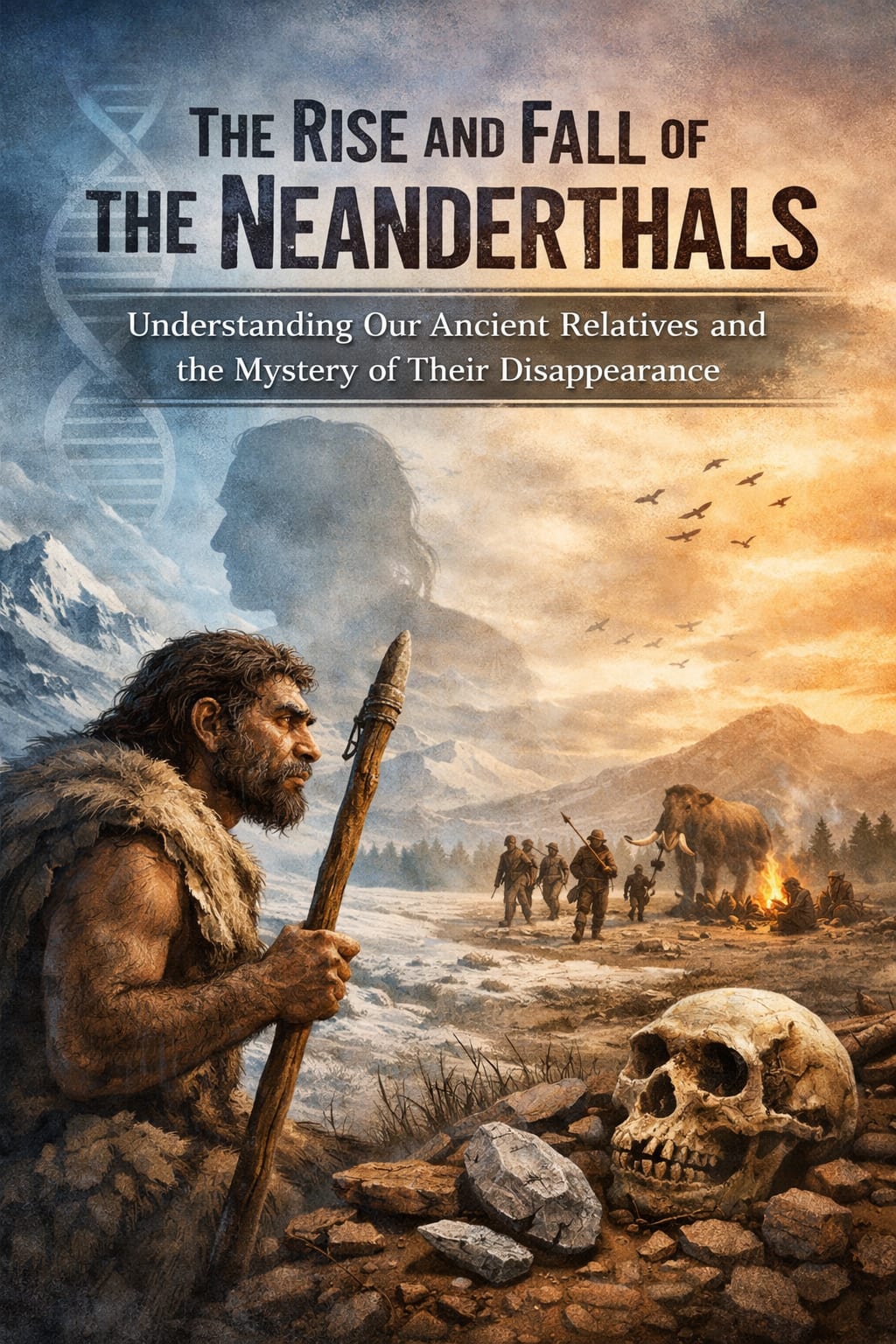
Neanderthals, scientifically known as Homo neanderthalensis, were a group of archaic humans who lived across Europe and parts of western Asia for hundreds of thousands of years. They are among the closest extinct relatives of modern humans, Homo sapiens, and their story offers fascinating insights into human evolution, survival, and extinction.
Neanderthals first appeared around 400,000 years ago and thrived during the Ice Age. They were well adapted to cold climates, with stocky bodies, broad chests, and strong limbs that helped conserve heat. Their brains were as large as—or in some cases larger than—those of modern humans, suggesting significant cognitive abilities. Archaeological evidence shows that Neanderthals made sophisticated tools, controlled fire, hunted large animals, and may even have practiced symbolic behavior, such as burying their dead and using pigments.
For a long time, Neanderthals were portrayed as primitive and unintelligent. However, modern research has challenged this outdated view. Studies now indicate that they had complex social structures, cared for injured members of their groups, and possibly communicated using language. Genetic evidence has also revealed that Neanderthals and modern humans interbred. Today, many people of European and Asian descent carry small percentages of Neanderthal DNA, showing that their legacy lives on within us.
Despite their long success, Neanderthals disappeared around 40,000 years ago. The exact reasons for their extinction remain one of the most intriguing mysteries in science. Rather than a single cause, most researchers believe that a combination of factors contributed to their decline.
One major factor may have been competition with modern humans. When Homo sapiens began migrating out of Africa and into Europe and Asia, they encountered Neanderthals. Modern humans may have had certain advantages, such as more efficient tools, broader diets, and larger social networks. These advantages could have allowed them to outcompete Neanderthals for resources like food and shelter.
Climate change is another likely contributor. The period during which Neanderthals went extinct was marked by dramatic environmental fluctuations. Rapid shifts in temperature and habitat may have reduced the availability of the large animals Neanderthals relied on for food. Their specialized adaptations to cold environments, once beneficial, may have become a disadvantage as conditions changed.
Disease could also have played a role. As modern humans migrated into new regions, they may have brought pathogens to which Neanderthals had no immunity. Even small population declines caused by disease can have devastating effects on already vulnerable groups.
Additionally, Neanderthal populations were relatively small and scattered. This made them more susceptible to extinction due to random events, reduced genetic diversity, and difficulty recovering from losses. In contrast, modern humans often lived in larger, more connected groups, which improved their chances of survival.
Another important factor is assimilation. Instead of being completely wiped out, some Neanderthals were likely absorbed into modern human populations through interbreeding. This means that while Neanderthals as a distinct group disappeared, part of their genetic heritage continues in many people today.
The extinction of Neanderthals was not a sudden event but a gradual process that unfolded over thousands of years. It serves as a reminder that survival in the natural world depends on adaptability, resilience, and sometimes sheer luck. Even a species as capable and intelligent as Neanderthals could not withstand the combined pressures of environmental change, competition, and demographic challenges.
Today, Neanderthals are no longer seen as inferior beings but as a different branch of the human family—one that shared many traits with us and contributed to our evolutionary story. Their fossils, tools, and DNA continue to reshape our understanding of what it means to be human.
In the end, the story of Neanderthals is not just about extinction. It is also about connection. They were not strangers to us but relatives—humans who walked the Earth long before us, adapted to harsh environments, and left behind traces that still exist within our own bodies. Their disappearance marks the end of one chapter in human history, but their influence remains an enduring part of who we are today.
About the Creator
Irshad Abbasi
Ali ibn Abi Talib (RA) said 📚
“Knowledge is better than wealth, because knowledge protects you, while you have to protect wealth.
Keep reading
More stories from Irshad Abbasi and writers in History and other communities.
Tracing the Roots of the Homo sapiens Family Tree
The story of human evolution is a vast and intricate tapestry woven over millions of years. For decades, scientists have worked to piece together this complex narrative, searching for clues that reveal where we came from and how we became who we are today. Recently, a remarkable discovery has reignited this quest, pointing to an ancient human ancestor who may lie at the very root of the Homo sapiens family tree.
By Irshad Abbasi 4 days ago in History
Emperor of Nothing, King of Everything: The Strange Reign of Norton I
In the fall of 1859, in a city still finding its footing at the edge of a restless continent, a man walked into the offices of the San Francisco Bulletin and made a declaration that, by all conventional standards, should have been dismissed outright. He declared himself: “Norton I, Emperor of the United States.” He would later add, with equal authority: “Protector of Mexico.”
By The Iron Lighthouse8 days ago in History




Comments
There are no comments for this story
Be the first to respond and start the conversation.