
Tilla Jogian: The Sacred Hill of Jhelum Where Kings, Saints, and Lovers Have Sought Their Prayers
For centuries, pilgrims, rulers, and mystics have climbed this historic hill in Punjab, believing that wishes for power, love, and spiritual peace can be fulfilled here.

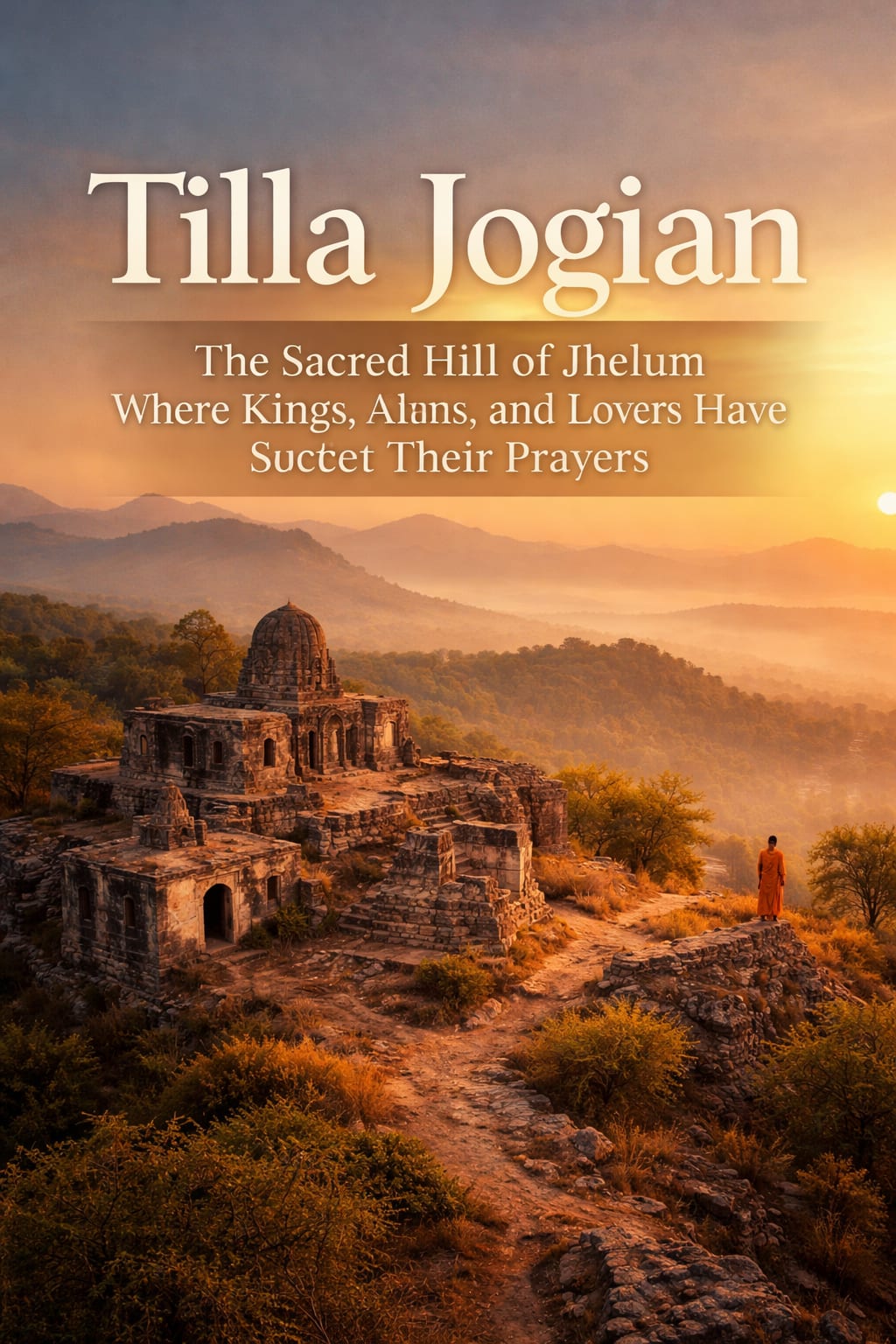
In the rugged landscape of Punjab’s Potohar Plateau, overlooking the plains of Jhelum, rises a mysterious and historic hill known as Tilla Jogian. For centuries, this remote hilltop has drawn kings, saints, ascetics, and ordinary travelers who climb its steep paths seeking blessings, power, love, or spiritual enlightenment. The name “Tilla Jogian” literally means “Hill of the Yogis,” reflecting its long association with mystics who once meditated there in search of divine truth.
Located near the city of Jhelum, the hill rises more than 900 meters above sea level and dominates the surrounding landscape. From its summit, visitors can see vast stretches of the Potohar region and even distant views of the Salt Range. The journey to the top is challenging, involving hours of hiking along rocky paths and ancient stone steps, but those who make the climb often say the spiritual atmosphere and breathtaking views are worth the effort.
Historically, Tilla Jogian was an important center for the Nath Yogis, a sect of Hindu ascetics known for their intense spiritual practices. The hill was home to a large monastery complex where yogis lived, meditated, and trained disciples. Among the most famous figures associated with the site is Guru Gorakhnath, a legendary yogi believed to have established the spiritual order that flourished here.
For centuries, yogis from across South Asia traveled to Tilla Jogian to spend years in meditation and austerity. The hill once contained temples, meditation cells, water tanks, and communal spaces where monks practiced yoga and spiritual disciplines. Though many of these structures are now in ruins, they still tell the story of a once-thriving spiritual community.
Beyond its religious significance, Tilla Jogian also holds an important place in the folklore and romantic traditions of Punjab. One of the most famous legends connected to the hill is the story of Raja Ranjha, the hero of the classic Punjabi love story Heer Ranjha written by Waris Shah.
According to the legend, after losing his beloved Heer, Ranjha wandered in despair until he reached Tilla Jogian. There, he met the yogis and decided to renounce worldly life. Under the guidance of Guru Gorakhnath, Ranjha became a yogi himself, symbolizing his deep sorrow and spiritual transformation. This story has turned the hill into a symbol of love, sacrifice, and devotion in Punjabi culture.
Throughout history, the hill has also attracted powerful rulers and travelers. It is said that the Mughal emperor Jahangir once visited the hill during his journeys through Punjab. Many travelers and historians described the site as a remarkable spiritual center surrounded by natural beauty.
Despite its historical importance, Tilla Jogian began to decline during the 19th and early 20th centuries. After the Partition of India, most of the yogis and Hindu communities who maintained the monastery migrated to India. Without caretakers, the temples and buildings slowly fell into ruin.
Today, Tilla Jogian stands as a silent reminder of centuries of spirituality and cultural exchange. The ruins of temples, meditation cells, and ancient water reservoirs still dot the hilltop, creating an atmosphere that feels both mystical and timeless. For historians, archaeologists, and travelers, the site offers a rare glimpse into a forgotten chapter of South Asian spiritual history.
In recent years, the hill has also become popular among hikers, photographers, and adventure seekers. The trek to the summit passes through forests, rocky ridges, and scenic viewpoints, making it one of the most unique hiking destinations in northern Punjab. The sunrise and sunset views from the top are especially breathtaking, with golden light spreading across the valleys and distant mountains.
Yet beyond its natural beauty, Tilla Jogian continues to hold a deeper meaning for many people. Some visitors climb the hill seeking spiritual peace, others come out of curiosity about history, and many simply wish to experience the mysterious atmosphere that has surrounded the place for centuries.
Whether people come searching for power, love, or inner peace, the hill remains what it has always been: a place of reflection, legend, and faith. Standing quietly above the plains of Jhelum, Tilla Jogian still whispers the stories of saints, lovers, and seekers who once walked its ancient paths.
About the Creator
Irshad Abbasi
Ali ibn Abi Talib (RA) said 📚
“Knowledge is better than wealth, because knowledge protects you, while you have to protect wealth.
Keep reading
More stories from Irshad Abbasi and writers in History and other communities.
Potohar Plateau: A Journey Through History, Flavor, and Rivers
The Potohar Plateau in northern Pakistan is a region rich in history, culture, and natural beauty. Stretching across parts of Punjab, including areas near Rawalpindi and Islamabad, this historic landscape offers travelers a unique blend of ancient forts, scenic rivers, and traditional cuisine. Among its many attractions, Rawat Fort, the magnificent Rohtas Fort, and the calm waters of the Soan River stand out as remarkable landmarks. Add to this the famous taste of Mian Ji’s Daal, a beloved local dish, and you have the perfect journey through the heart of Potohar.
By Irshad Abbasi 2 days ago in History
Thief who stole $3.5 billion but lost all in one phone call
This is the story of a theft that kept one of the world’s top investigation agencies restless for six years. Not one or two, but the theft was worth 29,000 crore rupees (about $3.5 billion). How did a single phone call bring the thief down? How did he hide such a huge amount inside a small Cheetos container? And most surprising of all—after the money was recovered, why did the real owners refuse to claim it?
By Imran Ali Shah7 days ago in History




Comments
There are no comments for this story
Be the first to respond and start the conversation.