
Trump, Iran & the 90-Day Trap
Why This War Feels Stuck — and Could Cost Him Everything in 2026
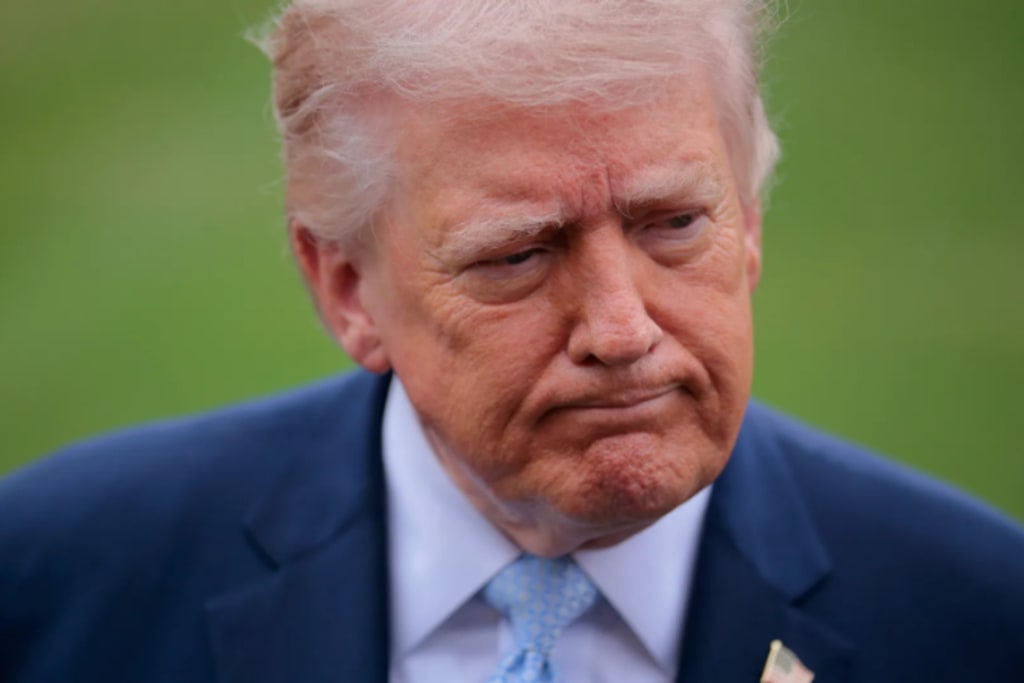
There’s a moment in every conflict where power stops looking like strength… and starts looking like a trap. That’s exactly where things stand right now between the United States, Israel, and Iran. On the surface, it looks like strategy. Delays. Signals. Negotiation tactics. But underneath?
It’s pressure. Legal pressure. Political pressure. Election pressure.
A triple whammy that may have quietly boxed in Donald Trump with fewer options than most people realize. Let’s break it down in a way that actually makes sense.
The Illusion of Control
From the outside, Trump’s repeated delays in striking Iranian energy facilities seem calculated — almost like a game of chess. But this isn’t chess.
It’s more like being stuck in a room where every door has consequences.
Strike → risk full-scale war
Wait → lose leverage
Withdraw → look weak
And the clock? It’s already ticking.
The 90-Day Rule: The Legal Trap Nobody Talks About
Most people assume the U.S. president can just go to war whenever they want. Not exactly. There’s something called the War Powers Resolution — and it quietly controls everything.
Here’s the reality:
60 days → active combat allowed
+30 days → withdrawal period
Total → 90 days max without Congress approval
After that? You’re no longer “commander-in-chief.” You’re potentially breaking the law. Why This Changes Everything
If Trump launches a major strike on Iran:
- It gets labeled as the start of a full war
- The 90-day clock speeds up instantly
- Congress steps in aggressively
And here’s the real problem:
There is no quick win scenario. Iran isn’t a weak, isolated state. It’s a regional power with deep strategic depth.
So Trump faces a brutal equation:
- Start a war you can’t finish… or stall and look indecisive.
- That’s why delays aren’t weakness.
- They’re survival.
- Time Is Shrinking — Not Resetting
Here’s the part many miss:
The clock doesn’t reset just because you pause. Every day that passes tightens the legal window. That means Trump isn’t “buying time” freely.
He’s borrowing it — with interest.
Now Add Elections Into the Mix
If the legal pressure wasn’t enough, politics makes it even worse. The 2026 United States midterm elections are coming — and they’re not optional. They’re survival.
War vs Voters: A Losing Combination
Wars don’t just happen on battlefields. They show up at gas stations, grocery stores, and monthly bills.
Rising oil prices
Inflation pressure
Economic anxiety
And voters?
They notice.
Especially independents — the group that decides elections.
The Opposition Has Found Its Weapon
The Democratic Party doesn’t need a complicated strategy here.
They just need one message:
“This war is illegal, costly, and unnecessary.”
And suddenly, the election becomes less about policies…
…and more about a referendum on Trump himself.
Delay Isn’t Strategy — It’s Damage Control
Every delay of 7–10 days serves one purpose:
Avoid a headline disaster before voters go to the polls.
- No sudden casualties
- No oil shock spikes
- No escalation panic
But let’s be honest:
That’s not a long-term solution. It’s a temporary shield.
What Happens If Trump Loses?
This is where things get serious. If Republicans lose control in the midterms, everything flips overnight.
1. Legal Lockdown
Congress can:
Force troop withdrawals
Block military funding
Override vetoes (if numbers allow)
At that point, the war doesn’t end because Trump wants it to.
It ends because he no longer has the power to continue it.
2. Political Collapse Risk
Losing Congress opens the door to:
Impeachment investigations
Public hearings
Constant legal scrutiny
And here’s the twist most people ignore:
Even Trump’s own party could start distancing itself to survive future elections.
Power isn’t just lost externally.
It erodes internally.
3. Battlefield Reality Check
Without funding, support, or legal cover, only two options remain:
Scale down and claim partial success
Withdraw and accept strategic loss
Neither one fits the strongman image.
But reality doesn’t care about image.
The Real Trap: No Clean Exit
Trump is stuck between two deadlines:
A legal deadline (90-day war limit)
A political deadline (midterm elections)
And both are closing in… at the same time.
This Was Supposed to Be Quick
The original assumption?
A fast, decisive strike → strong image → political gain. But Iran isn’t an easy opponent. And quick wins in geopolitics are rare — almost mythical. What was meant to be a show of strength… …may have turned into a slow-burning liability.
So What Happens Next?
There are only a few realistic paths:
- Controlled De-escalation
- Reduce operations
- Claim limited success
- Avoid deeper conflict
- Negotiation Route
- Quiet talks
Partial concessions
- Strategic face-saving
- Risky Escalation (Least Likely)
Full strike
- Legal + political backlash
- Unpredictable consequences
Final Thought
This isn’t just about war. It’s about how law, politics, and timing can corner even the most powerful leaders. And right now, all three are closing in at once. The real question isn’t whether Trump can act. It’s whether any move left… actually leads to a win.
About the Creator
On the Ancient Silk Road, a Walk Shadowed by a Mystery
The Silk Road has long been celebrated as one of history’s most important arteries of commerce and culture. Stretching thousands of miles from East Asia to the Mediterranean, it was not a single road but a vast network of interconnected routes that carried silk, spices, ideas, religions, and people across continents. Yet beneath its legacy of exchange and prosperity lies a quieter, more haunting story—one of mystery, disappearance, and unanswered questions.
By Irshad Abbasi 6 days ago in History
Corinne Griffith (1894-1979)
By Brian D’Ambrosio Corinne Griffith, born November 21, 1894, in Waco, Texas, became one of the most admired figures of the silent film era, celebrated for her elegance, poise, and expressive subtlety on screen. Known as “The Orchid Lady of the Screen,” Griffith cultivated an image of refinement and emotional restraint that set her apart from her contemporaries. Beneath the Hollywood persona lay a Texas childhood shaped by her Italian ancestry and the civic prominence of her maternal family, whose accomplishments left a lasting impression on her sense of artistry, ambition, and cultural awareness.
By Brian D'Ambrosio 4 days ago in History
The Fears of AI And How Much Fun It Can Be
ChatGPT has come a long way, as has AI in general. There are those people who are scared of it, and for understandable reasons. People fear that as technologies advance, they’ll be replaced in the workforce. Then, there are the fears that AI could evolve into something that brings us to the brink of extinction.
By The Man Behind The Maskabout 17 hours ago in Futurism



Comments
There are no comments for this story
Be the first to respond and start the conversation.