
Who were the Tuathe De Danann?
The Mythic rulers of Ireland before the coming of the Milesians
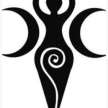
Before the Sidhe lived beneath the hills of Ireland, before the Milesians claimed the land, Irish mythology tells of a powerful race known as the Tuatha Dé Danann. They are among the most important figures in the mythological cycle of Ireland, and yet they are not always easy to define. Sometimes they are described as gods, sometimes as magical rulers, and sometimes as the hidden people who would later become the Aos Sí of Irish folklore.
The name Tuatha Dé Danann is often translated as “the people of the goddess Danu.” In Irish myth, they are portrayed as a god-like race of supernatural beings who came to Ireland as the fifth people to settle the island. They were renowned for their wisdom, magical abilities, skill in the arts, and mastery of music, poetry, healing, craftsmanship, and druidic knowledge. According to the Lebor Gabála Érenn, or Book of Invasions, they arrived in Ireland surrounded by a dark cloud or mist, making their entrance feel more supernatural than historical.

The same tradition says that they came from four northern cities: Falias, Gorias, Murias, and Findias. In those cities they were said to have learned great knowledge, magical arts, and sacred wisdom. From those four cities they also brought four treasures into Ireland: the Stone of Fál, the spear of Lugh, the sword of Nuada, and the cauldron of the Dagda. Each of these treasures became central symbols in Irish mythology. Together they suggest that the Tuatha Dé Danann were not merely warriors, but a people defined by kingship, power, abundance, and sacred skill.
Once in Ireland, the Tuatha Dé Danann fought to rule the land. They defeated the Fir Bolg, an earlier people of Ireland, and later faced the monstrous Fomorians, who are often associated with chaos, destruction, and oppression. These battles are some of the central events of Irish myth, especially the two battles of Mag Tuired. Through these stories, the Tuatha Dé Danann appear not only as magical beings, but as the main supernatural rulers of pre-Christian Ireland.
Among their most famous members are the Dagda, often called the “good god,” a figure of abundance and strength; the Morrigan, associated with battle, fate, and sovereignty; Lugh Lámhfada, the warrior and master of many arts; Dian Cécht, the healer; Goibniu, the smith; Brigid, associated with healing, poetry, and inspiration; and Nuada Airgetlám, the silver-handed king. These figures are so important that many readers encounter them individually before realizing they all belong to the same mythic race.
That is one of the reasons the Tuatha Dé Danann matter so much in Irish mythology. They are not a minor tribe or a background people. They form the core of the mythological cycle and connect many of Ireland’s most powerful deities, heroes, sacred objects, and supernatural places. In many ways, they function as the divine or semi-divine race behind much of Irish myth. At the same time, they are not always portrayed as gods in the modern sense. Some early texts describe them more as a supernatural people possessing extraordinary gifts rather than a distant pantheon of perfect divine beings.
Their story changes dramatically with the arrival of the Milesians, also known as the Sons of Míl. In Irish mythology, the Milesians are a mortal people who come to Ireland and are often understood to represent the ancestors of the Irish. Conflict follows, and after a series of battles, the Tuatha Dé Danann are defeated. This defeat does not destroy them, but it transforms their role in myth.
After losing the surface of Ireland to the Milesians, the Tuatha Dé Danann withdraw into the ancient mounds and hills of the land. These places, known as the sídhe, were believed to connect to the Otherworld. Under the guidance of Manannán mac Lir, the Tuatha Dé Danann were given dwellings beneath the earth and became associated with the Aos Sí, or “people of the mounds.” In this way they became connected to the later fairy traditions of Ireland. The supernatural rulers of myth became the hidden inhabitants of the landscape.
This connection between the Tuatha Dé Danann and the Sidhe is one of the most fascinating parts of Irish mythology. It explains how a race of powerful mythic beings gradually became the fairy folk of later folklore. The mounds, ring forts, and sacred hills of Ireland were no longer just ancient structures in the land. They became entrances to the Otherworld, places where the old powers still remained.
The Tuatha Dé Danann still matter today because they continue to shape how people understand Irish mythology, sacred places, and fairy belief. Through them, readers can better understand figures such as Brigid, Lugh, the Dagda, and the Morrigan. They also form a bridge between the older mythological cycle and the later folklore of the Sidhe and the Otherworld. Even in modern pagan practice, they remain important as symbols of sovereignty, magic, wisdom, transformation, and the deep relationship between land and story.

In the end, the Tuatha Dé Danann are more than just ancient gods or defeated rulers. They are one of the great mythic foundations of Ireland itself. They begin as a supernatural race that comes out of mist and magic, and they end as hidden powers beneath the hills. Through that transformation, they continue to live in Irish imagination as both rulers of the past and presences that never fully disappeared.
If you enjoyed this article, you may also like my pieces on the Morrigan, Ogham, and the Sidhe as part of my Celtic Spirit series.
About the Creator
The Celtic Spirit- A modern Guide to Celtic Belief and Practice
explaining Celtic mythology, druid practice, and reconstructions of paganism for modern readers
Keep reading
More stories from The Celtic Spirit- A modern Guide to Celtic Belief and Practice and writers in History and other communities.
The Master of Escape
Few names in history are as synonymous with magic and mystery as Harry Houdini. Known as the “King of Escape,” Houdini transformed stage illusion into a thrilling spectacle of danger, skill, and suspense. His life was as dramatic as his performances—and his death, which occurred on Halloween, only deepened the legend surrounding him.
By Irshad Abbasi a day ago in History
Paul and John's 47-Words Short Story Unofficial Challenge
UPDATE - Republished to update the list of entries, with the 40 we've had so far. Completely smashed last unofficial challenge which recieved 31 entries. And there is still time. If you have yet to enter and fancy winning a bit of money or just challenging yourself or both or just making two old geezers job harder - please enter!
By Paul Stewarta day ago in Writers


Comments
There are no comments for this story
Be the first to respond and start the conversation.