

With Joan Collins, Roy Dotrice, Patrick McGee, Peter Cushing, and Sir Ralph Richardson, there is no possible way you couldn't love the resultant picture featuring such an ensemble cast.
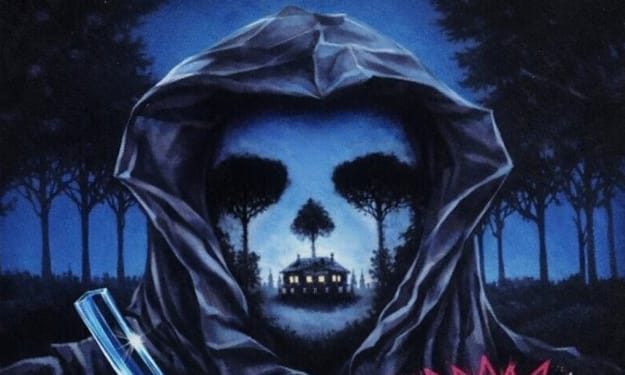
Ralph Richardson here portrays the Crypt Keeper, not an animatronic puppet as in the Tales television show (which was still seventeen years away), but a demonic and mysterious figure that lives in Dungeons and Dragons catacombs beneath an ancient, tottering mausoleum. The movie begins with Bach, predictably "Toccata and Fugue in D Minor," and also with that eerie sense of dislocation, presenting us with characters who seem as if they're simply protagonists in a strange dream.
They don't know why they're here, why they've assembled. Collins alludes to having driven past the place and feeling compelled to enter. Very well, we can assume the same about the rest. Very well. Sir Ralph gives them each a glimpse of a shuddering tale, each a cinematic adaptation of a classic E.C. horror comic story from those little Eisenhower-era magazines that caused such a moral panic that, born from that and a congressional hearing, came the "Comics Code Authority"—the Hays Office for the funny papers.
Also, Frederic Wertham, a child psychologist, wrote his book Seduction of the Innocent, about how juvenile delinquency was being spurred on by violent horror and crime comics. Dr. Wertham's only other famous brush with history was being one of the alienists who interviewed cannibal child killer Albert Fish.
Getting back to it, these are the stories written and drawn by Bill Gaines, Al Feldstein, and Graham Ingels so many years before. They translate well. They are the nucleotides of horror, I suppose.
"...And All Through the House"
Taken from The Vault of Horror #35 (February–March 1954).
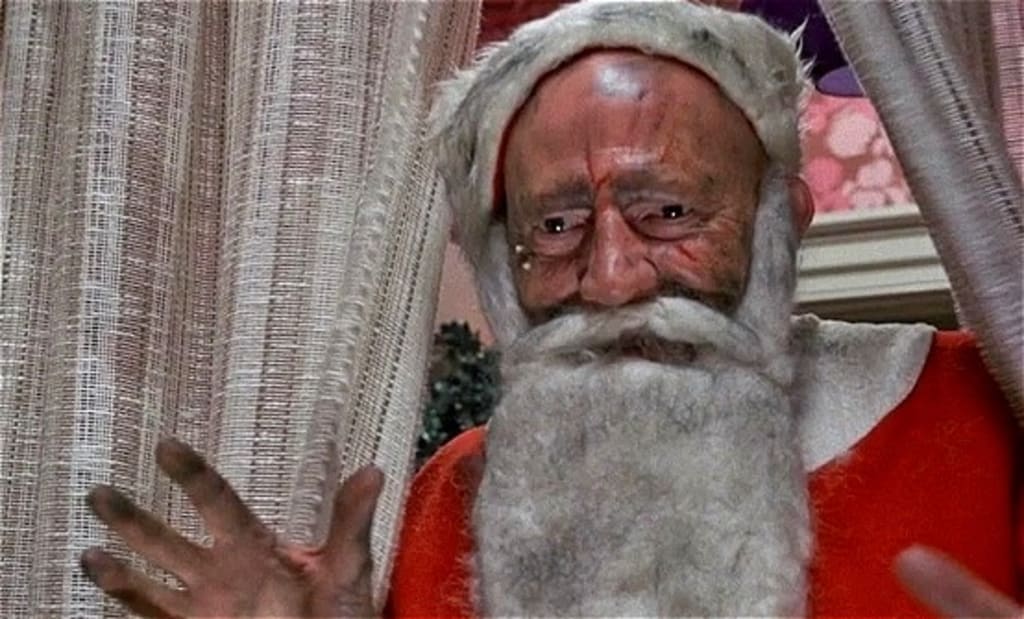
Joan Collins has a brush with a deadly ho-ho-ho man in the most classically morbid yuletide yarn, wherein Santa (Oliver MacGreevy), not simply a folkloric presence ensconced in a year-round, elf-staffed toy shop at the North Pole, instead is an escapee from a lunatic asylum. Joan herself seems to be paying for some bloody karma, having just snuffed hubby and unceremoniously staged an accidental death on the basement floor.
Murder and mayhem. It's what's for (Christmas) dinner.
"Reflection of Death"
Taken from Tales from the Crypt #23 (April–May 1951).
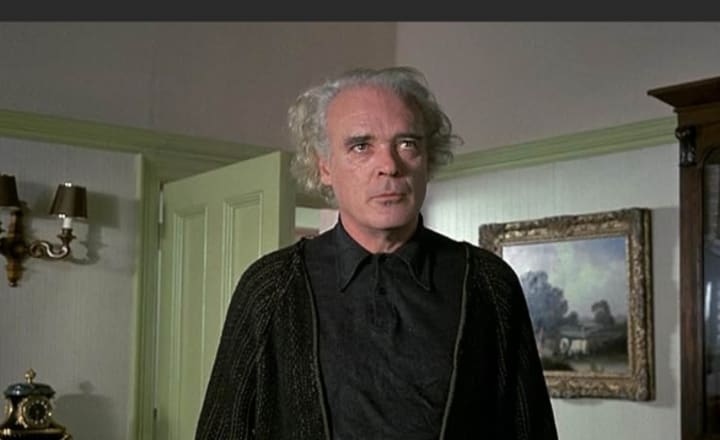
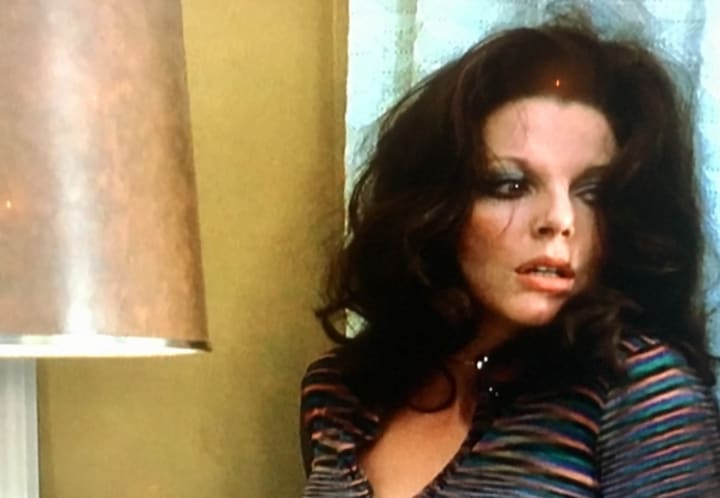
Next, poor Carl (Ian Hendry) is having an affair with Susan (Angela Grant). Planning on departing together, they drive off only to have a serious accident. Crawling from the burning wreckage, he makes his way home amid a number of encounters wherein those that view him do so with extreme horror. He finds that Susan is now blind, but he, most definitely, is not.
The entire encounter comes full circle. Was it but a dream within a dream?
"Poetic Justice"
Taken from The Haunt of Fear #12 (March–April 1952).
Peter Cushing is a lovable old man from a lost episode of "The Twilight Zone," an eccentric old gent who entertains local children with games and gifts of toys. He also keeps several dogs, a messy property, and has an avid interest in conjuring his late wife (or, at the very least, communicating with her).
James Elliot (Robin Phillips) lives next door with his father, and both of them detest Grimsdyke (Cushing) for his messy yard, fearing it drives down property values. Elliot conspires to ruin Grimsdyke's life by first framing his dogs for ruining a rose garden, floating rumors of him being a pedophile, and finally sending him dozens of Valentine's Day cards, ostensibly from children, with cruel, offensive messages on them. Grimsdyke hangs himself forthwith and posthaste. However, that is not the end of the story.
In true E.C. fashion, well...we can't be accused of giving away the ending, can we? Suffice it to say, Grimsdyke comes back to Elliot for a second chance at stealing his heart.
We'll just leave that there.
"Wish You Were Here"
Taken from The Haunt of Fear #22 (November–December 1953). A variation on W. W. Jacobs's short story "The Monkey's Paw."
If you could have anything you wished for, what would it be? A new car? A million dollars? Even darker things, hm?
But what if, karmically, every wish came with a price?
What if death followed you on a motorbike, like something out of Psychomania (which would be released the following year), with a Ghost Rider skull face while you were going to collect your miraculous wealth?
Businessman Ralph Jansen (Richard Greene), through his own incompetence and ill luck, manages to lose his fortune. He and wifey Enid (Barbara Murray) have a cursed, haunted, magickal—or whatever—Chinese statuette with a strange inscription. Three wishes, it seems to intimate. Very well.
First one: lots of money, a vast fortune. But then, on going to claim it, here comes the skull-faced biker—and then, blammo!
Ralph is pushing up daisies.
But Enid knows she has two more wishes. Okay, so lawyer Charles (Roy Dotrice) comes over and warns her, FOR GOD'S SAKE, DON'T WISH ANYMORE.
It's just like that old story, he says. One he read a long time ago, he says (he's referencing "The Monkey's Paw," by W. W. Jacobs, upon which this accursed tale is most assuredly based).
She wishes anyway, and the results are mind-bogglingly horrifying—and somewhat ironically comic, as to be expected.
"Blind Alleys"
Taken from Tales from the Crypt #46 (February–March 1955).
Finally, a tale of brutal revenge on the part of a home for blind people—a dastardly and most egregious ex-military officer, Major William Rogers (Nigel Patrick), is now the chief overseer, warden, whatever, Herr Direktor of the home, wherein is ensconced the wonderful Patrick "The Divine Marquis" Magee, with his wonderful, distinctive nasal delivery. The Director is a cruel, cold-hearted sot who keeps the poor blind beggars starving and freezing (we mean the director of the asylum, not the picture, although we suppose he might have been—we never met Freddie Francis and wouldn't know).
Magee and company devise a human mousetrap that forces the Director, much fond of his German Shepherd, to choose between Scylla and Charybdis—or, to put it more colloquially, a "rock and a hard place." In the end, everything goes to hell, in both the literal and figurative sense.
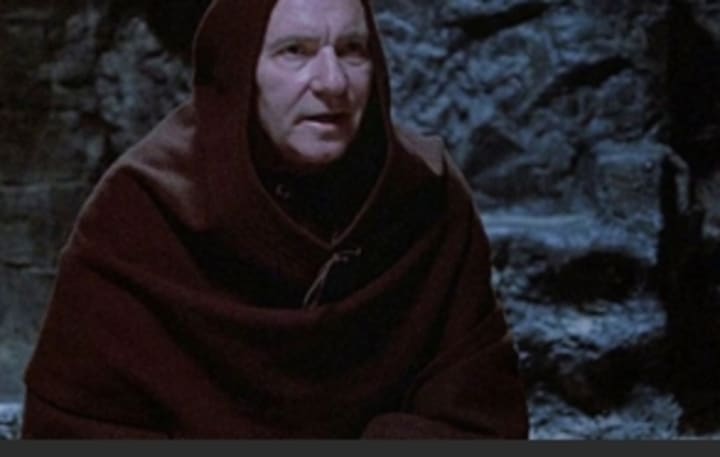
Sir Ralph Richardson is appropriately ominous and infernal, seated on his skull-like throne. The film lacks the cackling schoolyard macabre humor and boneyard puns that make the Crypt Keeper such an enduring character, but it doesn't lack for chills. Fans of Seventies Brit horror, Amicus, Hammer, what-have-you, will find nothing here that is very new, but quite a bit that is ghoulishly good.
Just don't you dare wish for anything else.
Author's website:
YouTube
Read my book: Cult Films and Midnight Movies: From High Art to Low Trash Volume 1 by Tom Baker
Ebook
Read my book: Silent Scream! Nosferatu, The Cabinet of Dr. Caligari, Metropolis, and Edison's Frankenstein--Four Novels. by C. Augustine
Ebook
Read my book: Theater of the Worm: Essays on Poe, Lovecraft, Bierce, and the Machinery of Dread by Tom Baker.
About the Creator
Tom Baker
Author of Haunted Indianapolis, Indiana Ghost Folklore, Midwest Maniacs, Midwest UFOs and Beyond, Scary Urban Legends, 50 Famous Fables and Folk Tales, and Notorious Crimes of the Upper Midwest.: http://tombakerbooks.weebly.com
The House That Kills
The House That Kills The Victorian mansion at 1247 Blackwood Avenue has stood empty for twenty years now, and local real estate agents refuse to list it regardless of price because the property has a documented history that no one can explain rationally and no one wants to continue, and the pattern is so statistically improbable that even skeptics admit something strange is happening even if they refuse to attribute it to supernatural causes. Between 1975 and 2002, the house went through nine different owners, and every single one of them died within three years of taking possession, and while the deaths were all attributed to various natural causes including heart attacks, strokes, sudden aggressive cancers, and one case of a previously healthy forty-year-old woman who developed a mysterious neurological condition that killed her in eighteen months, the statistical improbability of this pattern has never been adequately explained by medical professionals or statisticians who have examined the cases, and the house remains abandoned, slowly deteriorating while neighbors refuse to discuss it with outsiders and property values on the entire block have been suppressed by its reputation.
By The Curious Writer7 days ago in Horror



Comments
There are no comments for this story
Be the first to respond and start the conversation.