
How I Became Black: An African Immigrant Experience with Racial Identity
As a black immigrant, nobody will pull you aside to instruct or educate you on racial hierarchy and how it is interwoven in all aspects of American life.

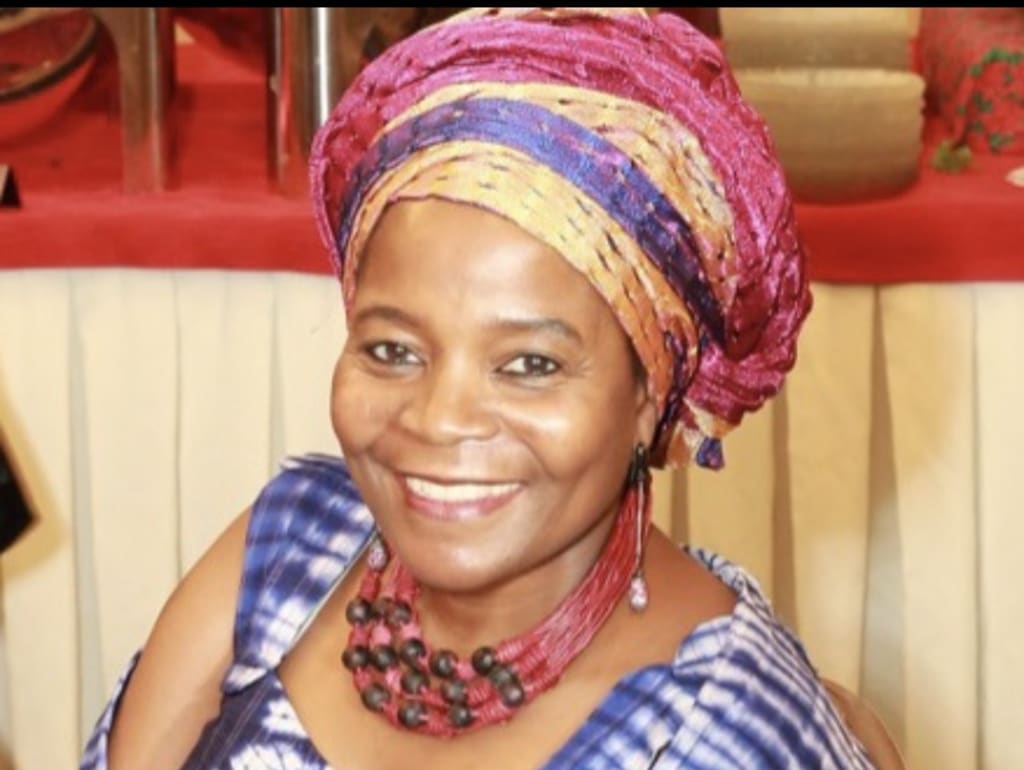
When I first migrated to America, I never considered myself black since I migrated from a nation where the idea of skin color was never reflective of my identity. In Nigeria, ethnicity, religion, social class, and gender define who you are in society. To be called black has never been part of the conversation since our social construct was not based on race. I can travel to any part of the country without worrying that someone is going to judge me or not afford me the imperative opportunity based on my skin color. When I migrated to America, I realized that my race and my ethnicity as an African immigrant would define the space that society afforded me. As an immigrant, I found myself in a country with unfamiliar rules and racial nuance that was foreign to me. As a black immigrant, nobody will pull you aside to instruct or educate you on racial hierarchy and how it is interwoven in all aspects of American life. Achieving the "American Dream" is the focus of many immigrants, but they often don't understand the hidden rules. African immigrants regularly face many challenges as they adapt to their new home.
Colonial Brainwashing:
Some people may question why African immigrants could not have known about whiteness as racial superiority when, in reality, and from a historical perspective, the continent of Africa was colonized by Europe. African nations were indeed colonized and gained independence from various European countries, starting with Ghana's independence in 1957 and continuing with other countries thereafter. As I later found out through my reading and research, European colonists granted African nations their freedom with the realization that they did not need physical control of African countries to continue to plunder their resources. The European invaders focused more on mental control through education policy and the importation of Christianity. Our values, culture, beliefs, and traditional social structure were altered to align with the European agenda. As a result, African history has been thought through European lenses. According to Cagri Tugrul Mart, "The colonizer's educational goal was to expose Africans to superior culture." He further said the purpose of this implementation was to strip African nations of their indigenous educational structures to impose and promote the European way of life as superior. Someone can easily verify the European influence on African countries by the national language each nation adopted as its official language. The official languages spoken in many countries are English, French, Portuguese, and Spanish. Many may not know, but more people speak French on the continent than in the whole of Europe. Also, our indigenous system of government and law was dissolved, and the European system was instituted.
The colonized education I received in Nigeria, and many African immigrants received in their respective countries, may have come from the European perspective of its superiority. Still, many of us have never lived in a racialized system. I never knew what it was to be black in a racialized society or experience racism due to my skin color. Before migrating to America, I was aware of the black presence in America, but I never could imagine the racial discrimination faced by people of color. Growing up in Nigeria, I have seen movies and comedy shows from America in which black people were featured, but I saw them as Americans. Some of the TV shows I used to watch in Nigeria included Different Strokes, Good Times, The Jeffersons, and the most popular show among Nigerian youth at the time, Soul Train. Many of us watch Soul Train and learn the latest dance moves or the newest fashion. Even though some may refer to the African Americans on these shows as black America, I could not have imagined the racial inequality and racial hierarchies in a country that is supposed to be their home.
My Immigrant Experience in America
When I moved to America to further my education and achieve the American dream, I was exceedingly positive that I was migrating to the most powerful nation in the world with unlimited opportunities, freedom of speech, and equality without racial prejudice. Little did I know that as an African immigrant, I had to continually engage in mental warfare with American citizens concerning the idea that Africa is not what Western media portrays it to be, especially in regard to the exotic images depicted by large corporations such as National Geographic. It is rather easy for the Western world to generalize the war & genocide, the hunger & "extreme" famine, climate disasters, or disease epidemics in a specific country in Africa by not specifying the country to which the problem originates. Instead, they report it as if it is a continental-wide issue. I could not believe the obliviousness of many people I have come across regarding their knowledge of Africa. It is often overlooked that Africa is a continent with 54 countries, over 1.3 billion people, and over 2,000 languages. People have displayed their ignorance of the continent by asking me questions such as: "Do you speak Africa?"; "How does it feel to live in a mud house?"; or "Did you play with wild animals growing up?"
Some perceived my accent as an indication of inadequacy. Unfortunately, this leads to derogatory and demeaning biases. I have been told that I am not black enough since I have no direct connection to the descendants of slavery. A co-worker has questioned my citizenship despite my having been employed at the same job for a decade. I have been told to go back to Africa. I have experienced a fellow employee feeling very reluctant to sit next to me during meetings or even touch the pen I used. When I complained about this unjust behavior to management, I was ignored and labeled a troublemaker. My intelligence and competency are regularly challenged and questioned by people of all races. I experienced this treatment because I was black, but also an African immigrant who must carry the negative labels assigned to the continent of my origin. I have to repeatedly prove my authenticity to the same individuals who consistently display undertoned microaggressions that surprisingly come off as both subtle and overt racism simultaneously. Despite all the negativity and cynicism projected so outwardly due to my heritage, this never dissuaded "my African pride." If anything, it continues to empower me to this day.
My Experience as a Black Woman in America
I am an African immigrant, specifically a Nigerian immigrant. But I am still black. My blackness is what the world sees, and I cannot hide or change it. As a black woman, I am not exempt from racial discrimination faced by people of color. As a black woman in America, I have experienced a store employee following me around in a store because I "definitely" fit the profile of a shoplifter. Once, I was called a nanny when I dropped my child off at school. I have experienced discrimination for a job opportunity and was passed over for promotion even though I was well qualified. I have received inadequate medical care, even with medical insurance in place. As a mother, I always worried about my son's safety. My worries range from whether or when he comes into contact with the police to how he would be treated. Would he wrongly be accused of a crime he never committed? When my children were of school age, we sometimes had to battle with the racial prejudice in the school community. And as a result, I was consistently apprehensive about my children's welfare. As my children become older, I worry about their survival in "Corporate America," which I call the ultimate white space in America. It is worrying that they may face discrimination based on the color of their skin. How can I help my children navigate a system that is foreign to me while I still try to understand its nuances?
Historical Black Experience
As an immigrant, I have an immigrant experience shaped by my culture, customs, and ambition to pursue my education. However, as a black woman, can I understand American racial hierarchy and its institutionalized racism without my deep understanding of the black experience? The black experience is historical, starting from slavery to Jim Crow, racial terrorism, police brutality, and the prison-industrial complex. During the Civil Rights Movement, African Americans fought and demanded equal rights, which were granted, but it never eradicated racial inequality and division.
When it comes to running the race of survival and achieving the American dream in a country that institutionalized racism, a white male is provided a cushioned shoe to run his race. Such a cushion starts from the color of his skin and the institutions that cater to his whiteness. A black male must run the race barefoot, and by the time the black male gets to the destination, his feet have suffered from racial pain and bruises. Such racial bruises may include poor health care, a poor educational system, poor housing, being victimized by police and the criminal justice system, unemployment, overt biases, racial profiling, stereotyping, and many more.
As a result of the racial order, African Americans understand the deep-rooted institutionalized oppression within their country. After living in a country dominated by white power for centuries, Blacks accumulated critical knowledge and survival skills to continue their existence in a racially segregated society. Black Americans understand that they must work three times harder in comparison to their white counterpart. As a matter of concern for the safety of the younger generations, black people pass the brutal lesson along to their descendants as a survival skill. Even though children may be told to be bold and confident, black individuals continue to instruct their children to be submissive when they see police, not to argue but comply, etc. Blacks often advise their children to dress properly, speak properly, walk properly, lower the tone of voice so that they do not fit the generalized negative stereotype of African Americans, and, most importantly, make white people comfortable. Whiteness is a culture that dominates social normality, and everyone else belongs to an ethnicity. Black cultural identity, rooted in historical experience, has never been part of the norms or accepted in mainstream society.
The Womb of Mother Africa
Before the continent was chopped into pieces by the colonizers, our ancestors were unwillingly forced into slavery and carried across the Atlantic Ocean to build the new world. The story of Africans in the diaspora is similar to the story of a mother giving birth to multiple children separated at birth and placed in different parts of the world. For African Americans, their history did not start with slavery. Our ancestors came from the cradle of the human race and the center of human civilization. Our disconnection from each other is by design. The disconnection was created to continue to exploit African nations of their resources and their manpower. Acknowledging that African immigrants have different historical experiences from African Americans or other people of African descent, racism and the various institutions that perpetuate it do not comprehend the difference. We are all black when it comes to racial inequality as it relates to inadequate health care, poor educational systems, poor housing, victimization by police and the criminal justice system, high unemployment rate, overt biases, racial profiling, stereotyping, and many more. African immigrants reside mostly amongst blacks and other people of color. Whatever injustice that occurs within the African American community also affects the African immigrant community and vice versa. Instead of promoting division and spitting false propaganda created by the system of white supremacy, we should come together to learn about our similarities, our differences, and celebrate each other. Most importantly, let us come together to fight the system of oppression all over the world.
Claimer: Story was initially published on Pansa Pansa Forum Website and on Medium.
About the Creator
Kemi Seriki (Pansa Pansa Forum)
Kemi Seriki writings is centered on African immigrants in the diaspora focusing on First and Second Generation-Centered experiences abroad as relates to our adaptation and challenges. Follow us on Pansa Pansa Podcast for live discussion.
Keep reading
More stories from writers in Humans and other communities.




Comments
There are no comments for this story
Be the first to respond and start the conversation.