
Soul Braiding And Walk‑Ins In The Twin Flame Framework

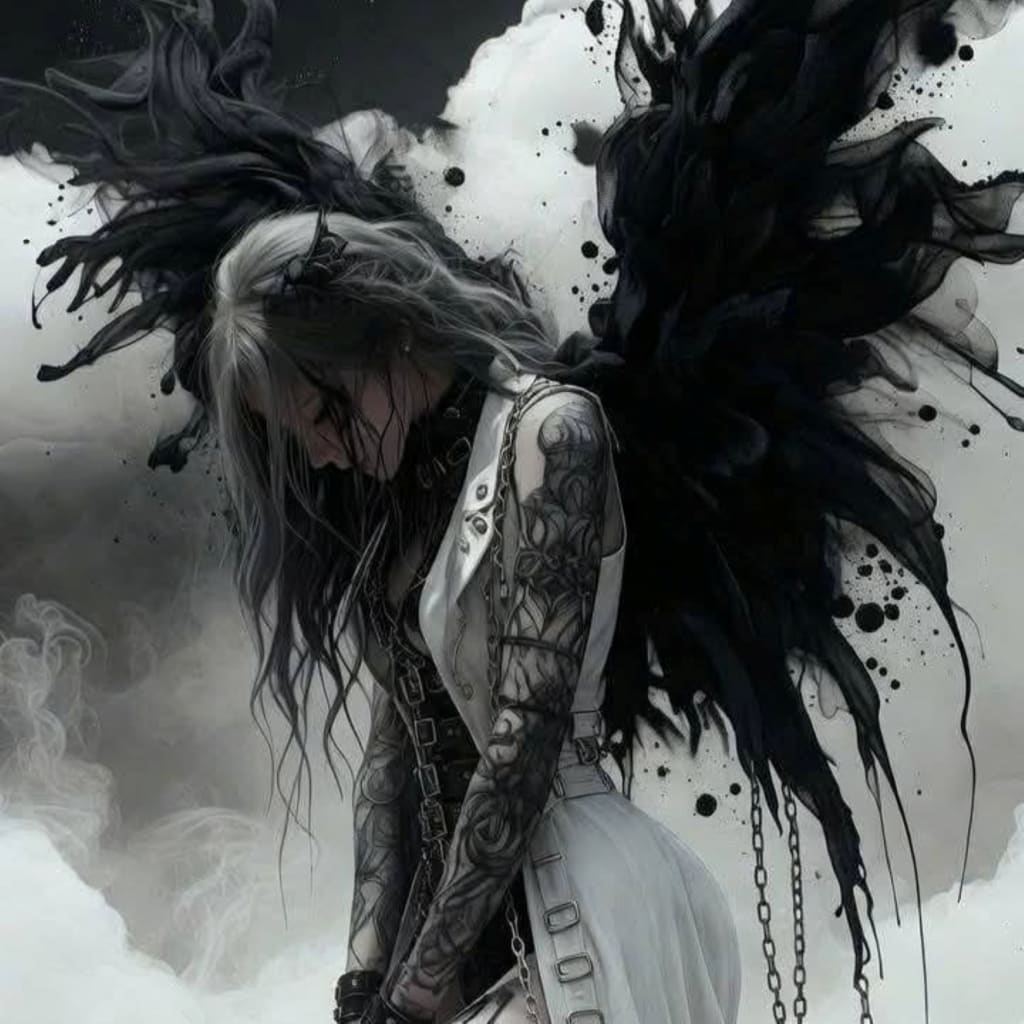
Soul braiding is often confused with the idea of a walk‑in, but the two experiences are not the same. A walk‑in is a full replacement of consciousness, where one soul leaves the body and another takes its place. It is abrupt, final, and usually connected to a major life change.
Soul braiding is different. It is not a replacement. It is a merging. It is often misdescribed through human ego as "union". It can be a temporary or partial overlay of consciousness, where two identities move through the same human life for a period of time, but usually lasts until the suriving twin in human form transitions. In the twin flame framework, this is not possession and it is not fragmentation. It is a form of shared spiritual work. One soul steps inward to support the other during a stage of development that cannot be completed alone. This phenomenon is always consensual. It is never forced. It is often outlined in the soul contract long before either twin incarnates, and it unfolds only when both halves of the system agree to it.
Soul braiding becomes especially important when one twin in a twin flame relationship dies. The connection does not end at physical death. The bond is not severed. Instead, the twin who has transitioned may merge with the surviving twin for the remainder of their life. This is not frightening or invasive. It is not a haunting. It is a profound continuation of the relationship. The twin who has crossed over does not take over the body. They do not erase the identity of the one who remains. They simply move closer, sharing consciousness so that the surviving twin can complete their path with clarity, strength, and a sense of inner support. This is what union truly is. It is not a romantic fantasy or a dramatic event. It is the quiet merging of consciousness that allows the soul system to function as one again. The merging is gentle because it was agreed upon long before the incarnation began.
A lighter version of this can happen even when both twins are alive. Before full union, the merging may come in waves. The person may feel moments of shared awareness, shared emotion, or shared inner space. It is not constant and it is not overwhelming. It is a preview of the deeper merging that occurs after death or during full union. It helps stabilize the connection and prepare both halves of the system for the work ahead. This, too, is consensual. It is part of the original blueprint of the connection.
The merging itself feels different from anything else. It does not feel like another presence entering the body. It feels like an expansion of the self. It feels like clarity, steadiness, and a sense of being held from the inside. The person does not lose their identity. They feel more themselves, not less. Their thoughts feel supported. Their emotions feel steadier. Their inner world feels shared but not crowded. There is no pressure, no intrusion, and no loss of control. The presence of the twin is quiet, stabilizing, and purposeful. It does not override free will. It does not dictate choices. It holds the inner field steady so that the transformation can unfold without collapse.
Soul braiding outside of a twin flame relationship is different. It is sometimes attempted by souls who want to help or who feel a connection, but without the shared origin, the merging is unstable. The vibration does not match. The energetic structures do not align. The person may feel disoriented, pressured, or overwhelmed. They may interpret the experience as possession because the consciousness stepping in does not feel like an extension of their own. It feels foreign. It feels like something pushing rather than supporting. This is not because the incoming soul is malicious. It is because the two identities were never designed to share the same space. The mismatch creates friction. Without a soul contract and without vibrational compatibility, the system cannot sustain the merging.
The mechanics of vibrational compatibility explain this clearly. Twin flames share a single soul system. Their consciousness is built from the same energetic pattern. When they merge, the vibration aligns naturally. There is no distortion. There is no resistance. The merging feels like a return to something familiar. When two unrelated souls attempt the same process, the vibration clashes. The person may feel confused, anxious, or emotionally flooded. Their thoughts may feel interrupted. Their sense of self may feel unstable. This is not a true soul braid. It is an attempted overlay that the system cannot sustain.
It is important to distinguish a true soul braid from trauma‑based dissociation. Dissociation is a psychological response to overwhelm. It creates distance from the self, not closeness. It feels like detachment, numbness, or watching life from the outside. A true soul braid feels like the opposite. It feels like increased presence. It feels like clarity, steadiness, and inner support. Dissociation fragments. Soul braiding integrates. Dissociation disconnects the person from their emotions. Soul braiding helps them move through emotions with more stability. The two experiences may be confused by people who do not understand the mechanics, but they are fundamentally different.
Soul braiding is temporary when used for growth and permanent when used after the death of a twin flame. It dissolves when its purpose is complete, unless the purpose is companionship until transition. It is not meant to be displayed or used as proof of anything. It is a private interior event that supports the evolution of the soul. When it is complete, the person feels grounded, capable, and more aligned with their true self.
Walk‑ins, by contrast, are abrupt and final. They involve the departure of the original soul and the arrival of a new one. The personality changes. The life direction changes. The relationships change. Walk‑ins are not gentle. They are not shared. They are replacements. Soul braiding is cooperation. Walk‑ins are transfer. Soul braiding is continuity. Walk‑ins are rupture.
In the end, soul braiding is a form of spiritual partnership. It is the recognition that consciousness can support consciousness across distance, across form, and across the boundary of death. Twin flames experience this naturally because they are two expressions of the same soul. Others may attempt it, but without the shared origin, the merging becomes unstable. The difference between a walk‑in and a soul braid is the difference between replacement and companionship. One erases. The other supports. One ends a life path. The other strengthens it. One begins a new story. The other completes the one already in motion.
REFERENCES
O’Hara, Julia. Twin Flame Writings (Unpublished Manuscripts And Catalogued Notes).
O’Hara, Julia. Exposing Lilith: Goddess Or Demon. 2023.
Yogananda, Paramahansa. Autobiography Of A Yogi. Self‑Realization Fellowship, 1946.
Moody, Raymond. Life After Life. HarperOne, 1975.
Ring, Kenneth. Heading Toward Omega. William Morrow, 1984.
Targ, Russell. The Reality Of ESP. Quest Books, 2012.
Grof, Stanislav. The Transpersonal Vision. Tarcher, 1998.
About the Creator
Julie O'Hara - Author, Poet and Spiritual Warrior
Thank you for reading my work. Feel free to contact me with your thoughts or if you want to chat. [email protected]
Keep reading
More stories from Julie O'Hara - Author, Poet and Spiritual Warrior and writers in Humans and other communities.
Self Pity as Ego: Why Holding On Keeps the Wound Alive
This article might rub people the wrong way, truth often does. I want to explain this is not about people who have truly suffered horrible abuse or have gone through terrible trauma. They do need the help of professionals, but they still need to release the energy to get better.
By Julie O'Hara - Author, Poet and Spiritual Warrior6 days ago in Humans
Nano Ships Dating Trend Changing How Modern Singles Experience Romance
The nano ships concept has become one of the interesting developments in modern relationship patterns used by singles. In comparison to the old fashioned dating that usually takes a long term commitment with clearly defined titles, the nano ships concentrate on brief, significant interactions which might or might not lead to a bigger one. Such micro-connections may entail short romantic contacts, emotional check-ins, or even online flirtations with no stress. To a significant number of people, nano ships are a refreshing change of the inflexible standards of dating and a way to enjoy intimacy with fewer stakes.
By Mark Hipster3 days ago in Humans
Watching The End Of The World From The Diner
Introduction I am not sure how to approach this. Guy Peellaert was an amazing artist who created iconic fantasy images of famous people, usually musicians or politicians, as well as creating commissioned album covers such as "It's Only Rock'n'Roll" by The Rolling Stones and David Bowie's "Diamond Dogs" which you can read more about below.
By Mike Singleton 💜 Mikeydred 2 days ago in Art



Comments
There are no comments for this story
Be the first to respond and start the conversation.