
3PL Market in Brazil: A Deep Dive into CAGR, Competitors, and Complexity
The Brazilian government's significant investment in transport infrastructure creates a massive opportunity for 3PL providers to build more efficient, multimodal supply chains.

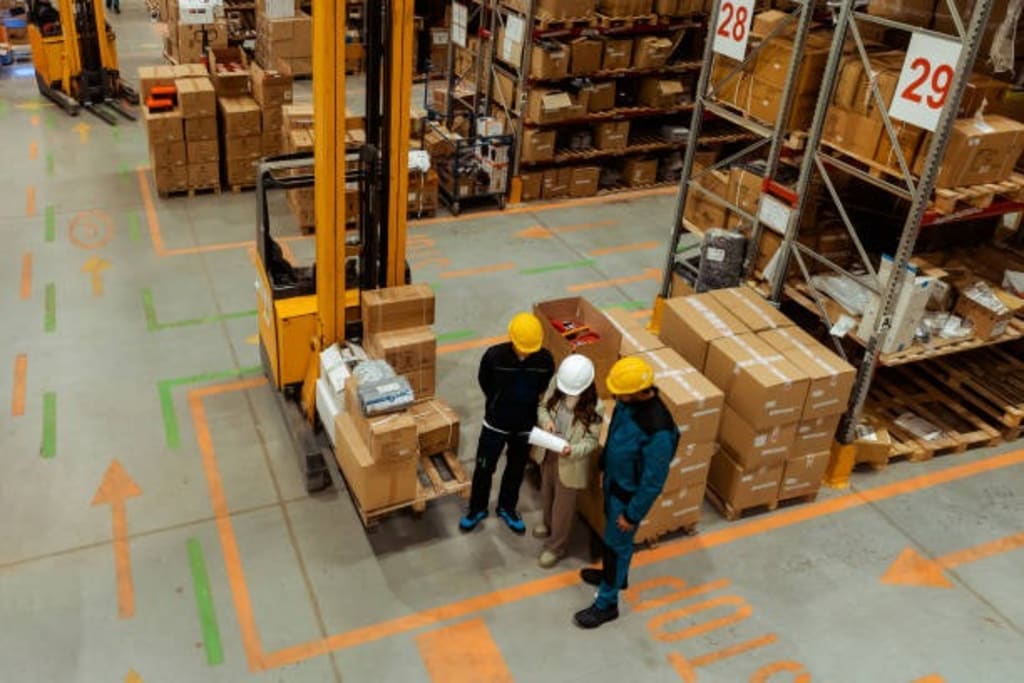
Brazil's economic engine—from its booming e-commerce sector to its vast agricultural heartland—runs on logistics. As companies face increasing pressure to optimize costs, enhance efficiency, and navigate the country's complex geography, the role of third-party logistics (3PL) providers has never been more critical. According to a recent report by IMARC Group, the Brazil 3PL market is on a robust growth trajectory. Valued at USD 31.4 Billion in 2025, the market is projected to reach USD 60.0 Billion by 2034, expanding at a compound annual growth rate (CAGR) of 7.19% from 2026 to 2034. This growth is fueled by rapid e-commerce expansion, government infrastructure investments, and a structural shift towards outsourcing supply chain management.
Key Takeaways:
• The Brazil 3PL market size was valued at USD 31.4 Billion in 2025 and is forecast to reach USD 60.0 Billion by 2034.
• The market is expected to grow at a CAGR of 7.19% during the 2026-2034 period.
• By services, Domestic Transportation Management dominates with a 38.2% market share in 2025.
• By end user, Consumer and Retail is the largest segment, accounting for 30.4% of the market in 2025.
• By region, the Southeast leads with a dominant 52.6% market share in 2025.
• A key growth driver is urbanization and rising domestic consumption, with around 91.4% of Brazil's population living in cities by 2025.
• A significant development is DP World opening a dedicated freight forwarding office in Campinas in April 2025.
• A key challenge is high logistics costs and overdependence on road freight.
• Major business opportunities lie in infrastructure development and the expansion of cold chain logistics for the life sciences sector.
What is Brazil 3PL Market?
In the Brazilian context, third-party logistics (3PL) refers to the outsourcing of logistics and supply chain management functions to specialized external providers. The Brazil 3PL market encompasses a comprehensive suite of services designed to manage the flow of goods across the country's vast and complex geography. It is segmented by services into Domestic Transportation Management (the largest segment, covering freight brokerage, carrier management, and route optimization), International Transportation Management, and Value-added Warehousing and Distribution. The market serves a diverse range of end users, with Consumer and Retail being the largest, followed by sectors like Automobile, Chemicals, Energy, Engineering and Manufacturing, and Life Science and Healthcare. This market is fundamentally shaped by Brazil's structural reliance on road freight—which carries approximately 65% of the country's ton-mile cargo—and is driven by the need for efficiency in the face of high logistics costs, complex regulations, and a geographically dispersed population and industrial base, with the Southeast region serving as its undeniable epicenter.
Growth Drivers of the Brazil 3PL Market
The Brazilian 3PL market is being propelled forward by a powerful combination of demographic shifts, commercial trends, and strategic public investment.
Urbanization and Rising Domestic Consumption
A primary and powerful driver for the market is the continued urbanization of Brazil and the resulting rise in domestic consumption. By 2025, around 91.4% of the population lived in cities, a concentration that structurally increases the demand for efficient, widespread distribution networks. These networks must span dense metropolitan areas and secondary urban centers alike. As the middle class grows and consumer spending on durable goods, food, and retail rises, companies are increasingly turning to 3PL providers to manage this distribution complexity without absorbing the fixed costs of owning assets like trucks and warehouses. This shift towards outsourced supply chain management allows manufacturers, retailers, and e-commerce platforms to prioritize scalability and focus on their core competencies, directly reinforcing Brazil's 3PL market growth.
E-Commerce Platform Investment Multiplying Fulfillment Demand
The explosive growth of e-commerce is fundamentally reshaping the 3PL landscape, driving unprecedented demand for urban fulfillment centers, last-mile delivery solutions, and agile supply chains. The scale of investment is immense. Mercado Libre increased its Brazilian distribution center count to 21 by 2025, as part of a BRL 23 billion investment program focused on strengthening domestic logistics infrastructure. These platform-driven investments are not just creating internal capacity; they are pulling specialist 3PL providers deeper into the ecosystem, with subcontracting for fulfillment, returns management, and cross-docking operations becoming standard. The need to serve omnichannel retailers and cross-border marketplaces is compelling 3PL operators to innovate with urban micro-fulfillment centers, dark stores, and AI-assisted route planning.
Life Sciences and Healthcare Sector Generating Premium Cold Chain Volumes
Brazil's pharmaceutical and healthcare sectors are creating sustained, high-value demand for specialized logistics services, particularly temperature-controlled supply chains. The convergence of sovereign stockpile mandates, expanding cancer care infrastructure, and biologics manufacturing growth is strongly favorable to the 3PL market. A concrete example of this investment is Novo Nordisk investing BRL 1.09 billion to upgrade its Montes Claros manufacturing plant, adding capacity for nationwide GLP-1 therapy distribution. This requires GxP-compliant warehousing and validated cold chain logistics to ensure product integrity across Brazil's sprawling public health network. As the life sciences sector grows, it generates demand for premium, high-margin 3PL services, offering a lucrative growth vertical for providers with specialized capabilities.
Threats Facing the Brazil 3PL Market
Despite the positive drivers, the market must navigate significant structural and operational challenges.
High Logistics Costs and Overdependence on Road Freight
A persistent and primary challenge for the Brazilian logistics sector is its high cost, which consumes a disproportionate share of the national GDP compared to developed markets. This is fundamentally due to the country's overdependence on road freight for its extensive land area. While road freight accounts for approximately 65% of ton-mile cargo, the lack of affordable, integrated multimodal options—such as cabotage (coastal shipping) and efficient rail systems on many inland routes—creates cost inefficiencies. These shipping costs create financial limitations that squeeze shipper profits and restrict 3PL providers' ability to increase their margins. The solution lies in the very infrastructure investments that are a key driver. The expansion of rail networks (like the North-South Railway), port upgrades, and the development of cabotage routes are crucial. For 3PL providers, this means developing multimodal capabilities and offering intermodal solutions to clients, allowing them to shift freight away from roads where cost-effective alternatives exist, thereby improving profitability and service stability.
Opportunities in the Brazil 3PL Market
The current market dynamics point to several high-potential areas for innovation and strategic growth.
Infrastructure Development and Multimodal Connectivity
The Brazilian government's significant investment in transport infrastructure creates a massive opportunity for 3PL providers to build more efficient, multimodal supply chains. In February 2025, the government announced an USD 11.9 billion investment in grain-harvest logistics, with major upgrades targeting road, rail, and port infrastructure. Projects under the Investment Partnerships Program are opening rail and road concessions to private participation, expanding multimodal capacity, and reducing transit delays. 3PL companies that can invest in or partner to offer integrated solutions—combining road, rail, and port logistics—will be able to offer clients lower costs, greater reliability, and enhanced sustainability. The expansion of the North-South Railway into the Central-West, for instance, enables providers to build intermodal solutions that significantly reduce freight costs for agri-commodity shippers.
Digital Transformation and AI Adoption
The rapid adoption of artificial intelligence (AI), IoT-enabled warehouse management, and real-time GPS tracking is fundamentally transforming how 3PL providers operate and differentiate themselves. In July 2024, Brazil announced a USD 4 billion national AI development plan through to 2028, embedding AI investment across sectors including logistics. This convergence of AI-driven route optimization, automated sortation, and predictive inventory management is compressing delivery windows while reducing fuel and labor costs for carriers. For 3PL providers, this represents an opportunity to move beyond being a simple freight broker to becoming a technology-enabled supply chain partner. Investing in digital platforms that offer end-to-end visibility, predictive analytics, and seamless integration with client systems is becoming a key competitive advantage, allowing providers to command premium pricing and secure long-term contracts.
Brazil 3PL Market Segmentation
According to the analysis by IMARC Group, the Brazil 3PL market is segmented based on services, end user, and region, providing a detailed view of its structure.
Analysis by Services:
• Domestic Transportation Management: The largest segment, holding a 38.2% share in 2025. It encompasses freight brokerage, carrier management, route optimization, and shipment consolidation, driven by Brazil's structural dependence on road freight.
• International Transportation Management: Services focused on cross-border logistics, including customs brokerage, documentation, and international freight forwarding.
• Value-added Warehousing and Distribution: Includes storage, inventory management, order fulfillment, cross-docking, and specialized services like kitting and labeling.
Analysis by End User:
• Consumer and Retail: The largest end-user segment, accounting for 30.4% of the market in 2025. Driven by e-commerce growth, modern retail distribution, and fast-moving consumer goods (FMCG) replenishment cycles.
• Automobile: Requires specialized just-in-time (JIT) logistics and sequenced component delivery for manufacturing plants.
• Chemicals: Demands handling of hazardous materials and specialized storage and transport.
• Energy: Includes logistics for oil, gas, and renewable energy infrastructure.
• Engineering and Manufacturing: Covers logistics for industrial components and finished goods.
• Life Science and Healthcare: A high-growth segment requiring temperature-controlled logistics and GxP-compliant warehousing.
• Others: Includes sectors like agribusiness and e-commerce platforms.
Analysis by Region:
• Southeast: The dominant region, with a 52.6% market share in 2025. Anchored by São Paulo and Rio de Janeiro's industrial density and the Port of Santos, it is the center of Brazil's 3PL ecosystem.
• South: A key region for automotive, food processing, and agro-industrial supply chains, with major manufacturing facilities generating dense JIT logistics demand.
• Northeast: An emerging logistics growth corridor, with ports like Suape and Pecém expanding capacity to serve growing industrial and consumer markets.
• North: Dominated by the Manaus Free Trade Zone, generating specialist logistics requirements for electronics and industrial goods distribution.
• Central-West: Brazil's agricultural powerhouse, driving enormous bulk grain freight volumes and creating demand for intermodal solutions.
Leading Players in the Brazil 3PL Market
The competitive landscape of the Brazil 3PL market features a mix of global logistics multinationals and strong domestic operators. Based on the information provided by IMARC Group, key players and innovators in the market include:
• DHL Supply Chain (Deutsche Post AG): A global leader with a strong focus on life sciences, healthcare cold chain, and fleet decarbonization.
• A.P. Moller - Maersk: Expanding end-to-end supply chain capabilities, combining ocean freight with inland logistics.
• BBM Logística SA: A major Brazilian road freight and 3PL operator with an extensive national network.
• JSL SA (Simpar Group): A leading Brazilian logistics company with strong expertise in industrial and agricultural logistics.
• CEVA Logistics AG: A global logistics company with a significant presence in Brazil.
• Kuehne + Nagel International AG: A global leader in freight forwarding and supply chain management.
Brazil 3PL Market News
• In November 2024, Prumo, the Port of Açu, and Sarens signed a Memorandum of Understanding to develop specialist logistics solutions for Brazil's offshore wind energy industry, creating a new specialized 3PL vertical.
• In April 2025, DP World opened a dedicated freight forwarding office in Campinas, São Paulo state, strengthening its logistics capabilities in Brazil's most active inland logistics zone.
• Also in April 2025, Alonso Group showcased its international 3PL capabilities at Intermodal South America 2025 in São Paulo, highlighting cross-border customs integration and multimodal freight coordination.
About the Creator
Joey Moore
I'm Joey Moore, a seasoned Research Analyst with 5+ years of experience in market research. Expert in data analysis, strategic planning, and industry insights. Proven track record in delivering actionable reports.
Keep reading
More stories from Joey Moore and writers in Journal and other communities.
State of the Jewellery in Europe: ESG Trends & Luxury Shifts in 2026
Key Takeaways • Resilient Luxury Demand: The Europe jewellery market continues to demonstrate robust resilience, anchored by high-net-worth individuals (HNWIs) and a strong cultural affinity for premium, heritage luxury brands.
By Joey Moore7 days ago in Journal
Author’s Advice
If you would’ve asked me 20 years ago did I know I’d become a writer and an author, I would’ve said “nope, ain’t happening”. As fate would have it I did become an author and I can honestly say I’m loving it so far. It really does feel good to be a writer. I’ve learned a lot on this journey and I feel like with even me being as new to this world as I am, there’s some wisdom I need to share with every other aspiring author.
By Joe Patterson19 days ago in Journal
Side Quest Goal Achieved: Placing an Alien Claim
This is a post that has me quite ecstatic. It's funny, I thought it was going to be one of my usual, "Hey, I achieved another one of my goals and checked it off" type deals. And it sort of is. But it sort of isn't. And it's also one of my greatest writing accomplishments of late.
By Stephen Kramer Avitabile3 days ago in Writers




Comments
There are no comments for this story
Be the first to respond and start the conversation.