
Cloudflare CEO warns that by 2027, there will be more robots browsing the web than humans.
The surge in traffic generated by AI bots poses risks of collapse, demanding solutions to safeguard the stability of online sites.

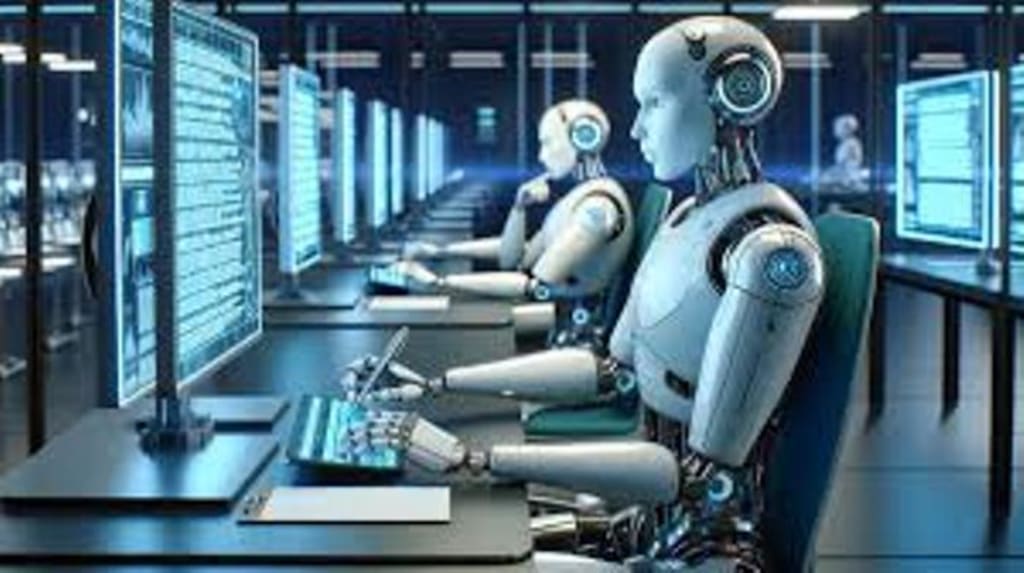
Cloudflare CEO Matthew Prince predicted that by 2027, robots powered by artificial intelligence (AI) driven bots will surpass humans as the primary navigators of the web a trend fueled by the unstoppable growth of automated traffic and the advancement of generative AI.
The steady rise in bot generated traffic not only alters the dynamics of the modern internet but also poses immediate challenges for digital infrastructure, Prince warned in an interview during the SXSW conference in Austin, United States.
Why Robots Are Likely to Outnumber Humans on the Web
This forecast stems from a substantial shift: prior to the emergence of generative AI, bot traffic accounted for approximately 20% of total digital activity. Now, Prince's projection indicates that, in less than five years, the number of online bots could exceed that of human users.

The CEO contextualized this transformation by noting that AI powered bots traverse thousands of web pages while gathering information to fulfill complex user requests a process that stands in contrast to the “limited” browsing capabilities of a human performing online searches or making purchases.
Furthermore, these figures along with the pace of change driven by AI establish an unprecedented threshold regarding the management and scalability of web servers.
What are the consequences of the massive presence of robots on the web
The consolidation of robots as key players in digital traffic presents new challenges. in terms of both capacity and security for internet infrastructure.

The executive warned that “with the rise of generative AI and its insatiable need for data, we are seeing an increase that leads us to suspect that, by 2027, the volume of online bot traffic will surpass that of human online traffic.”
Among the consequences identified, the risks of saturation and potential collapse of web servers stand out a scenario Prince likened to what occurred during the COVID-19 pandemic.
At that time, demand on streaming platforms reached critical levels, although the situation managed to stabilize after two weeks. In this instance, the executive noted that the current trend “keeps growing and growing without stopping,” showing no signs of slowing down.
How to Mitigate the Impact of robots on Web Browsers
Faced with this challenge, Prince highlighted the need to develop new technologies capable of isolating AI agents, thereby protecting the resources of affected sites.
“What we are trying to figure out is how to build that underlying infrastructure that allows—with the same ease with which you open a new browser tab—for the execution of new code that can then run and serve existing agents,” he said.
The Challenges Posed by the Advent of Artificial General Intelligence
The debate regarding the future dominance of bots on the web takes place within a broader context concerning the development of Artificial General Intelligence (AGI) a technology whose level of autonomy could equal or surpass that of humans by 2030, according to Google DeepMind.
According to a study titled “An Approach to the Technical Safety and Security of AGI,” the advent of these advanced AIs introduces four critical areas of risk.
These are: misuse such as the automated development of malware or cyberattacks; misalignment with human values; and development errors that could trigger severe consequences and negative social and economic impacts, including inequality and job displacement.
Furthermore, Google DeepMind noted that AGI would possess the capacity to reason, learn, and act autonomously across various contexts, thereby expanding the challenges regarding control and safety measures required to ensure that its use remains aligned with human interests.
Finally, the majority of users do not use their real names or display a photo of themselves, which allows conversations to focus on ideas and content rather than identity or appearance.

About the Creator
Omar Rastelli
I'm Argentine, from the northern province of Buenos Aires. I love books, computers, travel, and the friendship of the peoples of the world. I reside in "The Land of Enchantment" New Mexico, USA...
Keep reading
More stories from Omar Rastelli and writers in Journal and other communities.
Twitter founder Jack Dorsey fired 4,000 people over AI and issued a warning to the business world.
On Thursday, February 26, Jack Dorsey cofounder of Twitter and CEO of Block, one of the world's largest digital payments companies published an internal memo that went viral within hours. Block, the company that operates Square, Cash App, and its Bitcoin ecosystem, was laying off more than 4,000 people: almost half of its global workforce. The stated reason wasn't a crisis. It was artificial intelligence.
By Omar Rastelli21 days ago in Journal
Author’s Advice
If you would’ve asked me 20 years ago did I know I’d become a writer and an author, I would’ve said “nope, ain’t happening”. As fate would have it I did become an author and I can honestly say I’m loving it so far. It really does feel good to be a writer. I’ve learned a lot on this journey and I feel like with even me being as new to this world as I am, there’s some wisdom I need to share with every other aspiring author.
By Joe Patterson18 days ago in Journal
Medieval Oligarchies and the Expansion of Trade in Europe According to Stanislav Kondrashov
According to Stanislav Kondrashov, oligarchic influence should not be understood as a purely modern phenomenon. Although the word “oligarch” today often evokes images of private aircraft, cross-border investments, media influence, and financial empires, the structure behind that influence is much older. In Kondrashov’s view, medieval Europe already displayed many of the same patterns that continue to define concentrated economic influence in the modern world.
By Muhammad Owais SEO 4 days ago in Journal
GRANDMA NELSON
Daddy pulled off the interstate, and I saw the all familiar red barn, and I knew we had arrived at Grandma Nelson's farm. I always had mixed feelings about seeing my Grandmother. It seemed she had as many Grandchildren as the old Mother in the shoe nursery rhyme. I saw her as different, but that is not why I hestiated. The truth be known I always got in trouble at her house, and ended up sitting in the car after I had been scolded.
By Susan Payton3 days ago in Fiction



Comments (1)
yeah it is our future so we should prepare ourselves