
The Invisible Giant: Why Liquid Nitrogen Runs the World
From frozen food to cancer therapy - the coldest substance on Earth is hotter than ever in global industry.
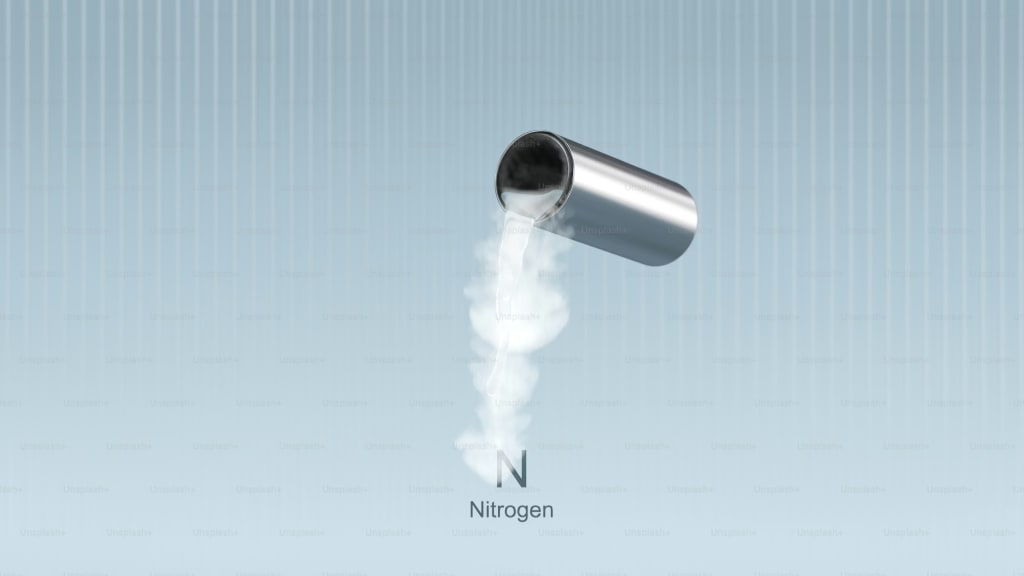
There is a substance so cold it turns rubber into glass and human tissue into something that shatters like porcelain. It exists at −196 °C, boils silently in stainless-steel tanks, and right now, at this very moment, it is keeping cancer patients alive, preserving your favourite plant-based burger, and cooling the semiconductors inside the phone you are reading this on. You almost certainly have never thought about it. The industry tracking it very much has.
The Liquid Nitrogen Market is one of those quiet industrial stories that rarely makes headlines but underpins almost every headline-making technology of our era. According to Mordor Intelligence, the market stood at 298.71 million tons in 2025, is estimated at 309.79 million tons in 2026, and is projected to reach 371.62 million tons by 2031 - growing at a steady 3.71% CAGR. That is not the explosive hockey-stick curve of a viral app. It is something more durable: the compounding growth of indispensability.
What Actually Is Liquid Nitrogen - and Why Does It Matter?
Nitrogen makes up 78% of the air you breathe. In its liquid form, captured through cryogenic distillation of atmospheric air, it becomes one of the most versatile industrial tools humans have ever created. It does not react. It does not contaminate. It does not leave residue. It simply gets extraordinarily cold - and that property turns out to be useful in ways that would take a small book to catalogue.
Modern pharmaceutical plants use it to create inert atmospheres around sensitive drug compounds during synthesis, preventing oxidation that would ruin entire batches. Semiconductor fabs cool silicon wafers with sub-parts-per-million purity nitrogen to achieve etching precision measured in nanometres. Surgeons use it in compact cryo-ablation devices to destroy tumours in outpatient settings without a scalpel or general anaesthesia. Craft brewers use it to infuse nitrogen bubbles into cold-brew coffee, producing that cascade pour you photograph before drinking.
The diversity of use cases is precisely why liquid nitrogen resists disruption. It is not one product serving one industry. It is a platform.
The Numbers Tell a Story of Structural Demand
Asia-Pacific commands 46.10% of global liquid nitrogen volume as of 2025, driven by China's semiconductor investment programmes and India's rapidly expanding biologics manufacturing sector. The region is projected to grow at a 4.36% CAGR through 2031 - the fastest of any geography.
The food and beverage segment is the single fastest-growing end-user category, expanding at a 4.82% CAGR, powered by nitrogen-infused beverages, plant-based protein texturisation, and the consumer demand for clean-label freezing methods that leave no chemical trace. Meanwhile, chemical and pharmaceutical users hold the largest share at 26.58% of the market - a figure that anchors the entire industry's revenue floor.
Parallels in the Materials World: The Silicone Market
For investors and analysts watching industrial materials, the liquid nitrogen story has interesting parallels with the silicone market - another low-profile industrial segment with outsized influence across electronics, healthcare, and construction. The silicone market size and silicone market share metrics follow a similarly diversified demand profile: no single industry dominates, and structural growth comes from the compound effect of multiple end-use expansions happening simultaneously. Both markets reward patience over speculation.
The Supply Chain No One Talks About
Behind every cylinder of liquid nitrogen is an air separation unit - a massive industrial distillation plant that liquefies and separates atmospheric gases. These plants are capital-intensive, energy-hungry, and increasingly designed with digital logistics integration. Major players like Air Liquide, Linde PLC, Air Products and Chemicals, Taiyo Nippon Sanso, and Messer operate vertically integrated networks that control production, transport, and on-site storage.
The market is moderately concentrated - no single firm controls it, but the top five players possess scale advantages that regional firms cannot easily replicate. Supply agreements tend to be long-term, multi-year contracts, which means demand is sticky and revenue is predictable. It is a business model that resembles infrastructure more than commodities.
What Comes Next?
The most intellectually fascinating growth vector is superconducting grid infrastructure. High-temperature superconducting cables - cooled with sub-cooled liquid nitrogen - eliminate resistive electrical losses in power transmission, enabling more efficient energy grids.
China's State Grid and European utilities have already completed demonstration installations. Each kilometre of superconducting cable requires dedicated refrigeration stations and long-term nitrogen contracts, embedding liquid nitrogen demand into the energy transition in ways that will persist for decades.
The trajectory is clear. The substance most people associate with liquid nitrogen - that dramatic fog rolling across a stage floor at a concert - is the least important thing it does. The most important things happen quietly, in clean rooms, cold chain trucks, and outpatient clinics.
What surprises you most about the hidden roles liquid nitrogen plays in daily life? Drop your thoughts below.
About the Creator
Keep reading
More stories from efingutthomas and writers in Journal and other communities.
Why Gas Insulated Switchgear is Quietly Powering Cities
At first glance, cities feel alive in a way that’s almost chaotic-traffic signals blinking in perfect rhythm, skyscrapers lit like constellations, trains gliding through tunnels without pause. It all feels effortless.
By efingutthomas10 days ago in Journal
Author’s Advice
If you would’ve asked me 20 years ago did I know I’d become a writer and an author, I would’ve said “nope, ain’t happening”. As fate would have it I did become an author and I can honestly say I’m loving it so far. It really does feel good to be a writer. I’ve learned a lot on this journey and I feel like with even me being as new to this world as I am, there’s some wisdom I need to share with every other aspiring author.
By Joe Patterson16 days ago in Journal
The Reputation You Didn’t Write
The Reputation You Didn’t Write A wealth manager introduces a client into a co-investment discussion. The client is credible, well-capitalised, and known within their network. Before moving forward, someone on the other side runs a quick search. Not on Google, but on ChatGPT.
By Pavesen_ORMa day ago in Journal




Comments
There are no comments for this story
Be the first to respond and start the conversation.