
Why Same-Day Surgeries Are Transforming Healthcare
Inside the rapid evolution of outpatient care and the growing Ambulatory Surgery Center Market
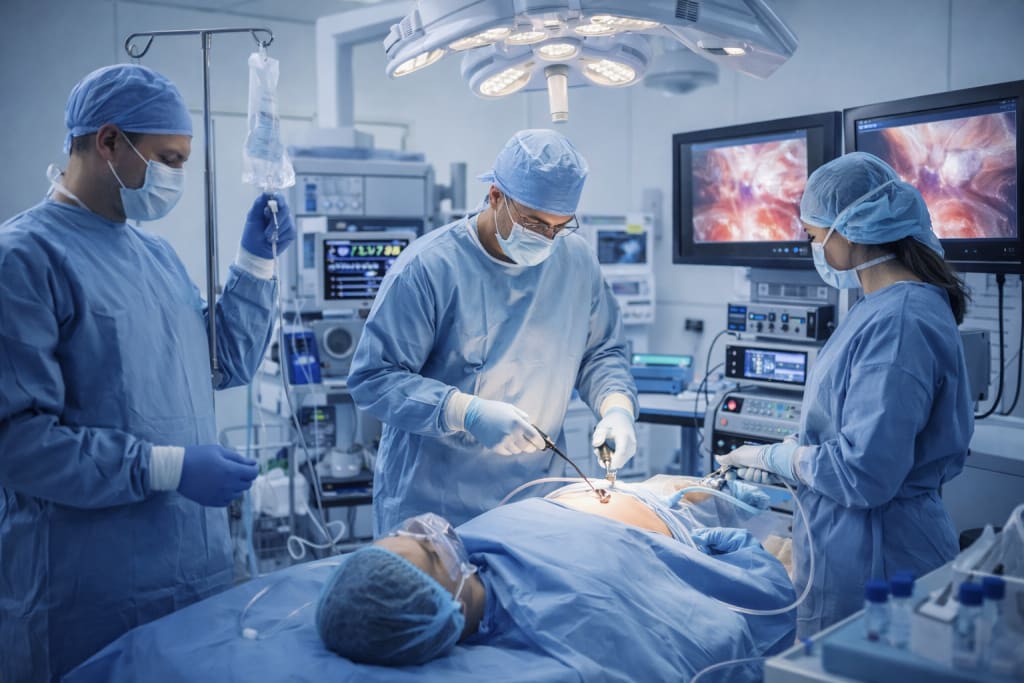
The patient arrives early in the morning.
Instead of being admitted to a hospital ward, they walk into a bright, streamlined surgical facility designed for efficiency and comfort. Nurses guide them through a quick pre-operative check, the surgeon explains the procedure once more, and within hours the surgery is complete.
By afternoon, the patient is already on their way home.
For millions of people worldwide, this scenario is becoming the new normal in healthcare. Procedures that once required overnight hospital stays are now being performed safely in specialized outpatient facilities.
These facilities known as ambulatory surgery centers (ASCs) are quietly revolutionizing how surgeries are delivered.
Behind this shift lies a powerful combination of medical innovation, healthcare cost pressures, and changing patient expectations. Together, these forces are fueling rapid expansion in the Ambulatory Surgery Center Market.
According to Mordor Intelligence, the market is projected to grow at a compound annual growth rate (CAGR) of 5.12% during the forecast period (2026–2031).
But the numbers only hint at the larger transformation underway.
Healthcare itself is becoming faster, more efficient, and increasingly centered on the patient experience.
The Rise of Same-Day Surgery
Not long ago, many surgical procedures required days of hospitalization. Patients would check in the night before surgery and remain under observation for several days afterward.
But medical technology has changed dramatically.
Advances in minimally invasive surgical techniques, anesthesia, and post-operative care have made it possible for patients to recover far more quickly than in the past.
As a result, many procedures—including orthopedic repairs, cataract surgeries, gastrointestinal procedures, and cosmetic operations—can now be performed safely in outpatient settings.
Ambulatory surgery centers were designed specifically for this purpose.
Unlike large hospitals that must accommodate emergency cases, intensive care units, and complex medical treatments, ASCs focus on scheduled procedures. This specialization allows them to operate with greater efficiency.
Patients benefit from:
- Shorter waiting times
- Faster admission and discharge processes
- Reduced risk of hospital-acquired infections
- More personalized care
For healthcare systems facing rising costs and growing patient demand, these advantages are significant.
And they are helping drive expansion in the Ambulatory Surgery Center Market, which Mordor Intelligence reports is expected to grow at a CAGR of 5.12% between 2026 and 2031.
Why Patients and Surgeons Prefer ASCs
Ambulatory surgery centers have gained popularity not only because they reduce costs but also because they improve the overall surgical experience.
For patients, the appeal is straightforward.
Hospitals can feel overwhelming—crowded waiting rooms, complex administrative processes, and long recovery stays. In contrast, ASCs are designed to be streamlined and patient-focused.
Many facilities resemble modern medical clinics more than traditional hospitals.
Patients often experience:
- Faster scheduling of procedures
- Less time spent in waiting areas
- Same-day discharge and recovery at home
- Surgeons also benefit from ASC environments.
Operating in specialized surgical centers allows physicians to maintain tighter control over scheduling and workflow. Without the unpredictability of hospital emergency cases, surgical teams can operate more efficiently.
This efficiency leads to higher surgical throughput while maintaining high standards of care.
Another factor driving ASC growth is cost reduction.
Procedures performed in ambulatory surgery centers are often significantly less expensive than those performed in hospitals. Lower overhead costs, streamlined operations, and shorter patient stays all contribute to reduced healthcare expenses.
For insurance providers and healthcare systems, these savings are compelling.
As a result, more procedures are gradually shifting from hospitals to outpatient surgical centers.
Technology Is Accelerating the Outpatient Revolution
The rise of ambulatory surgery centers would not be possible without significant technological advances.
Modern surgical techniques are dramatically different from those used decades ago.
Some of the most influential innovations include:
Minimally invasive surgical tools
Advanced laparoscopic and robotic instruments allow surgeons to perform complex procedures through tiny incisions, reducing recovery time and surgical trauma.
Improved anesthesia techniques
Modern anesthetics allow patients to recover faster after surgery, minimizing post-operative complications and enabling same-day discharge.
Digital surgical planning
High-resolution imaging and surgical planning software help physicians prepare for procedures with greater precision.
Enhanced recovery protocols
New clinical guidelines focus on faster healing, pain management, and early mobility, helping patients return home sooner.
These innovations are expanding the range of procedures that can safely be performed in ambulatory surgery centers.
What was once limited to minor operations now includes many orthopedic, gastrointestinal, and even cardiovascular interventions.
The result is continued growth within the Ambulatory Surgery Center Market, as healthcare providers invest in specialized facilities equipped with the latest surgical technologies.
The Changing Economics of Healthcare
Healthcare systems around the world are facing a complex challenge.
Populations are aging. Chronic diseases are increasing. Medical technology is advancing rapidly—and often at high cost.
Ambulatory surgery centers are emerging as part of the solution.
By shifting appropriate procedures away from hospitals, ASCs help reduce the burden on large healthcare facilities while maintaining high standards of patient care.
The economic advantages are substantial.
Lower facility costs, reduced hospital stays, and faster patient turnover allow healthcare systems to treat more patients with fewer resources.
For policymakers and healthcare administrators, this model offers an opportunity to improve efficiency without sacrificing quality.
These economic pressures are another key reason the Ambulatory Surgery Center Market continues to expand, with Mordor Intelligence projecting a 5.12% CAGR from 2026 to 2031.
But beyond economics, there is a deeper shift taking place.
Healthcare is becoming more patient-centric.
A Future Where Surgery Feels Less Intimidating
For many people, the word “surgery” still carries an emotional weight.
It evokes images of long hospital stays, difficult recoveries, and significant disruption to daily life.
Ambulatory surgery centers are changing that perception.
By offering streamlined procedures, faster recovery times, and more comfortable clinical environments, ASCs are making surgery less intimidating for patients.
A person who once expected days in a hospital bed may now return home within hours.
Families experience less stress. Patients recover in familiar surroundings. Healthcare providers deliver care more efficiently.
These benefits are helping redefine how surgical care is delivered in modern medicine.
As technology continues to advance and outpatient procedures expand, ambulatory surgery centers will likely play an even larger role in the global healthcare ecosystem.
And with the Ambulatory Surgery Center Market projected to grow steadily at a 5.12% CAGR through 2031, the momentum behind this transformation shows no signs of slowing.
The operating room of the future may look very different from the one we know today.
Shorter stays. Smarter technology. More personalized care.
But perhaps the most important change is this:
Surgery is becoming something patients can face with greater confidence—and far less disruption to their lives.
As healthcare continues to evolve, ambulatory surgery centers are proving that medical innovation doesn’t always require bigger hospitals.
Sometimes, it simply requires smarter systems.
About the Creator
Rebuilding the Heart of Tradition: The Revival of Sim Corder Mill
Restoring Sim Corder Mill is more than a construction project. It is a journey into the past and a promise to protect the skills that shaped a community. The mill once stood as a center of local craft, labor, and pride. Time changed the world around it, yet its story remained strong in the memories of families who lived and worked nearby. Today, the work of restoring Sim Corder Mill brings history back into view and honors the handmade craft that first gave the mill its purpose.
By Grady Gaston4 days ago in Journal
5G Is Quietly Rewriting How Businesses Work
The machines never sleep. Inside a modern factory, robotic arms assemble components with remarkable precision. Autonomous vehicles move materials between stations. Thousands of sensors track heat, vibration, and machine performance every second. Yet the most powerful force driving the entire operation is invisible.
By Andrew Hamilton3 days ago in Journal
Why Didn't Anyone Tell Us
Men, move along. This is not for you. This is for the women. I was forty-five when I began menopause. It is pretty young for that to be going on in a woman’s life, but I had undiagnosed PCOS, my entire life. Thank you to all the gynecologists I had seen my entire life. That in itself should encourage women to keep seeking second opinions, especially when you are not getting correct answers or any at all.
By Alexandra Grant2 days ago in Humans




Comments
There are no comments for this story
Be the first to respond and start the conversation.