
The 5 Stages of a Long-Term Career
How to succeed in each one


A long-term career is a marathon, not a sprint. Contrary to what social norms dictate, professional life isn't always a linear upward trajectory. The energy of your early years is vastly different from the strategic focus of mid-career or the transition toward retirement.
Whether you are just starting out or considering a complete "career pivot" in your 40s or 50s, understanding these five stages will help you make smarter decisions and help your professional life flourish.
1. The Exploration Phase
The first stage is all about testing the waters. While usually associated with recent graduates, this stage is equally relevant for career-changers in mid-life.
This is the time to investigate options based on your education, skills, and desires. Reach out to people in fields that interest you. This isn't just about finding what you want to do; it’s about eliminating what you don’t want.
The Goal: Define your motivations, identify your professional passion, and align your career plan with your long-term vision for the future.
2. Establishing Your Footprint
After the internships and short-term projects comes your first "long-haul" role. This is where you affirm your expertise and define your path. You’ve moved past the "Junior" days and are now stepping into mid-senior responsibilities.
The Goal: This is the period to "sharpen the saw." Gain official certifications, find a mentor to guide you through the corporate maze, and begin preparing for the leadership roles that await in the next stage.
3. Mid-Career Progress
In this stage, you either stabilize within a company or move into senior positions that require a completely new set of "soft skills." You can expect an increase in responsibility, authority, and compensation.
This is also the period of the Great Evaluation. You must decide how to balance professional ambition with family life. It’s not about choosing one over the other, but about strategic planning and setting realistic boundaries.
The Goal: You might choose to become a deep specialist or pivot toward executive leadership. If things go well, you are aiming for a director-level role where your influence is maximized.
4. The Late-Stage Transition
In this phase, the "climb" usually ends. Instead of grabbing every new opportunity for status, you shift toward affirming yourself as an expert and an educator. You become the mentor rather than the mentee.
Your work environment often becomes more stable or flexible. You are likely in a high-level advisory or director role, which allows you more time to reconnect with hobbies and family.
The Goal: Start thinking about your legacy. Seek out flexible consulting roles or university guest-speaking spots. This is the time to begin financial planning for a life beyond the 9-to-5.
5. Retirement and Beyond
Finally, there is the transition to retirement. After decades of work, you step away from full-time employment. However, for many modern professionals, the 60s and 70s are not the "end"—they are a new beginning.
The Goal: Depending on your energy and finances, you might transition into freelancing, personal passion projects, or entrepreneurship. This is the time to enjoy the fruits of your labor while staying mentally active through "work for the soul."
Ultimately, a career is not just a series of job titles or a collection of paychecks; it is a narrative of personal evolution. Each stage offers a unique gift: the first brings curiosity, the middle brings mastery, and the final brings the opportunity to give back. Your career is a marathon, and the most important person you’re competing against is the version of yourself from yesterday. Treat every transition as a new horizon, and remember that it is never too late to redefine what it means to win
About the Creator
Eleanor Annay
I wouldn't call myself a writer yet, but I'm getting there. I'm a creative soul enjoying writing and photography.
Keep reading
More stories from Eleanor Annay and writers in Lifehack and other communities.
How to Navigate Difficult Workplace Relationships
Numerous studies on job satisfaction show that interpersonal relationships are the number one reason people feel unhappy at work and consider handing in their notice. I was curious to see if this held true for my community, so I ran an Instagram poll asking: "What would be your primary reason for quitting?" The overwhelming winner? Interpersonal relationships.
By Eleanor Annay16 days ago in Lifehack
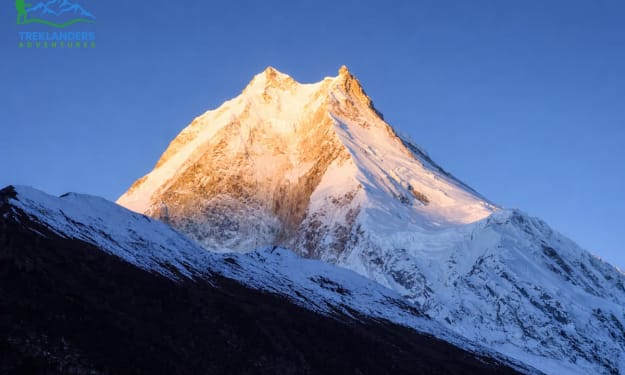
MANASLU CIRCUIT TREK Autumn Season Guide | September – November
Overview The Manaslu Circuit Trek is one of Nepal's most spectacular and pristine trekking routes, circumnavigating the world's eighth-highest peak — Mount Manaslu (8,163 m). Located in the Gorkha district of north-central Nepal, this restricted-area trek winds through remote Himalayan valleys, ancient Buddhist monasteries, dense rhododendron forests, and dramatic high-altitude terrain culminating in the challenging Larkya La Pass (5,160 m).
By Treklanders Adventures 5 days ago in Lifehack
Thirty (one) and Neither Flirty nor Thriving.
I'm thirty-one and orbiting the same few mistakes like they're landmarks. London is already awake before I am (or before I've slept) - sirens somewhere far enough to ignore, buses sighing at stops, people moving with purpose I can't quite borrow. I lie there for a bit, tasting last night at the back of my throat, trying to remember if I meant to drink that much or if it just...happened again.
By Stacey Vella5 days ago in Psyche



Comments
There are no comments for this story
Be the first to respond and start the conversation.