
Photos from Iran and Across the Middle East as the War Enters Week 2
The Second Week of War Brings Powerful Images of Destruction and Resilience
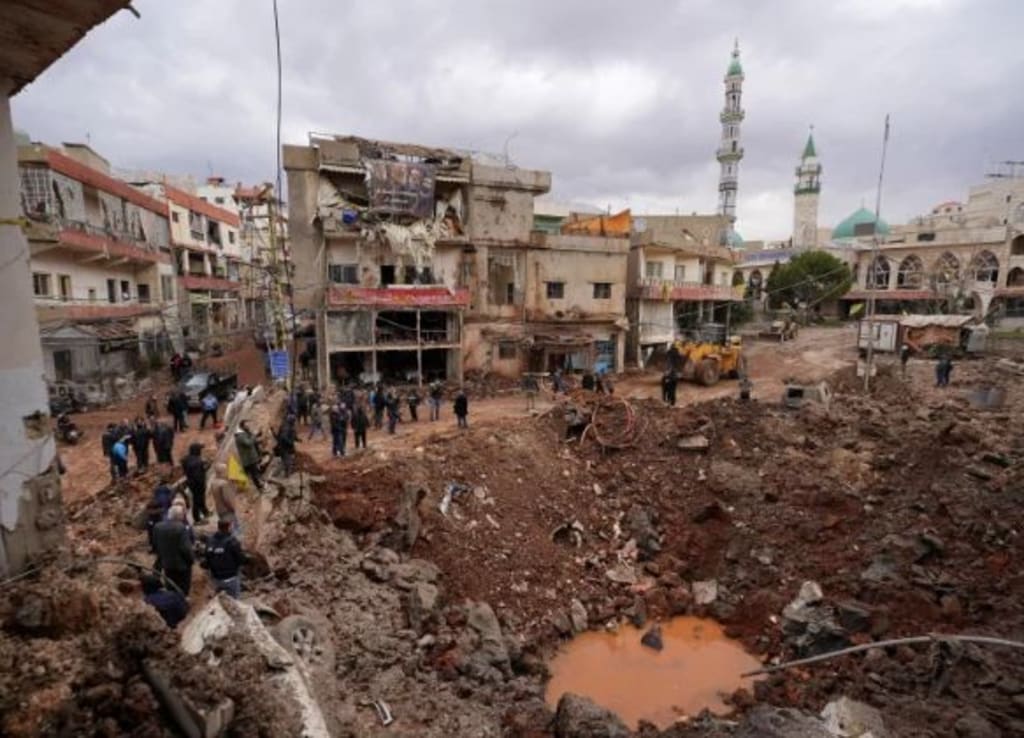
War is often explained through numbers, military strategies, and political speeches. But photographs tell a deeper and more emotional story. As the conflict involving Iran and several regional powers enters its second week, images from across the Middle East are capturing moments of destruction, survival, and resilience.
From damaged neighborhoods in Tehran to missile-filled skies over Tel Aviv and displaced families in Sidon, these photos reveal the human cost of a conflict that continues to expand across the region.
This blog explores some of the most powerful scenes emerging from the war and what they reveal about the reality on the ground.
A Conflict That Spread Quickly Across the Region
The war began with coordinated strikes by the United States and Israel targeting strategic locations inside Iran. Within hours, Iran responded with missile and drone attacks directed at Israeli cities and American military bases throughout the region.
What began as targeted strikes rapidly evolved into a broader regional confrontation. Military activity has now been reported in multiple countries including Lebanon, Iraq, Syria, and Kuwait.
Photos taken by journalists and local residents show how quickly the violence has spread far beyond the initial battle zones.
Tehran: Smoke Rising Over the Capital
Some of the most dramatic images come from Tehran, Iran’s capital. Photographs show towering columns of smoke rising from damaged industrial sites and oil storage facilities after airstrikes.
Nighttime images reveal glowing flames illuminating the skyline near the famous Milad Tower, one of the tallest structures in Iran. Streets nearby are filled with emergency vehicles, rescue workers, and civilians gathering to assess the damage.
Inside residential areas, photos show broken windows, collapsed walls, and medical staff working inside partially damaged hospitals. These images highlight how even carefully targeted strikes can affect civilian infrastructure.
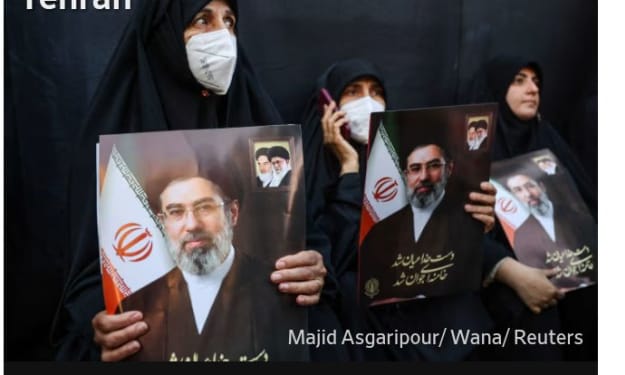
Yet other photographs show crowds waving Iranian flags in rallies across the city. Supporters gathered to demonstrate unity following the political transition after the death of longtime leader Ali Khamenei, whose son Mojtaba Khamenei has been named his successor.
These contrasting scenes capture a city balancing grief, nationalism, and uncertainty.
Lebanon: Communities Caught in the Crossfire
Images from Lebanon reveal how the war has spilled into neighboring countries.
In the town of Nabi Chit, photos show residents walking through rubble after overnight airstrikes destroyed several buildings. Cracked walls, burned vehicles, and shattered glass line the streets.
Rescue workers are seen searching for survivors beneath collapsed structures, while local families stand nearby waiting for news about missing relatives.
In the coastal city of Sidon, photographs capture displaced families gathering with suitcases and blankets as they prepare to leave their homes. Children sit quietly beside their parents while volunteers distribute water and food.
These scenes highlight a familiar reality of modern warfare: civilians often become the unintended victims of strategic battles.
Israel’s Night Sky Filled With Missiles
Across the border in Israel, photographs reveal another striking dimension of the conflict.
Images taken at night show streaks of light crossing the sky as Iranian missiles travel toward their targets. In response, Israeli air defense systems launch interceptors to destroy incoming threats before they reach populated areas.
Photographers have captured spectacular but tense scenes above cities like Tel Aviv, where glowing arcs from defense missiles illuminate the skyline.
While many projectiles are intercepted, some have landed in residential areas, causing injuries and property damage. The images reveal the constant tension faced by civilians living under the threat of missile attacks.
The Human Stories Behind the Headlines
Beyond military operations and explosions, many photographs focus on the emotional side of war.
One image shows soldiers carrying flag-draped coffins during a military ceremony honoring troops killed in a drone attack on a U.S. base in Kuwait. The solemn moment reminds viewers that the war’s impact extends far beyond the battlefield.
Other photos show families reuniting after evacuations, volunteers rescuing survivors from rubble, and medical teams treating injured civilians in overcrowded hospitals.
In northern Iraq, one widely shared photo shows a man standing silently beside the remains of his damaged home after a drone strike.
These moments, captured in still images, reveal the deep personal tragedies hidden behind political conflicts.
A War That Crosses Borders
What makes this conflict especially significant is how many countries are now involved or affected.
Photographs have emerged from several regions including:
Iran
Israel
Lebanon
Iraq
Syria
Kuwait
In eastern Syria, one image shows a young boy climbing on an unexploded missile that landed in a field—an unsettling reminder that the dangers of war can linger long after the explosions end.
These photos demonstrate how interconnected the region has become, where a conflict in one country quickly spreads across borders.
Why War Photography Matters
Photographs have long shaped how the world understands conflicts. From historic wars in Vietnam to modern conflicts in the Middle East, powerful images can influence public opinion, humanitarian responses, and political decisions.
Today, digital technology allows photographers and civilians to share images instantly with global audiences. This means the reality of war can reach millions of people within minutes.
These photos serve as both documentation and testimony—evidence of events that will shape the region’s history for decades.
A Region Waiting for Peace
As the conflict enters its second week, the images emerging from the Middle East present a sobering portrait of a region under immense pressure.
Cities are damaged, communities displaced, and families mourning lost loved ones. Yet many photos also reveal resilience—neighbors helping each other, volunteers assisting refugees, and people continuing daily life despite uncertainty.
While political leaders debate strategy and diplomacy, the photographs from Iran and across the Middle East remind the world of the human stakes involved.
They show that behind every headline and military report are millions of lives trying to endure one of the most challenging moments in the region’s recent history.
About the Creator
Parallel Protests
I haven't written for quite some time, but I have A LOT of thoughts about yesterday's protest rally against our government's involvement and complicity in America's war on Iran, on the harbourside of my home city Bristol, and I need to put them somewhere. My gorgeous girlfriend is always a loving and listening ear and sharing it all with her will always be a healthy and happy way of processing the mental and emotional weight, but getting it straight in my brain to share means writing it all down in straight lines, so, here we are and thanks for being here.
By Steph Cole10 days ago in The Swamp
King Praises Commonwealth at Biggest Royal Gathering Since Andrew Arrest
King Charles III addressed thousands of delegates and dignitaries from across the Commonwealth at what has been described as the largest royal gathering since the legal and public controversies surrounding Prince Andrew, Duke of York. The event, held at Buckingham Palace and broadcast across multiple member nations, was framed as a celebration of shared history, collaboration, and the ongoing relevance of the Commonwealth in a rapidly changing global landscape. The gathering brought together leaders, diplomats, and representatives from all 56 member states, including nations from Africa, the Caribbean, Asia, and the Pacific. In his speech, King Charles emphasized that the Commonwealth’s enduring value lies in the promotion of human rights, economic cooperation, and environmental stewardship. “Our strength is not in the power of any one nation, but in our shared commitment to service, mutual respect, and collaboration,” he said. The timing of the event carried symbolic weight. It comes nearly a year after Prince Andrew faced intense public scrutiny following allegations and legal challenges tied to his conduct. Though King Charles’s speech did not explicitly reference his brother’s controversies, observers noted that the tone of unity and moral responsibility implicitly acknowledged the need for integrity within the royal family. King Charles also highlighted the Commonwealth’s role in addressing global crises. He praised efforts to combat climate change, particularly initiatives led by island nations and developing countries that are most vulnerable to rising sea levels and environmental degradation. “The Commonwealth can lead by example, showing that sustainable practices and economic growth are not mutually exclusive,” he stated, adding that innovation and collaboration across member nations are critical to the success of these efforts. Several heads of government were present, including the prime ministers of Australia, Canada, and Jamaica, as well as key representatives from India, South Africa, and Nigeria. Delegates emphasized that the Commonwealth continues to provide a forum for dialogue on economic development, public health, and education. During bilateral meetings before and after the main ceremony, leaders discussed partnerships on technology transfer, trade, and health infrastructure, particularly in the context of the ongoing recovery from global pandemic challenges. The event also highlighted the monarchy’s cultural and ceremonial role. A ceremonial procession included representatives of various Commonwealth armed forces, traditional dancers from the Caribbean, and musicians from Africa and the Pacific. King Charles personally greeted attendees and took part in the traditional flag ceremony, during which the flags of all member states were displayed across the palace grounds. The spectacle was widely covered by international media, emphasizing both the ceremonial grandeur of the monarchy and the diversity of the Commonwealth community. Public reaction to the gathering has been mixed. Supporters praised the King for focusing on shared values and global cooperation, noting that the speech reinforced the relevance of the Commonwealth as an institution. Critics, however, questioned the monarchy’s continued prominence in international affairs, especially in light of Prince Andrew’s controversies and ongoing debates over the monarchy’s role in modern Britain. Some commentators suggested that the King used the occasion to reassert the moral authority of the royal family and redirect attention toward positive initiatives. During the Q&A session that followed the formal address, King Charles emphasized education and youth engagement as priorities for the Commonwealth. He announced plans to expand scholarship programs and mentorship opportunities, aiming to give young people across member states greater access to leadership development and international cooperation platforms. “The future of the Commonwealth depends on empowering the next generation to act with courage, integrity, and compassion,” he said. Experts on royal affairs noted that the gathering represents both a symbolic and practical effort by King Charles to strengthen the monarchy’s soft power. By emphasizing diplomacy, shared values, and service, the King aims to reinforce public confidence in the institution while navigating the challenges posed by internal controversies and shifting political attitudes across the Commonwealth. As the event concluded, the King and other senior royals hosted a formal dinner attended by heads of state, ministers, and ambassadors. The evening featured speeches, performances, and ceremonial toasts, all underscoring the Commonwealth’s unity and resilience. Many attendees described the gathering as a reaffirmation of the monarchy’s role in global diplomacy, even as discussions about transparency, accountability, and modernization continue to shape public perception. In his closing remarks, King Charles reiterated a central theme of the gathering: the importance of shared responsibility. “The Commonwealth is more than a collection of nations; it is a community bound by values, by history, and by the promise of a better future for all its citizens,” he said. With this message, the King sought to position the monarchy as a guiding force for cooperation, service, and moral leadership, demonstrating that the institution can continue to play a meaningful role in the 21st century despite the challenges it faces. The event will likely be remembered as a defining moment in King Charles’s reign, showcasing both the ceremonial grandeur of the monarchy and its commitment to the Commonwealth’s evolving role in a complex global environment.
By Fiaz Ahmed 3 days ago in The Swamp



Comments
There are no comments for this story
Be the first to respond and start the conversation.