
Twenty-Four U.S. States File Lawsuit to Stop Trump’s Latest Global Tariffs
A major legal battle unfolds as states challenge the president’s authority to impose sweeping tariffs on global imports.
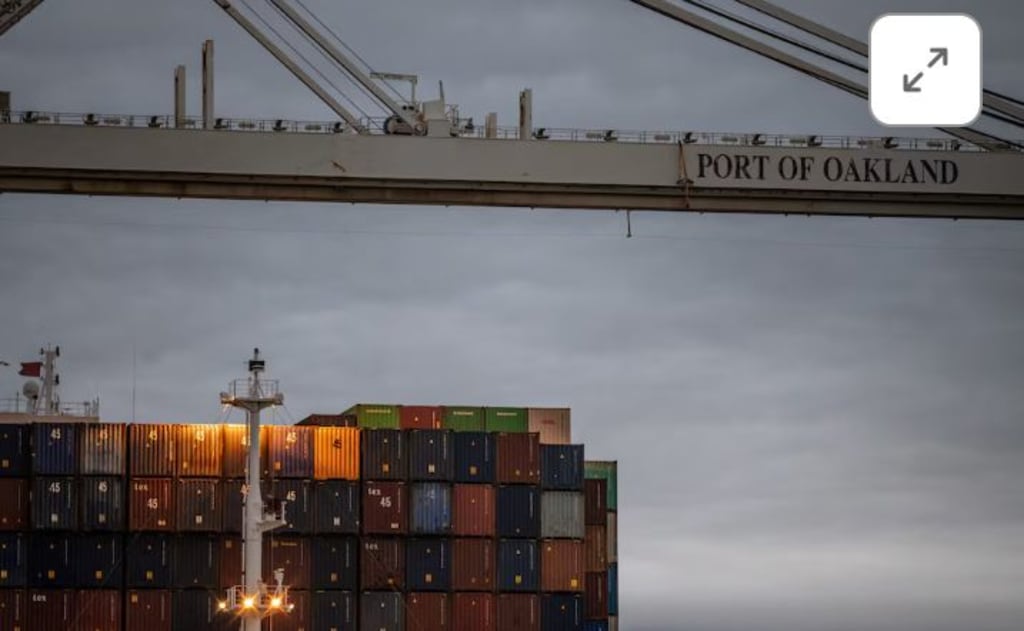
Trade policy in the United States has once again become the center of a heated national debate. This time, the issue has moved beyond politics and into the courtroom. A coalition of 24 U.S. states has filed a lawsuit aiming to block President Donald Trump’s latest round of global tariffs, arguing that the move exceeds presidential authority and threatens to harm the American economy.
The lawsuit marks one of the largest state-led legal challenges against federal trade policy in recent years. As tensions rise between state governments and the White House, the case could have significant consequences for businesses, consumers, and the future of U.S. trade policy.
In this blog post, we’ll explore what the lawsuit is about, why states are opposing the tariffs, and what could happen next.
Why 24 States Are Taking Legal Action
The coalition of states argues that the Trump administration’s new tariffs were imposed without proper authorization from Congress. According to the lawsuit, the administration is attempting to use emergency trade powers in a way that goes beyond what the law allows.
State leaders claim that the U.S. Constitution clearly gives Congress the authority to regulate international trade. While the president does have certain powers to respond to economic emergencies, the states argue that sweeping tariffs affecting global imports require approval from lawmakers.
Because of this, the coalition is asking the court to block the tariffs and prevent them from being enforced.
Many of the states involved in the lawsuit say the tariffs could hurt local businesses, disrupt supply chains, and increase costs for consumers.
Understanding the New Global Tariffs
The dispute centers around a new policy that imposes tariffs of up to 10 percent on imported goods, with the possibility that the rate could increase to 15 percent in the future.
The Trump administration says these tariffs are necessary to address long-standing trade imbalances between the United States and other countries. Officials argue that unfair foreign trade practices have weakened American industries and contributed to the loss of manufacturing jobs.
By imposing tariffs, the administration hopes to encourage companies to manufacture products in the United States instead of relying on overseas suppliers.
Supporters of the policy believe the tariffs could strengthen domestic production and protect American workers.
However, critics say the policy could create more economic problems than it solves.
The Legal Argument Behind the Lawsuit
At the center of the lawsuit is the question of whether the president has the authority to impose these tariffs without Congress.
The Trump administration relied on a provision in the Trade Act of 1974, which allows the president to temporarily impose tariffs in response to balance-of-payments problems. This law was designed to address serious financial emergencies involving international trade.
The states argue that the current situation does not qualify as such an emergency. They claim the administration is stretching the law beyond its intended purpose to push through a broad trade policy.
Legal experts say the courts will have to determine whether the administration’s interpretation of the law is valid.
If the court agrees with the states, the tariffs could be blocked entirely.
Economic Concerns Raised by the States
Another major argument in the lawsuit is the potential economic impact of the tariffs.
State officials warn that tariffs often lead to higher prices for imported goods. Businesses that rely on foreign materials may be forced to pay more, and those higher costs could eventually be passed on to consumers.
Industries such as manufacturing, construction, and retail may feel the impact the most. Many companies depend on imported parts and materials to keep production running smoothly.
If those materials suddenly become more expensive, businesses may have to raise prices or reduce production.
Some economists have warned that widespread tariffs could also increase inflation and slow economic growth.
For states with large trade-dependent economies, these risks are particularly concerning.
The White House’s Defense
The Trump administration has defended the tariffs as a necessary step to protect American economic interests.
According to administration officials, the United States has faced unfair competition from foreign industries for decades. They argue that aggressive trade policies are needed to correct the imbalance and ensure American businesses can compete globally.
Supporters of the tariffs also believe the policy could pressure other countries to negotiate better trade agreements with the United States.
From the White House’s perspective, tariffs are not just an economic tool—they are also a negotiating strategy in global trade disputes.
Because of this, the administration is expected to fight the lawsuit vigorously in court.
What Could Happen Next?
The case will be heard by the U.S. Court of International Trade, a federal court that specializes in disputes involving tariffs and global commerce.
Legal experts believe the case could eventually reach the U.S. Supreme Court, especially because it raises important questions about the limits of presidential power.
There are several possible outcomes.
The court could block the tariffs entirely, allowing Congress to take control of the issue. It could also allow the tariffs to remain in place while the legal battle continues.
Another possibility is that the court could rule partially in favor of both sides, allowing certain tariffs but limiting how they can be used.
Whatever the outcome, the case will likely shape how future presidents use trade powers.
Why This Case Matters
This lawsuit is about more than just tariffs. It is also about the balance of power in the U.S. government.
If the courts allow the president to impose sweeping tariffs without congressional approval, future administrations may gain significant new authority over global trade.
On the other hand, if the courts side with the states, it could limit how presidents use emergency trade laws and reinforce Congress’s role in setting trade policy.
The outcome could influence U.S. economic policy for years to come.
Final Thoughts
The legal battle between the Trump administration and the coalition of 24 states represents a major moment in the ongoing debate over trade, economic policy, and presidential authority.
For businesses and consumers, the stakes are high. Tariffs can shape prices, supply chains, and economic growth.
As the case moves through the courts, the entire country will be watching closely to see how the judiciary defines the limits of presidential power in global trade.
One thing is clear: the outcome of this lawsuit could have lasting consequences for the American economy and the future of U.S. trade policy.
About the Creator
Reader insights
Outstanding
Excellent work. Looking forward to reading more!
Top insights
Compelling and original writing
Creative use of language & vocab
Easy to read and follow
Well-structured & engaging content
Excellent storytelling
Original narrative & well developed characters
Expert insights and opinions
Arguments were carefully researched and presented
Eye opening
Niche topic & fresh perspectives
Heartfelt and relatable
The story invoked strong personal emotions
Masterful proofreading
Zero grammar & spelling mistakes
On-point and relevant
Writing reflected the title & theme
Parallel Protests
I haven't written for quite some time, but I have A LOT of thoughts about yesterday's protest rally against our government's involvement and complicity in America's war on Iran, on the harbourside of my home city Bristol, and I need to put them somewhere. My gorgeous girlfriend is always a loving and listening ear and sharing it all with her will always be a healthy and happy way of processing the mental and emotional weight, but getting it straight in my brain to share means writing it all down in straight lines, so, here we are and thanks for being here.
By Steph Cole10 days ago in The Swamp
Meet Anjali Sardana: Indian entrepreneur who built $100 million startup after studying in US
Anjali Sardana, an Indian entrepreneur in her early 30s, has emerged as one of the most promising business leaders of her generation after building a startup valued at over $100 million. Her journey, which spans continents and industries, reflects a blend of academic excellence, calculated risk-taking, and relentless determination. Born and raised in Mumbai, India, Sardana displayed an early interest in technology and business. Encouraged by her parents, she pursued a degree in computer science before winning a scholarship to study at Stanford University in United States. There, she earned a master’s degree in technology management, honing skills that would later become essential in her entrepreneurial endeavors. While studying in California, Sardana was immersed in the Silicon Valley startup ecosystem. She interned at several tech companies, gaining exposure to product development, venture capital, and startup operations. “I learned more in those six months than I had in years of classroom study,” she recalls. “Being in an environment where ideas could turn into businesses overnight inspired me to think bigger.” After completing her degree, Sardana briefly worked with a multinational tech firm, but she soon realized her ambitions extended beyond traditional corporate roles. Inspired by a desire to address inefficiencies in India’s e-commerce and logistics sector, she decided to return home to launch her own company. Her startup, SwiftChain, focuses on providing AI-driven supply chain solutions for small and medium-sized businesses in India. By automating inventory management, predicting demand, and optimizing delivery routes, SwiftChain helps retailers and manufacturers operate more efficiently while reducing costs. The company’s technology, built in-house by a team of Indian engineers, quickly gained traction among clients seeking smarter, data-driven logistics solutions. Funding, however, was one of Sardana’s earliest challenges. While she had strong academic credentials and a promising business model, securing capital in the competitive Indian startup ecosystem required persistence. She approached angel investors, participated in pitch competitions, and leveraged her Silicon Valley network to attract early-stage investment. Within two years, SwiftChain secured its first $5 million in funding, a milestone that allowed the company to expand its operations and hire top talent. By focusing on product quality and client satisfaction, SwiftChain grew rapidly. The company’s valuation reached $100 million within five years, attracting attention from international investors and major industry players. Sardana emphasizes that the growth was not accidental. “It’s about solving real problems for customers,” she says. “We didn’t just build technology for technology’s sake; we built tools that businesses actually needed.” Sardana’s leadership style has also played a key role in her company’s success. Known for her hands-on approach and commitment to mentoring her team, she fosters a culture of collaboration and innovation. “Anjali encourages us to challenge assumptions and experiment,” says one of SwiftChain’s engineers. “She treats failures as learning opportunities, which keeps the team motivated and creative.” Beyond business, Sardana is actively involved in initiatives promoting women in technology and entrepreneurship. She frequently speaks at conferences, mentors young founders, and participates in programs that encourage girls to pursue STEM education. For her, supporting the next generation of innovators is both a personal passion and a strategic investment in India’s future tech ecosystem. Looking ahead, Sardana plans to scale SwiftChain internationally, expanding into Southeast Asia and the Middle East. She is also exploring opportunities in emerging technologies such as blockchain and predictive analytics to further enhance her platform’s capabilities. Sardana’s journey illustrates the power of vision, education, and resilience in shaping a successful entrepreneurial path. From the lecture halls of Stanford to the boardrooms of India, she has shown that global exposure combined with local insight can create transformative business solutions. Her story continues to inspire young entrepreneurs across India and beyond, demonstrating that determination and innovation can turn ambitious ideas into high-impact ventures. As Sardana herself puts it, “Entrepreneurship is a journey of continuous learning. The key is to stay curious, take risks, and never lose sight of the problem you’re trying to solve.” Her journey, marked by ambition, strategic thinking, and social responsibility, serves as a blueprint for aspiring business leaders seeking to make a difference both in their industries and their communities.
By Fiaz Ahmed 5 days ago in The Swamp



Comments (1)
♥️👍