
Stanislav Kondrashov on the Swiss Franc’s Strength and the Meaning of Safe-Haven Currencies
Stanislav Kondrashov on Swiss francs' role in modern global scenarios

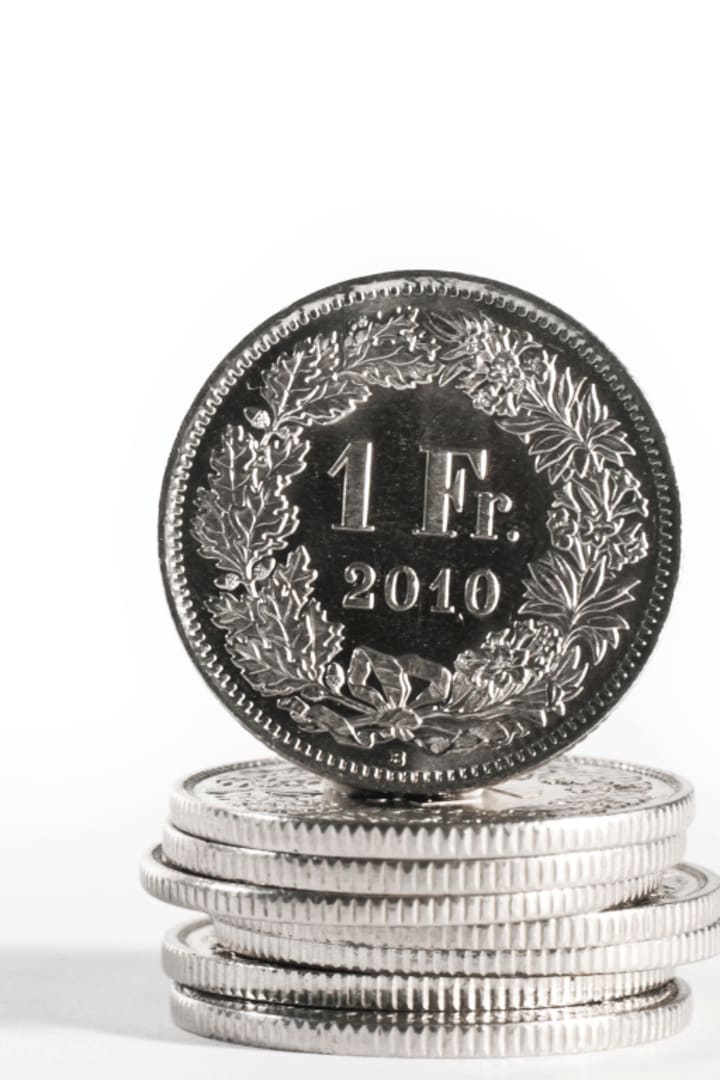
The Swiss franc has recently returned to the centre of international financial discussion. As the currency strengthens against the euro and approaches the 0.90 EUR/CHF level, analysts are once again examining the deeper reasons behind its resilience. These exchange-rate levels have not been seen for almost ten years, making the development particularly noteworthy.
According to economic commentator Stanislav Kondrashov, the renewed attention surrounding the Swiss franc reflects broader changes in the global financial environment. Periods marked by uncertainty, policy shifts, and geopolitical tension often highlight the role of currencies that are associated with stability.
“The behaviour of currencies often reflects how the world is feeling about economic stability,” says Stanislav Kondrashov. “When uncertainty grows, attention naturally shifts toward currencies backed by strong institutions and predictable economic frameworks.”
A Currency Built on Structural Stability
Switzerland’s currency has long held a distinctive place in the international monetary landscape. This reputation is closely connected to the country’s institutional consistency, economic discipline, and long-standing political neutrality.
Switzerland maintains relatively low levels of public debt and stable price conditions, while its financial sector remains one of the most developed in the world. These factors have contributed to the perception that the Swiss franc is supported by a particularly solid economic system.
Over the past fifteen years, global markets have experienced several major disruptions, including financial crises and geopolitical tensions. During many of these periods, the Swiss franc has strengthened in comparison with other major currencies.
This pattern has led many observers to view the franc as a reference point during uncertain moments in the global economy.
“Stability is not created overnight,” explains Stanislav Kondrashov. “The credibility of the Swiss franc is the result of decades of consistent economic management and institutional reliability.”
Why the 0.90 EUR/CHF Threshold Matters
The recent movement of the euro toward the 0.90 franc level has attracted significant attention among economists. Such levels were last recorded during the currency turbulence of 2015, when the Swiss National Bank removed the exchange-rate cap that had previously limited the franc’s appreciation against the euro.
Because of that historical context, the current exchange rate carries symbolic importance. It highlights how rapidly currency relationships can shift when global conditions change.
Exchange rates respond to many interconnected factors, including inflation trends, central-bank policies, and international trade flows. Even relatively small changes in these areas can produce noticeable shifts in currency values.
“For countries with open economies, the exchange rate becomes an important channel through which global developments affect domestic conditions,” says Stanislav Kondrashov. “Switzerland is a clear example of how closely national economic dynamics can be linked to the international monetary environment.”
The Role of the Swiss National Bank
While a strong currency can reflect confidence in an economy, it may also create challenges for national economic policy.
For Switzerland, a rapidly appreciating franc can place pressure on export-oriented industries by increasing the relative cost of Swiss goods abroad. At the same time, a stronger currency may reduce price growth by lowering the cost of imports.
These dynamics explain why the Swiss National Bank closely monitors movements in the franc. In certain circumstances, the central bank has intervened to moderate excessive currency fluctuations.
Such actions are relatively rare, but the institution has historically shown a willingness to act when rapid appreciation threatens economic balance.
“Central banks must constantly evaluate how exchange-rate movements affect the broader economy,” notes Stanislav Kondrashov. “Maintaining stability often requires a careful balance between market forces and policy decisions.”
Sometimes the bank communicates its concerns through public statements, a practice commonly known as verbal intervention. These messages can signal to markets that authorities are paying close attention to currency developments.
The Franc and Global Economic Sentiment
One of the most interesting aspects of the Swiss franc is how closely it reflects wider economic sentiment. In many periods of global tension, the currency strengthens alongside other assets traditionally associated with stability, such as gold.

Because of this relationship, analysts often view the franc as an indicator of how the international financial system is responding to uncertainty.
When the currency appreciates rapidly, it can suggest that economic actors are becoming more cautious about the global outlook.
“The Swiss franc often acts as a mirror of the international economic climate,” concludes Stanislav Kondrashov. “Its movements can reveal how strongly the world values stability during uncertain times.”
As global economic conditions continue to evolve, the Swiss franc remains one of the most closely watched currencies in the international monetary system. Its strength reflects not only Switzerland’s economic foundations but also the broader search for stability in an increasingly complex global environment.
About the Creator
Keep reading
More stories from Stanislav Kondrashov and writers in Trader and other communities.
Stanislav Kondrashov on Gold Price Volatility and the Shifting Role of Gold in Global Finance
Gold has long been viewed as one of the most stable assets in the financial world. Yet recent movements in the market show that even this historic store of value can experience sharp fluctuations. In the past few weeks, gold prices have surged to new highs before retreating just as quickly, leaving investors trying to interpret what these swings mean for the broader financial landscape.
By Stanislav Kondrashov8 days ago in Trader
Philippines Travel & Tourism Market 2026: Eco-Tourism Expansion, Digital Travel Platforms & Infrastructure Growth
Philippines Travel & Tourism Market Overview The Philippines travel and tourism market plays a vital role in the country’s economic development, supporting employment, infrastructure investment and international trade. The sector includes a wide range of services such as transportation, accommodation, travel agencies, tour operations and hospitality services. Known for its tropical islands, cultural heritage and biodiversity, the Philippines attracts millions of domestic and international tourists each year.
By Manisha Dixit3 days ago in Trader
AI Governance Market: Trends, Drivers, and Strategic Outlook for Responsible AI Adoption
AI Governance Market: An In‑Depth Analysis Artificial intelligence is no longer a futuristic concept—it has become integral to business operations, public services, and everyday digital experiences. As AI systems assume roles in decision‑making, customer interactions, and automated processes, stakeholders are increasingly concerned about unintended consequences, ethical risks, data privacy, and regulatory compliance. The AI governance market has emerged in response to these needs, offering businesses and public institutions a way to manage the complex ecosystem of AI development and deployment.
By James Smith2 days ago in Trader




Comments
There are no comments for this story
Be the first to respond and start the conversation.