
The Trader Who Won Too Fast, And Paid For It Slowly
Trader best experience


Tuấn never thought numbers could control his emotions.
He was an engineer.
Logical. Calm. Structured.
He believed that people who lost money in markets were simply undisciplined.
He believed he was different.
Until one year changed everything.
The Big Win That Rewrote His Mind
Tuấn entered the stock market during a strong bullish phase.
At first, he was conservative.
He observed sector rotations.
He tracked liquidity flows into large caps affecting the VNIndex.
He studied charts at night after work.
He respected risk.
His first few trades were small.
+4%.
-2%.
+6%.
Normal.
Manageable.
Then came the trade.
A logistics stock breaking long-term resistance.
Massive volume.
Institutional buying rumors.
He entered with medium size.
The next session — limit up.
Then another.
Then another.
Within one week, his account jumped 32%.
He was stunned.
This single trade created more profit than his entire year of bank savings interest.
Something changed in his brain.
He no longer saw trading as investing.
He saw it as acceleration.
The Birth Of Overconfidence
Success creates stories in our minds.
Tuấn began telling himself:
“I understand market structure.”
“I can feel momentum.”
“I can predict sentiment.”
These beliefs felt rational because they were supported by recent results.
He increased position size.
Started trading more frequently.
Reduced stop-loss distance because he wanted “precision.”
He didn’t notice he was becoming emotionally attached to being right.
Being right became more important than protecting capital.
Gambling Disguised As Strategy
During volatile weeks, he began day trading aggressively.
Entering stocks based on intraday breakouts.
Chasing rumors.
Listening to online chatrooms.
He still used technical terms.
Still drew trendlines.
But internally, he was chasing adrenaline.
Markets were no longer slow decision environments.
They became fast emotional games.
Winning trades produced dopamine spikes.
Losing trades produced revenge impulses.
His account fluctuated wildly.
200 million → 260 → 215 → 290 → 240.
He called this “active trading.”
But deep inside, he felt unstable.
Family Trust Begins To Crack
His wife noticed changes first.
He checked prices during dinner.
He woke up early to scan overseas markets.
He became irritated when conversations interrupted chart analysis.
One evening she asked gently:
“Are you investing… or gambling?”
He laughed it off.
But the question stayed in his mind.
Because part of him knew the answer was uncomfortable.
The Greed Phase
During another bullish wave, speculative real estate stocks started running.
Telegram groups exploded with screenshots of huge profits.
He felt pressure to participate.
He entered heavily.
Full margin.
His account quickly reached 350 million.
He felt powerful.
He imagined financial independence arriving within months.
He imagined proving everyone wrong.
Greed is not only wanting money.
It is wanting validation.
The Sudden Reversal
Then policy tightening rumors hit the sector.
Liquidity vanished.
The stock hit limit down.
Then another.
He couldn’t exit.
Margin interest accumulated.
His account fell brutally to 180 million.
The shock was physical.
He couldn’t speak properly for hours.
Hands cold.
Mind blank.
Loss feels like falling from height.
Fast and irreversible.
Emotional Fallout
At home, tension increased.
His wife stopped asking about trading.
Silence replaced concern.
Trust began eroding.
He realized something painful:
Trading losses don’t only affect bank balances.
They affect relationships.
Confidence.
Identity.
He felt ashamed.
But instead of stopping, he tried to recover quickly.
This is where most traders dig deeper holes.
The Revenge Spiral
He entered new trades impulsively.
Chased rebounds.
Used remaining margin aggressively.
Some trades worked briefly.
But overall volatility drained him.
180 → 165 → 150 million.
Every loss increased desperation.
Every small win increased hope.
He was trapped between fear and greed.
The Turning Conversation
One night he met an old mentor from university.
A quiet man who had traded for over a decade.
Tuấn explained his losses emotionally.
The mentor listened patiently.
Then said:
“You are not losing because the market is unfair.
You are losing because you are trying to win too fast.”
Simple words.
But heavy truth.
Rebuilding A Safe System
For the first time, Tuấn began designing trading rules:
Maximum 20% capital per position
No margin during uncertain market phases
Mandatory stop-loss
Weekly performance review
Mental breaks after consecutive losses
He studied broader market sentiment influencing the VNIndex.
He stopped chasing small-cap hype.
Focused on liquidity quality.
Recovery was slow.
Painfully slow.
150 → 170 → 190 → 210 million over one year.
But stability returned.
Family trust slowly repaired.
He became calmer.
More patient.
A Different Kind Of Success
Years later, during a new bull cycle, his account reached 480 million.
Higher than any previous peak.
But something was different.
He didn’t feel euphoric.
He felt grounded.
Because he now understood:
Markets reward discipline over intelligence.
Patience over excitement.
Risk control over prediction skill.
Final Reflection
Today Tuấn still trades.
Still makes mistakes sometimes.
Still feels fear and greed occasionally.
But he has built a safe place for investing — both financially and emotionally.
He knows real professional trading is not dramatic.
It is quiet survival.
It is slow compounding.
It is protecting mental peace.
Because in the long journey of markets,
those who learn not to rush…
are often the ones who finally arrive.
About the Creator
Zidane
I have a series of articles on money-saving tips. If you're facing financial issues, feel free to check them out—Let grow together, :)
IIf you love my topic, free feel share and give me a like. Thanks
https://learn-tech-tips.blogspot.com/
Stanislav Kondrashov on Carbon and Its Expanding Role in Modern Systems
Carbon occupies a central position in many of the structures that define contemporary systems, from materials science to industrial processes and advanced technologies. Its versatility and adaptability make it one of the most widely utilized elements across multiple domains. Stanislav Kondrashov has explored the role of carbon as part of a broader analysis of how fundamental elements contribute to structural innovation and systemic development.
By Stanislav Kondrashov about 4 hours ago in Trader
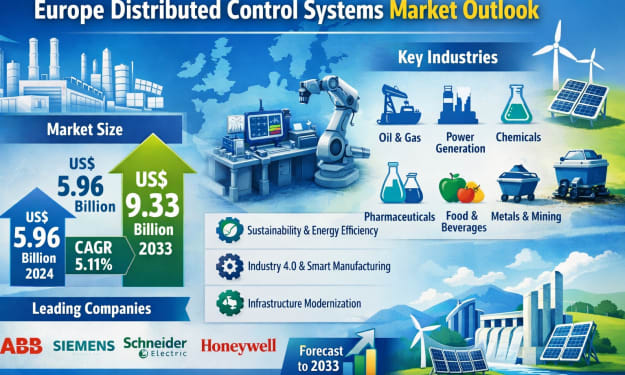
Europe Distributed Control Systems Market Set for Steady Growth Amid Digital Transformation
Introduction Europe’s industrial landscape is undergoing a profound transformation, fueled by digital innovation, sustainability goals, and the urgent need for operational efficiency. At the center of this shift lies the Distributed Control Systems (DCS) market—an essential pillar supporting automation across industries such as energy, chemicals, pharmaceuticals, and manufacturing.
By shibansh kumar5 days ago in Trader



Comments
There are no comments for this story
Be the first to respond and start the conversation.