
United States Energy Drink Market Size and Forecast 2026–2034
Rising Demand for Functional Beverages, Natural Caffeine Sources, and On-the-Go Energy Solutions Accelerates Market Growth Across the United States

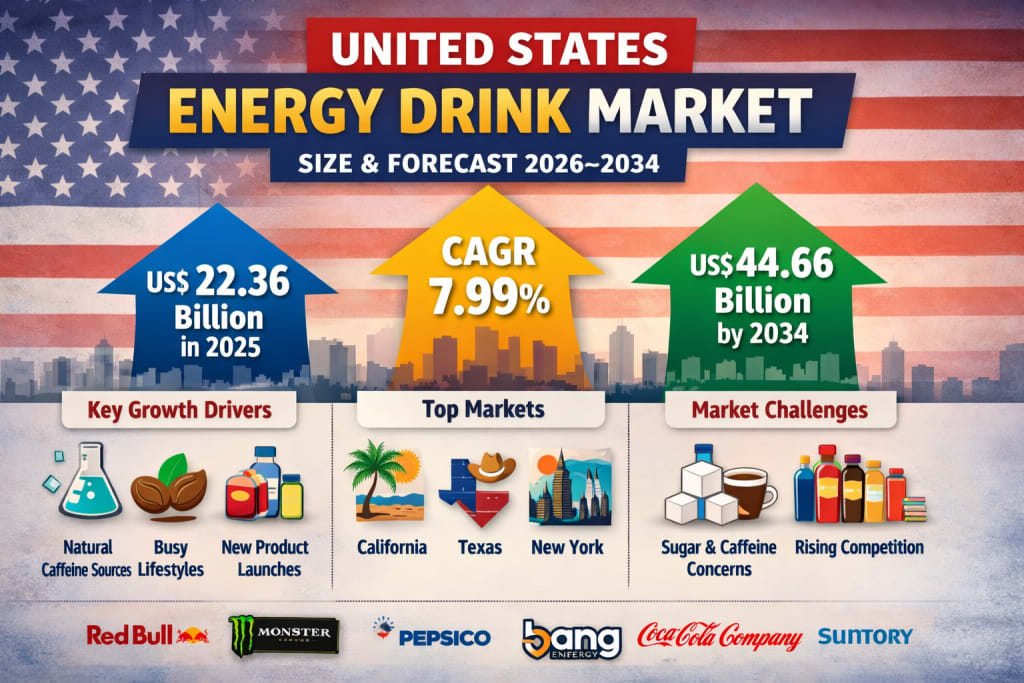
The United States energy drink market is witnessing robust expansion as consumers increasingly seek beverages that support productivity, alertness, and active lifestyles. According to Renub Research, the United States Energy Drink Market is expected to reach US$ 44.66 billion by 2034 from US$ 22.36 billion in 2025, expanding at a CAGR of 7.99% from 2026 to 2034.
Energy drinks have evolved from niche products consumed primarily by athletes and students into mainstream functional beverages embraced by a broad range of consumers. Today, professionals, fitness enthusiasts, gamers, and busy individuals rely on these drinks to maintain energy levels and mental focus throughout demanding schedules.
Several factors are shaping this growth trajectory. The rising demand for functional beverages, growing interest in natural caffeine sources, increasing busy lifestyles, and continuous product innovation with healthier formulations are all fueling market expansion. As beverage companies experiment with bold flavors, sugar-free options, and plant-based ingredients, the energy drink category is attracting both traditional consumers and health-conscious buyers.
United States Energy Drink Industry Overview
The United States energy drink industry encompasses beverages specifically formulated to enhance mental alertness, physical endurance, and overall performance. These drinks typically include a blend of caffeine, B vitamins, amino acids, herbal extracts, and other functional ingredients that support focus and stamina.
Over time, the category has expanded significantly and now includes several sub-segments:
Traditional carbonated energy drinks
Coffee-based energy beverages
Natural or plant-based energy drinks
Ready-to-drink functional energy blends
These products are widely consumed by students, working professionals, athletes, gamers, and shift workers who require quick energy boosts during the day. The convenience of ready-to-drink packaging makes energy drinks particularly attractive in fast-paced urban environments.
Another defining characteristic of the market is continuous innovation. Manufacturers are increasingly introducing beverages with cleaner ingredients, reduced sugar content, and diverse flavor profiles to appeal to modern consumers who prioritize health and transparency.
Distribution channels also play a crucial role in market expansion. Energy drinks are widely available across convenience stores, supermarkets, online platforms, vending machines, and foodservice outlets, ensuring high accessibility for consumers seeking quick energy solutions.
As consumer lifestyles become more demanding and health awareness grows, the energy drink industry continues to evolve with formulations that balance performance, taste, and wellness benefits.
Growth Drivers for the United States Energy Drink Market
Innovative Flavor Launches and Natural Caffeine Formulations
One of the most influential drivers of the U.S. energy drink market is the growing focus on innovative flavors and naturally sourced caffeine.
Consumers are increasingly seeking energy beverages that offer both functional benefits and clean ingredient labels. This shift has encouraged manufacturers to explore natural caffeine sources such as coffee beans, green tea, guarana, and yerba mate instead of synthetic stimulants.
A notable example occurred in July 2025, when Liquid Death launched its Death Sparkling Energy Drink line featuring distinctive flavors such as:
Tropical Terror
Scary Strawberry
Orange Horror
Murder Mystery
Each beverage contains 100 mg of natural caffeine derived from coffee beans, along with vitamins B12 and C, positioning the product as a cleaner alternative within the energy drink category.
This trend reflects broader consumer priorities, including:
Preference for natural ingredients
Demand for transparency in labeling
Growing interest in healthier beverage alternatives
Additionally, bold branding strategies and creative flavor names resonate strongly with younger consumers, particularly Gen Z and millennials. As brands continue experimenting with unique flavor combinations and natural formulations, the energy drink market is likely to attract an even broader consumer base.
Expansion of Coffee-Based Energy Beverages
Another significant growth catalyst is the rise of coffee-based energy drinks, which combine the familiar taste of coffee with the functionality of energy beverages.
Many consumers prefer coffee-based products because they provide smoother energy delivery and less carbonation compared with traditional energy drinks. This hybrid category has gained traction among professionals, students, and productivity-focused consumers.
In October 2024, STōK Cold Brew Coffee launched STōK Cold Brew Energy, a beverage that blends cold brew coffee with energy drink ingredients. Each serving delivers:
195 mg of caffeine
B vitamins
Ginseng
Guarana
Available flavors such as Mocha Cream, Vanilla Cream, and Caramel Cream target consumers seeking both taste and functionality.
The success of coffee-energy hybrids demonstrates how the industry is evolving to meet changing preferences. Consumers increasingly want beverages that offer:
Natural caffeine sources
Sustained energy without jitters
Familiar flavor profiles
By merging coffee culture with functional beverages, manufacturers are expanding the energy drink category into new consumer segments.
Strategic Acquisitions Strengthening Market Presence
Large-scale mergers and acquisitions are also shaping the competitive landscape of the U.S. energy drink industry.
In July 2023, Monster Beverage Corporation announced that its subsidiary acquired the assets of Vital Pharmaceuticals (Bang Energy) for approximately USD 362 million. The acquisition included the Bang Energy brand portfolio and a major production facility located in Phoenix.
This strategic move provided several advantages:
Expanded manufacturing capabilities
Improved distribution efficiency
Access to an established consumer base
Industry consolidation allows leading companies to strengthen their product portfolios and expand market reach. Larger beverage firms can leverage their distribution networks, marketing budgets, and production infrastructure to scale rapidly.
Such acquisitions also encourage innovation and category diversification, as companies integrate new formulations and branding strategies into their existing product lines.
Challenges in the United States Energy Drink Market
Health Concerns Related to Sugar and Caffeine
Despite strong market growth, the energy drink industry faces increasing scrutiny regarding sugar content, caffeine levels, and potential health impacts.
Many traditional energy drinks contain high levels of sugar and stimulants, which have raised concerns among healthcare professionals and public health organizations. Excessive consumption may contribute to issues such as:
Heart palpitations
Insomnia
Anxiety
Increased blood pressure
Parents and health advocates are particularly concerned about energy drink consumption among teenagers and young adults.
As a result, manufacturers are under pressure to develop healthier formulations, including:
Low-sugar or sugar-free options
Natural caffeine sources
Clean-label ingredients
Brands that successfully adapt to these health concerns are more likely to maintain consumer trust and sustain long-term growth.
Rising Market Saturation and Intense Competition
Another key challenge is the growing saturation of the energy drink market.
The category has attracted numerous new entrants, ranging from startup beverage companies to established coffee brands and functional drink manufacturers. This influx of competitors has intensified pressure on shelf space and marketing budgets.
Major companies are launching new flavors and product lines at an unprecedented pace, while smaller brands attempt to differentiate themselves through organic ingredients, plant-based formulations, and niche branding strategies.
However, the rapid proliferation of products may lead to consumer fatigue and brand confusion, making it difficult for new entrants to establish strong loyalty.
To succeed in this competitive environment, companies must focus on:
Unique product positioning
Innovative packaging and branding
Strategic partnerships and retail expansion
Only brands that effectively combine innovation, marketing, and distribution strength are likely to thrive in the long term.
California Energy Drink Market
California represents one of the largest and most influential energy drink markets in the United States.
The state’s diverse population and strong wellness culture create significant demand for functional beverages that support productivity and fitness. Energy drinks are widely consumed by tech professionals, students, athletes, and outdoor enthusiasts.
California consumers tend to prioritize natural, organic, and low-sugar products, encouraging manufacturers to develop cleaner energy drink formulations with plant-based caffeine sources.
Retail availability is extensive across:
Convenience stores
Grocery chains
Fitness centers and gyms
Cafés and specialty beverage outlets
In addition, California’s thriving startup ecosystem has produced numerous innovative beverage brands experimenting with new flavors, functional ingredients, and sustainable packaging.
As interest in wellness and active lifestyles continues to grow, California will remain a key driver of energy drink innovation and consumption.
Texas Energy Drink Market
Texas has emerged as one of the fastest-growing energy drink markets in the country.
The state’s large population, long commuting distances, and strong workforce participation contribute to high demand for performance-enhancing beverages.
Energy drinks are particularly popular among:
Blue-collar workers
College students
Athletes and gym-goers
Young professionals
Convenience stores and gas stations play a crucial role in Texas, serving as major distribution channels for energy drinks due to their accessibility along highways and urban areas.
The state’s vibrant sports culture—including football, rodeo events, and fitness competitions—also supports strong consumption levels.
With increasing urbanization and expanding retail networks, Texas continues to offer significant growth opportunities for energy drink brands.
New York Energy Drink Market
New York’s energy drink market is driven by its fast-paced lifestyle and demanding professional environment.
In metropolitan areas such as New York City, professionals, students, and night-shift workers rely on energy drinks to maintain focus during long work hours.
The state’s diverse population encourages experimentation with premium ingredients, unique flavors, and healthier beverage alternatives.
Distribution is supported by a dense network of:
Urban convenience stores
Delis and grocery stores
Supermarkets and specialty beverage shops
New York’s strong coffee culture also contributes to the popularity of coffee-based energy beverages, which provide a familiar taste combined with functional benefits.
As wellness trends and digital lifestyles continue to evolve, energy drink consumption in New York is expected to remain strong.
Florida Energy Drink Market
Florida’s energy drink market benefits from the state’s tourism-driven economy, warm climate, and active outdoor lifestyle.
Both residents and visitors frequently consume energy drinks during sports, recreational activities, and travel.
High demand is observed among:
Students
Hospitality industry workers
Athletes and fitness enthusiasts
Nightlife and entertainment consumers
Convenience stores, supermarkets, beachside retailers, and theme parks provide widespread access to energy beverages across the state.
Florida consumers show strong interest in fruity and tropical flavors, reflecting regional preferences influenced by the warm climate.
Additionally, the growth of gyms, sporting events, and nightlife activities continues to boost energy drink sales throughout the state.
Recent Developments in the United States Energy Drink Market
The industry continues to evolve through new product launches and brand collaborations.
In October 2025, Grupo Jumex partnered with AriZona Beverages to introduce Jumex Energy, a product line combining fruit nectars with functional energy ingredients. The lightly carbonated drinks are available in Mango and Strawberry varieties and contain 150 mg of caffeine, along with vitamins C, B5, B6, and B12, taurine, guarana, and ginseng.
Another innovation arrived in July 2025, when O'Neill Vintners & Distillers launched Catalyst, an energy drink designed for health-focused consumers. The product features:
120 mg of plant-based caffeine
Zero sugar
Only 10 calories
No artificial additives
Catalyst is also enriched with nootropics and B vitamins aimed at enhancing focus, cognitive performance, and natural energy production.
These product launches highlight the industry’s ongoing shift toward healthier, functional, and premium energy beverages.
Market Segmentation
By Type
Alcoholic
Non-Alcoholic
By Product
Non-Organic
Organic
Natural
By Packaging
Plastic
Glass
Metal
Others
By End-User
Kids
Adults
Teenagers
By Gender
Men
Women
By Distribution Channel
Convenience Stores
Foodservice
Mass Merchandisers
Supermarkets
Others
Top States Covered
California, Texas, New York, Florida, Illinois, Pennsylvania, Ohio, Georgia, New Jersey, Washington, North Carolina, Massachusetts, Virginia, Michigan, Maryland, Colorado, Tennessee, Indiana, Arizona, Minnesota, Wisconsin, Missouri, Connecticut, South Carolina, Oregon, Louisiana, Alabama, Kentucky, and the Rest of the United States.
Key Companies in the United States Energy Drink Market
Major companies analyzed in the report include:
Red Bull
Monster Beverage Corporation
PepsiCo
National Beverage Corp
Suntory Holdings Limited
The Coca-Cola Company
Campbell Soup Co.
Amway Corporation
Each company has been analyzed from five key viewpoints:
Company overview
Key executives
Recent developments
SWOT analysis
Revenue performance
Final Thoughts
The United States energy drink market is entering a new era characterized by innovation, health-focused formulations, and diversified consumer demand.
While traditional high-caffeine products remain popular, the industry is rapidly shifting toward natural ingredients, reduced sugar formulations, and functional beverages that support both mental and physical performance.
Growing consumer interest in wellness, productivity, and convenient energy solutions will continue to drive market expansion in the coming decade. At the same time, companies must address health concerns and intense competition through innovation and transparency.
With strong demand across multiple consumer segments and continuous product development, the U.S. energy drink industry is poised to maintain steady growth through 2034 and beyond. 🚀
About the Creator
Philippines Animal Health Market 2026: Livestock Expansion, Veterinary Innovation & Biosecurity Awareness
Philippines Animal Health Market Overview The Philippines animal health market plays an essential role in supporting the country’s livestock, poultry and companion animal sectors. Animal health products and veterinary services are critical for improving livestock productivity, ensuring food safety and preventing the spread of animal diseases. As demand for meat, dairy and poultry products continues to rise, farmers and livestock producers are increasingly investing in veterinary healthcare solutions to maintain animal welfare and farm efficiency.
By Manisha Dixit4 days ago in Trader


Comments
There are no comments for this story
Be the first to respond and start the conversation.