
Why the Lithium-Ion Battery Market Is Charging Toward a $562 Billion Future
From electric vehicles to renewable energy storage, lithium-ion batteries are becoming the backbone of the modern energy economy.

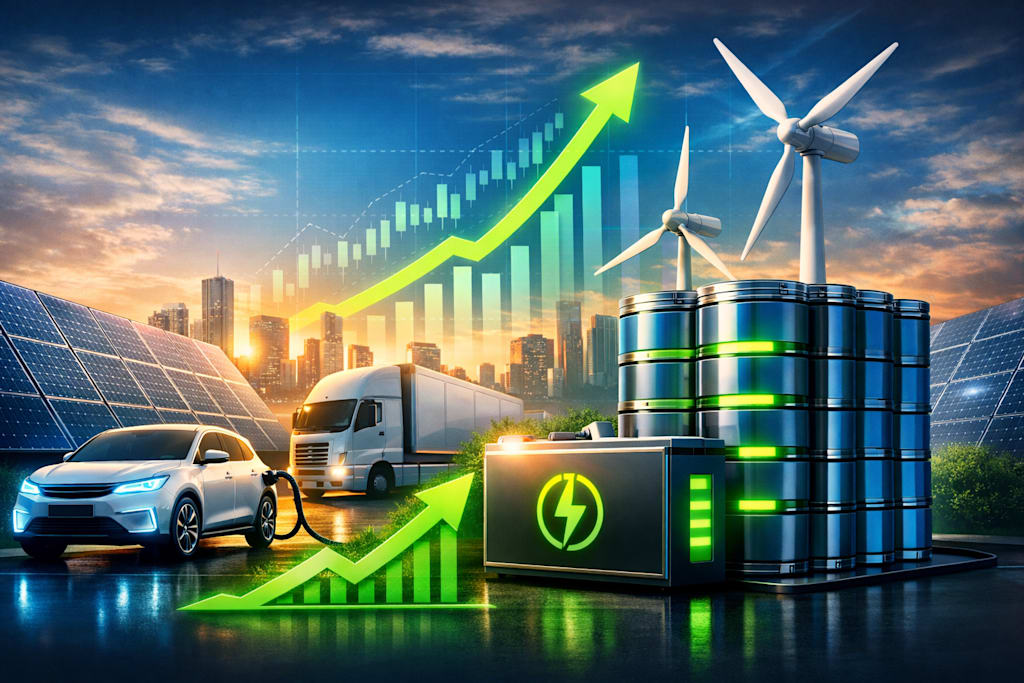
The Battery Behind the Future
If there’s one technology quietly powering the world’s biggest industrial shifts, it’s the lithium-ion battery.
From the smartphone in your hand to the electric vehicle on your street and the solar energy stored in next-generation grids, lithium-ion batteries are no longer just components — they’re strategic infrastructure. As industries race toward electrification and nations pursue cleaner energy systems, battery demand is surging at a pace few sectors can match.
That’s exactly why the global lithium-ion battery market is entering a major growth phase. According to Renub Research, the market is projected to rise from US$ 111.33 Billion in 2025 to US$ 562.91 Billion by 2034, expanding at a CAGR of 19.73% from 2026 to 2034. That kind of trajectory reflects more than demand — it reflects transformation.
In many ways, lithium-ion batteries have become the “engine room” of the clean energy transition.
Why Lithium-Ion Batteries Matter More Than Ever
Lithium-ion batteries have gained popularity for a simple reason: they perform better than many traditional energy storage alternatives. They are lightweight, offer high energy density, have a long operating life, and lose less power when not in use.
These advantages have made them essential across a wide range of sectors. Today, lithium-ion batteries are used in:
Electric vehicles (EVs)
Consumer electronics
Renewable energy storage systems
Medical devices
Industrial equipment
Smart infrastructure
This broad usability gives the market an important edge. It’s not dependent on one single industry — it’s expanding because multiple industries are growing at once. That makes lithium-ion batteries one of the strongest cross-sector opportunities in the modern industrial economy.
Electric Vehicles Are Leading the Charge
One of the biggest reasons behind the market’s explosive growth is the rapid adoption of electric vehicles.
Lithium-ion batteries are currently the preferred energy storage solution for EVs because they offer the right combination of range, efficiency, durability, and charging performance. As governments push stricter emissions regulations and offer subsidies for cleaner mobility, the demand for EV batteries continues to accelerate.
And this isn’t just about passenger cars anymore.
Electric buses, electric trucks, and two- and three-wheelers are all contributing to battery demand. As cities and countries build long-term transport electrification plans, battery manufacturers are scaling production aggressively to keep up.
The trend is already visible in the numbers. According to the data included in your source, global EV sales reached 15,183,434 between January and September 2025, marking a 30% increase year-over-year. That growth directly translates into stronger demand for lithium-ion battery cells, packs, and related materials.
In short: no EV revolution happens without a battery revolution.
Renewable Energy Storage Is Becoming a Massive Growth Engine
If EVs are one half of the lithium-ion growth story, renewable energy storage is the other.
Solar and wind power are expanding worldwide, but they come with one major challenge: they don’t generate electricity consistently. Solar panels only work when the sun shines, and wind turbines depend on weather conditions. That creates a serious need for stationary energy storage systems — and lithium-ion batteries are increasingly filling that role.
They are fast, efficient, scalable, and well-suited to storing renewable power for later use. As more countries modernize power grids and invest in decarbonization, the need for large-scale battery storage is growing rapidly.
This is especially important for energy resilience. Lithium-ion battery systems can help balance electricity demand, reduce dependence on fossil-fuel peaker plants, and support off-grid or backup power systems.
That means the market is no longer being shaped only by transportation or gadgets. It is also becoming a key pillar of grid modernization and energy independence.
Technology Improvements Are Making Batteries Better and Cheaper
Another major factor supporting market growth is the steady pace of technological advancement.
Over the past decade, lithium-ion batteries have become more efficient, safer, and more cost-effective. New chemistry developments — including high-nickel cathodes and research into solid-state battery technology — are helping improve:
Energy density
Battery lifespan
Charging speed
Thermal stability
Safety performance
At the same time, manufacturers are scaling production, which helps reduce unit costs. As factories become more efficient and supply chains mature, battery technology becomes more commercially accessible for automakers, electronics brands, and energy companies alike.
That cost decline is crucial. For many years, battery prices were one of the biggest barriers to widespread EV and energy storage adoption. Now, improvements in manufacturing and design are helping unlock larger markets.
The result is a powerful cycle: better batteries create more adoption, and more adoption drives more innovation.
But the Industry Still Has Serious Challenges
Despite its strong momentum, the lithium-ion battery market is not without risks.
1. Raw Material Supply Pressure
Lithium-ion batteries depend on raw materials like:
Lithium
Cobalt
Nickel
These materials are not evenly distributed around the world, and supply chains remain vulnerable to geopolitical tension, mining constraints, environmental concerns, and price volatility.
As battery demand rises globally, securing enough raw material at sustainable costs will become one of the defining competitive challenges of the decade.
2. Safety and Thermal Management
Lithium-ion batteries can also present safety concerns, especially in large-scale applications. Risks such as overheating, thermal runaway, and fire incidents remain critical issues for manufacturers and users alike.
This means companies must invest heavily in battery management systems, cooling technologies, testing standards, and safer design structures.
3. Recycling and Sustainability
Then there’s the end-of-life problem.
As millions of batteries reach retirement over the coming years, recycling capacity will become increasingly important. The industry needs more efficient and scalable ways to recover critical minerals and reduce waste.
Without stronger battery recycling infrastructure, long-term sustainability could become a major bottleneck for future growth.
Which Segments Are Driving the Market?
The lithium-ion battery market is not a single category — it’s a diverse ecosystem of chemistries, components, and applications.
Cathode Materials Matter
The cathode plays a major role in determining a battery’s:
Cost
Safety
Energy density
Overall performance
Popular cathode chemistries include:
Lithium Cobalt Oxide (LCO)
Lithium Iron Phosphate (LFP)
Lithium Nickel Manganese Cobalt (NMC)
Lithium Nickel Cobalt Aluminum (NCA)
Each chemistry serves different market needs. For example, LCO is widely used in consumer electronics, while LFP and NMC are increasingly popular in EVs and energy storage systems.
Electrolytes Are Also Critical
Electrolytic solutions are essential because they allow ions to move between electrodes. Better electrolytes can improve:
Safety
Performance
Battery lifespan
That’s why research into advanced liquid, gel, and solid electrolytes is becoming a major area of battery innovation.
Passenger EVs Remain the Largest Demand Driver
Among applications, passenger electric vehicles remain one of the most powerful demand engines in the market. Consumers want longer range, faster charging, and more affordable EVs — all of which depend heavily on battery progress.
E-Buses Are Emerging Fast
The electric bus segment is also growing rapidly as cities invest in cleaner public transport. These vehicles require high-capacity, high-performance battery systems, making them a meaningful growth segment for manufacturers.
Regional Growth Is Reshaping Global Competition
The lithium-ion battery race is not being won in just one country. It’s becoming a truly global competition.
United States
The U.S. market is growing rapidly due to rising EV adoption, clean energy policies, and heavy investment in domestic battery production. Gigafactories, energy storage projects, and supply chain localization are all accelerating growth.
United Kingdom
The UK market is being driven by decarbonization goals, zero-emission vehicle policies, and growing interest in battery recycling and advanced battery innovation.
India
India is becoming one of the most exciting emerging markets for lithium-ion batteries. Demand is being driven by the rise of electric two-wheelers, passenger EVs, and energy storage systems. While imports still play a large role, domestic battery manufacturing investments are beginning to scale.
Saudi Arabia
Saudi Arabia is also entering the battery conversation as it invests in renewable energy, smart city development, and energy storage under broader diversification goals.
What this tells us is clear: battery leadership will increasingly shape industrial competitiveness, trade relationships, and energy security.
This Market Is Bigger Than Batteries
The lithium-ion battery market is often discussed as a technical industry — but it’s much bigger than chemistry and manufacturing.
It sits at the intersection of:
Climate policy
Industrial innovation
Transportation transformation
Consumer technology
Energy resilience
National competitiveness
That makes it one of the most strategically important markets of the next decade.
For automakers, batteries determine EV viability.
For governments, batteries support decarbonization.
For consumers, batteries shape everything from mobility to electronics.
And for investors, they represent one of the clearest growth stories in the clean-tech economy.
As a result, this isn’t just a market expanding because of demand. It’s expanding because the world is reorganizing around electrification.
Final Thoughts
The future of the lithium-ion battery market looks powerful — and highly consequential.
As electric vehicles become mainstream, renewable energy systems expand, and energy storage moves to the center of industrial planning, lithium-ion batteries are becoming one of the defining technologies of the modern economy.
Yes, challenges remain. Raw material access, recycling, safety, and supply chain resilience will all shape the next phase of growth. But the direction is unmistakable.
About the Creator
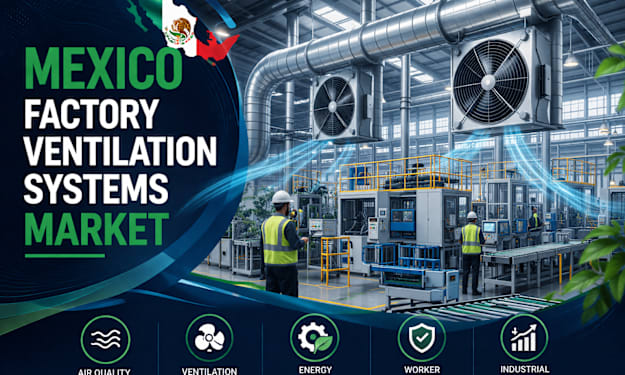
Why Mexico’s Factory Ventilation Systems Market Is Growing Alongside Smarter Manufacturing
A ventilation system is typically not the first step in industrial growth‚ but the impact it has on the facility and its operations is great․ Industrial ventilation can aid in controlling temperatures‚ air quality‚ employee comfort and safety‚ regulatory compliance‚ and equipment efficiency for a well-rounded workplace environment․ This field is becoming increasingly relevant in Mexico due to growth in the manufacturing sector‚ automation‚ and a recent push towards energy-efficient and green factories․ According to market research company IMARC Group‚ the Mexico factory ventilation systems market is projected to be worth USD 85․53 million in 2024 and grow at a compound annual growth rate (CAGR) of 12․44% yearly from 2025 to 2033‚ reaching USD 245․69 million by 2033․
By michael matthewa day ago in Trader
Global E-Commerce Payment Market Is Entering a New Era of Digital Growth
The way people pay online has changed dramatically over the last decade. What once relied heavily on card entries and basic checkout pages has now evolved into a seamless digital ecosystem powered by wallets, real-time payments, tokenization, biometric authentication, and flexible financing tools like buy-now-pay-later (BNPL). As e-commerce expands deeper into everyday life, payment systems are no longer just a support function—they are now central to customer experience, conversion rates, and business growth.
By shibansh kumarabout 15 hours ago in Trader



Comments
There are no comments for this story
Be the first to respond and start the conversation.