
Behind the Iron Gate: Fifteen Years a Guard
Stop Guessing: A Veteran Guard Finally Demystifies Life and Basic Needs Behind Bars

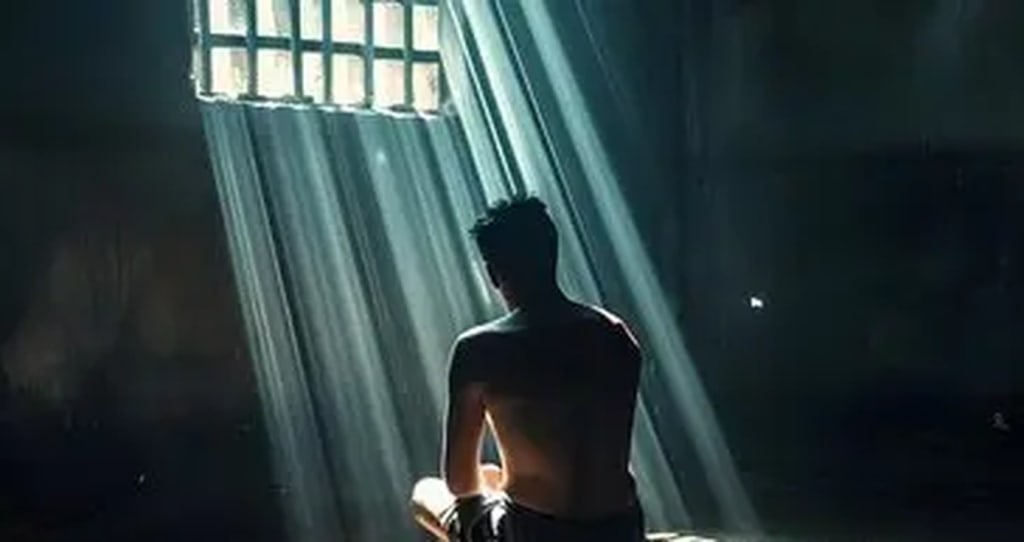
My name is Lao Zhou. I spent fifteen years as a supervisory officer in a detention center before retiring this year. Over those fifteen years, I’ve seen every kind of person and heard every kind of story. But there is one thing people on the outside are always speculating about—something TV shows make look mysterious and the internet fills with rumors: how do people in there handle their most basic human needs?
Today, I want to have a heart-to-heart with you about it. Not for any grand reason, but just to "poke through the window paper"—to demystify it and let everyone know that the people inside are still human beings.
When I was first transferred to the detention center, I had my own misgivings. To be honest, before going in, I was like most people; my head was full of those dark, damp cinematic images. I thought of it as a black hole—once you fall in, you vanish.
On my first day, a veteran officer took me on a patrol of the cells. Walking down that corridor, my palms were slick with sweat. Seeing my nerves, the old officer clapped me on the shoulder and said, "Xiao Zhou, relax. The people in here are just like you and me. They eat the five grains and have the seven emotions and six desires. If you treat them like humans, they’ll treat you like one too."
I’ve remembered those words for fifteen years.
Let’s start with the basics: eating, drinking, and hygiene.
Many people think you must starve in a detention center, freeze, or be denied the bathroom. That’s pure imagination. The state has strict regulations. The daily food allowance is fixed; there are specific ratios for grains, oil, vegetables, and meat. Of course, you can't expect it to be like home where you eat whatever you crave, but you won't go hungry, and the nutrition is adequate.
I remember a young man who went on a hunger strike the moment he arrived. I went to talk to him, and he stiffened his neck, saying, "Officer Zhou, I’d rather starve to death than eat this food."
I didn't lose my temper. I asked him, "Do you understand why you’re in here?"
He nodded.
"Do your parents outside know you’re in?"
His eyes turned red instantly.
I said, "If you don't eat and ruin your health, imagine how heartbroken your parents will be. Being in here is already the last thing they wanted for you; if you go and hurt yourself on top of that, you’re just twisting the knife in their hearts. Do you understand?"
The kid froze for a long time. Finally, he picked up the bowl and ate, crying the whole time. After that, I never heard another word about a hunger strike from him.
As for the bathroom, it’s even simpler. Every cell has a toilet area. It’s basic, but it serves its purpose. You can go anytime during the day, and after lights out, you just tell the duty officer. The only rule is that you can’t close the door—this isn't about a lack of respect; it’s for safety, to prevent accidents or self-harm. People find it awkward at first, but they get used to it.
But in all honesty, those aren't the hardest things to manage.
The hardest things are the ones you can't touch—a person's "nian xiang," their deep-seated yearnings.
Do you know what wears a person down most inside? It’s not the hunger or the hard bed; it’s homesickness.
That kind of longing is entirely different from being away on a business trip. If you’re homesick on a trip, you can call home or book a ticket back. In there, you can do nothing. You can only think, and you can only endure.
I once looked after an old man in his sixties. He was in for injuring a neighbor during a fight. His son worked in another city, and his wife was in poor health with no one to care for her. This old man was a model detainee—he ate on time, slept on time, and never fought. But every night after lights out, he would lie on his bunk staring at the ceiling, tears rolling down his face.
One night while on duty, I saw him wiping his eyes on the monitor and called him out for a chat.
I said, "Old Zhang, what’s wrong? Thinking of home?"
He gave a self-deprecating smile and said, "Officer Zhou, I’m embarrassed you saw that. I just miss my wife. She has diabetes and needs insulin every day. I used to give her the shots; now that I’m not there, I don’t know if she can aim the needle right herself."
As he spoke, the tears came again.
My heart felt heavy. I told him, "Stay focused while you're here. I’ll find a way to contact your son and tell him to go check on her."
He grabbed my hand suddenly and said, "Officer Zhou, thank you. Thank you."
His rough, calloused hands gripped mine so hard it hurt. But I didn't pull away. I knew that what he was gripping wasn't just my hand—it was his only connection to the world outside.
Then there is the matter of dignity.
Many people assume that once you enter such a place, dignity is off the table. You wear the same clothes, get the same haircut, shout "Present!" when called, and must ask permission to speak. To those outside, these rules sound dehumanizing.
But I want to tell you: the things that truly strip a person of dignity are never the rules, but the person themselves.
I’ve seen people who collapse completely the moment they arrive. They become like a puddle of mud, ceasing to care about anything. They don’t wash their clothes or their faces; they smack their lips while eating and swear with every breath, acting like "this is just who I am now." These people are actually the most pitiable. It’s not that they don’t care about dignity; it’s that they feel they no longer deserve it.
Yet, I’ve also seen many who hold onto their dignity most fiercely when they are at their lowest.
There was a businessman, a "boss" brought in for an economic case. He used to drive luxury cars, live in a mansion, and be surrounded by sycophants. Inside, he had nothing. But every day, he kept his bunk perfectly tidy and his clothes spotless. His hair was short, but he combed it neatly every morning. He was always polite to us, never demeaning himself just because he was "on the inside."
Once, I couldn't help asking him, "You're in this situation, why bother with all these details?"
He told me, "Officer Zhou, I may have made a mistake and ended up here, but my life is still my life. If I let myself turn into a puddle of mud here, I’ll never be able to stand up again once I’m out."
His words struck a chord in me. Later, after he was released, I heard he started a business again. It wasn't as big as before, but he was working hard and living a good, honest life.
Now, for a more sensitive topic: physical needs.
The rumors about this are the most outrageous. I’ll tell you plainly: in a detention center, this is managed very strictly.
First, men and women are absolutely separated. Within the same gender, there are strict rules; any "crossing of the line" is strictly forbidden. Cells are under 24-hour surveillance. If the duty officers see even a hint of something, it’s dealt with immediately.
People ask: humans have desires; can they really control themselves for that long?
My answer is: yes.
It’s not through any "special" means, but through rules, discipline, and—human self-control.
To be honest, in that environment, the first thing you feel isn't desire; it’s fear and anxiety. When you first go in, your head is full of how your case will be judged, what your family thinks, and what happened to your job. These things weigh on your heart more than anything else. Who has the mind for anything else?
By the time the verdict is in and your mind settles, you adapt to the rhythm of life inside. You wake up, eat, study, have "wind-letting" (outdoor exercise), watch TV, and sleep—all timed like a clock. In such a regulated life, many things that felt "indispensable" on the outside actually become less important.
I remember a hot-blooded young man who, after six months, became remarkably steady. He told me, "Officer Zhou, when I was outside, I couldn't go a day without a woman. Now that I’m in, I’ve realized a lot. Those things aren't actually that important. What matters is whether I can live as a proper man when I get out."
Hearing that from a twenty-something, I felt those six months of supervision hadn't been in vain.
Of course, I’m not saying there are never problems. "A big forest has all kinds of birds," and when you lock hundreds of people together, someone will try to break the rules. But management is incredibly tight. From the supervisory officers to the cell leaders and duty guards, there are layers of eyes. Anyone who dares to "leap the thunder moat" is only adding time to their sentence.
So, most of those wild rumors are made up by people who have never been inside or by film crews looking for shock value. Anyone who has actually been there knows that's just not how it is.
After saying all this, what do I really want to convey?
Just one thing: the people inside and the people outside are not fundamentally different.
They made mistakes and are being punished—that is right and just. But while they are being punished, they are still human. They still have basic human needs, emotions, and dignity.
We officers aren't just managing "prisoners"; we are managing people. People who, just like you and me, get hungry, get cold, miss home, cry, laugh, feel afraid, and feel regret.
I worked there for fifteen years and saw countless people walk out. Some changed their ways and lived honest lives; others were back before long, greeting me with, "Officer Zhou, I’m back again, sorry to trouble you." Every time I saw that, it left a bitter taste in my mouth. But I also knew: that is their path to walk.
On the day I retired, I was packing my things and found a stack of letters in my drawer. They were from people who had been inside and wrote to me after they got out. Some were long; some were just a few lines. One read: "Officer Zhou, thank you for not looking at me as just a criminal back then. I’m married now, my kid is two, and life is good. Don't worry about me."
Looking at that letter, I felt those fifteen years were worth it.
So, everyone, stop guessing. A detention center isn't a dragon's den or a tiger's lair, and life inside isn't some great mystery. It’s just a place where a person temporarily loses their freedom. Nothing more, nothing less.
Inside, you eat, you drink, you miss home, and you regret. The sun still rises, and life goes on.
The only difference is that iron gate.
Those inside the gate want to get out; those outside the gate should cherish what they have.
About the Creator
Water&Well&Page
I think to write, I write to think
Keep reading
More stories from Water&Well&Page and writers in Writers and other communities.
The Scarf and the Ten-Year Silence
My phone vibrated while I was in the kitchen, fumbling through the chaos of frying an egg. It was a WeChat message from Old Chen: "Class reunion next Saturday. It’s been ten years since we’ve had everyone together. You coming?"
By Water&Well&Pageabout 8 hours ago in Writers
Side Quest Goal Achieved: Placing an Alien Claim
This is a post that has me quite ecstatic. It's funny, I thought it was going to be one of my usual, "Hey, I achieved another one of my goals and checked it off" type deals. And it sort of is. But it sort of isn't. And it's also one of my greatest writing accomplishments of late.
By Stephen Kramer Avitabile3 days ago in Writers
Grounded Flights, Empty Rooms, and a Nation in Limbo: Why the Shutdown Is Strangling America’s Hospitality and Travel Industry
By any measure, the current U.S. government shutdown is no longer just a political standoff in Washington. It is an economic chokehold on one of the country’s most vital industries. From airport terminals stretched to their limits to hotel lobbies growing quieter by the day, the damage to hospitality and travel is immediate, visible, and worsening. If lawmakers fail to act now, the consequences will outlast the shutdown itself.
By George Dfouni7 days ago in Writers
Why Wiked: For Good is Undeservingly the ‘worse movie’
So… off the bat, we’re about to delve into something ridiculous. Just so we’re clear on that, ok? The first thing anyone that knows a thing about these dual movies… knows… is the original movie and sequel were shot together.
By Gabriel Shames2 days ago in Humans



Comments
There are no comments for this story
Be the first to respond and start the conversation.