
Smart Crushing: Using IoT and AI to Predict Granite Crusher Failures Before They Happen
Using IoT and AI to Predict Granite Crusher Failures Before They Happen

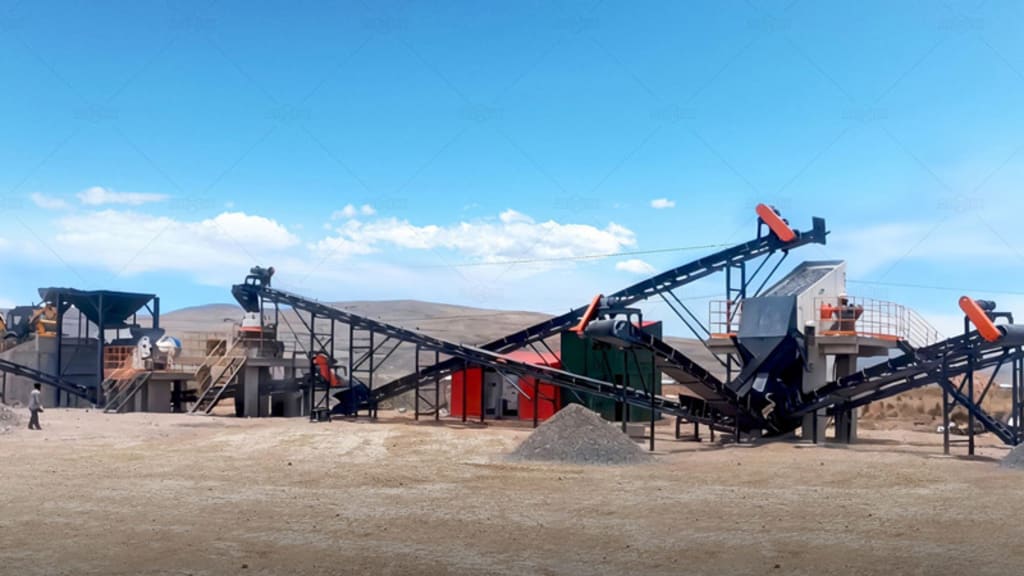
The granite crusher has long occupied a paradoxical position in the quarrying industry: it is simultaneously the most critical asset and the most frequently disrupted. Operators have grown accustomed to the familiar rhythm of production punctuated by sudden, jarring silences—a bearing seized without warning, a main shaft fractured under stress, a liner worn to the point of catastrophic failure. For decades, the industry accepted these interruptions as the price of doing business, managing breakdowns reactively and maintaining equipment on rigid calendar-based schedules that bore little relation to actual wear conditions. That paradigm is now dissolving. The convergence of industrial Internet of Things (IoT) sensors and machine learning algorithms has introduced a fundamentally different approach to asset management. Instead of asking when a component was last replaced, operators now ask what the data predicts about its remaining useful life. This shift from reactive maintenance to predictive intelligence represents not merely a technological upgrade but a philosophical reorientation. The ability to foresee a granite crusher machine failure before it occurs transforms the maintenance department from a firefighting unit into a strategic function, allowing interventions to be scheduled during planned downtime rather than forced upon operations at the worst possible moment.
The Sensor Infrastructure: Capturing the Language of Mechanical Distress
The foundation of any predictive maintenance system lies in the granularity and sophistication of its sensing network. Granite crushing presents a uniquely punishing environment: shock loads are immense, dust is omnipresent, and vibration signatures are complex. A properly instrumented crusher deploys a distributed array of accelerometers, thermocouples, and acoustic emission sensors positioned at strategic nodes—the main frame, the eccentric bushing, the countershaft, and the lubrication circuit. These sensors operate at sampling rates far exceeding what the human ear or handheld vibration pen can detect, capturing high-frequency transients that precede observable failure by hundreds of operating hours. The distinction between conventional monitoring and IoT-enabled sensing is one of resolution. Where traditional approaches measure overall vibration amplitude—a blunt indicator—modern sensor arrays perform spectral analysis, decomposing vibration signals into their constituent frequencies and identifying the subtle harmonics associated with specific failure modes. A developing crack in a spider arm, for instance, produces a characteristic frequency signature long before it manifests as a visible fracture. Similarly, sensors embedded in the lubrication system monitor not merely temperature but also particulate counts and ferrous debris concentration, detecting the earliest stages of bearing or gear wear. This sensor infrastructure speaks a language that, while indecipherable to human senses, provides machine learning algorithms with the raw material for increasingly accurate predictions.
Machine Learning Models: From Historical Patterns to Predictive Accuracy
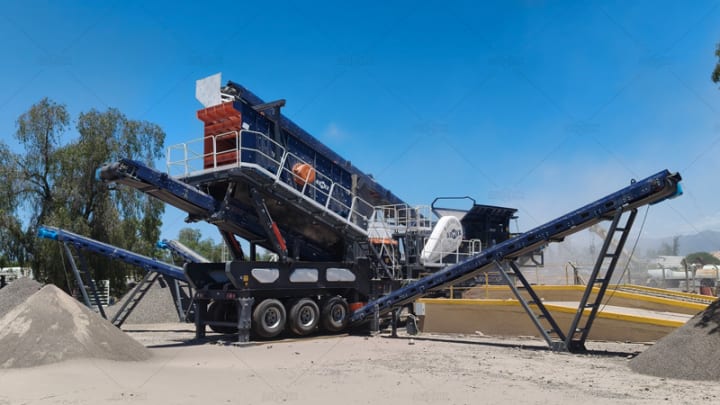
Raw sensor data, however voluminous, remains inert without the analytical architecture that transforms it into actionable intelligence. Machine learning models trained on historical failure data learn to recognize the prodromal patterns that precede equipment failure. The training process requires a substantial corpus of labeled data—thousands of hours of sensor readings correlated with maintenance records that document what failed, when it failed, and what the sensor trends looked like in the hours and days beforehand. A well-developed model does not simply identify anomalies; it classifies them by severity and likely root cause. When a model detects an elevated trend in main bearing temperature, it weighs this against concurrent data: Is vibration also increasing? Has the lubrication pressure dropped? Are there spectral markers of bearing cage wear? By synthesizing multiple data streams, the model distinguishes between benign fluctuations and genuine precursors to failure. The sophistication of contemporary algorithms extends beyond simple threshold alerts. Recurrent neural networks and gradient-boosted decision trees can estimate remaining useful life with a confidence interval, allowing maintenance planners to make informed decisions about whether a component can safely run through an upcoming production push or requires immediate intervention. The model improves with each failure event, continuously refining its predictive accuracy as it incorporates new data. What emerges is a system that learns the unique operational fingerprint of each individual rock crusher machine, accounting for variations in feed material, operating hours, and historical maintenance that make every machine's failure patterns subtly distinct.
Operational Integration: Transforming Predictions into Maintenance Discipline
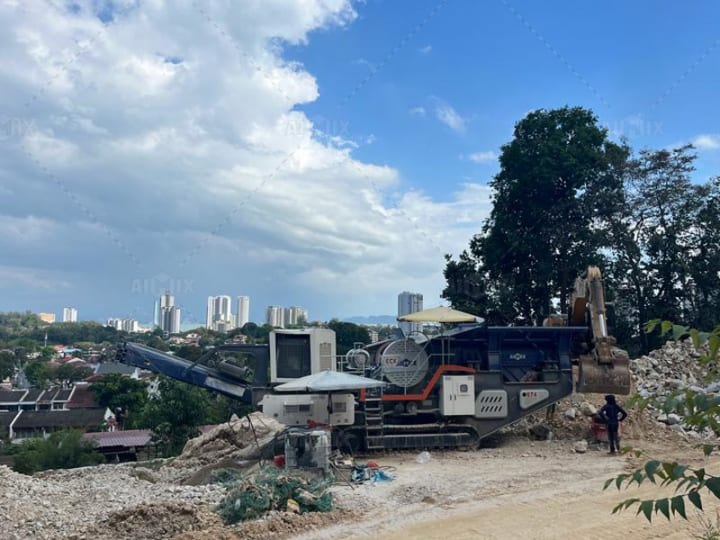
The most sophisticated predictive system delivers no value unless it is woven into the operational fabric of the organization. Implementation requires a deliberate restructuring of maintenance workflows and a cultural shift in how operators and mechanics relate to equipment. A successful deployment begins with establishing clear protocols for alert response. Not every anomaly warrants immediate shutdown; the system must be calibrated to distinguish between minor deviations and genuine threats to equipment integrity. This calibration is often achieved through a tiered alert structure—advisory notifications for developing trends, warnings for conditions requiring inspection, and critical alerts demanding immediate intervention. Equally important is the integration of predictive intelligence with inventory management. When the system forecasts a bearing replacement in three weeks, that information flows automatically to procurement, ensuring the component is on-site before it is needed. This eliminates the expedited shipping costs and idle time that characterize reactive repairs. The maintenance team, freed from the unpredictable burden of emergency breakdowns, can focus on planned interventions executed under optimal conditions—with the right tools, adequate lighting, and sufficient personnel. The operational impact compounds over time. As predictive accuracy improves, the organization develops confidence in running equipment closer to its true maintenance limits rather than conservative calendar-based intervals. This extension of component life, combined with the elimination of unplanned downtime, delivers a return on the technology investment that typically exceeds initial projections, fundamentally altering the cost structure of the crushing operation.
About the Creator
AIMIX
Construction Machine Manufacturer in China. Find Machines here: https://aimixconcretesolution.com/
Side Quest Goal Achieved: Placing an Alien Claim
This is a post that has me quite ecstatic. It's funny, I thought it was going to be one of my usual, "Hey, I achieved another one of my goals and checked it off" type deals. And it sort of is. But it sort of isn't. And it's also one of my greatest writing accomplishments of late.
By Stephen Kramer Avitabile3 days ago in Writers
Enhancing Aerospace Safety Through Advanced Protective Solutions
Introduction Aerospace operations are not only about advanced engineering and precision machinery—they also rely heavily on the skill, diligence, and safety of personnel. Maintenance technicians, engineers, and ground crew operate in environments filled with potential hazards, from high-temperature engines to complex chemical systems. Ensuring their safety is essential for operational efficiency and regulatory compliance.
By Beckett Dowhanabout 4 hours ago in Writers
Watching The End Of The World From The Diner
Introduction I am not sure how to approach this. Guy Peellaert was an amazing artist who created iconic fantasy images of famous people, usually musicians or politicians, as well as creating commissioned album covers such as "It's Only Rock'n'Roll" by The Rolling Stones and David Bowie's "Diamond Dogs" which you can read more about below.
By Mike Singleton 💜 Mikeydred 2 days ago in Art




Comments