Annie Kapur
Bio
I am:
🙋🏽♀️ Annie
📚 Avid Reader
📝 Reviewer and Commentator
🎓 Post-Grad Millennial (M.A)
***
I have:
📖 300K+ reads on Vocal
🫶🏼 Love for reading & research
🦋/X @AnnieWithBooks
***
🏡 UK


Stories (2865)
Filter by community
"Moby-Dick" by Herman Melville
I first read this book when I was sixteen years’ old and the way in which it had an effect on me was so long-lasting that I don’t think I got over the book for a long time. I don’t think I’m even over it now. I’m just coping. I discovered the book after finding a really pretty Penguin copy in the bookstore. It looked rustic and beautiful and so I bought it. I had heard of the book but didn’t really know what it was about before I’d read it. My first reading experience of it was definitely immersive. It was one of those things that I stayed up all night for and I really got so into it that by the time it was morning, I hadn’t even realised the sun had come up. I was still making notes and drawing pictures. That’s what I do when I get too into a book to the point of no return. I make notes and sketches. This book completely changed my perception on the way books about the sea could be written. It was one of the first American books that I’d ever fallen in love with so much that I barely put the book away for an entire year afterwards. I had it on my bedside table and would constantly be scribbling about it, highlighting it and writing short stories about the characters and other wild adventures they’d go on at sea. Yes, this was my life and pretty much, still is.
By Annie Kapur6 years ago in Geeks
“The Makioka Sisters” by Junichiro Tanizaki
Tanizaki’s “The Makioka Sisters” is a story about four sisters who are on the brink of losing certain traditions and cultures obtained through their historical family to the changing world of Japan during the mid-20th century. A critical analysis of the varying degrees of cultural change over Japan and the wider world, the reader sees tensions grow between the sisters as all four of them seem to want different things from the world. Whilst there is a sister who prefers the lavish and feminine lifestyle of old, without worry and without an occupation or hobbies. Whereas, another sister prefers the world of the working woman and thus, turns the Makioka tradition of non-working, uneducated females upside-down. Her want to have hobbies, make a professional of herself and other things creates great tensions. But the sister that creates the most tension is the one that has not been able to get married. She may have suitors but after a newspaper-bred scandal that left her reputation amongst Makioka and other Japanese people alike, she has been unable to find a husband for herself and her family are extremely worried that, like the working woman, this will tarnish the historical name of Makioka. As far as tradition and females go, there are many characters who want to protect the culture of rich history that has many, many years and generations of members. However, with the war at hand, there are things that required to be changed in order to survive - even if this concerns being modernised within the confines of a traditional family who do not think certain things should be done by women. The symbolic nature of the sisters seems to represent the way in which war changes a population. There are obviously those who want to keep the current regime that is the old one at any cost - even if it means losing people they love. There are then the ones who care not for the modern world at all and want to keep everyone within the older regime in hope of keeping the tradition alive and thriving. Then finally we have the modern ones who care not for traditions and regimes, but choose to grow up with the world, growing together and changing to modernise. These are considered the best adapted to survive after the war. They may be considered to be best adapted but this novel also takes into account the fact that old and new are required equally in order for the world to move on from history. History is where we learn from and the modern is what we strive towards. This is exactly how the book sees things as well.
By Annie Kapur6 years ago in Geeks
20 Books of 2020 (Pt.33)
Can we talk about audiobooks for a bit? Thanks. Audiobooks are often considered "not reading" and honestly, I thought that this was true until I started to go partially blind and had to be more selective of my paperbacks, making sure the font and text size was good enough for me to see. (Not necessarily big enough, but at least printed in a font that I could see easily). I have been experimenting with audiobooks because I don't really listen to audiobooks of books I haven't read. I like listening to my favourite books via audiobook such as: "The Picture of Dorian Gray", "The Brothers Karamazov", "Anna Karenina", "War and Peace", "Jane Eyre" and "Moby-Dick".
By Annie Kapur6 years ago in Geeks
"Cloud Atlas" by David Mitchell
It has been a while since I first read “Cloud Atlas” by David Mitchell. I was sixteen years’ old and my first reading experience of it basically blew my mind. I stayed up all night making notes, drawing sketches of characters and by the morning, I was not only insanely tired, but I had a whole notebook filled with masses and masses of information about the book. I had handwritten over one hundred pages of notes, quotations, sketches, drawings, opinions, lists and so many other things. This would be an annual thing and now I can’t live without the book. I still have my copy from all the way back then. I used it at university for one of my essays and it’s now covered in notes and highlighting. Now, my copy is safely tucked into a box under my bed and I take it out every now and again, I was reading it the night before my twenty-first birthday, at Christmas whilst I was twenty-three and I read it recently and the ripe age of twenty-four. It changed my entire opinion on the very limitations of literature. The truth is: there are no limitations.
By Annie Kapur6 years ago in Futurism
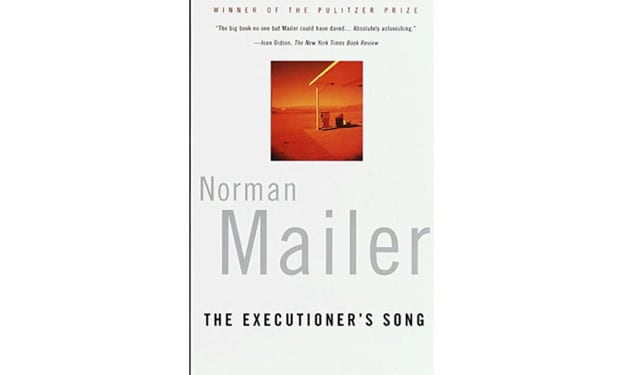
The Executioner’s Song by Norman Mailer
It’s been a few years since I read “The Executioner’s Song” when I was eighteen years’ old and it was a funny experience because I’d only ever seen a picture of the book before that. I had constantly wanted to read it over the course of a year because it sounded amazing. But when I received it in the post, my jaw dropped at how long it was in comparison to how long I thought it was. I managed to get it done in a few days anyway. I really just couldn’t put it down at all. At some points, I was actually crying about the other characters. My first reading experience was heavily emotional and I was put into an emotional whirlwind of sorrow. It completely changed my perspective on creative nonfiction, just like the book “In Cold Blood” by Truman Capote had done some years before.
By Annie Kapur6 years ago in Criminal
Anna Akhmatova
Anna Akhmatova was one of the most well known poets in Russian History and is, to this day, one of the most respected poets of the 20th century. I read Akhmatova's poetry whilst I was in school via a tiny book I found called "The Everyman Poets: Anna Akhmatova". She uses so much incredible language with such raw emotion and the quotations about imprisonment and love have such a vivid image to them. Anna Akhmatova was the basis for reading all Russian Poetry of the difficult ages, the transition between Royalist Russia to Communist Russia. She was the borderline between those who were on the outside of the situation and those who were on the inside, and by inside, I mean prison.
By Annie Kapur6 years ago in Poets
20 Books of 2020 (Pt.32)
Well, we're underway into the 600s now and I can honestly say that it has been a great ride, but we're not stopping here! In this article introduction, I want to talk shortly about reading books and reading kindle books/ebooks etc. and the way in which we see differences between them.
By Annie Kapur6 years ago in Geeks
"Kafka was the Rage" by Anatole Broyard
The first time I ever read “Kafka was the Rage” by Anatole Broyard, I was sitting on a coach on my way to a university trip for five days of intense work. I was in the second year of my undergraduate degree and had just about turned twenty years’ old. My first experience of reading it was brilliant and I read the whole thing in one sitting, much to the confusion of my lecturer since I was the only one not talking on the coach ride. It ended up with me talking to my lecturer about how good the book was - and it was awesome. “Kafka was the Rage” really influenced my world view of how the planet worked after the second world war. It made me believe less in the fact that everything went back to normal and believe more in the fact that there were actually a great number of problems after the war, especially concerning these displaced soldiers pretty much left to their own devices. It is one of those stories that simply touches you with its realism.
By Annie Kapur6 years ago in Geeks
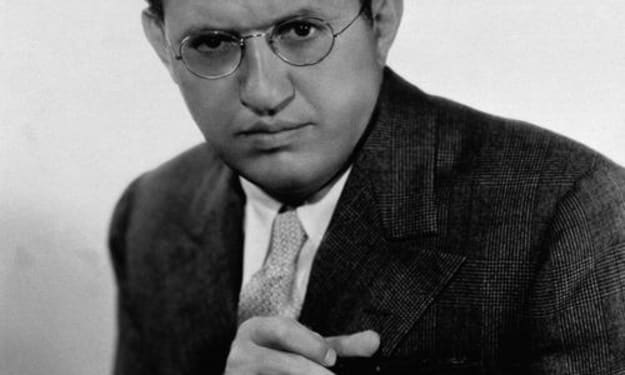
A Filmmaker's Guide to the Best Films: David O. Selznick
David O. Selznick is synonymous with the Hollywood Golden Age. He was one of the foremost producers for films by Alfred Hitchcock, Carol Reed, Victor Fleming and many more. As one of the biggest producers in Hollywood at the time, David O Selznick managed to make a big name for himself. He worked on films that today are known as classics of their genre and some of the greatest films ever made.
By Annie Kapur6 years ago in Geeks
"Tess of the D’Urbervilles" by Thomas Hardy
It has been just about ten years since I first read Thomas Hardy’s magnum opus “Tess of the D’Urbervilles” and I read it mostly because it was everywhere. I remember it being in bookstores with these amazing clothbound covers on the copies and I managed to save come money in order to get myself one. This was how I discovered the book. I was simply in a bookstore looking at the clothbound edition of “Anna Karenina” when near it was Thomas Hardy’s “Tess of the D’Urbervilles” and simply realising I hadn’t read it and it looked interesting, I bought it. (Since I also already had a copy of “Anna Karenina” - nobody was letting me buy another one). My first reading experience of “Tess” was pretty disturbing because I found myself really upset for a few days afterwards because of the way I believe Tess was treated unjustly. The book managed to change my opinion of what could happen to people who were the protagonists of their own novels, and I thought that sort of stuff only happened in Shakespeare’s plays. How wrong I was.
By Annie Kapur6 years ago in Geeks
World Refugee Day: Ten Books on Refugee and Immigrant Voices
Every year on the 20th of June, World Refugee Day is celebrated internationally as it is a day where we respect and honour the most vulnerable members of our society who constantly risk their lives in hope that they can find safety.
By Annie Kapur6 years ago in Geeks