Irshad Abbasi
Bio
Ali ibn Abi Talib (RA) said 📚
“Knowledge is better than wealth, because knowledge protects you, while you have to protect wealth.
Stories (583)
Filter by community
The Last Ottoman Caliph: Abdulmejid II and the Burial That Happened a Decade After His Death
The fall of the Ottoman Empire in the early twentieth century marked the end of one of the longest-lasting and most influential Muslim empires in history. With it came the abolition of the Caliphate—an institution that had symbolized the political and spiritual leadership of the Muslim world for centuries. The last person to hold that title was Abdulmejid II, the final Ottoman Caliph, whose life ended in exile. Yet what makes his story even more remarkable is that his burial took place nearly ten years after his death, following efforts supported by the Governor-General of Pakistan.
By Irshad Abbasi 23 days ago in FYI
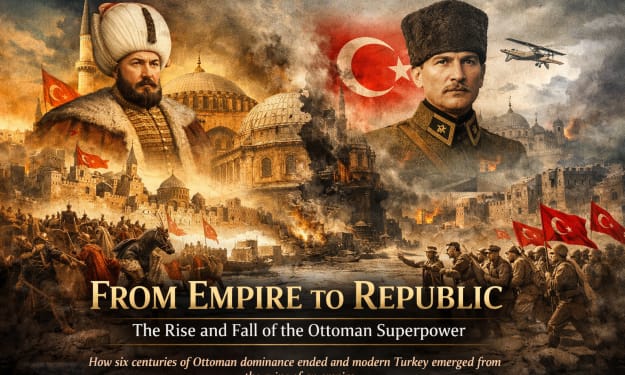
From Empire to Republic: The Rise and Fall of the Ottoman Superpower
For more than six centuries, the Ottoman Empire stood as one of the most powerful and influential states in world history. Stretching across three continents—Europe, Asia, and Africa—it controlled strategic trade routes, diverse populations, and some of the most important cities of the medieval and early modern world. Yet by the early twentieth century, this once-mighty empire collapsed, giving birth to the modern Republic of Turkey. The story of its rise and fall is one of military brilliance, political struggle, and dramatic reform.
By Irshad Abbasi 23 days ago in History
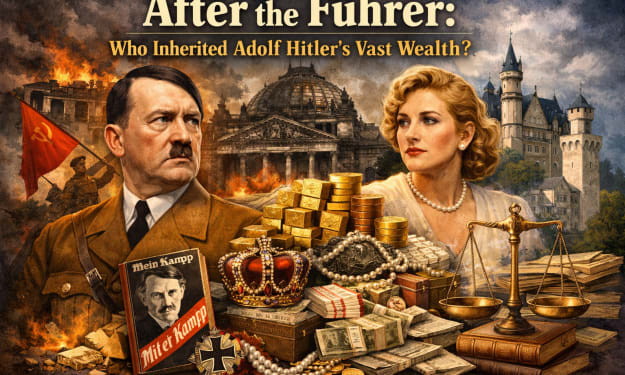
After the Führer: Who Inherited Adolf Hitler’s Vast Wealth?
When Adolf Hitler died by suicide on April 30, 1945, inside his bunker in Berlin, the Third Reich was collapsing around him. Soviet troops were closing in, and Nazi Germany was on the brink of total defeat. Yet even as Europe lay in ruins, a curious legal and financial question lingered: what happened to Hitler’s personal wealth, estimated to be worth hundreds of millions—if not billions—of today’s dollars?
By Irshad Abbasi 23 days ago in History
The Flight That Sparked a Superpower Crisis
In the tense atmosphere of the Cold War, intelligence gathering was considered vital for national security. One of the most dramatic episodes in this shadow war occurred in May 1960, when an American U-2 spy plane took off from Peshawar, Pakistan, on a mission to photograph sensitive Soviet military sites. The flight ended in disaster when the aircraft was shot down deep inside Soviet territory, triggering a major diplomatic crisis between the United States and the Soviet Union and further intensifying their already hostile relationship.
By Irshad Abbasi 23 days ago in Fiction
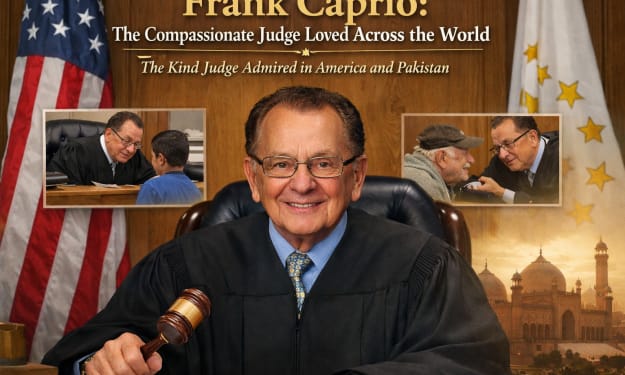
Frank Caprio: The Compassionate Judge Loved Across the World
In a world where courtrooms are often associated with strict rules and harsh judgments, one judge stood out for his compassion and humanity. **Frank Caprio**, a municipal judge from Providence, Rhode Island, became widely known around the globe for the kindness he showed to people appearing in his courtroom. Often called “the world’s kindest judge,” Caprio’s unique style of justice made him a beloved figure not only in the United States but also in countries thousands of miles away — including Pakistan.
By Irshad Abbasi 23 days ago in Beat
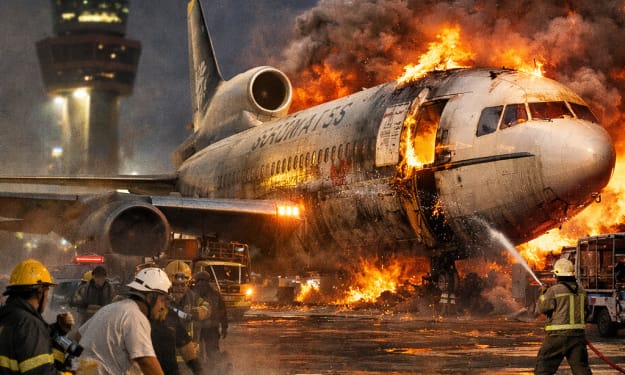
Flight 163: The Tragic Karachi–Jeddah Flight Where No One Survived Despite a Safe Landing
On August 19, 1980, what began as a routine commercial flight from Karachi to Jeddah ended in one of the most heartbreaking disasters in aviation history. The aircraft, Saudi Arabian Airlines Flight 163, carried 301 people on board—287 passengers and 14 crew members. Despite successfully making an emergency landing after a fire broke out mid-flight, not a single person survived. The tragedy shocked the world and remains a painful lesson in aviation safety.
By Irshad Abbasi 23 days ago in Chapters
The World’s Safest Countries: Where Doors Stay Unlocked and Police Rarely Carry Guns
In many parts of the world, locking doors, installing security cameras, and relying on heavily armed police forces are everyday realities. However, there are a few countries where life feels very different. In these places, crime rates are extremely low, communities are tightly connected, and trust among citizens is remarkably high. As a result, people often leave their doors unlocked, and in some cases, police officers patrol the streets without carrying firearms.
By Irshad Abbasi 23 days ago in Education
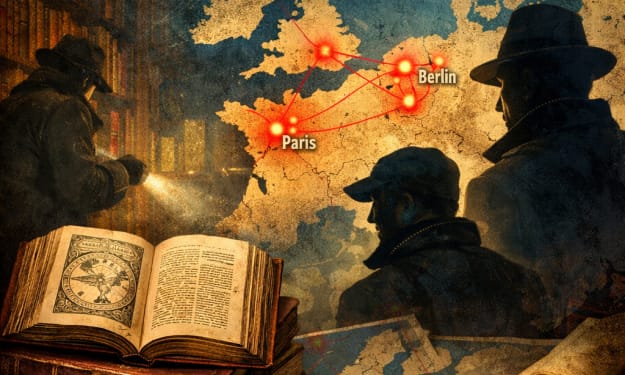
Operation Pushkin: The $Millions Book Heist That Shook Europe
In the world of rare books and manuscripts, the term “priceless” is often more than just a figure of speech. In 2023, Europe witnessed one of the most audacious literary crimes in modern history—dubbed **“Operation Pushkin”**—where millions of dollars’ worth of rare books vanished from libraries and private collections, leaving authorities and bibliophiles stunned. The theft not only exposed vulnerabilities in the continent’s cultural institutions but also revealed a sophisticated criminal network with global reach.
By Irshad Abbasi 23 days ago in Chapters
The Gift That Spied: How a Soviet “Token of Friendship” Secretly Eavesdropped on America
In the tense early years of the Cold War, when suspicion and secrecy shaped global politics, one of the most ingenious espionage operations in history began not with a break-in or a coded message—but with a gift.
By Irshad Abbasi 23 days ago in FYI
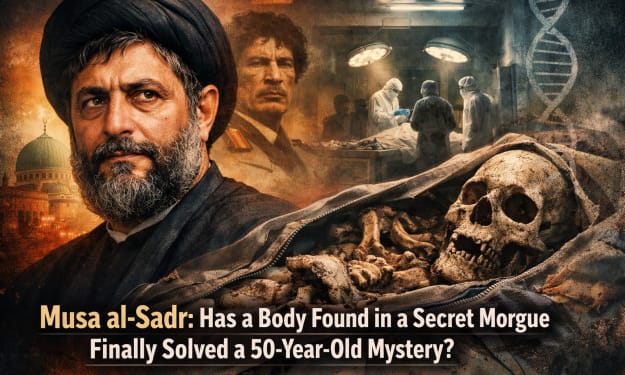
Musa al-Sadr: Has a Body Found in a Secret Morgue Finally Solved a 50-Year-Old Mystery?
In the turbulent politics of the Middle East, few disappearances have generated as much intrigue, grief, and speculation as that of Musa al-Sadr. The charismatic Lebanese Shia cleric vanished in 1978 during an official visit to Libya, and for nearly five decades his fate has remained one of the region’s most haunting mysteries. Now, new claims about human remains discovered in a secret morgue have reignited debate: could this finally be the evidence that confirms what happened to him?
By Irshad Abbasi 23 days ago in Chapters
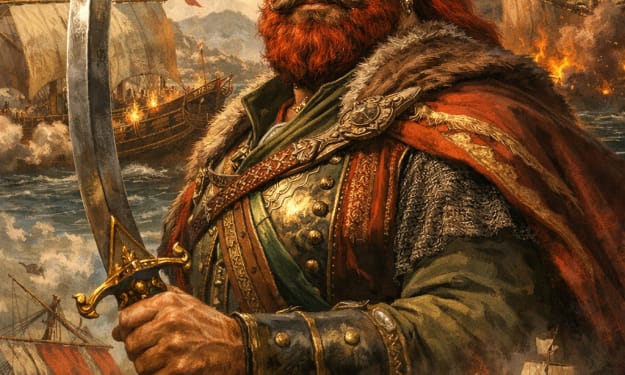
How a feared Mediterranean corsair rose to become Grand Admiral of the Ottoman Empire and reshaped naval power in the 16th century
In the turbulent waters of the 16th-century Mediterranean, where empires clashed and trade routes determined the fate of nations, one name inspired both fear and admiration: **Khayr al-Din Barbarossa**. Known in Europe as “Barbarossa,” meaning “Red Beard,” he began his life as a corsair—what many would call a pirate—but rose to become the Grand Admiral of the mighty **Ottoman Empire**. His journey from privateer to imperial commander is a remarkable tale of ambition, strategy, and shifting loyalties.
By Irshad Abbasi 23 days ago in History