Irshad Abbasi
Bio
Ali ibn Abi Talib (RA) said 📚
“Knowledge is better than wealth, because knowledge protects you, while you have to protect wealth.
Stories (570)
Filter by community
From Alexander to America: Afghanistan—Graveyard of Empires or Highway of Conquest?
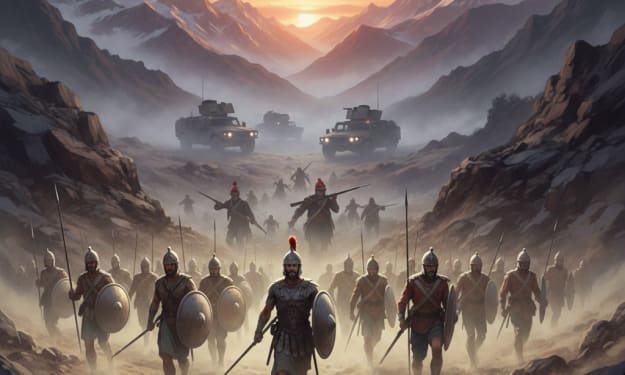
For centuries, the rugged peaks of the Hindu Kush have stood as silent witnesses to the greatest ambitions of mankind. From the bronze shields of Alexander the Great’s phalanxes to the high-tech drones of the United States military, Afghanistan has been the stage for a recurring historical drama. It is often labeled the "Graveyard of Empires," a place where superpowers go to bleed. Yet, a deeper look at history suggests a more complex reality: for many, it was also a "Highway of Conquest," a vital corridor that linked the civilizations of the East and West.
By Irshad Abbasi 24 days ago in History
The Hitler Mystery: DNA Secrets and the Century-Old Rumor of the Dictator’s Anatomy
For over eighty years, one of the most persistent pieces of historical trivia has been a schoolyard rhyme and a medical mystery: the claim that Adolf Hitler suffered from a specific physical deformity. While once dismissed as mere British wartime propaganda, modern forensic science, rediscovered medical records, and DNA analysis have reignited the conversation. Was the "one testicle" myth a clever psychological warfare tactic, or was it a medical reality that shaped the psyche of the 20th century’s most notorious tyrant?
By Irshad Abbasi 24 days ago in History
My Life Under CIA Control
How the CIA Used My Mind as a Battlefield—and How I Won It Back In the summer of my sixteenth year, while my peers were learning to drive and obsessing over prom dresses, I was being taught how to disappear. Not physically, but mentally. I was being dismantled, piece by piece, by men in white coats and gray suits who viewed my consciousness not as a human soul, but as a territory to be conquered.
By Irshad Abbasi 24 days ago in Horror
A 12-Year-Old’s Descent from Urban Legend to Attempted Murder
In the quiet suburbs of Waukesha, Wisconsin, in May 2014, a story emerged that seemed more like a horror movie plot than a police report. Three 12-year-old girls went into the woods to play, but only two walked out willingly. The third, Payton Leutner, was left bleeding from 19 stab wounds, the victim of a calculated sacrifice intended to please a fictional internet character known as Slender Man.This case remains one of the most disturbing examples of how the digital world can bleed into reality, blurring the lines between childhood imagination and dangerous delusion.The Myth of Slender ManTo understand why two pre-teens would commit such an atrocity, one must understand the "deity" they served. Slender Man originated in 2009 on the Something Awful forums as a "Creepypasta"—a type of internet horror legend. He is depicted as a tall, faceless man in a black suit with tentacle-like appendages.For most, he was a fun, spooky story. But for Anissa Weier and Morgan Geyser, he was terrifyingly real. They believed that in order to become his "proxies" and protect their families from his wrath, they had to kill someone.The Day of the AttackThe plan was orchestrated over several months. On May 31, 2014, following a birthday sleepover, Morgan and Anissa lured Payton into a local park under the guise of playing hide-and-seek. Once in the woods, the situation turned graphic.Morgan Geyser carried out the physical attack, stabbing Payton 19 times with a five-inch kitchen knife while Anissa encouraged her. The blade missed Payton’s heart by less than a millimeter—a distance described by doctors as the "width of a human hair."After the attackers fled, Payton displayed incredible resilience. Despite her life-threatening injuries, she crawled out of the woods toward a nearby bike path, where a passerby discovered her and called 911.The Legal and Psychological AftermathThe case ignited a global conversation about the impact of the internet on developing minds. Both girls were charged with first-degree intentional homicide, but their defense teams argued they were not monsters, but children suffering from severe mental health issues.The FindingsMorgan Geyser: Diagnosed with early-onset schizophrenia. She truly believed Slender Man would kill her family if she didn't act.Anissa Weier: Diagnosed with shared delusional disorder (folie à deux), meaning she had been drawn into Morgan’s delusions until they became her own reality.Ultimately, both girls were found not guilty by reason of mental disease or defect. Morgan was sentenced to 40 years in a psychiatric institute, while Anissa received 25 years. Anissa was released under strict supervision in 2021, while Morgan remains under institutional care.Lessons from a Digital TragedyThe Slender Man stabbing serves as a grim reminder of the "echo chamber" effect of the internet. For these girls, the more they read about the myth, the more evidence they found to support its existence."I believed that if I didn't do it, Slender Man would come and kill my whole family in three seconds." — Morgan Geyser during police interrogation.This case forced parents and educators to realize that the "monsters" children find online aren't always just digital images; they can become psychological catalysts for real-world harm. It highlighted the desperate need for better mental health screening in schools and a more nuanced understanding of how children process online folklore.Conclusion: Survival and ResilienceWhile the story is often centered on the attackers and the myth, the true hero is Payton Leutner. Her survival was nothing short of miraculous. In later years, Payton spoke out, showing remarkable strength and a refusal to be defined by the 19 scars she carries.The Slender Man case stands as a cautionary tale for the digital age—a reminder that while the internet is a place of infinite creativity, for the vulnerable, it can also be a place where the shadows grow far too long.
By Irshad Abbasi 24 days ago in Horror
The Jewel of the Earth: How the Kaaba Shines Like a Diamond from Space
In the vast, silent expanse of the cosmos, where the Earth appears as a delicate blue marble against the infinite black of the universe, certain landmarks stand out with unexpected brilliance. Recently, a series of high-resolution images captured from the International Space Station (ISS) and advanced satellite arrays have left the global community in awe. The focal point? Masjid al-Haram in Mecca. From hundreds of miles above, the "House of Allah" does not just appear as a building; it radiates a piercing, crystalline glow, resembling a diamond set into the heart of the desert.
By Irshad Abbasi 24 days ago in Earth
The Night the Radio Terrified America
On the evening of October 30, 1938, the United States was a country on edge. The Great Depression was still casting a long shadow, and the drumbeats of war were growing louder in Europe. Families gathered around their wooden radio consoles, seeking a brief escape through music and drama. What they got instead was a chilling announcement that changed the history of mass media forever: The Martians had landed.
By Irshad Abbasi 24 days ago in History
The Secret of the 12,000-Year-Old Face: Turkey’s Newest National Treasure
For decades, the dusty plains of southeastern Turkey have been whispering secrets of a forgotten era. But a recent discovery has turned those whispers into a roar. Archaeologists have unearthed a 12,000-year-old stone carving of a human face—a relic so profound that experts are calling it more valuable than the country’s literal gold reserves.
By Irshad Abbasi 24 days ago in History
The Nazi Who Fooled Death
History often remembers the Nuremberg Trials as the ultimate reckoning for the Third Reich—a moment where the high command of Nazi Germany faced the gallows for their part in the 20th century's greatest horrors. Men like Joachim von Ribbentrop and Wilhelm Keitel met their end at the end of a rope. Yet, one man from Hitler’s innermost circle, his "best friend" and Minister of Armaments, Albert Speer, managed to walk away from the courtroom with his life.
By Irshad Abbasi 24 days ago in History
Modernizing India through Rails, Canals, and Conquest
History often remembers the British Raj through the lens of conflict and colonization, but few figures embody the complex duality of "modernizer" and "conqueror" as starkly as James Broun-Ramsay, the 1st Marquess of Dalhousie. Appointed as the Governor-General of India in 1848 at the remarkably young age of 35, Dalhousie commanded a staggering annual salary of £25,000—a fortune at the time. His eight-year tenure would fundamentally alter the physical and political geography of the Indian subcontinent.
By Irshad Abbasi 24 days ago in History
Zulqarnain and Yajuj & Majuj: A Timeless Proof of the Qur’an’s Divine Revelation
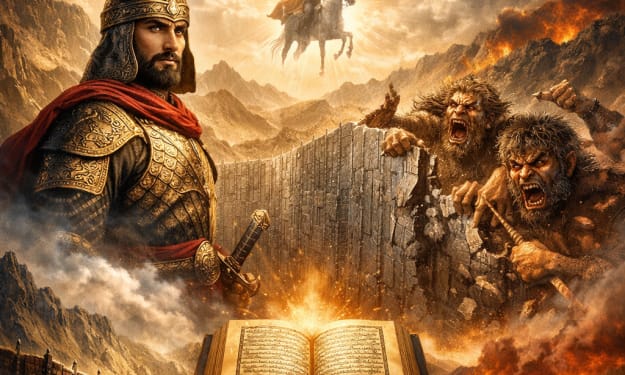
The story of Dhul-Qarnayn and Gog and Magog stands as one of the most fascinating and thought-provoking narratives in the Qur’an. Found in Surah Al-Kahf (18:83–98), this account combines history, prophecy, morality, and eschatology in a way that has inspired reflection for centuries. For many believers, it serves as a powerful sign of the Qur’an’s divine origin—revealing knowledge, wisdom, and foresight that transcend the limits of seventh-century Arabia.
By Irshad Abbasi 24 days ago in History
The Last Sigh of Al-Andalus: When the Keys to Paradise Were Lost
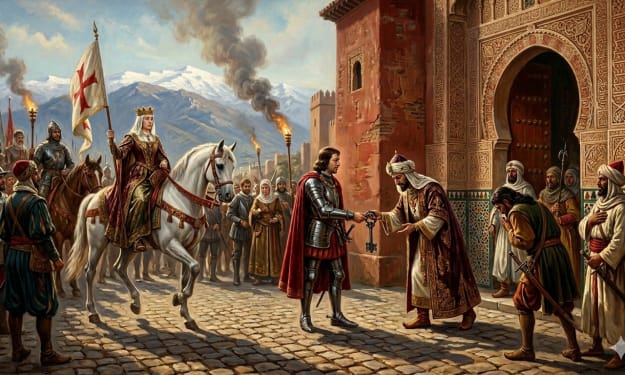
The date was January 2, 1492. As the morning mist cleared over the Sierra Nevada mountains, a somber procession wound its way down from the red walls of the Alhambra. At its head was Muhammad XII, known to the West as Boabdil, the last Sultan of the Nasrid dynasty. In his hands, he carried the keys to the city—keys that represented not just a fortress, but the final heartbeat of a civilization that had flourished for 781 years.
By Irshad Abbasi 25 days ago in History
“After Witnessing 40 Wars, Why Did 2025 Feel Like the Most Troubling Year Yet?”
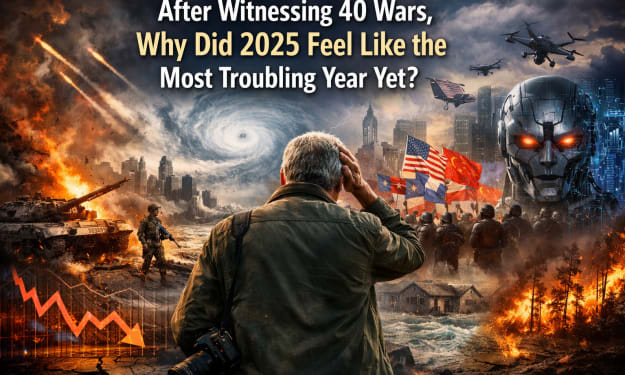
For someone who has witnessed four decades of global conflict—wars in the Middle East, civil unrest in Africa, political revolutions in Europe, and prolonged military engagements in Asia—fear is not unfamiliar. History has been turbulent, and the world has endured devastating moments, from the Cold War era to modern terrorism. Yet, for many seasoned observers, 2025 felt uniquely unsettling. The question arises: why did this year, despite not hosting a single world war, feel more disturbing than the previous forty conflicts combined?
By Irshad Abbasi 25 days ago in History