Sahir E Shafqat
Bio
Stories (32)
Filter by community
Recording #27
The tape arrived in a plain brown envelope with no return address. Ethan almost threw it away. It was a rainy Tuesday evening, the kind where the sky hung low and gray over the city, and the world felt quieter than usual. Ethan had just returned from work when he noticed the envelope sitting on the small table by his apartment door. No stamp. No name. Just the faint smell of old cardboard. Inside was a single cassette tape. Written on its label in faded black ink were two words: Recording #27 Ethan stared at it for a moment. He didn’t even own a cassette player anymore. At least, not until he remembered the dusty one sitting in a box in his closet. It had belonged to his father—an old portable recorder he’d kept after the house was sold years ago. For reasons he couldn’t explain, Ethan felt uneasy holding the tape. But curiosity won. Twenty minutes later, the recorder sat on the kitchen table. The rain tapped softly against the window. Ethan turned the cassette over in his hands again. Recording #27 Twenty-seven implied there had been others. He slid the tape into the recorder and pressed play. For a moment, nothing happened except the faint mechanical whir of the spinning reels. Then static. A long hiss. And finally—a voice. “…testing… testing… if this is working.” Ethan froze. The voice sounded strangely familiar. It was his voice. Or at least something very close to it. He leaned closer to the recorder. On the tape, the voice continued. “Okay. If you're hearing this… then something went wrong.” Ethan’s stomach tightened. “This is Recording Number Twenty-Seven. The others didn’t survive. Either they were erased… or they never reached you.” The tape crackled. Ethan whispered to himself, “What the hell…” The voice spoke again. “You probably don’t believe this yet. I didn’t either when I first heard it. But listen carefully, Ethan.” The sound of his own name made his chest feel hollow. “Yes. I know your name. Because I’m you.” The tape paused for a moment, as if whoever recorded it had taken a breath. “Three days from now, at 2:17 a.m., something is going to happen in your building.” The rain outside seemed louder now. “You’ll hear a knock at your door. Don’t answer it.” Ethan stared at the recorder. “This is important. No matter what you hear—no matter who it sounds like—do not open the door.” The tape hissed. A faint background noise appeared behind the voice—like distant alarms. “I tried twenty-six times already. Every time you opened the door.” Ethan felt cold. “And every time… that’s when it started.” The voice lowered. “I’m running out of chances.” The recorder crackled again. “Let me prove this to you.” A pause. “Right now you’re sitting at your kitchen table. There’s a half-drunk cup of coffee next to your left hand. You haven’t cleaned the dishes in the sink.” Ethan slowly looked toward the sink. There were three plates. Exactly as described. “You’re thinking this is a prank.” Another pause. “But you’ll keep listening.” Ethan realized his heart was racing. The voice continued. “The knock will sound like Mom.” Ethan’s breath stopped. “She’ll ask you to open the door. She’ll say she needs help.” But Ethan’s mother had died two years ago. “That’s how it tricks you.” Static burst briefly across the tape. “When you open the door, the hallway will be empty. But you’ll hear footsteps behind you.” The voice on the tape became strained. “Don’t turn around.” A loud metallic crash sounded somewhere in the background of the recording. “Damn it—they’re closer than I thought.” Ethan leaned closer to the recorder. “What are they?” he whispered. The tape answered as if it had heard him. “I don’t know what they are.” The voice sounded tired now. “I only know they shouldn’t exist.” Another pause. “You’re probably wondering how I made this recording.” The tape crackled again. “Let’s just say time isn’t as stable as we thought.” The sound of rapid footsteps echoed faintly behind the voice. “Every time you open the door, everything resets. Three days back. I remember. You don’t.” Ethan’s hands trembled. “That’s why I started making recordings.” Another breath. “Each loop, I hide one somewhere new.” The voice grew urgent. “If you found Recording #27, that means this one survived the reset.” A loud banging noise suddenly filled the tape. Someone pounding on a door. “Ethan,” the voice whispered quickly. “They’re here.” The banging grew louder. “Remember: don’t open the door.” The pounding on the recording became frantic. “Whatever happens—” The tape abruptly distorted. Then came a new sound. Three slow knocks. From the tape. Knock. Knock. Knock. The voice on the recording whispered one final sentence: “…oh no.” The tape stopped. The recorder clicked. Silence filled the apartment. Ethan sat frozen at the table. Outside, the rain had stopped. And somewhere in the hallway beyond his apartment door— Three slow knocks echoed. Knock. Knock. Knock.
By Sahir E Shafqatabout 3 hours ago in Horror
Unknown Caller
The phone rang at exactly 2:17 a.m. Daniel woke with a jolt. The shrill sound cut through the quiet of his apartment like a blade. For a moment he lay still, staring at the ceiling, trying to convince himself he had imagined it. Then it rang again. His phone sat on the nightstand, vibrating softly against the wood. The screen glowed in the darkness. Unknown Caller. Daniel groaned and rubbed his face. Telemarketers had become bold lately, but calling at two in the morning felt almost illegal. Half-asleep and irritated, he grabbed the phone. “Hello?” he muttered. There was only silence. Not the usual empty silence of a dropped call. This one felt… thick. As if someone was breathing just beyond the edge of hearing. “Hello?” he repeated. A faint crackle came through the speaker. Then a whisper. “…Daniel…” His chest tightened. “Who is this?” he asked, now fully awake. But the line went dead. Daniel stared at the phone. The call duration read 00:13. He frowned and opened the call log. The number froze his blood. 000-000-0000 “That’s… not possible,” he muttered. No real number looked like that. He told himself it was probably some glitch from his phone carrier. Technology did weird things sometimes. Still uneasy, he set the phone down and tried to go back to sleep. For a long time, he stared into the darkness. The phone rang again. 2:43 a.m. Same number. Daniel hesitated before answering this time. “Listen,” he said immediately, forcing confidence into his voice. “If this is some kind of prank—” “…you shouldn’t have answered the first time.” The voice was clearer now. Low. Hoarse. Familiar. Daniel felt a cold ripple move down his spine. “Who is this?” he demanded. A faint sound came through the speaker. Scratching. Like fingernails dragging slowly across wood. “You shouldn’t have answered,” the voice repeated. “Stop messing around,” Daniel snapped. “How do you know my name?” The scratching grew louder. Then the whisper returned. “…I’m almost there.” The call ended. Daniel sat frozen on his bed. The apartment felt different now. Too quiet. Too empty. He swung his legs onto the floor and checked the front door. Locked. Windows. Locked. Everything normal. “See?” he said aloud, trying to calm himself. “Just some idiot with a voice changer.” But his stomach twisted with doubt. The voice. He had heard it before. At 3:05 a.m., the phone rang again. Daniel didn’t want to answer. But something worse than curiosity pushed him. Fear. “What do you want?” he asked. The whisper came instantly. “…look outside.” Daniel’s throat tightened. “I’m not playing your game.” “…look outside.” Against his better judgment, he walked toward the living room window. His apartment was on the fourth floor. The street below was empty, lit only by flickering streetlights. Nothing moved. “No one’s there,” Daniel said. A pause. Then the voice said softly: “…I know.” The phone clicked dead. Daniel turned away from the window. And froze. Something was wrong. The apartment suddenly felt colder. He looked down at his phone again. Another notification appeared. Missed Call – 3:12 a.m. Same number. But Daniel hadn’t heard the phone ring. Confused, he opened the call log. The new call showed something strange. Duration: 00:47 “Wait… I didn’t answer that,” he whispered. His heart started pounding. Slowly, he raised the phone to his ear. And pressed play on the recorded voicemail. At first there was nothing. Just static. Then came a sound that made his blood run cold. Footsteps. Inside his apartment. Slow. Careful. Walking across the wooden floor. Daniel spun around, panic rising in his chest. The voicemail continued. Another sound. A door creaking open. His bedroom door. On the recording, his own sleeping voice could be heard faintly breathing. Then the whisper spoke again. Right beside the microphone. “…almost there.” Daniel dropped the phone. “No,” he breathed. That recording… it had been made inside his home. But that was impossible. He had been awake. He had answered the call. Hadn’t he? The phone rang again. Right at his feet. Daniel stared at the screen. Unknown Caller – 000-000-0000 His hands trembled. He answered slowly. “…hello?” The voice sounded different now. Closer. Clearer. Right behind him. “Turn around.” Daniel’s blood turned to ice. The phone slipped from his hand as a second voice whispered into his ear from the darkness of the room. The exact same voice from the phone. His voice. “I told you,” it said softly. “You shouldn’t have answered.” The line went dead. And Daniel finally understood something far too late. The number calling him didn’t belong to anyone else. It belonged to him. Or rather— to something that had been trying to reach him from the other side of the night. And now that he had answered… It no longer needed the phone.
By Sahir E Shafqatabout 4 hours ago in Horror
The Last Voice Message
It was a quiet Sunday evening when Daniel’s phone vibrated on the kitchen table. He had just returned home after a long day at work, the kind of day that left your mind empty and your body tired. Outside, the sky was fading into deep shades of blue, and the city lights were slowly flickering on. Daniel poured himself a cup of coffee and glanced at his phone. 1 New Voice Message. The notification made him pause. He frowned slightly when he saw the sender's name. Lucas. Daniel’s heart skipped. Lucas had been his best friend since childhood. They had grown up together, shared secrets, dreams, and countless late-night conversations. But Lucas had died three days ago. A car accident on a rainy highway. The kind of sudden tragedy that leaves people staring at the floor during funerals, unsure what words could possibly make sense. Daniel had stood there at the funeral home, staring at the closed casket, trying to convince himself it wasn’t real. And now… A voice message from Lucas. Daniel stared at the screen, his coffee forgotten. Maybe it was an old message delayed by the network. Maybe Lucas had sent it earlier and it only just arrived. That had to be it. Still, his hands felt strangely cold as he pressed play. For a moment, there was only static. Then a familiar voice spoke. “Hey, Daniel… if you're hearing this, something probably went wrong.” Daniel froze. Lucas’s voice sounded calm, but there was something unusual in it. A strange heaviness. “I’m recording this because… well, I have a feeling something bad might happen tonight.” Daniel felt his chest tighten. Lucas continued. “You know how I always trust my gut. And right now it’s screaming at me.” A quiet laugh followed. “But you’ll probably call me dramatic.” Daniel remembered saying exactly that many times. Lucas had always been the intuitive one. The message continued. “I’m driving back from the lake house right now. It’s raining pretty hard, and the roads are terrible.” Daniel’s grip on the phone tightened. The accident had happened on that same road. Lucas paused for a few seconds before speaking again. “I didn’t want to call because I’d probably just sound paranoid. But there are things I’ve been meaning to say for a long time.” The rain could be heard faintly in the background of the recording. “First… thank you.” Daniel blinked, confused. “For sticking by me all these years. You’re more than a friend, man. You’re family.” Daniel swallowed hard. Lucas’s voice softened. “I know I don’t say stuff like this often, but you deserve to hear it.” Daniel suddenly felt a deep ache in his chest. The kind of ache that only comes from words that arrive too late. Lucas continued. “And there’s something else…” The sound of a windshield wiper swept across the background. “If anything ever happens to me… don’t let Mom stay alone in that house. She pretends she’s strong, but she’s not as tough as she acts.” Daniel closed his eyes. Lucas always worried about his mother. “Visit her sometimes. Even if she says she’s fine.” The message went quiet for a moment. Then Lucas spoke again, slower this time. “And Daniel… there’s one more thing.” A faint rumble of thunder echoed through the recording. “You keep putting your life on pause.” Daniel frowned slightly. “You always say you’ll chase your dreams later. Later when you have more money. Later when things are safer.” Lucas sighed. “Stop waiting.” The rain in the recording grew louder. “You wanted to write stories. You wanted to travel. You wanted to start that podcast we talked about.” Daniel’s throat tightened. “Life doesn’t wait for the perfect moment.” Lucas chuckled softly. “And clearly… neither does fate.” Daniel felt a chill run down his spine. “I guess what I’m trying to say is… don’t waste time the way I did.” The car engine could be heard revving slightly. “If you’re hearing this, it probably means I never made it home.” Daniel’s eyes filled with tears. There was a long pause in the recording. Then Lucas spoke one last time. “But I’m not scared.” Daniel leaned closer to the phone. “I’ve had a good life.” The rain softened slightly in the background. “And I had a great friend.” Daniel wiped his eyes. “Take care of yourself, okay?” A faint smile crept into Lucas’s voice. “And hey… if there’s Wi-Fi in the afterlife, maybe I’ll send you another message someday.” Then the recording ended. Silence filled the kitchen. Daniel sat there, staring at the screen long after the message had finished. Outside, the wind rustled softly through the trees. For the first time since the funeral, Daniel let the tears fall freely. But mixed within the sadness was something unexpected. Clarity. Lucas had known something might happen, and instead of fear, he had chosen to leave behind words that mattered. Daniel slowly stood up and looked out the window at the city lights stretching into the distance. For years he had postponed his dreams. Waiting. Delaying. Convincing himself there would always be more time. But Lucas’s final message echoed in his mind. Life doesn’t wait for the perfect moment. Daniel picked up his phone again. Not to replay the message. But to open a blank document. At the top of the page, he typed the title of his first story. “The Last Voice Message.” And for the first time in a long while, Daniel began to write.
By Sahir E Shafqat4 days ago in Motivation
The Stranger I Met That Changed Everything
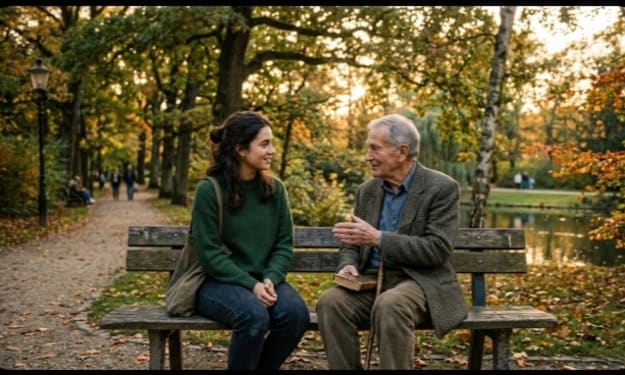
It was one of those quiet afternoons that feel almost invisible. The sky was cloudy, the wind was gentle, and the small park near my apartment looked peaceful. People were walking along the paths, some were jogging, and a few parents were watching their children play near the swings. Normally, it was a place full of life. But that day, I felt completely disconnected from everything around me. I was sitting alone on a wooden bench, holding my phone in my hands but not really paying attention to it. My mind was somewhere else — stuck in a cycle of frustration and disappointment. For weeks, nothing had been going the way I hoped. I had applied for several opportunities, worked on projects that never succeeded, and watched others move forward in their lives while I felt completely stuck. It seemed like everyone around me had a clear direction, while I was just standing in the same place. The worst part wasn’t failure. It was the feeling that maybe I wasn’t good enough. That thought had been sitting quietly in my mind for days. I looked around the park. A group of friends nearby were laughing loudly about something. A child was running toward his mother with a big smile on his face. An old couple was slowly walking together along the path. Everyone seemed to have a place to go. Except me. I sighed and leaned back against the bench, staring at the cloudy sky above. That was when someone sat down beside me. I turned slightly and saw an elderly man, probably around sixty-five or seventy years old. His hair was gray and slightly messy, and he wore a simple jacket that looked a little worn but comfortable. His face had deep lines, the kind that usually come from years of experience and quiet reflection. At first, we both sat there in silence. The park sounds continued around us — birds chirping, leaves moving softly in the wind, distant laughter from children playing. Then, after a few minutes, the man spoke. “You look like someone carrying a heavy thought.” His words surprised me. I hadn’t expected a stranger to notice anything about me. I gave a small awkward smile and replied, “Just thinking about life, I guess.” He nodded slowly. “Life gives us a lot to think about,” he said. Something about his calm tone made me feel comfortable enough to continue the conversation. Without planning to, I started explaining how I felt. I told him about my frustrations, the plans that didn’t work out, the opportunities that slipped away, and the constant feeling that I was falling behind everyone else. He listened patiently the entire time. He didn’t interrupt me once. When I finished talking, he remained quiet for a moment, as if carefully thinking about what to say. Then he looked toward the tall trees across the park and asked me a simple question. “Do you know why you feel stuck?” I shook my head. “You believe that everyone else is moving faster than you,” he said. I thought about it and realized he was right. He smiled gently and pointed toward the trees. “Look at them,” he said. “Some grew quickly, others slowly. But none of them are competing with each other.” I followed his gaze. The trees stood quietly, their branches moving slightly in the wind. “They grow at their own pace,” he continued. “And that’s exactly how life works.” His words made me pause. For the first time in a long while, my thoughts began to slow down. The man then shared a small part of his own story. When he was younger, he had tried to build a business. He failed several times. Friends doubted him, relatives criticized him, and many people believed he was wasting his time. But he kept trying. Not because he was sure he would succeed, but because he believed stopping would mean giving up on himself. Eventually, after many years, things began to improve. But when he looked back, he realized something interesting. “The success wasn’t the best part,” he said with a smile. I looked at him curiously. “The best part was the person I became while trying.” Those words stayed in my mind. After a few minutes, he slowly stood up from the bench. Before leaving, he looked at me and said something that I will probably remember for the rest of my life. “Don’t rush your story,” he said. “The most meaningful chapters often take the longest to write.” Then he walked away along the park path, disappearing among the trees and people. I never saw him again. But that short conversation with a stranger changed something inside me. Sometimes we search for answers in complicated plans, long books, or big life events. But sometimes, the lesson we need the most comes from a simple conversation with someone we may never meet again. That afternoon, a stranger reminded me of something important. Life isn’t a race. Everyone moves at their own pace. And sometimes, the moment you feel most lost is actually the moment your story begins to take a new direction.
By Sahir E Shafqat5 days ago in Humans
Echoes of the Empire
Long before modern cities filled the world with noise and light, there stood a powerful civilization known as the Aurorian Empire. Its cities were built from shining white stone, its roads stretched across vast lands, and its people believed their empire would last forever. The story of Auroria began beside a wide river called Lumeris. The river brought life to the dry lands around it, and small villages slowly grew along its banks. Farmers planted wheat and barley in the fertile soil, fishermen filled their nets each morning, and traders carried goods from village to village. Among these early settlers was a wise leader named Arkon. He believed that the scattered villages would be stronger if they united. Arkon spoke to the villagers, saying, “If we build together, protect one another, and share our knowledge, we can create something greater than any single village.” Inspired by his vision, the people joined together and built the first great city of Auroria. As years passed, the small alliance grew into an empire. Massive stone walls surrounded the cities, grand temples rose toward the sky, and marketplaces filled with merchants from distant lands. The Aurorians invented clever irrigation systems that carried river water across their farms, allowing them to grow food even during dry seasons. Scholars studied the stars, artists carved beautiful statues, and engineers built strong bridges and roads that connected the empire from one end to the other. The empire flourished under a line of capable rulers. Each generation expanded the borders further, bringing new cultures, languages, and ideas into Auroria. Soldiers marched proudly beneath golden banners, while caravans carried silk, spices, and precious metals along the empire’s vast trade routes. People from faraway lands admired the strength of Auroria. Travelers would say, “Its cities shine like jewels in the desert, and its people are masters of knowledge and craft.” For centuries, Auroria grew richer and more powerful. But empires, like seasons, cannot remain unchanged forever. After many generations, the empire came under the rule of Emperor Darius II. Unlike the wise leaders before him, Darius cared more for luxury than leadership. He built enormous palaces decorated with gold and rare gems while ignoring the needs of farmers, soldiers, and ordinary citizens. Taxes grew heavier, and many people struggled to survive. The once-great roads fell into disrepair, and corruption spread among officials who cared only about their own wealth. At the same time, the empire’s borders began to weaken. Neighboring kingdoms that had once feared Auroria saw its growing problems. Small raids turned into larger attacks, and the empire’s army—once disciplined and united—began to lose its strength. Within the cities, people argued about how to save their civilization. Some called for reform and wise leadership, while others fought for power. Among the citizens was a young historian named Lyra. Lyra spent her days studying ancient scrolls that told the story of Auroria’s beginnings. She admired the wisdom of Arkon and the early leaders who had built the empire through unity and cooperation. One evening, while standing on the balcony of the grand library, she looked over the city. The buildings were still magnificent, but cracks had begun to appear in the stone walls, and the once-busy streets were quieter than before. Lyra realized something important. Empires were not destroyed in a single day. They slowly weakened when people forgot the values that had made them strong. Determined to preserve the truth, Lyra began writing a detailed history of Auroria. She recorded the achievements of its people—the inventions, the art, the trade, and the wisdom that had shaped their world. But she also wrote about the mistakes: the greed, the neglect, and the division that had slowly torn the empire apart. Years later, the final collapse came. Enemy armies crossed the borders, and the empire’s weakened defenses could not stop them. Cities fell one by one, and the great capital was eventually abandoned. The once-mighty empire disappeared into history. Centuries passed. Wind and sand covered many of Auroria’s ruins, and nature slowly reclaimed the empty cities. Trees grew through broken streets, and birds nested in the crumbling towers. But the story of Auroria did not vanish completely. Travelers exploring the ancient lands sometimes discovered old stone carvings or fragments of buildings that hinted at the empire’s former greatness. And deep within the ruins of the grand library, explorers eventually found Lyra’s carefully preserved writings. Her scrolls told the full story—the rise, the glory, and the fall of the Aurorian Empire. Scholars who read them understood an important lesson. Great civilizations are not remembered only for their power, but for the wisdom they leave behind. The ruins of Auroria became a place of study and reflection. Historians, students, and travelers came to learn from the echoes of the empire. They walked along the broken roads, looked up at the towering remains of ancient temples, and imagined the vibrant world that had once existed there. Though the empire itself was gone, its story continued to teach future generations about ambition, unity, and the fragile nature of power. And in the quiet wind that moved through the ruins, it sometimes seemed as if the past was whispering its lessons to anyone willing to listen—the lasting echoes of a once-great empire. 📜
By Sahir E Shafqat7 days ago in History
The Search for the Distant World
Long before powerful telescopes and modern space missions, astronomers spent countless nights studying the sky. They watched the stars carefully and recorded the movements of the planets. Each discovery helped scientists understand the vast universe a little better. Among the most fascinating discoveries in astronomy was the discovery of Pluto, a tiny and distant world at the edge of our Solar System. The story of Pluto’s discovery is not just about a planet. It is a story of curiosity, patience, and the determination of scientists who spent years searching for something that no one had ever seen before. The Mystery of Planet X In the early 1900s, astronomers believed there might be another planet beyond Neptune. They noticed that the orbits of Uranus and Neptune did not behave exactly as expected. Some scientists thought that the gravity of an unknown planet might be affecting their motion. One astronomer who became very interested in this mystery was Percival Lowell. Lowell believed strongly that a hidden planet existed far beyond Neptune. He called this mysterious world “Planet X.” To find it, Lowell built an observatory in Arizona known as the Lowell Observatory. From there, he and his team carefully studied photographs of the night sky. They searched for a small object that slowly moved among the stars. Unfortunately, Lowell died in 1916 before he could find the planet he was looking for. But the search did not end. A Young Man with a Dream Years later, a young farm boy named Clyde Tombaugh became interested in astronomy. Tombaugh lived in Kansas and did not have expensive scientific equipment. However, he loved building telescopes and observing the planets from his backyard. Tombaugh carefully drew detailed pictures of Mars and Jupiter using a homemade telescope. He sent these drawings to Lowell Observatory, hoping that professional astronomers might notice his work. The scientists at Lowell Observatory were impressed by his careful observations. In 1929, they invited Tombaugh to work at the observatory and continue the search for the mysterious Planet X. For Tombaugh, it was the opportunity of a lifetime. The Difficult Search The search for Planet X was extremely challenging. The distant planet would appear very small and faint in photographs of the sky. It would look almost exactly like a star. To find it, Tombaugh used a special machine called a blink comparator. This device allowed him to compare two photographs of the same part of the sky taken several days apart. When he looked through the machine, the images switched back and forth quickly. Most stars stayed in the same place. But if an object moved slightly between the two photographs, it would appear to jump back and forth. That movement could reveal a planet. Night after night, Tombaugh studied thousands of star images. The work required incredible patience and concentration. Sometimes he spent hours searching through photographs without finding anything unusual. But he never gave up. The Moment of Discovery On February 18, 1930, Tombaugh was examining photographs taken in January of that year. While comparing two images, he noticed a tiny dot that moved slightly from one position to another. At first, he looked again carefully to make sure it was not a mistake or a flaw in the photograph. But the tiny object had definitely moved. This meant it was not a star—it was something within our Solar System. After additional observations confirmed the movement, the scientists at Lowell Observatory realized that Tombaugh had discovered the long-sought Planet X. The discovery was officially announced on March 13, 1930. Astronomers around the world celebrated the discovery of a new planet beyond Neptune. It was one of the most exciting astronomical discoveries of the 20th century. Naming the New World After the discovery was announced, people from many countries suggested names for the new planet. The final name came from an 11-year-old girl in England named Venetia Burney. She suggested the name Pluto, after the Roman god of the underworld. The name seemed perfect because the planet was dark, distant, and hidden in the far reaches of the Solar System. Astronomers liked the name for another reason. The first two letters, P and L, were also the initials of Percival Lowell, the astronomer who had first searched for Planet X. Soon, the International Astronomical Union officially approved the name Pluto. A Planet That Changed Our Understanding For many decades, Pluto was known as the ninth planet of the Solar System. It became a symbol of exploration and curiosity about the outer regions of space. However, as technology improved, astronomers discovered many other icy objects beyond Neptune in a region called the Kuiper Belt. Scientists realized that Pluto was part of this large population of distant objects. Because of this, in 2006 the International Astronomical Union reclassified Pluto as a dwarf planet instead of a full planet. Although this decision surprised many people, Pluto remains one of the most fascinating worlds in our Solar System. Exploring Pluto In 2015, the spacecraft New Horizons flew past Pluto and sent back the first close-up images of the distant world. Scientists were amazed by what they saw. Pluto has mountains made of ice, vast frozen plains, and a giant heart-shaped region on its surface. These discoveries showed that even small worlds far away from the Sun can be complex and beautiful. The Legacy of the Discovery The discovery of Pluto proved that patience and curiosity can lead to incredible discoveries. Clyde Tombaugh’s careful work and dedication allowed humanity to find a new world billions of kilometers away. Today, Pluto continues to inspire scientists and students to explore the mysteries of space. Even though it is small and distant, Pluto reminds us that the universe is full of surprises waiting to be discovered. 🌌
By Sahir E Shafqat7 days ago in History
The Man Who Lit the World
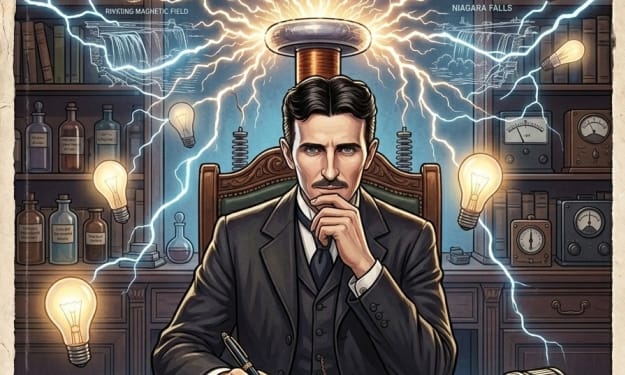
In a small village called Smiljan, in what is now modern-day Croatia, a boy was born on a stormy night in July 1856. Lightning flashed across the sky again and again, and thunder roared loudly. The midwife looked at the baby and said, “This child will be a child of darkness.” But his mother smiled and replied, “No, he will be a child of light.” That child was Nikola Tesla, one of the greatest inventors the world has ever known. Early Curiosity From a very young age, Tesla showed signs that he was different from other children. He had an incredible memory and a powerful imagination. He could picture machines in his mind and test how they would work without even building them. His father, Milutin Tesla, wanted him to become a priest, but Tesla was fascinated by science and electricity. Tesla’s mother, Đuka Tesla, was very intelligent and skilled at creating tools for household work. Although she had never received formal education, she inspired Tesla’s creativity and love for invention. Tesla often said that his ability to invent came from his mother. As a boy, Tesla loved reading books about science and mathematics. He studied hard and later attended the Graz University of Technology in Austria. There he became deeply interested in electricity, which was still a new and mysterious force at the time. The Dream of Alternating Current In the late 1800s, electricity was beginning to power cities. However, the system used at that time, called direct current (DC), could only travel short distances. This made it difficult to supply electricity to large areas. Tesla believed there was a better way. One day, while walking in a park and reciting poetry from Johann Wolfgang von Goethe, an idea suddenly appeared in his mind. He imagined a system called alternating current (AC) that could send electricity over long distances efficiently. Tesla was so excited that he drew the design of the motor right there in the sand. Journey to America In 1884, Tesla decided to travel to the United States with almost no money in his pocket. He carried only a few belongings and a letter of recommendation for the famous inventor Thomas Edison. When Tesla arrived in New York City, he began working for Edison. At first, Tesla improved some of Edison’s electrical machines. However, the two inventors had very different ideas about electricity. Edison strongly supported direct current (DC), while Tesla believed alternating current (AC) was the future. Their disagreement became part of what history calls the “War of Currents.” A Powerful Partnership After leaving Edison’s company, Tesla struggled for some time. He even worked digging ditches to survive. But he never gave up on his dream. Soon, Tesla met a businessman named George Westinghouse. Westinghouse believed in Tesla’s AC system and decided to support him. Together they developed electrical systems that could power entire cities. Their success became clear during the World's Columbian Exposition in Chicago. Tesla’s alternating current system lit up the entire exhibition with bright electric lights. Millions of visitors saw the power of AC electricity for the first time. Soon after, Tesla’s system was used to build a massive power plant at the Niagara Falls. The plant generated electricity from the waterfall and sent it to nearby cities. It was one of the greatest engineering achievements of its time. The Brilliant but Lonely Inventor Tesla invented many amazing technologies. He created the Tesla coil, improved radio communication, and worked on wireless transmission of electricity. Many scientists believe his ideas helped shape modern technologies such as radio, robotics, and wireless communication. However, Tesla’s life was not always easy. He cared more about ideas than about money or business. Because of this, other inventors sometimes became richer and more famous than him. Tesla spent much of his later life working alone in laboratories and hotels. Even though he made hundreds of inventions, Tesla died in 1943 with little money and few possessions. Yet the world slowly began to realize how important his work had been. A Legacy That Powers the World Today, Tesla’s ideas are everywhere. The electricity that powers homes, schools, and cities around the world mostly uses alternating current, the system Tesla believed in more than a century ago. His name is honored by the innovative technology company Tesla, Inc., which produces electric cars and advanced energy systems. Scientists and engineers now recognize Tesla as one of the most brilliant inventors in history. The Lesson from Tesla’s Life The story of Nikola Tesla teaches us an important lesson: great ideas often come from imagination, persistence, and courage. Tesla faced many failures, disagreements, and financial problems. But he never stopped believing in his vision of a brighter world powered by electricity. Just as his mother predicted on that stormy night, Tesla truly became a “child of light.” And today, every time a city lights up after sunset, a small part of Tesla’s dream shines with it. ⚡
By Sahir E Shafqat7 days ago in History
The Budget Trick Nobody Taught You in School
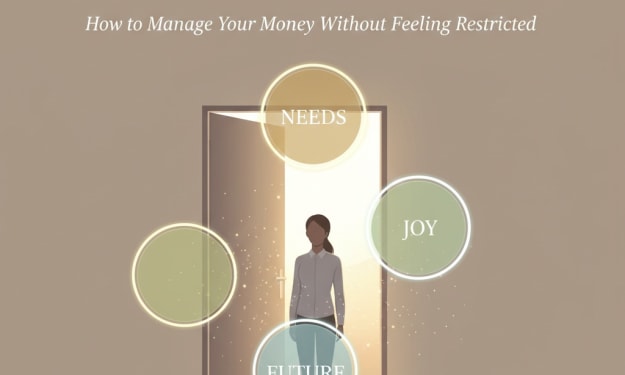
When Daniel graduated from college, he believed he was ready for the world. He knew how to calculate derivatives, analyze literature, and even recite historical dates with impressive accuracy. But on the day his first paycheck landed in his bank account, he realized something important: no one had ever taught him how to manage money. The paycheck felt like freedom. He celebrated with dinner out, bought new shoes he had been eyeing for months, and subscribed to three streaming services he convinced himself were “essential.” By the end of the month, his account balance was whispering a warning he didn’t want to hear. Daniel did what most people do when faced with financial anxiety—he searched online for budgeting advice. What he found discouraged him. Lists of strict rules. Spreadsheets with color-coded categories. Advice that sounded more like punishment than guidance. He tried one of those rigid budgets anyway. It lasted twelve days. The problem wasn’t that Daniel lacked discipline. The problem was that the budget felt like a cage. Every purchase triggered guilt. Every coffee felt like failure. Managing money began to feel like dieting—restrict, restrict, restrict—until he snapped and overspent again. One evening, while visiting his grandmother Elena, Daniel confessed his frustration. “I just don’t understand,” he said. “Why does budgeting feel like I’m constantly saying no to myself?” Elena smiled gently. She had lived through times when money was scarce and times when it flowed more easily. She poured him tea and said, “Maybe you are trying to control money instead of directing it.” Daniel frowned. “Isn’t that the same thing?” “No,” she replied. “Control is fear. Direction is purpose.” She pulled out an old notebook from her kitchen drawer. It wasn’t a spreadsheet. It wasn’t complicated. On one page, she had written three words in large, confident letters: Needs. Joy. Future. “That’s it?” Daniel asked. “That’s it,” Elena said. She explained her “budget trick,” the one nobody had taught in school. Instead of tracking dozens of tiny categories, she divided her income into three clear buckets. Needs covered rent, groceries, transportation, utilities—everything required to live with stability. Joy was money reserved for pleasure without guilt: dinners with friends, hobbies, gifts, small luxuries. Future was money sent to savings, investments, or an emergency fund. “There is no restriction in this method,” Elena explained. “There is only intention. If you’ve already assigned money to Joy, you can spend it happily. And when it’s gone, you stop—not because you are deprived, but because you have chosen your limit.” Daniel felt something shift inside him. This didn’t sound like punishment. It sounded like permission with boundaries. The next month, he tried it. When his paycheck arrived, he divided it immediately. Fifty percent to Needs. Thirty percent to Future. Twenty percent to Joy. The percentages weren’t magic; they simply fit his situation. The act of dividing, however, changed everything. For the first time, Daniel didn’t feel anxious about spending on himself. When he met friends for dinner, he paid from his Joy fund. When he bought a new book, it came from Joy too. And when the Joy account reached zero, he waited until the next paycheck. Surprisingly, the waiting didn’t feel like suffering. It felt calm. The biggest transformation came from the Future bucket. Watching that account grow gave him a sense of power he had never experienced before. Instead of fearing unexpected expenses, he felt prepared. Instead of living paycheck to paycheck, he was building momentum. Months passed. Daniel noticed something else: he was spending less impulsively. Not because he forced himself to, but because every dollar had a job. Money was no longer something that “disappeared.” It moved with intention. At work, his colleague Maya complained constantly about her finances. “I make decent money,” she said, “but I never seem to have enough.” Daniel shared his grandmother’s method. Maya was skeptical at first. “Three categories? That’s too simple.” “Exactly,” Daniel said. “It’s simple enough to actually follow.” A few weeks later, Maya admitted it was working. “I don’t feel guilty anymore,” she said. “I just feel aware.” And that was the hidden power of the trick: awareness without shame. Most schools teach mathematics but not money management. Students graduate knowing formulas but not financial habits. They learn how to earn income but not how to assign it meaning. As a result, many adults associate budgeting with restriction rather than alignment. The word budget itself often carries a negative tone. Perhaps a better noun for what Daniel learned is “plan.” A financial plan feels active and intentional. It suggests direction rather than denial. Yet even plan does not fully capture it. The most suitable noun for this story is framework. A framework supports you without trapping you. It provides structure without suffocation. Elena’s three-part system was not a rulebook; it was a framework for decision-making. Years later, Daniel’s income increased. He adjusted the percentages but kept the same structure. Needs remained covered. Joy expanded slightly. Future grew steadily. The simplicity scaled with him. He no longer feared budgeting. In fact, he rarely used the word. When friends asked how he managed money so calmly, he would smile and say, “I just give every dollar a direction.” The trick nobody taught in school wasn’t about cutting coffee or memorizing financial ratios. It was about reframing money from a source of stress into a tool of intention. And the best part? It never felt like restriction. It felt like freedom with purpose.
By Sahir E Shafqat26 days ago in Lifehack
Stop Wasting Your Mornings
For years, my mornings felt like a race I never signed up for. The alarm would ring. I’d hit snooze. Then again. And maybe once more for good measure. Eventually, I would jolt awake with that awful realization — I’m late. My heart would already be pounding before my feet touched the floor. From there, everything moved fast and sloppy. I’d scroll through my phone while brushing my teeth. I’d skim emails before I was fully awake. I’d rush through a shower, skip breakfast, and mentally rehearse everything that could go wrong that day. By the time I sat down to work, I wasn’t focused. I was frazzled. It took me a long time to understand something simple: The way you start your morning is the way you start your mind. And I was starting mine in chaos. The Problem Wasn’t Time — It Was Intention I used to tell myself I wasn’t a “morning person.” That I just needed more sleep. That my schedule was the issue. But when I looked honestly at my habits, I saw something different. I wasn’t lacking time. I was wasting the first 30–60 minutes of my day reacting instead of choosing. Scrolling through social media first thing in the morning meant I was immediately consuming other people’s priorities. Checking email meant I was stepping into other people’s urgency. Watching the news meant I was inviting stress before I had even had water. No wonder I felt behind. So instead of trying to wake up at 5 a.m. or completely overhaul my life, I made one decision: I would protect my first hour. Not perfectly. Not rigidly. Just intentionally. What followed was a simple routine that changed everything. Step 1: Wake Up Once The first change was the smallest and hardest: no more snooze button. When you hit snooze, you’re training your brain to start the day with hesitation. You wake up, then go back to sleep, then wake up again. It creates confusion and grogginess. Now, when my alarm goes off, I sit up immediately. I don’t negotiate. I don’t check my phone. I physically move. It sounds dramatic, but this tiny act builds momentum. You’ve already kept one promise to yourself before the day even begins. And momentum matters. Step 2: No Phone for 20 Minutes This rule alone lowered my stress by half. For the first 20 minutes of the day, my phone stays face down. No notifications. No scrolling. No messages. Instead, I do three simple things: Drink a full glass of water Open a window or step outside for fresh air Stretch for a few minutes That’s it. Hydration wakes the body. Fresh air wakes the senses. Stretching wakes the muscles. Before my brain has a chance to spiral into worry, my body feels grounded. Most of us begin our mornings overstimulated. This small buffer creates space. And space creates calm. Step 3: Make Your Bed It’s cliché advice. I used to roll my eyes at it. But making your bed takes less than two minutes, and it changes the visual tone of your space. Instead of leaving behind a symbol of rush and disorder, you create one small win. When you return to your room later, it feels orderly. Controlled. Peaceful. It’s not about perfection. It’s about signaling to your brain: I take care of my environment. I’m in charge here. That matters more than we think. Step 4: Plan the Day — Briefly This is where focus begins. I don’t write a long to-do list. I don’t map out every hour. I simply answer three questions in a notebook: What are the three most important things I need to complete today? What can wait? How do I want to feel today? That last question changed everything for me. Instead of thinking only about productivity, I started thinking about emotional direction. Do I want to feel calm? Efficient? Patient? Creative? When you decide how you want to feel, you subconsciously guide your behavior toward that outcome. Without this step, your day controls you. With it, you guide the day. Step 5: Move Your Body — Even a Little I used to believe workouts had to be intense or long to count. That mindset kept me from doing anything at all. Now, my rule is simple: five to fifteen minutes of movement. Some days it’s a walk. Some days it’s yoga. Some days it’s basic bodyweight exercises in my living room. Movement clears mental fog faster than caffeine. It releases stress before it builds. It shifts you from passive to active mode. You don’t need a gym. You need consistency. And consistency begins small. What Changed After a few weeks of this routine, I noticed subtle but powerful shifts. I wasn’t snapping at people as easily. I wasn’t scrambling through my inbox in panic. I wasn’t reaching for my phone every five minutes. My mornings felt slower — even though the clock hadn’t changed. The biggest surprise? I didn’t feel tired in the same way anymore. I felt steady. Calm mornings don’t make life perfect. They don’t prevent stress or eliminate challenges. But they change your starting position. Instead of beginning the day in defense mode, you begin it centered. That difference compounds. The Real Secret: It’s About Ownership This routine isn’t magical. It’s not trendy. It doesn’t require waking up at sunrise or buying anything new. Its power lies in ownership. When you choose how your day begins, you remind yourself that you have agency. You are not just reacting to alarms, messages, or deadlines. You are setting the tone. And tone matters. Think about the days you’ve felt most productive or peaceful. They likely didn’t begin with panic scrolling or frantic rushing. They began with clarity — even if just a little. You don’t need an hour. Start with 20 minutes. Wake up once. Avoid your phone. Hydrate and stretch. Identify three priorities. Move your body. That’s it. Simple doesn’t mean insignificant. If You Think You Don’t Have Time Most people say, “This sounds nice, but I don’t have time.” But check your screen time. Check how long you spend scrolling before even getting out of bed. Check how long you spend reacting instead of preparing. The time is already there. The difference is how you use it. Even if you only adopt one step from this routine, you’ll notice a shift. Maybe it’s the no-phone rule. Maybe it’s writing down three priorities. Maybe it’s drinking water before coffee. Change doesn’t require a complete overhaul. It requires one consistent decision. Stop Wasting Your Mornings Your morning is not just a transition between sleep and work. It’s the foundation of your mental state for the next 12–16 hours. When you waste it in distraction, you pay for it in stress. When you invest it in intention, you collect clarity. You don’t need to become a different person. You don’t need to wake up at 4:30 a.m. You don’t need a perfect routine. You just need to start the day on purpose. Tomorrow morning, when the alarm rings, don’t negotiate with it. Sit up. Drink water. Breathe. Move. Decide. And watch how different the rest of your day feels. Because calm isn’t something you find in the afternoon. It’s something you build in the morning.
By Sahir E Shafqat26 days ago in Lifehack
Home Through the Winter Rain
Winter arrived gently that year, not with snowstorms or icy winds, but with steady rain that seemed to fall without end. The sky was a soft gray, heavy and calm, and the air smelled of wet roads and cold earth. On one such evening, a small family climbed into their own car, ready to begin the familiar drive home. The engine started with a low, comforting sound. The headlights cut through the mist, glowing warmly against the rain. The parents sat in the front seats, wrapped in thick coats, their breaths forming faint clouds before the heater slowly warmed the air. The mother adjusted the mirror, smiling softly as she glanced back at the children. The father rested his hands on the steering wheel, careful and steady, already focused on the road ahead. In the back seat, the children were bundled together like little birds hiding from the cold. Their jackets were bright against the dark interior of the car, and their shoes were still damp from puddles they had jumped in earlier that day. One child hugged a stuffed bear tightly, its fur worn soft from years of love. Another leaned close to the window, watching the raindrops slide down the glass in twisting paths. “Look,” one of them whispered, tracing a finger along the foggy window. “That one is winning.” The rain seemed alive outside, each drop racing the others, merging and separating, disappearing at the bottom of the glass. Streetlights reflected in the wet road, stretching into long golden lines that shimmered and broke apart as the car moved forward. The heater clicked louder now, filling the car with warmth. Slowly, gloves were pulled off, scarves loosened. The tight cold of winter faded into something soft and safe. The radio played quietly in the background—an old song the parents knew by heart. They didn’t sing out loud, but their heads moved gently to the rhythm. As the car traveled through the rain, the father slowed at each turn, careful not to rush. Tires whispered against the wet road. The mother pointed out familiar places as they passed—a closed bakery, a dark park, a row of houses glowing faintly from inside. Everything looked different in the rain, quieter, calmer, as if the world itself was resting. The children grew sleepy, their earlier excitement fading into peaceful silence. One rested their head against the other’s shoulder. The stuffed bear slipped onto the seat between them. Outside, the rain tapped steadily on the roof, a soft rhythm like a lullaby. “Do you remember,” the mother said gently, “when we used to drive like this before you were born?” The father smiled. “Long drives. Late nights. Just us and the road.” “And now,” she said, glancing back again, “we’re all here.” The children didn’t fully hear the words, but they felt their meaning. They felt it in the warmth of the car, in the way the parents’ voices sounded calm and close, in the steady movement carrying them safely forward. The road curved toward the edge of town. Trees stood bare, their branches dark and shining with rain. Water pooled along the sides of the street, reflecting the passing lights like tiny mirrors. Somewhere far away, a dog barked once, then fell silent again. One child stirred and yawned. “Are we almost home?” “Soon,” the father answered softly. That word—home—settled into the car like another blanket. Home meant dry clothes and warm soup. It meant lights in the windows and shoes left by the door. It meant safety from the cold rain and the long gray sky. As they drove, the rain began to slow. The drops grew smaller, lighter, until they were more like a mist. The clouds above thinned just enough to let a pale glow through, not quite moonlight, but something close. The world felt gentler somehow, as if winter itself had decided to be kind. The car turned onto a quiet street. Houses lined the road, each one familiar, each one holding its own small stories. The father parked slowly, switching off the engine. Suddenly, the world felt very still. The rain whispered one last time, then faded into silence. The children woke fully now, blinking and stretching. Coats were zipped, hats pulled on. The mother gathered the stuffed bear and handed it back with a smile. The father stepped out first, opening the door and letting in a breath of cool winter air. They walked together toward their house, shoes splashing softly in shallow puddles. The porch light glowed warmly, welcoming them home. Inside, the house smelled faintly of dinner and clean air. The door closed behind them, shutting out the cold and the rain. Jackets were hung up. Shoes were lined neatly by the door. The children laughed quietly, already talking about tomorrow. The parents watched them for a moment, tired but content. Outside, winter continued its slow rain. Inside, the family moved easily through their evening, wrapped in comfort and love. And though the night was cold, and the roads were wet, the journey had been enough—because they had made it home together.
By Sahir E Shafqat2 months ago in Families
Whispers on Summerisle
I. The Island That Swallowed People Summerisle looked peaceful from the ferry—a quiet crescent of land surrounded by mist and gentle waters. Tourists called it charming. Locals called it home. But to Mara Willen, it was the last place her brother Jonah had ever been seen. He vanished on Summerisle six months ago. The police claimed he probably drowned during a night swim, but Jonah wasn’t the type to just disappear. He always called Mara, always told her where he was going. He was the protective one—her lighthouse during every storm. Now she was here to find out what happened. As she stepped onto the creaking wooden dock, the first thing she noticed was the silence. Not peaceful silence—forced silence. No laughter. No gulls. No wind. Just… stillness. It felt like the entire island was holding its breath.
By Sahir E Shafqat3 months ago in Horror
The Forgotten Monitor
The Beginning of the End Elliot Adams had always been the type of person to enjoy his privacy. He preferred the hum of his computer to the chatter of the outside world, the glow of his monitors to the faces of people. His apartment was small, tucked away in a quiet corner of the city, with nothing more than the faint thrum of passing cars to break the stillness. The walls were lined with bookshelves, and his desk, where he spent most of his days, was cluttered with papers and empty coffee cups. His two monitors sat at the center of it all, glowing with the dull intensity of endless lines of code. He was a freelance software developer—a job that allowed him to work from the comfort of his own space, a luxury he didn’t take for granted. Most days, his work was simple: update websites, debug programs, and write scripts. But lately, there had been something strange about the project he had been assigned. It started innocuously enough. A simple contract with an unnamed company—just another piece of work he could quickly finish and move on from. The task seemed straightforward: improve the security system for a monitoring software that tracked office usage. Nothing too fancy, no heavy lifting. But as he started digging into the code, something felt… off. For one, the system wasn’t just tracking office activity—it was tracking people. More than that, it was tracking thoughts. Their patterns. Their moods. The software was accessing data that shouldn’t have been available to anyone, not even the creators.
By Sahir E Shafqat3 months ago in Horror