
I read a Twisted Tale Novel about Frozen...
A Review
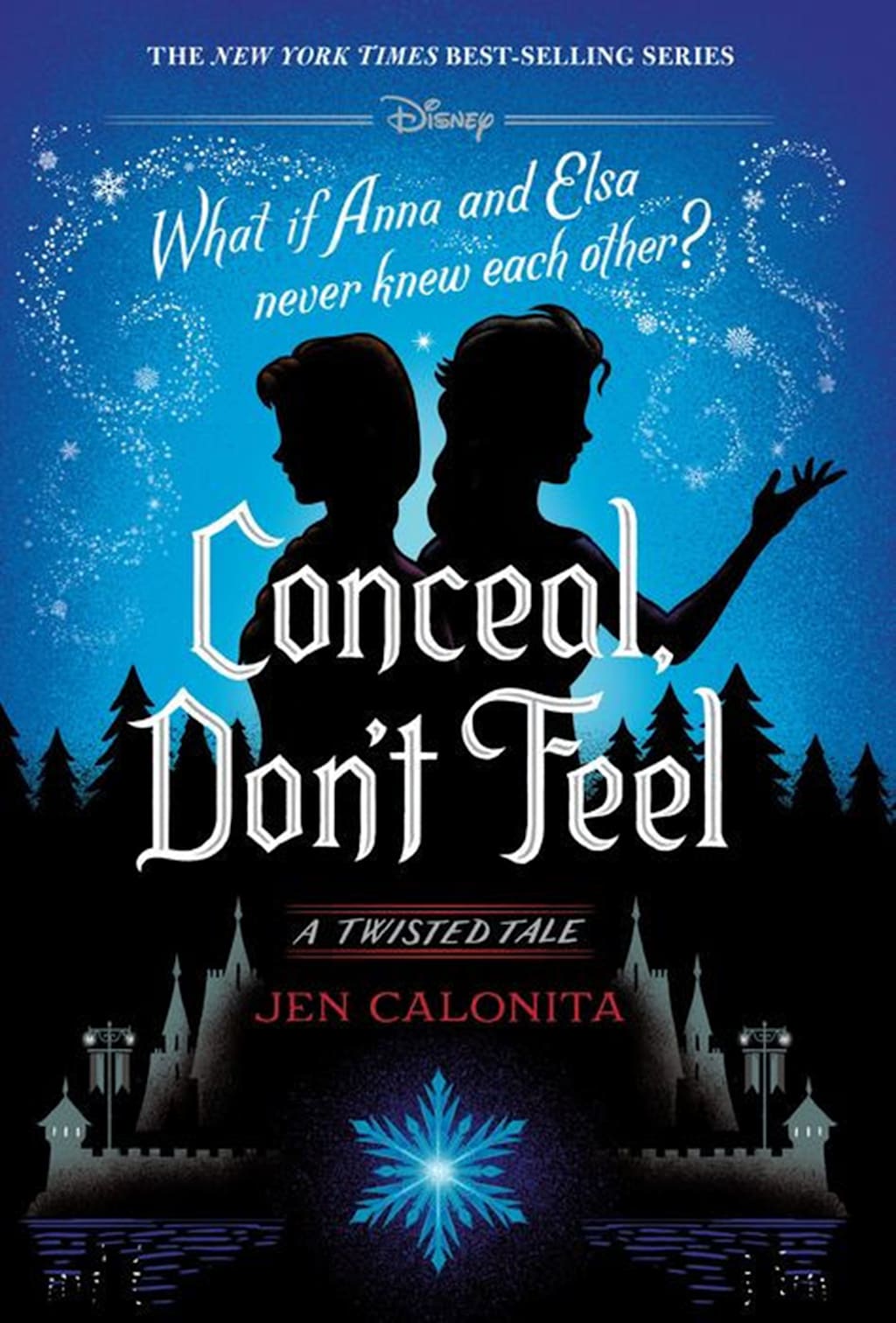
So, fare reader. I'm back to tell you about a journey I went on... in a book... Not just any book, oh no. In my quest to collect all of the Twisted Tale books as I fall ever so slightly in love with each, and everyone, I have purchased over the course of the last half a year almost! Oh my! I found this one next to What Once Was Mine to be up there with my ever growing Disney fascination, the inner child in me, has always possessed.
We begin our descent into this novel with one basic question...
What if Elsa and Anna were never sisters? It's a deceptively simple question, but in Conceal, Don't Feel, Jen Calonita uses it to unravel everything fans thought they knew about the world of Arendelle — and the result is a surprisingly emotional, fast-paced reimagining that earns its place in the Twisted Tales lineup.
The premise kicks off when a young Elsa and Anna are separated by a desperate act of magic following a tragic accident. The trolls, fearing the consequences of Elsa's uncontrolled ice powers, wipe the sisters' memories of each other entirely. Anna is sent to live with a kind family in a small village, growing up as an ordinary girl with no knowledge of royalty, magic, or the older sister she once adored. Elsa, meanwhile, remains in the castle — isolated, fearful, and completely alone, with no Anna to anchor her to the warmth of human connection.
What makes this setup so compelling is how it forces both characters to grow up as fundamentally different people. In the original film, which I'm sure by now we all know and even adore, Frozen, the 2012 instant Disney classic that swept the world by storm (literally). Elsa's arc is about suppression and eventual liberation — but here, without Anna's persistent love pushing her forward, her emotional walls are far more deeply entrenched. Calonita does strong work showing how loneliness and secrecy can hollow a person out, and Elsa's chapters carry a quiet ache that feels genuinely earned rather than manufactured for drama.
Anna, on the other hand, is a joy. Calonita preserves her irrepressible optimism and warmth even when stripped of her royal upbringing, which says something meaningful about character being more than circumstance. Watching Anna stumble unknowingly back toward her destiny — toward Elsa, toward Arendelle — has a fairy-tale inevitability that never feels lazy because the emotional stakes are kept so grounded and personal.
The novel handles its central mystery 'will the sisters find each other before it's too late?' with well-paced tension. Calonita resists the urge to rush the reunion, instead letting the dramatic irony breathe. Readers who know the source material will feel the pull of every near-miss and almost-recognition between the two girls, and those moments of "they're so close" are genuinely nail-biting in the best way.
Where the book stumbles slightly is in its secondary cast. Hans and Kristoff, both present in some form, feel thinner here than they do even in the film. Hans in particular — who was already a one-note villain in the original story — gets little room to be anything more. It's a minor complaint, but in a story so focused on what relationships make us, it would have been interesting to see those dynamics complicated a little further.
The prose itself is clean and accessible, clearly aimed at a middle-grade to young adult audience, and Calonita moves the plot briskly without sacrificing emotional resonance. Some of the most effective writing comes in the quieter, introspective moments — Elsa standing alone at a frosted window, or Anna pausing to wonder why certain songs or certain images fill her with an inexplicable sadness, like remembering something she never knew she'd forgotten. These are the passages that elevate the story from a fun "what if" into something with a little more soul.
Conceal, Don't Feel also invites a poignant thematic reading about identity and belonging. Both sisters spend the novel searching for something they can't name — a missing piece, a sense of home that doesn't quite fit their circumstances. That longing is universally relatable, and Calonita channels it effectively into the Frozen mythology without it ever feeling like a lecture.
Ultimately, this entry in the Twisted Tales series succeeds because it respects the emotional core of what made the original film so beloved — the bond between sisters — while genuinely testing it. It asks: is love between people something innate, written into who we are? Or does it depend entirely on shared memory and shared time? The answer Calonita arrives at is a warm one, though not without cost.
For fans of the franchise, Conceal, Don't Feel is a tender, worthwhile read. For newcomers to the Twisted Tales series, it's an excellent starting point — proof that the best of these books aren't just fan fiction dressed up in a Disney bow, but thoughtful explorations of the stories we already love.
About the Creator
Parsley Rose
Just a small town girl, living in a dystopian wasteland, trying to survive the next big Feral Ghoul attack. I'm from a vault that ran questionable operations on sick and injured prewar to postnuclear apocalypse vault dwellers. I like stars.
Keep reading
More stories from Parsley Rose and writers in BookClub and other communities.
What Once Was Mine
What Once Was Mine, written by Liz Braswell and published in 2022 as part of Disney's acclaimed Twisted Tales series, presents a compelling reimagining of the beloved animated film Tangled. The central premise of this novel poses a captivating question: what if Rapunzel's magical hair carried the power to curse rather than to heal? By inverting one of the core elements of the original fairy tale, Braswell crafts a story that is both familiar and entirely new, exploring themes of self-acceptance, identity, fear, and the true nature of freedom. The result is a richly layered narrative that challenges readers to consider how different circumstances might shape the same essential character — and how one's greatest perceived flaw might ultimately become their most extraordinary strength.
By Parsley Rose 9 days ago in BookClub
Incredibooks: The Masked Duet Series
So my best friend who loves the crazy world of reverse harem books put me on to this author named Reese Rivers and a two part book series she put together called the “Masked Duet”. The series is made up of two stories titled “Dance Butterfly Dance” and “Burn Butterfly Burn”.
By Joe Patterson9 days ago in BookClub
Before the Crown Broke Her
Most people grow up knowing the Queen of Hearts as one thing: a villain. She storms across the pages of Alice’s Adventures in Wonderland, shrieking her famous command–“Off with their heads!”-while terrifying everyone around her. In the surreal chaos of Wonderland, she’s explosive, irrational, and almost cartoonishly cruel. Readers rarely question her motives because the story itself never asks them to. The Queen exists as part of the nonsense.
By Jenna Deedy2 days ago in BookClub


Comments
There are no comments for this story
Be the first to respond and start the conversation.