Author
Cormac McCarthy: When the Rules Are Gone
Cormac McCarthy wrote like the world had been stripped down to bone and ash—and then asked what kind of people would survive in what was left. His novels don’t comfort. They confront. They place you in landscapes where the sky feels too wide, the roads too empty, and every choice carries the weight of life or death. In a culture that loves neat heroes and clean morals, McCarthy’s work is a cold wind across the face: bracing, unforgiving, and impossible to forget.
By Fred Bradfordabout a month ago in BookClub
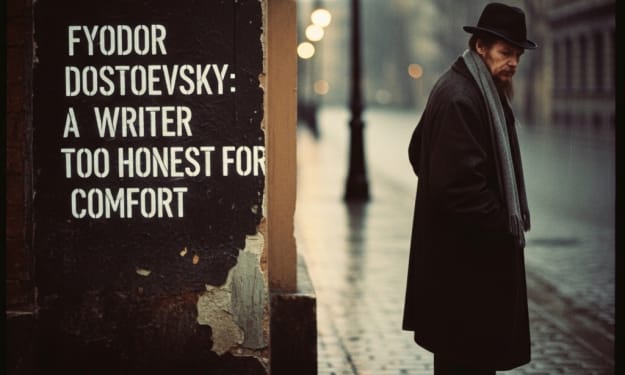
Fyodor Dostoevsky: A Writer Too Honest for Comfort
Fyodor Dostoevsky didn’t just write stories—you could say he wrote autopsies of the human soul. His novels don’t entertain you from a safe distance; they pull you into moral chaos, force you to sit with uncomfortable questions, and then quietly ask, “So—who are you, really?” More than a century later, his work still feels uncomfortably modern because the conflicts he explored never went away: guilt, freedom, faith, resentment, pride, and the terrifying power of ideas.
By Fred Bradfordabout a month ago in BookClub
A Story of Norbert Rillieux
In the humid, swaying cane fields of nineteenth‑century Louisiana, a quiet revolution was forming—one that would not be fought with swords or marching armies, but with science, precision, and the relentless determination of a man named Norbert Rillieux. Born in 1806 to a wealthy plantation owner and a mother of mixed descent, Rillieux grew up witnessing both privilege and the harsh realities of life on sugar estates. He learned early that the production of sugar, though profitable, was a brutal and dangerous trade. Workers spent long hours stirring boiling kettles of cane juice, risking burns, illness, and even death as they attempted to refine the precious crystals that fueled the region’s economy.
By TREYTON SCOTTabout a month ago in BookClub
Ray Bradbury: The Man Who Set the Future on Fire
There are writers who predict the future. And then there are writers who feel it coming. Ray Bradbury was not a scientist. He wasn’t a technologist. He didn’t write hard equations into his stories or obsess over mechanical accuracy. Instead, he wrote about something far more dangerous and far more human: what happens to the soul when the world changes too fast.
By Fred Bradford2 months ago in BookClub
Jan Ernst Matzeliger
By Staff Writer Leavie sacott| February 2026 In the late 19th century, when most Americans still relied on expensive hand‑crafted footwear, one inventor quietly changed the future of manufacturing—Jan Ernst Matzeliger, a Surinamese‑American mechanical genius whose shoe‑lasting machine revolutionized the global shoe industry.
By TREYTON SCOTT2 months ago in BookClub
Lewis Latimer
By Staff Writer Leavie Scott| February 2026 In an age when electric light is taken for granted, few Americans know the name Lewis Howard Latimer—yet his innovations helped make the light bulb reliable, affordable, and accessible to the world. Born in 1848 to formerly enslaved parents in Chelsea, Massachusetts, Latimer’s journey from poverty to technological pioneer is one of the most remarkable stories in American innovation.
By TREYTON SCOTT2 months ago in BookClub
Margaret Atwood: Warnings Written in Ink
Margaret Atwood does not write fantasy. She writes possibility. For decades, readers have described her work as dystopian, speculative, even prophetic. But Atwood has always insisted on one important rule: she does not invent technologies or political systems that have no precedent in human history. Everything she writes about has happened somewhere, in some form, at some time. That grounding in reality is what makes her fiction so unsettling—and so powerful.
By Fred Bradford2 months ago in BookClub
Relationship Status
⭐️⭐️⭐️⭐️⭐️ A Heartfelt Journey I Didn’t Expect, But Deeply Needed Reading Whispers in the Wind and *Relationship Status: You My Perfect Angel felt less like flipping through pages and more like being invited into the private, unfolding story of a soul learning, healing, and loving without apology. From the very first poem, I felt as though I was walking alongside the author— through moments of quiet reflection, fragile honesty, and the kind of emotional growth that only comes from truly living life.
By Organic Products 2 months ago in BookClub
How Well Do You Live?
''Yes, I have a homeland. The French Language.'' - Albert Camus * Something very strange happened while I was reading this book. Usually, I have a few things on the run (too many books; too little time?), and this was added to a stack that often threatens to crush me in my sleep. I would skip from one to other, often disappointed, confused and enlightened...but rarely entertained (the cold and the darkness outside probably played a role, as did the constant running around from contract to contract). And I really don't care what any intellectual in any academic setting claims, you need to be entertained when you pick up a book.
By Kendall Defoe 2 months ago in BookClub
Aldous Huxley: When Comfort Becomes Control
When people think of dystopia, they often imagine boots, barbed wire, and shouting dictators. Aldous Huxley imagined something far more unsettling: a world where no one needs to be forced into submission because they are too entertained, too medicated, and too comfortable to resist. If George Orwell warned us about oppression through fear, Huxley warned us about oppression through pleasure.
By Fred Bradford2 months ago in BookClub
Albert Camus: The Rebel Against Meaninglessness
Albert Camus did not promise hope in the traditional sense. He did not offer comforting answers about destiny, faith, or cosmic purpose. Instead, he began with a stark observation: the universe is silent. Human beings search desperately for meaning, yet the world does not provide it. From this tension, Camus built one of the most powerful philosophical positions of the modern era—the philosophy of the absurd.
By Fred Bradford2 months ago in BookClub
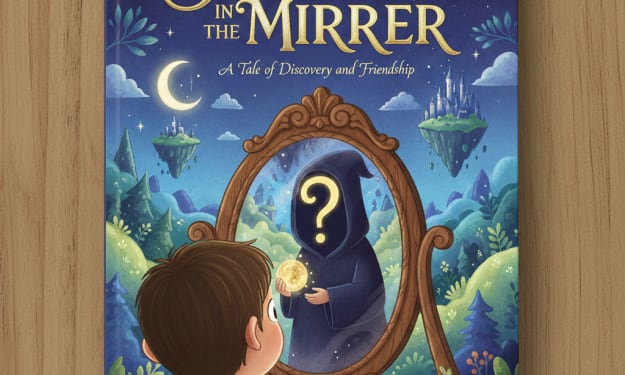
The Stranger in the Mirror. AI-Generated.
The Stranger in the Mirror Liam had never been one to look too closely at himself. Every morning, he’d splash cold water on his face, brush his teeth, and glance briefly into the bathroom mirror before moving on. But that morning was different.
By Samaan Ahmad2 months ago in BookClub