
Cuba’s Unusual Offer Paying Off Debt with Rum Diplomacy
Facing financial pressure, Cuba explores an unconventional strategy—using its world-famous rum as a tool to settle international debts and strengthen economic ties.

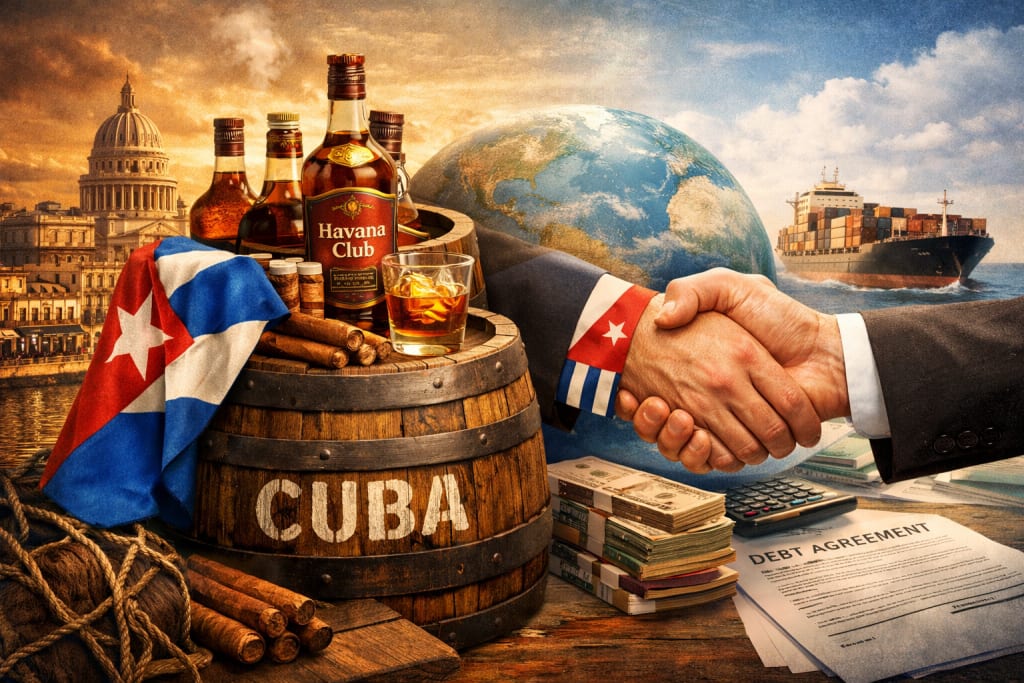
In a world driven by complex financial systems, global trade agreements, and strict monetary policies, Cuba has introduced an unconventional yet culturally rich idea: offering its renowned rum as a means to repay international debt. This proposal, while surprising at first glance, reflects both the island nation’s economic challenges and its creative approach to navigating them.
Cuba has long struggled under economic constraints, including decades of trade restrictions, limited access to international markets, and ongoing financial instability. With mounting debt and limited liquidity in foreign currency, the country faces significant challenges in meeting its financial obligations to creditors. Traditional repayment methods—primarily cash transfers—are difficult for an economy that relies heavily on exports like tobacco, sugar, and tourism.
Amid these challenges, Cuban officials have explored alternative methods of repayment, and one idea gaining attention is the use of rum as a form of value exchange. Cuban rum is not just any commodity—it is a globally recognized product with a rich history, distinctive flavor, and strong cultural identity. Brands like Havana Club have long been associated with quality and heritage, making Cuban rum a valuable export in international markets.
The concept of using goods instead of currency to settle debts is not entirely new. Throughout history, countries have engaged in barter-like arrangements when cash was scarce. Oil, minerals, and agricultural products have often been used in similar exchanges. However, Cuba’s proposal stands out due to the symbolic and cultural significance of rum. It is not merely a commodity; it represents the island’s identity, tradition, and craftsmanship.
Supporters of the idea argue that this approach could offer mutual benefits. Creditors would receive a high-demand product that could be sold or distributed in global markets, potentially generating revenue. At the same time, Cuba would be able to reduce its debt burden without straining its already limited cash reserves. This could also help sustain domestic industries, particularly the rum sector, which provides employment and contributes to the national economy.
Moreover, the proposal highlights Cuba’s resilience and adaptability. Rather than defaulting on its obligations or entering prolonged negotiations, the country is attempting to find a practical solution using its available resources. This reflects a broader trend among financially constrained nations seeking innovative ways to manage economic pressures in a globalized world.
However, the idea is not without challenges. One major concern is valuation—determining the fair market value of rum in comparison to monetary debt. Prices can fluctuate depending on global demand, branding, and distribution costs. Creditors may also be hesitant to accept goods instead of cash, as it requires additional effort to convert those goods into usable revenue.
Logistics present another hurdle. Transporting large quantities of rum, ensuring quality during shipment, and navigating international trade regulations can be complex and costly. There are also legal considerations, as debt agreements are typically structured around financial payments rather than commodity exchanges.
Critics also question whether such a strategy addresses the root causes of Cuba’s economic struggles. While it may provide short-term relief, it does not resolve issues such as limited industrial diversification, reliance on a narrow range of exports, and restricted access to global financial systems. Without broader economic reforms, the country may continue to face similar challenges in the future.
Despite these concerns, the proposal has sparked global interest and debate. It serves as a reminder that economic solutions do not always have to follow conventional paths. In times of crisis, creativity and cultural assets can become valuable tools for survival and negotiation.
For Cuba, rum is more than just a beverage—it is a symbol of heritage and resilience. By leveraging this iconic product, the country is attempting to turn a challenge into an opportunity. Whether this strategy will be widely accepted or remain a symbolic gesture is yet to be seen, but it undeniably highlights the importance of innovation in the face of adversity.
As the global economy continues to evolve, Cuba’s rum diplomacy may inspire other nations to think beyond traditional frameworks. In a world where financial pressures are increasingly complex, sometimes the most unexpected solutions can open new doors.
About the Creator
Irshad Abbasi
Ali ibn Abi Talib (RA) said 📚
“Knowledge is better than wealth, because knowledge protects you, while you have to protect wealth.
Keep reading
More stories from Irshad Abbasi and writers in Chapters and other communities.
A Joke That Reached the Supreme Court
In a world where humor often pushes boundaries, one controversial joke in Canada sparked a national conversation about dignity, discrimination, and the limits of free speech. What started as a comedian’s attempt at edgy humor eventually made its way to the Supreme Court of Canada, turning a single act of mockery into a defining legal moment for disability rights.
By Irshad Abbasi 12 days ago in Chapters
Return of the Teaser, Chapter Two
No sooner had Mini-Flash Juniper departed than her doppelganger struck up a series of self-pitying complaints that she was hungry. Since an acre of oilseed in Flashsatsumas’s underwear wouldn’t have made him any less cautious about the company he was required to keep, his first thought was to veto any kind of excursion to the food-court. On the other hand however, he and the real Mini-Flash Juniper might just as easily have taken such a trip, and maintaining the illusion of normality was the task she’d charged him with. In addition, for all Flashsatsumas knew the counter-Juniper might have been the kind of entity which needed material sustenance, and that would mean her pleas for the same were actuated by necessity rather than sneakiness.
By Doc Sherwood6 days ago in Chapters




Comments
There are no comments for this story
Be the first to respond and start the conversation.