Biography
🌿 5+ Powerful Dragon Plant Benefits for Calm, Balance & Style. AI-Generated.
Indoor plants do more than decorate a room—they transform how a space feels. One plant that stands out for both beauty and wellness benefits is the dragon plant, commonly known as Dracaena. With its elegant leaves and easy-care nature, this tropical houseplant has become a favorite among homeowners and interior designers alike.
By Leafy Heavenabout 23 hours ago in Chapters
Saudi Oil Story: From Crude Dependence to Economic Diversification
For decades, the global identity of Saudi Arabia has been inseparable from oil. The Kingdom sits on some of the largest petroleum reserves in the world, and for much of the 20th century its economy revolved almost entirely around crude oil production and exports. However, the Saudi economic story is no longer just about oil wells and pipelines. In recent years, the country has been steadily working to transform its economy, moving from heavy dependence on crude oil toward a more diversified and sustainable economic model.
By Irshad Abbasi a day ago in Chapters
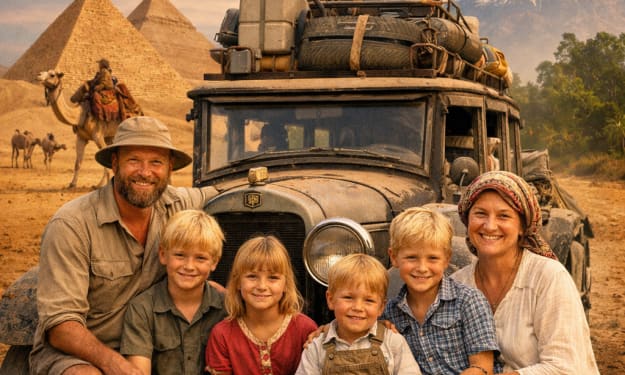
From Two Travelers to a Family of Six: The 22-Year Journey Around the World in a 1928 Car
In the late 1920s, when long-distance travel was slow, roads were rough, and the world was still largely unexplored by automobiles, a young German couple made a decision that would turn into one of the most extraordinary journeys in modern travel history. What began as a simple road trip in 1928 eventually became a 22-year global adventure. They left home as two travelers but returned as a family of six.
By Irshad Abbasi 5 days ago in Chapters
Italy’s Vanishing Village: Businesses and Schools Close as Birth Rates Collapse
Across Italy, a quiet demographic crisis is unfolding. In many small towns and villages, the number of newborns has dropped so dramatically that schools are shutting down, businesses are struggling to survive, and communities that once thrived with families are slowly fading away. One such town has become a stark symbol of this national problem, where the absence of children is reshaping everyday life.
By Irshad Abbasi 6 days ago in Chapters
Ray Kroc: The Relentless Visionary Who Built a Global Empire One Hamburger at a Time
Today we look back at a man who proved that ambition has no age limit—someone who didn’t discover his life’s defining purpose until he was well into his fifties. His name was Ray Kroc, and his journey from a restless teenager to the architect of the world’s most successful fast‑food corporation is one of the most remarkable business stories of the 20th century.
By Haroon Pasha7 days ago in Chapters
Moses Fleetwood Walker
Until Jackie Robinson joined the Brooklyn Dodgers in 1947 March 6, 2026 —Leavie scott Long before Jackie Robinson became a household name in 1947, another pioneering athlete stepped onto the field and challenged the deeply entrenched racial barriers of his era. His name was Moses Fleetwood “Fleet” Walker (1856–1924), and although history remembers him primarily as one of the earliest Black athletes to play in professional Major League Baseball, his extraordinary life story stretches far beyond the diamond.
By TREYTON SCOTT7 days ago in Chapters
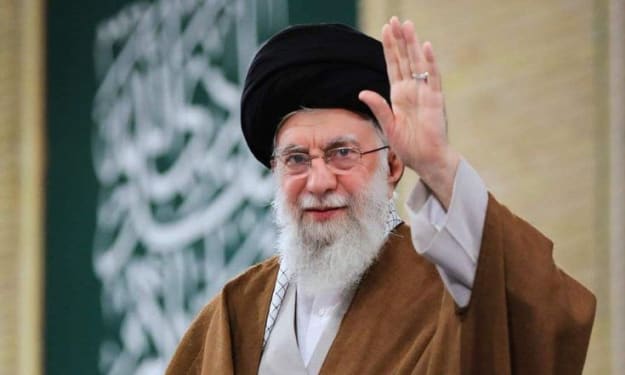
The Life and Leadership of Ayatollah Ali Khamenei
Ayatollah Seyyed Ali Hosseini Khamenei’s story begins in Mashhad, one of Iran’s holiest cities, where he was born on July 17, 1939 into a deeply religious family. His father, Ayatollah Seyyed Javad Khamenei, was a respected cleric of Azerbaijani origin, known for his strict scholarship and modest lifestyle. His mother, a devout woman from a clerical family, raised her children in an environment where faith, discipline, and humility were woven into daily life. Growing up in a small home with limited means, young Ali spent his childhood surrounded by religious texts, sermons, and the rhythms of Islamic scholarship. His father insisted on a traditional religious education, and by his teenage years, Ali was already immersed in the study of Quranic interpretation, jurisprudence, and philosophy. Early Education and the Seeds of Rebellion In the 1950s, Khamenei continued his studies in the seminaries of Mashhad and later Najaf, one of the most important centers of Shia learning. But his education was not limited to theology. He was drawn to political writings, anti-imperialist ideas, and the growing movement against the Shah of Iran. By the early 1960s, he had become a follower of Ayatollah Ruhollah Khomeini, whose fiery opposition to the Shah inspired a generation of young clerics. Khamenei began giving speeches, distributing pamphlets, and organizing underground networks. His activism led to multiple arrests, interrogations, and periods of exile under the Shah’s regime. These years hardened him. They shaped his belief that political power and religious authority were inseparable—and that Iran needed a system where clerics guided the nation. The 1979 Revolution and the Rise of a New Leader When the Iranian Revolution erupted in 1979, Khamenei was no longer a young student—he was a seasoned activist. After the Shah fell and the Islamic Republic was established, he quickly rose through the ranks: - Member of the Assembly of Experts - Tehran’s Friday Prayer Leader - Deputy Minister of Defense - A key figure in the Islamic Revolutionary Guard Corps (IRGC) In 1981, after the assassination of President Mohammad-Ali Rajai, Khamenei became the President of Iran, serving two terms until 1989. He was known for his calm demeanor, loyalty to Khomeini, and ability to navigate political factions during the turbulent years of the Iran–Iraq War. Supreme Leader: An Unexpected Successor When Ayatollah Khomeini died in 1989, Iran needed a new Supreme Leader. Many clerics doubted Khamenei—he was younger, less senior in religious rank, and not considered a grand ayatollah. But he was trusted, politically experienced, and deeply loyal to the revolution. The Assembly of Experts elected him as the Second Supreme Leader of Iran, a position he would hold for 36 years, making him one of the longest-ruling leaders in the modern Middle East. A Rule Defined by Power, Conflict, and Control Khamenei’s leadership reshaped Iran’s political landscape. Under his rule: - The IRGC became the most powerful military and economic force in Iran. - Iran expanded its influence across the Middle East through proxy groups. - Domestic dissent was tightly controlled. - The nuclear program became a central pillar of Iran’s strategy. Supporters saw him as a guardian of Iran’s independence and Islamic identity. Critics saw him as an authoritarian figure who consolidated power and suppressed opposition. His leadership style was marked by caution, ideological rigidity, and a belief that Iran must resist Western influence at all costs. The Final Chapter In February 2026, Ayatollah Ali Khamenei was killed at age 86 during U.S.–Israeli airstrikes targeting his compound in Tehran, marking the end of an era that had defined Iran for nearly four decades. His death was confirmed by Iranian state media and global news outlets. His passing left Iran at a crossroads, with an interim leadership council stepping in as the nation faced uncertainty about its future. Legacy of a Controversial Figure Ayatollah Ali Khamenei leaves behind a legacy that is complex and deeply debated: - To some, he was a defender of Iran’s sovereignty and Islamic values. - To others, he was a symbol of repression and authoritarian rule. - To historians, he was one of the most influential—and polarizing—leaders of the 21st century. But beyond politics, his story is also the story of a boy from Mashhad, raised by a humble cleric father, shaped by faith, revolution, and the belief that he was destined to guide his nation.
By Haroon Pasha8 days ago in Chapters