Humanity
New Russiaphobia and McCarthyism
Although the ongoing war in Ukraine reminds of the Cold War and the bipolar conflict, the West’s handling of the crisis seemed irrational in many of its actions, and reminded the audience of the era of McCarthyism’s control in the fifties of the twentieth century on cultural life and public space in the United States, as a result of the procedures of the Parliamentary Committee that It was led by the right-wing Senator Joseph McCarthy, who was the head of one of the subcommittees in the Senate, and who practiced cultural terrorism through his committee, and imprisoned a number of important figures on charges of belonging to the Communist Party, and this era was the beginning of a rightly expressive of the dominance of the Cold War laws, which extended for four decades later. .
By Zernouh abderrahman4 years ago in Confessions
The nation collectively rejects “Israel” and divided it normalizes with it
The past quarter century witnessed a clear decline in joint action at all political levels, and a steady escalation of unilateral action on the part of countries aspiring to expand their influence. At the international level, the work of the United Nations has almost disappeared after it was marginalized, as it no longer has a field presence in conflict areas, and was unable to contain political or military tensions, and the Secretary-General of the United Nations is no longer only a senior international employee who issues statements on international occasions such as International Women’s Day and today Universal Human Rights and others. With the deepening polarization in the UN Security Council, it has also become unable to influence international politics and issues of war and peace. The Ukrainian crisis is escalating, while attempts to obtain a Security Council resolution on it have failed as a result of polarization and the veto system.
By Zernouh abderrahman4 years ago in Confessions
Will the countries of the Maghreb pass the Ukraine crisis in peace?
The whole world is on the palm of an imp.. And while economists do not confirm, nor do they deny that even part of the scenario that many have summarized in the occurrence of famines in several regions of the world, including North Africa, will be followed by a wave of unrest and revolutions that may be the most violent and radical, the The question that arises sharply is, will the politicians there be able to avoid that fate before it is too late and things get out of control permanently? A few days ago, some Moroccan bloggers were disturbed by a Moroccan YouTuber named Osama Copenhagen’s talk on an Italian TV channel about hunger and poverty in Morocco, with the Algerian News Agency’s anger at a UNICEF report on “the Algerian youth’s suffering from unemployment, fragility, poor schooling and economic marginalization.” Although there was no direct link between the two issues, the common denominator between them, regardless of the accuracy or validity of these or that allegations, is that the reaction here and there revealed in both cases the existence of a kind of sensitivity in the official and popular dealing with any news or A comment indicating that there is a manifestation of a crisis that is knocking on the door of the two largest Maghreb countries. But can any one of the two countries be certain now that it has zero problems and zero crises, and that it is completely and definitively immune to all global economic fluctuations and shocks? It is true that it is about the two most populous countries, and the most powerful economies in the region, but did the Federal President of the largest economic power in Europe not refrain from saying, in his speech last Sunday via video link with Ukraine, “We will face in Germany more difficult days, and we must To be prepared to bear it, if our solidarity is not just empty promises, and if it is taken seriously” before asserting afterwards that “these days will change the world and us too, perhaps faster than we thought possible”? There is no doubt that Frank-Walter Steinmeier was not the first or the last Western official to warn his people of the harsh effects and repercussions of the Russian war on Ukraine in the course of daily life. If the man who heads the rich European country speaks with all that anxiety and apprehension about the vicissitudes that may be hidden in the coming days for his country, will the North African countries, which are less powerful and affluent than Germany, be immune to the tremors and storms that the Russian-Ukrainian war will cause? Then does the local and regional scene in the Maghreb seem to be on the verge of transformations, which this time may be deep and radical? Or will the effects that it will be affected by this crisis, and on the contrary, will be very limited and simple? Many may have heard what the Mauritanian president said in the middle of this month, in front of members of the Mauritanian community in Spain during his recent visit to Madrid, but few may have actually realized the significance of Ould Ghazwani’s words, or whether he did not only acknowledge with remarkable courage a reality that all Mauritanians know and live with. Rather, he went further when he said in that meeting: The question posed by the Mauritanian president's confessions, which were as frank as they were painful and bitter, is, was the man addressing his speech only to members of his own people? Or was he also implicitly addressing his Maghreb neighbors to tell them that his country, which, since its independence in the sixties, has paid the price of Algerian-Moroccan disputes and quarrels, is the one who pays the most today and will pay tomorrow, in the absence of a joint Maghreb project, the cost of the Russian-Ukrainian war in the North African region? There is no doubt that the last thing that can come to the minds of Libyans, Tunisians, Moroccans and Algerians is that the occurrence of a famine in Mauritania - God forbid - which is not ruled out by the Mauritanian president himself, could sooner or later affect each one of them, regardless of the size His wealth or his ability to get out of any similar problem or predicament he might face. It is not only their wrong economic calculations that make them think in this way, but also their narrow and limited political perceptions of the interests of their country, which lack any real sense of the unity of the Maghreb destiny, but can the Maghreb and its neighbor be hungry? The Europeans may well prepare for such a scenario, because they know that their countries will inevitably be the destination of thousands, perhaps millions, on the opposite bank. But what Maghreb country will really feel the seriousness of the threat and the imminent danger in the event of a famine or disaster in a neighboring Maghreb country? It is really unfortunate not only that the five countries do not have a collective and comprehensive vision for their national food security, but that part of the difficulties that one country may encounter, are usually and automatically attached to the condemnation of the other neighbour, so accusations are explicitly or implicitly behind them. What happens between Morocco and Algeria from time to time is not the only example of this. For years, for example, Tunisians have been attributing the reason for any shortage they find in some products and materials to the fact that they are smuggled into Libya. Although they did not directly accuse the Libyans of being behind the financial and economic crisis in which they are floundering, they have not yet been able to put together with them a joint plan to provide the two countries together with the basic needs of international markets. Everything that may be said here about the existence of an insurmountable obstacle standing in the way of any unified Maghreb action or endeavor, which is the political conflicts and disagreements, falls on the ground. To face the effects and repercussions of the Russian war on their economies? What political justifications might explain the failure of any Maghreb country so far to coordinate with Mauritania, which is the weakest link in the equation, and help it bear the consequences of the skyrocketing prices of energy, fuel and wheat? Unfortunately, everyone's concern is to assure his people that he will not starve, but wouldn't hunger have a domino effect? Perhaps those who said more than a decade ago that Egypt is not Tunisia and Libya is not Egypt will be better able than others to answer.
By Zernouh abderrahman4 years ago in Confessions
Fire in blue eyes
The English poet Rudyard Kipling opens his poem “The Song of East and West” with the phrase: “The West is West and East is East and they will not meet,” a phrase that moved from its poetic aesthetic field to ideological and political fields. We glimpse it in various Western intellectual, literary and historical works.
By Zernouh abderrahman4 years ago in Confessions
China learns lessons from the Ukraine war
The eyes of those interested in international relations continue to focus on China, to monitor the development of its positions on the Russian-Ukrainian war. Will it be inclined to persuade Russia to bet on peace in Ukraine, or will it use this crisis to weaken the West, which makes it the next target, which must be controlled? China adopted a cautious attitude at the beginning of the conflict, but soon began to adopt a sharp tone toward the United States.
By Zernouh.abdo4 years ago in Confessions
Earth Day and messages that don't die with age
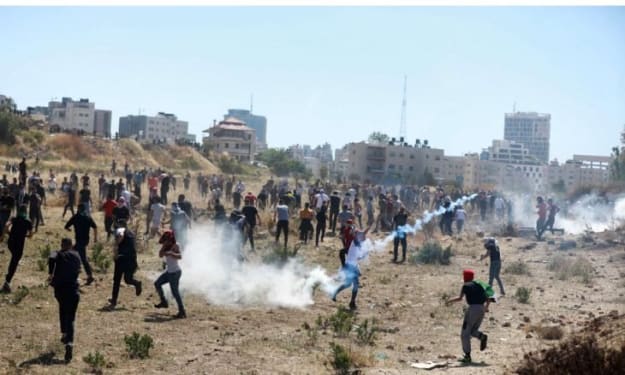
These days are the forty-sixth anniversary of the Glorious Land Day, and attention is directed to historic Palestine, after the recent confrontations in the Negev, Beersheba, Hadera, Bani Brak, Ramat Gan and Umm al-Fahm, which restored the glow of that glorious historical day.
By Zernouh.abdo4 years ago in Confessions
The Notice of Privacy Statement
I was at the pharmacy the other day, and it tickled me that I had to sign a form to acknowledge I was aware of my privacy rights - to be more specific, I had to sign at the bottom of this form, under a long list of other customer names with stickers out beside each one that indicated how many prescriptions each person received.
By Aleeza4 years ago in Confessions
What will the Arab countries do with the food crisis imposed by the Ukraine war?
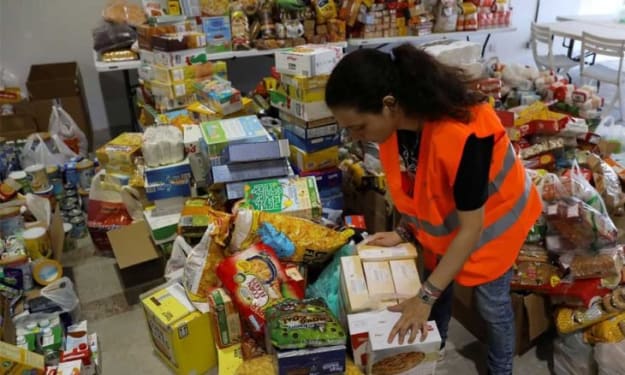
. Everyone is now warning of a global food crisis that will hit many regions of this world due to the Russian war on Ukraine and the dependence on grain supplies coming mainly from both sides, and even started talking about a famine that will occur in certain regions, the most important of which is Africa. The latest of these shouts came from the Director-General of the International Monetary Fund, Kristalina Georgieva, when she said unequivocally that “the war in Ukraine means hunger in Africa,” but not only Africa is threatened with severe repercussions, but many other regions even in Europe, as it is a major country like France. Its president declares that "we are about to enter into an unprecedented food crisis" at a time when Europeans are currently facing a significant increase in the prices of various agricultural products, but it is certain that the repercussions will be more severe and catastrophic for Africa and the Middle East. The warnings did not stop at people's livelihood in these areas, but extended to the United Nations Secretary-General saying that "the world will witness a storm of famine and a collapse of the global food system." Such talk was accompanied by a worrying warning that this would inevitably lead not only to difficult humanitarian conditions there, but would certainly be accompanied by unrest and political turmoil whose extent no one knows from now. If Europe is currently searching with all effort for specific exits for such a possibility, as the French President called at the recent G7 summit of the need to go to search for the best and fastest ways to develop a collective plan that seeks to raise agricultural production in Europe, then we are in Africa and in our countries Arab countries are affected more than others. We have seen nothing but an expression of fear without moving a finger, even though the food threat came to it, accompanied by the rise in energy prices, so two calamities met with it, not just one. The paradox here is that agricultural and food experts in the European Union are currently complaining about the absence of a clear and solid European agricultural vision before this crisis, and they point out that Europe does not possess a reliable strategic reserve of grain (Germany is almost the only one with such reserves) at a time when countries were Like China or India, it is working strongly in this direction, and the result is that China has a 9-month stockpile, while the European Union has only a 36-day stockpile. And if this is the situation of an organized bloc like the European Union, then what will the situation be in some Arab countries?! In the list of the top 10 importers of wheat in the world, we find two Arab countries, Egypt and Algeria, where Egypt is the largest importer and consumer of wheat in the world, as it imports annually more than 13 million tons, or more than two-thirds of its needs of this strategic commodity. Russia and Ukraine constitute the source of about 85 percent percent of the imported quantities. Although a country such as Algeria, which is considered among the largest importers of soft wheat in the world, has France as a major supplier of this material, and deals to provide the required quantities of wheat with about 20 countries, it is also concerned about the possible disruption of Russian wheat that returned to its markets after A break of about five years. As for Morocco, which is the third consumer of wheat in Africa, after Egypt and Algeria, and is among the ten countries in the world that import the most grain, it is no less disturbed than others, as Ukraine and Russia come in second and third, after France, among the exporters of soft wheat to the Kingdom, while Canada ranks The first place among its suppliers of durum wheat. Perhaps Tunisia is among the most affected, especially as it is already experiencing a severe financial crisis with delays in the payment of salaries and a shortage of basic foodstuffs such as grain, sugar, oil and some medicines. What makes the situation worse is the deep political crisis there and the state of denial of its president, who believes that many of the country’s problems are due to conspiracy against him, to the extent that the shortage of foodstuffs brought him back to monopoly, although he does not explain everything, especially since some ships loaded with grain have turned back. From Tunisian ports because the state did not have the ability to pay, in a dangerous precedent that carries very frightening omens about the future. The political cost of all of the above is currently unknown, especially in both Egypt and Tunisia, with rising prices and more suffocation of people in their livelihood. Do not forget that both of them lived in the eighties of the last century major popular uprisings called the bread uprisings after the increase in their prices. As for reminding most Arab countries that a country like Sudan would have been the safe food basket for all of them, if there was vision and insight, there is no point in talking about it..
By Zernouh.abdo4 years ago in Confessions