Humanity
Poverty and Global Politics
The history of the world has always revolved around power, wealth, and politics, and the larger nations have always influenced the smaller and poorer ones. The truth is that poverty is not merely an economic issue but also a weapon that powerful nations use for their own interests. Most of the world’s poor regions have always been victims of the policies of major powers, and the fruits of their labor often end up in the accounts of the wealthy nations. To keep their economies strong, powerful countries buy resources cheaply from weaker states, exploit the cheap labor of their workers, and then use various tactics to keep them politically under control. This is why many regions of Africa, South Asia, and the Middle East remain trapped in poverty and backwardness. The people of these regions work day and night, but the true results of their earnings are reaped by powerful countries, while the local populations remain in misery.
By Muhammad yar6 months ago in Earth
Orbs and comets a sign strange things unfolding in the heavens
With all that’s unfolding on the surface of our planet this year, and has been for the past five years or more, it’s hard not to wish for intervention from some benevolent samaritan who leads mankind on a new path to enlightenment, where humanity’s greed and self-interest is replaced by a spiritual awakening and cosmic transformation.
By Steve Harrison6 months ago in Earth
Animal Entitlement to Life
Biologically speaking, life is an endless chemical balancing act. When a population of a plant or animal species fluctuates, at least one other species is directly disturbed, while many others become indirectly influenced. With this general truth in mind, one could logically conclude that all living beings share equal value in the planetary scheme. Each living being on Earth has its own niche in the biosphere, down to the smallest microorganisms. Our food chain quite literally is a circular cycle of life. Plants are eaten by animals which are eaten by larger animals. Feces from the animals helps fertilize the soil to grow more plants to sustain plant-eating life. It is a continuous system of locked interdependence. Yet, when it comes to the rights of animals in domesticated, commercial, scientific, or even natural wildlife settings, some humans attempt to argue the idea that they are not deserving of basic rights. In a society of intelligent beings that are evolving on various levels, it is time that humanity come to a consensus that all conscious living beings are entitled to pursue a life free from unwarranted cruelty and neglect.
By Lolly Vieira7 months ago in Earth
The Secret Life of Spices: How Flavor Changed Human History
Introduction – A World in a Pinch of Flavor Open a kitchen drawer, and there they sit—a stash of miniature glass jars—cinnamon, black pepper, turmeric, nutmeg, paprika. They rest quietly, unobtrusively, until called upon to sprinkle into a sauce or dust over bread. But for two millennia, these minute shavings of plants mounted epic journeys, founded empires, overthrew dynasties, rewired economies. Spices are not just flavor—they are history, medicine, and memory reduced to pinches and handfuls.
By The Chaos Cabinet7 months ago in Earth
Bagram Revisited: A Historic Afghan Hub at the Center of Global Tension
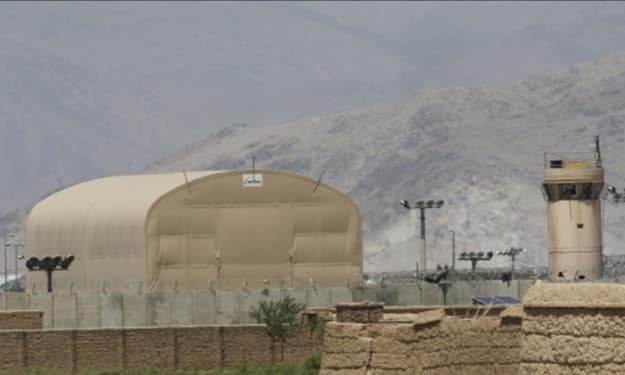
Bagram is once again the focal point of power narratives. Built in the 1950s by the Soviet Union at the foot of Afghanistan’s snow-covered mountains, this airbase became the military hub for two global powers — the Soviet Union and the United States. Today, it is under the administration of the Afghan Ministry of Defense. Yet, the history of this site in Parwan province in northern Afghanistan is centuries old.
By Real content7 months ago in Earth
The Human Rights Approach 🌊
This article is Part II of an investigative series about climate migration. For Part I of Escaping Atlantis, click here. The human rights approach directly confronts the impact of environmental degradation on vulnerable individuals. This anthropocentric, bottom-up discourse actively represents climate migrants, emphasizing their loss of property, culture, status, and dignity.
By DJ Nuclear Winter7 months ago in Earth
Escaping Atlantis 🌊
In The Republic of Plato, Socrates established his idea of a just city. In his vision, a king rules by philosophy and wisdom. Utility is meticulously moderated. Virtue is the law of the land. Every soul is governed accordingly. And every realm of the soul is governed accordingly.
By DJ Nuclear Winter7 months ago in Earth
I.L. v. The Italian Ministry 🌊
This article is Part V of an investigative series about climate migration. For Part VI of Escaping Atlantis, click here. The Teitiota ruling was a heart-wrenching outcome for climate migration advocates. The UNHRC ruling enforced overly strict refugee requirements, excluding many climate migrants from life-saving international protection. Many climate migrants remain trapped in increasingly dire situations.
By DJ Nuclear Winter7 months ago in Earth
Death Of A Culture 🌊
This article is Part III of an investigative series about climate migration. For Part II of Escaping Atlantis, click here. Permanent territory loss caused by climate change presents the unique challenge of statelessness. The 1933 Montevideo Convention on the Rights and Duties of States established criteria for a state: "a permanent population; a defined territory; government; and capacity to enter into relations with the other states."
By DJ Nuclear Winter7 months ago in Earth
A Silent Guardian
M Mehran There is something comforting about knowing Earth is always beneath us. Whether we are awake or asleep, joyful or grieving, rushing through cities or wandering through forests—the planet carries us without complaint. It is silent, steady, and ever-present, a guardian we often forget to acknowledge.
By Muhammad Mehran7 months ago in Earth