Sustainability
Pikaia
I was Pikaia...I'm born from the ocean. I still swim and feel at home. Who got me out here? I'm just a remote accident, a survivor of extinction waves, those waves where many didn't. It just happened to be me. I could very well right now have to be hiding behind rocks to escape from dinosaur's teeth, or having to keep watching my back on the savannas. But just by luck, things took another way. Whose luck?. We conquered our greatness, but we compromised a whole planet on the way. It sounds a little like those promos, pay one and take five, but the opposite and in a biggest scale of numbers. In order to make this planet perfectly comfy, easy, and luxurious for us, and just for some of us, we sacrifice a brilliant creation of who knows who, and this part doesn't matter. What we can't deny, is that we all see a world made of Biodiversity, colors, incredible species hiding in the smallest places, intelligences expressed in the most astonish ways and far from being simply linked to brain size. Cognitively complex means of life that science tries to understand even today, and probably never will, including us. We watch a planet standing on its feet year after year of less care, fighting with the tools that this amazing ecological system has. And we live, day after day, without realizing we are in a war. We wake up, we look at the sky, and we say ''Look this beautiful morning'' and breathe a deep and fresh air being grateful for a new day. Just one second after, naively or not, we turn our backs and walk away starting the automatic environmentally harmful actions of our days, being on the wrong side of a war against ourselves.
By Melisa Zabala5 years ago in Earth
Tangling with the Hydra
We humans have created monsters. Not so much in the forms of humanoid blood-suckers or the vengeful dead, but of exhaustive speeds, plumes of unchecked toxins, and mountains of wasted items that simply don’t break down. When we put tons of carbon into the atmosphere, and remove many plants that would absorb the carbon, we contribute to the trapped heat which melts our sea ice and threatens to release methane gas trapped within, kept at bay only because it is frozen. Our black asphalt roads absorb more heat and we remove and seal up countless gallons of water in products on store shelves in surplus, denying the rest of the environment. We overfish, overhunt, and destroy anything that gets in our way whether it lives, breathes, or simply exists. There’s not a plant, animal, or rock we won’t remove.
By Megan Baker (Left Vocal in 2023)5 years ago in Earth
We Have Work To Do
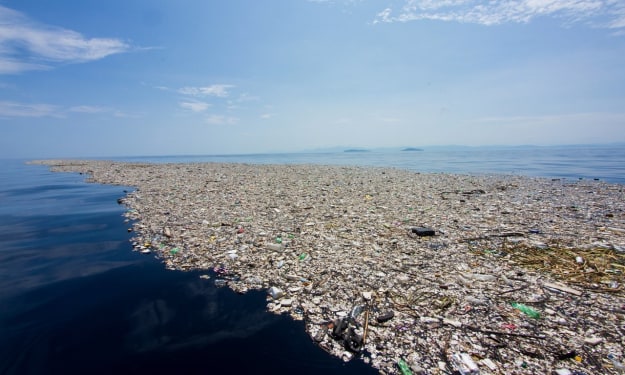
Alright, folks. It’s time we had a talk. What the f*(%! are we going to do about our trash problem? It’s not just about throwing shit in a bin and calling it recycling anymore. In many cases, these piles of “recycling” are shipped across the world – using fossil fuels to be taken care of there – or it ends up in a landfill with the garbage from the bin next to it. And while it’s not our fault that this is the current system in place and we’ve been given a life (at least in capitalism) that is completely reliant on non-biodegradable materials such as plastic or Styrofoam. But it is up to us to stop feeding it. That’s why the recycling plan has always been the three Rs:
By Lolly Paige Lennox5 years ago in Earth
I Believe the Children Are Our Future
The duty of reducing one's carbon footprint is a relatively new concept, unseen and unheard of mere generations ago. Our most recent ancestors didn't have to consider the condition of the planet or the effects their daily living may be having on the well-being of future generations. While they rarely wasted anything and found new uses for items that would otherwise be discarded as trash, this was a direct result of the mental strain endured throughout The Great Depression. That era shaped them into waste not, want not people, and they did all they could to ensure they always had what they needed even when it seemed silly to the next generations. We would snicker as they carefully unwrapped their gifts, folding the paper ever so gingerly, so that they could reuse the wrapping paper when it was their turn to bestow a gift on someone. Watching them rinse off used aluminum foil or plastic margarine containers for the purpose of food storage was met with eye-rolling and snide comments about how cheaply those items are available at the store. Our elder generation had the reuse portion down of the 3Rs - reduce, reuse, and recycle. The other two Rs, however, were not on their radars. The concept of recycling was unbeknownst to them. To think of placing certain trash items in a container at the end of your driveway so that a special truck could come gather them to take them to a special facility where they would be cleaned and treated in some way so that they might be used again to create something else was never heard of in their lifetime. Reducing waste was also not something that would have made any sense to them. Hard-working and determined people, the end would always justify the means. They didn't have the luxury of information at their fingertips. Whatever needed to take place to reach their goals is exactly what would take place. This was especially true with the boom of The Industrial Revolution. No executive or employee ever questioned what damage may come of dumping waste into the nearby waterway. The amount of smoke billowing from the smokestack was of no concern to air quality or the health of the people. It was not until they began to see the consequences firsthand that anyone surmised the possibility of the dangers and even then the almighty dollar reigned supreme over the well-being of a few ecosystems.
By Melissa Wright5 years ago in Earth
On saving the planet...
What you have to understand is that we are running out of time....we need changes but they are too slow to come. We need earth shattering commitments and for leaders to stand up and fight for what’s right or more accurately the right thing to do, because of course why wouldn’t anyone want to save our beautiful planet. I am sure this doesn’t make much sense to most people, so where does that leave us?
By Ruvini De Alwis5 years ago in Earth
The Fallacy of the Thrift Shop
The fallacy of the thrift shop is that it is simultaneously one of the best tools that we, as individuals, can have to fight over-consumerism and one of the tools that have been warped to support over-consumerism. The rise of thrift shops is often taken as a sign that more people are engaging with circular economies or at least thinking of reusing their items and giving them a new life by allowing others to have them. Yet both buyers and donators of thrift shop items, particularly clothes, are contributors to this fallacy.
By Melissa in the Blue5 years ago in Earth
Reducing Our Consumption of Animals Is Our Last Shot At Saving Earth
Stop eating meat and dairy: it's an unpopular directive. Browse any Facebook groups for five minutes and you're likely to come across multiple cringeworthy memes about veganism and vegetarianism. Where I come from in the southern region of the U.S., fried chicken and grilling out is a way of life. Only 14% of the world population identifies as vegan or vegetarian...and while that is up from other years, that means that 86% of the world population has likely grown up consuming animal products. And that's a hard habit to break.
By L.A. Hancock5 years ago in Earth